The vital interrelationship of Nature and of humanity, as well as the complex process of evolution and of history, is essentially the manifestation of unity in diversity. Every human being is a compact kingdom with manifold centres of energy that are microcosmic foci connected with macrocosmic influences. There is a fundamental logic to the vast unfolding from One Source through rays of light in myriad directions into numerous centres that are all held together by a single Fohatic force, an ordering principle of energy. The logic of emanation is the same for the cosmos and for the individual. The arcane teaching of the divine Hierarchies, of Dhyani Buddhas, of the three sets of Builders and of the mysterious Lipika conveys intimations of invisible, ever-present, noumenal patterns that underlie this immense cosmos of which every human being is an integral part. The ordered movement of the vast whole is also mirrored in the small, in all the atoms, and is paradigmatically present in the symmetries and asymmetries of the human form with its differentiated and specialized organs of perception and of action.
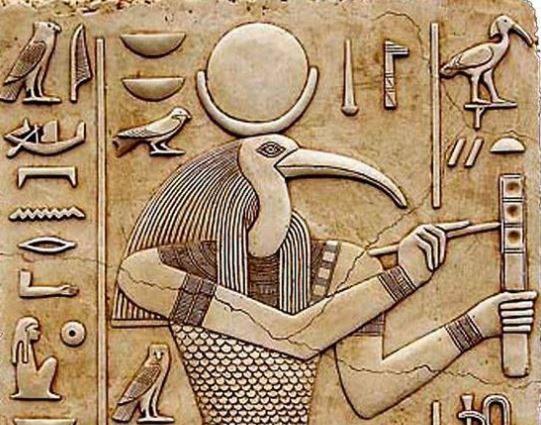
Modern man, burdened by irrelevant and chaotic cerebration, often fails to ask the critical, central questions: What does it mean to have a human form? Why does the face have seven orifices? What does it mean to have a hand with five fingers? Why is one finger called the index finger and what is the purpose of pointing in human life? What is the significance of the thumb and what is its connection with will and determination, which must be both strong and flexible? Can flexibility and fluidity be combined in human life in ways analogous to what is exemplified in the physical world by all the lunar hierarchies impressed with the intelligence that comes from higher planes? What is the function of the little finger, which is associated with Mercury? What is the connection between speech and this seemingly unimportant digit which is important for those who have skill in the use of hands, whether in instrumental music or in craftsmanship? When one is ready to ask questions of this kind, taking nothing for granted, then one can look at statues of the Buddha and of various gods in many traditions, where the placement of the hand is extraordinarily significant: whether it is pointing above, pointing below, whether it is extended outwards, whether it is in the form of an oblation or receiving an offering, or in the familiar mudra of the hand that blesses. What is the meaning of joining the thumb and the central finger, which is given great importance in mystical texts like the Hymn to Dakshinamurti?
The moment one begins to raise such innocent questions about the most evident aspects of human existence, it immediately becomes clear that pseudo-sophisticated people are prisoners of the false idea that they already know. And yet self-reliance and spontaneous trust are so scarce in the world of the half-educated. Many people are so lacking in elementary self-knowledge that when a person meets another, instead of a natural response of receptivity and trust, there is an entrenched bias engendered by fear and suspicion. This has been consolidated through the establishment of a Nietzschean conceptual framework in which all human relationships are viewed simply in terms of domination and being dominated. This obsessive standpoint drains human relationships of deeper content, of spiritual meaning and moral consciousness. All moral categories and considerations become irrelevant when one entirely focuses upon an ethically neutral and colourless conception of the will. To assume and act as if everything turns upon the master-slave relation is a major block to the development of self-consciousness, as Hegel recognized. Humanity has left behind its feverish preoccupation with false dominance in formal structures. The seventeenth and eighteenth centuries witnessed the emergence of a higher plateau of individual and collective self-consciousness. All men and women are the inheritors of the Enlightenment, with its unequivocal affirmation of the inalienable dignity of the individual, who can creatively relate to other human beings in meaningful dialogue and constructive cooperation.
Rooted in a simplistic but assertive mentality, dissolving all moral issues, the language of confrontation and of submission is irrelevant to the universal human condition and to the hierarchical complexity of Nature. Any person with a modicum of thought who begins to ask questions about the marvelous intricacy and dynamic interrelationships of Nature – questions about the sun and the stars, the trees and forests, the rivers and oceans, and above all about human growth – will readily recognize that no real understanding of the organic processes of Nature can be properly expressed in terms of such jejune categories as dominance and submission. Nor can any meaningful truths about the archetypal relations between teachers and disciples, parents and children, friends and companions, be apprehended through the truncated notion of an amoral will. Human life is poetic, musical and poignant. It has an open texture, with recurrent rhythms, and it continuously participates in concurrent cycles. To know this is to recognize, when viewing the frail fabric of modern societies, that human evolution has not abrogated the primordial principles of mutuality and interdependence, but indeed abnormal human beings and societies have become alienated from their inner resources of true strength and warmth, trust and reciprocity. The Golden Rule remains universal in scope and significance. There is not a culture or portion of the human race, not an epoch in history, in which the Golden Rule was not understood. Without this awareness there would be no social survival, let alone its translation into the language of roles and obligations and into the logic of markets. Reciprocity is intrinsic to the human condition.
By rethinking fundamentally what it means to confer the potency of ideation upon primal facts such as the conscious use of the human hand, one can discard much muddIed thinking which is the prolific parent of a vast progeny of distrustful, fearful, weak and wayward thoughts that are constantly tending in a downward direction. Spiritual will can be strengthened when a person meditates upon the cosmic activity which is partly conveyed through creation myths, and may be grasped metaphysically in terms of the abstract becoming more and more, yet only incompletely, concrete. There must be a firm recognition of the necessary gap – inherently unbridgeable – between the unconditioned and the conditioned, between noumenal light and its phenomenal reflections. For those who begin to sense this in the ever-changing world, it can help to initiate a revolution in their everyday relationships. The true occultist starts at the simple level of constant thoughtfulness and moves to a mode of awareness whereby he can effortlessly put himself into the position of another human being.
It is the hallmark of spiritual maturity that one has no sense of psychological distance from another, that one cannot only salute but also share the unspoken subjectivity of another human being. When a thoughtful person begins to look at others in this way, the need for involuntary karma and mere extensions to superficial human contact will be replaced by the inward capacity, through every opportunity that comes naturally, to discover the universal meaning of human evolution, the potential richness and actual limitations of human nature, and the shared pathos of the spiritual pilgrimage of humanity. As depth of awareness is gained, it is possible to educate one’s perceptions and one’s responses to the world, cleansing the mind and the heart, and releasing the spiritual will. One can cultivate a real taste for the rarefied altitudes of Himalayan heights whereupon sublime truths are experienced as noumenal realities.
The awakening of intuitive insight is an essential prerequisite to authentic participation in human life. Noetic awakening presupposes that one learns to take nothing for granted, and repeatedly re-creates a sense of wonder and openness. It is necessary to increase silence in relation to speech, contemplation in relation to action, and deliberation in relation to impetuous response. Living from within, each day becomes charged with rich significance and is a vital link in a continuous thread of creative ideation. So immense are the potentials of human consciousness that for a true yogin a single day is like an entire incarnation. When individuals truly kindle the spark of Buddhi-Manas, they can rapidly move away from the nether region of dark distrust and abject dependence, and actively think in terms of the high prerogatives and vast possibilities of human life. Through calm contemplation they can come closer to the highest energies in the cosmos. Through proper alignment with what is above and within, they readily perceive the world as a shadowy reflection of reality, and also see beyond fleeting images to the hidden core of what gives vitality and continuity to the stream of consciousness. The restoration of Buddhic perception gives a preliminary understanding of what it is like to become constitutionally incapable of distrust, delusion, cowardice and craving. The mental portrait of the self-governed Sage, whoever remains in effortless attunement to the parentless Source, becomes a transforming reality in daily life. One no longer inhabits the terrestrial region of time and space in which linger many deluded souls for whom one feels true compassion, but one ascends to the empyrean of divine ideation.
Raghavan Iyer
The Gupta Vidya III
 Grand Temple of Horus Behdety