A narrative lecture on Sacred Sound, Divine Names, Hermetic Philosophy, Qabalah, and the Creative Power of the Spoken Word
Introduction: In the Beginning Was the Word
There is an ancient teaching within the Western Mystery Tradition that the universe was not merely constructed, but spoken into manifestation.
Before there was form, there was the potential for form. Before there was movement, there was the possibility of movement. And before the visible universe emerged from the invisible, there was, according to the mystical imagination, a primordial utterance through which the unmanifest became manifest.
The opening verses of the Gospel of John declare:
“In the beginning was the Word, and the Word was with God, and the Word was God.” — John 1:1, KJV
To the ordinary reader, these words may express a theological mystery concerning the Divine Logos. But to the Hermetic philosopher, the Rosicrucian mystic, and the ceremonial magician, they also invite contemplation of a profound metaphysical principle: the relationship between consciousness, vibration, expression, and creation.
Within the mystical interpretation of this teaching, the Word is more than language. It represents Divine Intelligence expressing itself through an ordering principle.
In the Book of Genesis, creation unfolds through divine speech: “And God said, Let there be light: and there was light” (Genesis 1:3).
In the Sefer Yetzirah, the Hebrew letters become integral to a symbolic account of the formation of the cosmos. In later Qabalistic traditions, Divine Names are understood as expressions of sacred attributes, powers, and relationships within the Divine Reality.
These teachings have inspired generations of mystics to ask a remarkable question:
If the Divine Word symbolizes the power by which creation is ordered, might the disciplined use of sacred speech assist the human being in bringing intention into expression?
This is the question before us today.
For within the practice of vibrating Divine Names lies a discipline that joins breath, voice, concentration, imagination, reverence, and will.
And it is through the deliberate union of these faculties that the practitioner seeks to become more effective in the art of manifestation.
We must, however, distinguish the metaphysical teaching from a scientifically demonstrated mechanism. Sacred vibration is understood within these traditions as spiritually significant; it has not been established that pronouncing Divine Names directly changes external events through an independent supernatural force.
Its practical power may also be understood through its effects on attention, emotional regulation, commitment, and purposeful action.
I. What Does It Mean to Vibrate a Divine Name?
To vibrate a Divine Name is not simply to pronounce a sacred word aloud.
Neither is it merely to chant, sing, whisper, or repeat a phrase until the mind becomes quiet.
In the ceremonial traditions of the Hermetic Order of the Golden Dawn, the vibration of Divine Names developed into a specialized technique in which the practitioner combines controlled breathing, vocal resonance, concentration, and visualization.
The name is pronounced deliberately, often upon a sustained exhalation, with the intention that its symbolic significance permeate the practitioner’s consciousness.
The distinction between ordinary speech and magical vibration is principally one of concentration, intentionality, and ritual meaning.
Consider the difference between casually saying the word peace and deliberately speaking that same word while contemplating its meaning, regulating one’s breathing, and committing oneself to act peacefully.
The word itself has not changed.
What has changed is the condition of the person speaking it.
The same principle offers an accessible introduction to Divine Name vibration.
Within ceremonial magic, a Divine Name represents more than a collection of syllables. It is understood as a symbolic expression of a particular aspect of Divinity.
When the practitioner vibrates that Name, the intention is not to command God, nor to reduce the Divine to a mechanical formula.
Rather, the practitioner seeks to bring the individual consciousness into greater harmony with the divine attribute represented by that Name.
This is an important distinction.
The magician does not become the source of Divine Power simply by speaking a sacred formula. In a reverential interpretation of ceremonial practice, the magician becomes an instrument through which divine principles may be contemplated, embodied, and expressed.
The purpose of vibration is therefore not merely to make sound. It is to make the whole person participate consciously in the meaning of the sound.
II. The Hermetic Principle of Vibration
One of the most frequently quoted teachings in modern Hermetic literature appears in The Kybalion, published in 1908:
“Nothing rests; everything moves; everything vibrates.”
This statement is presented in that work as the Principle of Vibration.
Although The Kybalion is a modern esoteric text rather than an ancient Egyptian or classical Hermetic scripture, its formulation has become influential within contemporary metaphysical teachings.
The principle suggests that reality may be contemplated in terms of movement, rhythm, and varying conditions of manifestation.
We must distinguish this philosophical concept from the scientific meaning of vibration.
In physics, vibration describes measurable oscillatory motion. Sound involves mechanical pressure waves traveling through a medium. The esoteric assertion that consciousness or spiritual reality possesses a particular vibration is a metaphysical proposition, not an established physical equivalence.
Nevertheless, the symbolism is useful.
Think of a musical instrument.
A string, when properly tensioned and set into motion, produces a recognizable tone. The quality of that tone depends upon the condition of the instrument and the manner in which it is played.
The human being may be compared, symbolically, to such an instrument.
The body provides the physical means of expression. The breath supplies the movement. The voice gives audible form to intention. The mind directs attention. The imagination supplies symbolic imagery. And the will determines the purpose toward which these faculties are directed.
When these elements are disorganized, the individual’s intentions may be equally disorganized.
But when they are brought into harmony, the practitioner may experience greater clarity, steadiness, and purposeful expression.
Thus, within the Hermetic understanding, vibrating a Divine Name becomes an exercise in establishing correspondence between the inner life and a chosen sacred principle.
The practitioner seeks not simply to produce a particular sound, but to cultivate a particular state of being.
And this brings us to the relationship between sacred vibration and manifestation.
III. Manifestation Begins in the Invisible
Within the Western Mystery Tradition, manifestation is often described as a movement from the subtle to the dense, from the unformed to the formed, and from possibility into actuality.
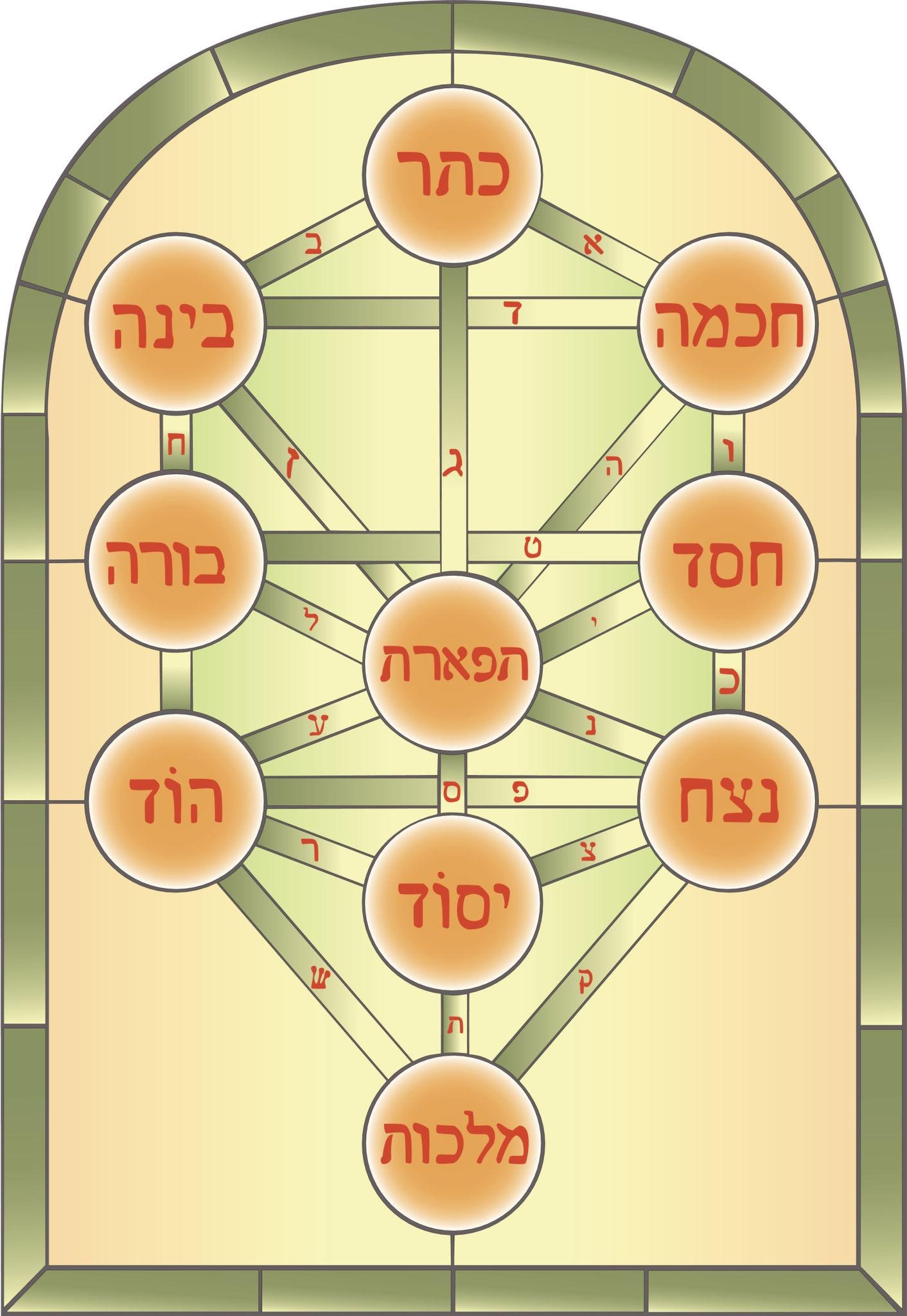
This process finds a particularly elaborate symbolic expression in the Qabalistic Tree of Life.
The ten Sephiroth may be contemplated as successive modes through which Divine Reality is expressed.
In a Hermetic-Qabalistic interpretation, Kether represents the supreme unity or crown of manifestation. Chokmah symbolizes primordial wisdom and dynamic impulse. Binah represents understanding, limitation, and formative structure.
The subsequent Sephiroth develop further aspects of expression, culminating in Malkuth, the Kingdom, associated with the material world.
This arrangement provides a powerful symbolic model for understanding how an intention may become an accomplished reality.
An idea begins as a possibility.
It acquires direction through the will.
It develops through thought, imagination, and discernment.
It encounters the necessity of organization, limitation, and sustained effort.
Finally, it takes shape through action in the material world.
Notice what this teaching implies.
Manifestation is not complete when an intention has been imagined. It is complete only when the intention has been given appropriate expression.
The individual who wishes to cultivate wisdom must study, reflect, and apply what has been learned.
The individual who wishes to establish prosperity must make sound decisions, develop useful abilities, and take practical action.
The individual who wishes to experience greater harmony must cultivate harmonious conduct.
Vibrating Divine Names may serve as a ritual means of orienting consciousness toward these purposes.
But the ritual must be accompanied by the conduct that gives the intention its earthly form.
In this sense, Malkuth is not an afterthought.
It is the necessary field in which the work becomes visible.
IV. The Divine Names as Expressions of Sacred Attributes
Within Hermetic Qabalah, particular Divine Names are associated with the Sephiroth of the Tree of Life.
These associations were developed through Jewish mystical sources and later adapted into Christian Cabala, Hermetic Qabalah, and ceremonial magic.
It is important to recognize that these traditions do not always interpret or use the Names in the same way. In Judaism, Divine Names are treated with particular reverence, and some are not ordinarily pronounced as written.
The following correspondences reflect a commonly used Hermetic-Qabalistic arrangement rather than a universal practice across all Qabalistic traditions.
| Sephirah | Divine Name | Contemplative attribute |
| Kether | Eheieh | Divine Being; unity |
| Chokmah | Yah | Wisdom; primordial impulse |
| Binah | YHVH Elohim | Understanding; formative structure |
| Chesed | El | Mercy; benevolence |
| Geburah | Elohim Gibor | Strength; disciplined power |
| Tiphareth | YHVH Eloah ve-Daath | Beauty; harmony; illumination |
| Netzach | YHVH Tzabaoth | Endurance; desire; victory |
| Hod | Elohim Tzabaoth | Intellect; order; articulation |
| Yesod | Shaddai El Chai | Foundation; imagination; mediation |
| Malkuth | Adonai ha-Aretz | Kingdom; embodiment; earthly expression |
These correspondences should not be interpreted as a list of magical commands that guarantee particular outcomes.
Rather, each Name may serve as a focus for contemplation of a sacred quality.
A practitioner seeking greater self-discipline, for example, might contemplate the qualities traditionally associated with Geburah.
One seeking reconciliation might contemplate Chesed and its symbolism of mercy.
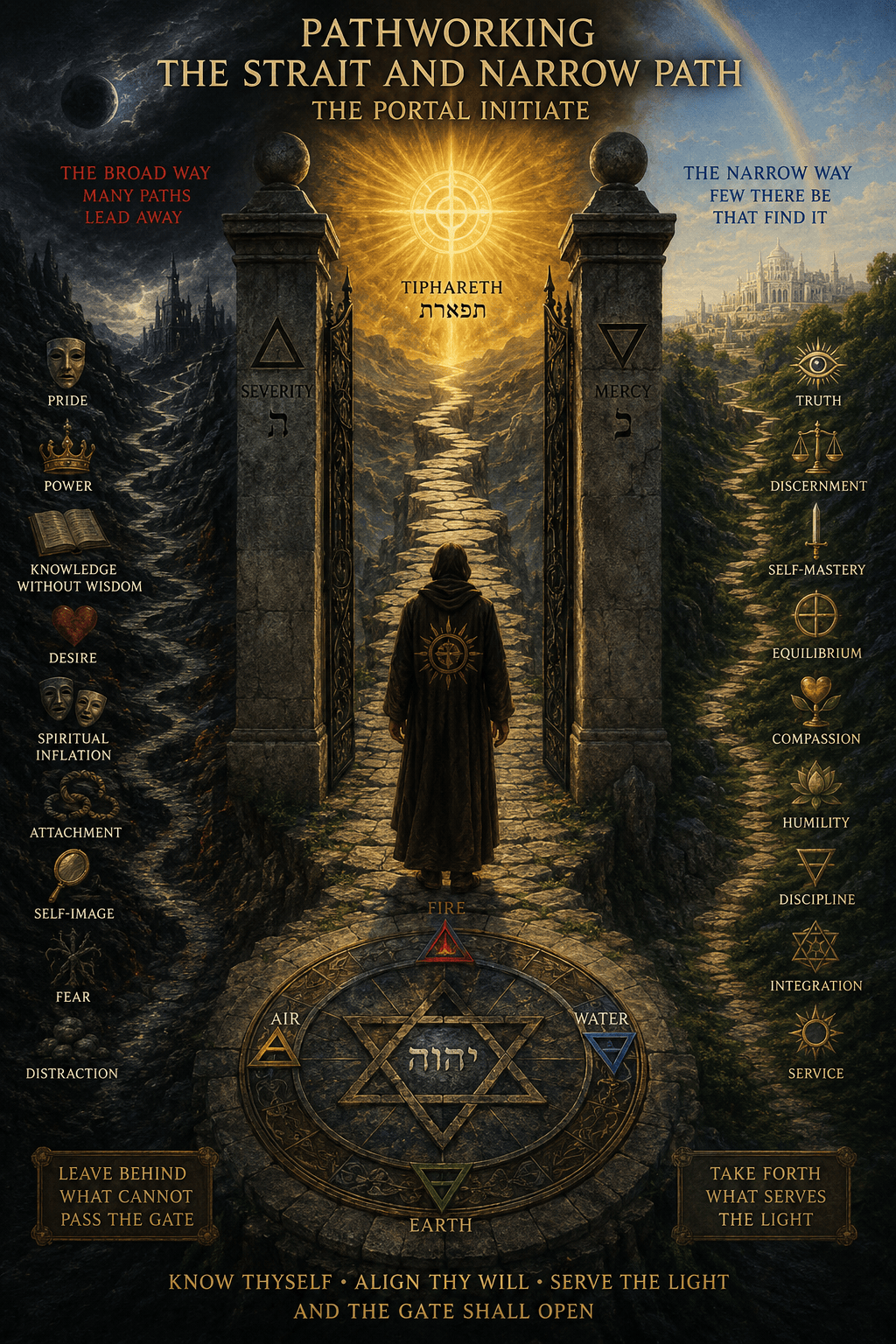
One seeking equilibrium between competing demands might meditate upon Tiphareth, the sphere of beauty and harmonizing consciousness.
The power of the exercise lies in the transformation of the practitioner’s relationship to the principle.
A person who repeatedly contemplates mercy but continues to act cruelly has not meaningfully integrated that teaching.
A person who invokes strength but refuses responsibility has not yet embodied the quality represented.
And a person who vibrates a Divine Name for wisdom while remaining unwilling to learn has mistaken ceremonial expression for accomplishment.
The Name establishes the focus. The practitioner must establish the corresponding life.
V. Breath: The Bridge Between Intention and Expression
Why does the practice of Divine Name vibration place such importance upon breathing?
Because breath is the immediate physical means by which the spoken word is produced.
Without the movement of air, ordinary vocal sound cannot arise.
Within mystical literature, breath also possesses rich symbolic significance.
The Hebrew word ruach can signify wind, breath, or spirit, depending upon its context. In Genesis 2:7, the image of God breathing the breath of life into the human being contributes to a longstanding religious association between breath and vitality.
For the ceremonial magician, conscious breathing therefore becomes both a practical technique and a sacred symbol.
When the practitioner inhales deliberately, attention is gathered.
When the practitioner exhales while vibrating a Name, that gathered attention is given audible expression.
When the sound concludes, silence permits the practitioner to observe the effect of the exercise upon consciousness.
There is a threefold rhythm here:
Reception, expression, and contemplation.
First, the practitioner becomes receptive.
Second, the practitioner expresses the sacred intention.
Third, the practitioner observes, reflects, and integrates.
The breathing need not be forceful or extreme. Comfortable, natural breathing is sufficient. Straining the voice, holding the breath excessively, or attempting to produce intense bodily sensations adds nothing essential to the contemplative purpose.
The objective is not physical intensity.
It is deliberate awareness.
And this awareness provides the foundation for the next faculty: imagination.
VI. Imagination: The Formative Faculty of the Magician
In ordinary conversation, imagination is sometimes dismissed as fantasy.
But within Hermetic and Rosicrucian teachings, imagination has often been understood as an important faculty in symbolic contemplation and spiritual development.
The magician learns to construct meaningful inner images and to sustain attention upon them.
Consider a practitioner contemplating Divine Wisdom.
The individual might imagine a radiant light illuminating the mind.
This image does not need to be interpreted as literal supernatural light. It may function as a symbolic representation of clarity, understanding, and insight.
While sustaining that image, the practitioner vibrates an appropriate Divine Name with reverence.
The visualization gives symbolic form to the intention.
The spoken Name gives it audible expression.
The breath regulates the pace of the exercise.
The will maintains its direction.
Together, these activities form a unified contemplative act.
This process can be especially valuable when the practitioner is attempting to change an established pattern of behavior.
Suppose an individual struggles with indecision.
A purely intellectual resolution to become more decisive may be quickly forgotten.
But a repeated contemplative exercise involving a sacred principle, a meaningful image, and a clearly defined commitment may help make the desired change more memorable.
The ritual becomes a rehearsal of the consciousness the practitioner wishes to cultivate.
Yet imagination must remain connected to discernment.
An image experienced during meditation is not automatically a revelation, prophecy, or instruction from a Divine Intelligence.
It may carry personal symbolic meaning without constituting evidence about the external world.
The mature magician learns to distinguish spiritual interpretation from objective fact.
This distinction protects the Work from confusion and allows imagination to become a disciplined ally rather than an unquestioned authority.
VII. The Spoken Word and the Direction of Will
Within ceremonial magic, will is more than wishing.
It is the faculty through which an individual selects a purpose and maintains commitment to its realization.
A wish may arise spontaneously and disappear just as quickly.
An intention possesses greater definition.
But an effective will requires continuity.
It must survive distraction, discouragement, delay, and the ordinary demands of life.
Here we discover one of the most useful applications of Divine Name vibration.
The practice may serve as a deliberate moment in which the individual renews allegiance to a chosen principle.
When the magician vibrates a Divine Name associated with strength, the intention is not merely to experience a temporary sensation of power.
It is to remember the obligation to act with strength.
When the magician vibrates a Name associated with harmony, the objective is not simply to enjoy a peaceful meditation.
It is to cultivate harmony in speech, judgment, and relationship.
And when the magician vibrates a Name associated with Divine Being, the deeper purpose may be to contemplate the relationship between personal identity and the sacred ground of existence.
The practice thus becomes a means of repeatedly asking:
What principle am I attempting to embody?
What kind of person must I become to express that principle?
And what must I do when the ritual has ended?
These questions lead us toward a more mature understanding of manifestation.
For the greatest obstacle to manifestation is often not the absence of desire.
It is the contradiction between desire and conduct.
One may desire knowledge while resisting study.
One may desire prosperity while avoiding responsibility.
One may desire love while refusing vulnerability, honesty, or consideration.
One may desire spiritual advancement while neglecting the discipline necessary to sustain it.
The vibrated Word, in this interpretation, becomes a reminder that intention must be supported by congruent action.
VIII. Why Repetition Can Strengthen the Practice
Sacred repetition has been employed in numerous religious and contemplative traditions.
Jewish prayer, Christian hesychasm, Hindu mantra practice, Buddhist chanting, and Islamic devotional remembrance each possess distinct theological foundations and methods. They should not be treated as interchangeable systems.
Nevertheless, they demonstrate the widespread human use of repeated sacred language as a means of devotion and concentrated attention.
Within ceremonial magic, repetition may serve several purposes.
It establishes rhythm.
It reduces distraction.
It reinforces the association between a sacred symbol and its contemplated meaning.
It provides a recognizable beginning and ending to a period of spiritual practice.
And it may help the practitioner develop familiarity with a desired state of concentration.
Research on repetitive prayer and meditative practices suggests that certain forms of rhythmic vocalization and controlled breathing can influence respiratory patterns, attention, and subjective calm. These findings do not establish that a particular Divine Name produces a unique external manifestation effect.
What they do support is the broader possibility that disciplined vocal contemplation can affect the practitioner’s internal experience.
This is not insignificant.
A calmer mind may make better decisions.
A more focused individual may recognize opportunities previously overlooked.
A person who regularly reflects upon ethical commitments may become more consistent in carrying them out.
Such changes can affect external circumstances through ordinary, understandable pathways.
The esoteric practitioner may additionally interpret these changes through the language of spiritual correspondence.
Both interpretations can be discussed without confusing one with the other.
IX. Divine Name Vibration in the Golden Dawn Tradition
Within the Hermetic Order of the Golden Dawn, Divine Name vibration occupies an important place in ritual and ceremonial instruction.
The practice appears in connection with invocations, banishings, elemental work, and other methods of ritual concentration.
In the Lesser Ritual of the Pentagram, for example, Divine Names are associated with the four quarters of the ritual space.
The traditional names include YHVH, Adonai, Eheieh, and AGLA, the last being a sacred acronym rather than an ordinary personal name of God.
The ritual combines gesture, visualization, directional orientation, and vocal expression.
Its structure provides an instructive example of how ceremonial practice unites several faculties into a single symbolic operation.
The practitioner does not merely speak.
The practitioner moves, visualizes, concentrates, and participates in an ordered sequence.
Within Golden Dawn interpretation, the purpose of such operations includes purification, equilibrium, and the establishment of a properly ordered ritual environment.
The practitioner is taught to cultivate discipline before attempting more elaborate magical work.
This is particularly relevant to the subject of manifestation.
A person whose attention is continually scattered may find it difficult to sustain a coherent purpose.
A person governed by every passing emotion may struggle to distinguish a genuine aspiration from a temporary impulse.
A person who confuses spiritual enthusiasm with practical accomplishment may repeatedly begin projects without completing them.
Golden Dawn training, at its best, addresses these difficulties by insisting upon the gradual education of the faculties.
The elements become symbolic categories through which the aspirant examines the personality.
Earth teaches stability and embodiment.
Air teaches discrimination and clarity.
Water teaches receptivity and emotional understanding.
Fire teaches aspiration, courage, and directed energy.
Spirit symbolizes the principle through which these faculties may be brought into equilibrium.
The vibration of Divine Names can be understood as one instrument within this larger discipline.
It does not replace the Work.
It assists in focusing the worker.
X. A Practical Exercise in Sacred Vibration and Manifestation
Let us now consider a simple contemplative exercise inspired by Hermetic-Qabalistic practice.
This is a modern educational adaptation, not a historical Golden Dawn initiation or a substitute for traditional instruction.
For this exercise, we shall contemplate the principle of harmony associated with Tiphareth.
Rather than require the pronunciation of a sacred Hebrew Name, practitioners who prefer to observe Jewish restrictions concerning Divine Names may use a reverential title such as Divine Harmony or Source of Light.

First: Establish your intention.
Sit comfortably in a quiet place. Consider one area of your life in which greater harmony is needed.
Choose something specific: an unresolved disagreement, a difficult decision, or an imbalance between responsibility and personal well-being.
Second: Establish the breath.
Breathe gently and naturally. Allow the shoulders to relax and the mind to settle. Do not force the breath or attempt to induce unusual sensations.
Third: Form the symbolic image.
Imagine a gentle golden light in the region of the heart. Allow it to symbolize wisdom, compassion, integrity, and equilibrium.
Recognize this as an intentional image used for contemplation.
Fourth: Vibrate the sacred expression.
On a comfortable exhalation, slowly and resonantly pronounce:
“Divine Harmony”
Allow the sound to be steady and unforced. Repeat three times, pausing naturally between repetitions.
Fifth: Contemplate the principle.
Remain silent for a short period.
Ask yourself what harmony requires of you in the situation you have selected. Does it require patience? A difficult conversation? Greater honesty? A firm boundary? A willingness to compromise?
Sixth: Translate the intention into action.
Identify one practical action that can be completed within the next twenty-four hours.
Write it down and commit to completing it.
This final step is indispensable.
The practice should not conclude with the satisfaction of having performed a ritual.
It should conclude with a clearer understanding of what must now be done.
Over time, the practitioner may observe whether the exercise improves concentration, emotional steadiness, and consistency of action.
Such observations provide a more responsible measure of practical benefit than attributing every favorable coincidence to the ritual.
XI. The Ethical Dimension: Manifestation Is Not Domination
There is a temptation within some modern manifestation teachings to imagine that spiritual power means the ability to compel circumstances, influence other people against their will, or obtain desired outcomes regardless of consequence.
This understanding deserves careful examination.
Within a mature spiritual discipline, will must be accompanied by wisdom.
Power must be balanced by responsibility.
And desire must be examined in the light of ethical judgment.
The use of Divine Names should not become a means of treating sacred language as an instrument of coercion.
Nor should it encourage the practitioner to believe that illness, poverty, loss, or adversity necessarily results from insufficient faith or improper vibration.
Human circumstances arise from complex personal, social, biological, and material conditions.
No individual possesses complete control over them.
The practitioner may influence some conditions through choices and actions, but not all outcomes are subject to personal will.
The ethical purpose of manifestation practice is therefore not unlimited control.
It is the cultivation of greater responsibility for the thoughts, decisions, and actions that genuinely lie within one’s power.
From this perspective, the invocation of mercy should encourage merciful conduct.
The invocation of wisdom should encourage honest inquiry.
The invocation of strength should encourage courage without cruelty.
And the invocation of harmony should encourage just relationships rather than the suppression of legitimate differences.
A sacred Name should elevate the practitioner’s conduct, not merely intensify the practitioner’s desires.
XII. The Greater Secret: Becoming the Word You Speak
We now approach the central mystery of this lecture.
The novice may begin by believing that the power resides entirely in the pronunciation of a sacred formula.
The student may then discover the importance of breath, concentration, and visualization.
The more experienced practitioner begins to recognize the necessity of integrating the invoked principle into ordinary life.
But the deepest lesson is more demanding.
It asks the individual to become an expression of the very principle being contemplated.
What does it mean to vibrate a Name associated with wisdom?
It means more than sounding the syllables correctly.
It means learning to distinguish knowledge from assumption, understanding from prejudice, and genuine insight from wishful thinking.
What does it mean to invoke Divine Mercy?
It means more than experiencing an elevated emotional state.
It means developing the capacity to respond to others with compassion while maintaining appropriate judgment.
What does it mean to invoke Divine Strength?
It means more than feeling powerful during ritual.
It means possessing the courage to act rightly when doing so is difficult.
And what does it mean to invoke Divine Harmony?
It means learning to reconcile competing demands without abandoning integrity.
Here the relationship between vibration and manifestation becomes clearer.
The most enduring manifestation may be the gradual transformation of the person who performs the Work.
As that person changes, behavior changes.
As behavior changes, relationships and decisions may change.
As decisions change, the course of a life may change.
Within the language of Hermetic philosophy, this process may be contemplated through the relationship between the inner and outer worlds.
The transformation of consciousness becomes meaningful when it finds expression in the world of action.
This is the practical significance of the ancient ideal of bringing the higher into correspondence with the lower.
Not merely to imagine a more luminous existence.
But to live in a manner that gives that aspiration recognizable form.
XIII. The Rosicrucian Ideal: From Personal Desire to Spiritual Service
The Rosicrucian tradition introduces an additional dimension to this discussion.
Spiritual development is not undertaken solely for the satisfaction of personal ambition.
It is also directed toward the refinement of character, the cultivation of wisdom, and service to humanity.
Within this framework, the question changes.
Instead of asking only, “How may I use sacred vibration to obtain what I desire?” the practitioner begins to ask:
“How may I bring my desires into harmony with what is wise, beneficial, and just?”
This is a significant movement in spiritual maturity.
The individual no longer regards the Divine merely as a source of power to be accessed.
The Divine becomes the supreme standard against which the individual’s motives are examined.
Manifestation then becomes inseparable from purification of intention.
Before attempting to realize a desire, the practitioner considers its consequences.
Does it serve only vanity?
Does it depend upon another person’s loss?
Does it encourage dependence upon magical thinking rather than responsible effort?
Or does it contribute to the development of wisdom, stability, creativity, healing relationships, and meaningful service?
These questions do not diminish the value of aspiration.
They refine it.
For the Rosicrucian ideal is not simply to possess greater power.
It is to become increasingly worthy of the responsibilities that accompany power.
The sacred Word, contemplated in this light, becomes an instrument of self-examination.
It reminds the practitioner that the highest purpose of spiritual practice is not merely the alteration of circumstances.
It is the elevation of consciousness and conduct.
Conclusion: Let the Word Become Flesh
We began with the opening declaration of the Gospel of John:
“In the beginning was the Word.”
We conclude with another statement from the same Gospel:
“And the Word was made flesh, and dwelt among us.” — John 1:14, KJV
In its Christian theological context, this passage concerns the Incarnation of the Divine Logos in Jesus Christ.
Within a secondary, symbolic application to spiritual practice, it also offers a compelling image of the relationship between sacred meaning and embodied existence.
The Word must not remain merely an idea.
The aspiration must not remain merely a dream.
The sacred principle must not remain confined to the ceremonial chamber.
It must become visible in the manner in which we live.
If we invoke wisdom, let us become more discerning.
If we invoke mercy, let us become more compassionate.
If we invoke strength, let us become more courageous.
If we invoke harmony, let us become more balanced.
And if we invoke Divine Light, let us seek to illuminate rather than obscure the lives we touch.
The vibration of Divine Names may provide a powerful contemplative discipline because it gathers the faculties of the human being around a sacred intention.
Breath, voice, thought, imagination, emotion, and will are brought into deliberate relationship.
But the measure of that practice is not the volume of the voice, the intensity of the sensation, or the number of repetitions performed.
Its deeper measure is the quality of consciousness and conduct that follows.
For the magician who speaks of peace but cultivates conflict has not yet integrated the Word.
The magician who invokes wisdom but refuses understanding has not yet embodied the Word.
And the magician who seeks manifestation without accepting responsibility has not yet completed the Work.
Let the sacred utterance become the beginning of transformation rather than its substitute.
Let intention become commitment.
Let commitment become action.
And let action become the visible expression of the highest principles the practitioner has chosen to serve.
For the greatest power of the vibrated Word may not be that it causes the universe to obey our desires, but that it teaches us to bring our desires, our character, and our actions into conscious harmony with the Divine.
And therein lies the greater mystery of manifestation.
Selected References for Further Study
The following works provide historical, philosophical, and practical context. They represent different traditions and levels of historical authority.
1. Regardie, Israel. The Golden Dawn. A major published compilation of Golden Dawn ritual and instructional materials. Particularly relevant to Divine Name vibration, ceremonial visualization, and ritual practice.
2. Scholem, Gershom. Major Trends in Jewish Mysticism. A foundational scholarly study of Jewish mystical movements, providing historical context for the development of Qabalistic thought.
3. Kaplan, Aryeh. Sefer Yetzirah: The Book of Creation. A translation and commentary examining Hebrew letters, numbers, and cosmological symbolism within Jewish mystical tradition.
4. The Three Initiates. The Kybalion (1908). An influential modern esoteric presentation of seven purported Hermetic principles, including vibration and mentalism. Best understood as modern occult philosophy rather than an authentic ancient Hermetic source.
5. Copenhaver, Brian P. Hermetica: The Greek Corpus Hermeticum and the Latin Asclepius in a New English Translation, with Notes and Introduction (1992). A scholarly translation of primary Hermetic texts useful for distinguishing classical Hermetic philosophy from later occult interpretations.
6. Yates, Frances A. The Rosicrucian Enlightenment (1972). An important historical study of the intellectual, religious, and cultural environment surrounding early Rosicrucianism.
7. Bernardi, Luciano, et al. “Effect of Rosary Prayer and Yoga Mantras on Autonomic Cardiovascular Rhythms: Comparative Study.” BMJ 323 (2001): 1446–1449. A physiological study examining the relationship between rhythmic recitation, breathing, and cardiovascular rhythms. It does not test supernatural manifestation claims.
8. Winkelman, Michael. Shamanism: A Biopsychosocial Paradigm of Consciousness and Healing (2010). An interdisciplinary treatment of ritual, consciousness, and healing traditions, useful for considering how ritual practices may affect human experience without conflating cultural interpretations with demonstrated physical mechanisms.
Editorial note: This lecture presents sacred vibration as an esoteric and contemplative discipline. Historical theological claims, symbolic interpretations, and empirically studied psychological or physiological effects are distinguished throughout. It does not assert that vocalizing Divine Names has been scientifically demonstrated to produce external events by supernatural causation.
Annotated Bibliography
The Power of the Vibrated Word: How Vibrating Divine Names Can Amplify Your Manifestation Abilities
Fields of Study: Hermetic Philosophy, Jewish Mysticism, Hermetic Qabalah, Rosicrucianism, Golden Dawn Ceremonial Magic, Sacred Sound, Spiritual Psychology, and Contemplative Practice.
Introduction
The practice of vibrating Divine Names occupies a distinctive place within the Western Mystery Tradition, where sacred language is understood as more than a means of communication. In Hermetic, Qabalistic, and ceremonial magical teachings, the Divine Word represents a relationship between spiritual intention, symbolic expression, consciousness, and the ordering of creation.
This annotated bibliography provides a scholarly foundation for studying these concepts, particularly as presented in the accompanying lecture.
The selected works have been organized into five categories:
- Biblical and Jewish mystical foundations of the Divine Word.
- Classical Hermetic philosophy and the doctrine of manifestation.
- Golden Dawn ceremonial magic and the vibration of Divine Names.
- Rosicrucian spirituality, imagination, and spiritual transformation.
- Scientific and psychological research concerning chanting, rhythmic vocalization, breath, and meditation.
Each entry identifies the author’s central contribution, explains its relevance to the lecture, and distinguishes historical teachings from later esoteric interpretations.
An important scholarly distinction governs this bibliography: the spiritual significance attributed to Divine Name vibration within esoteric traditions is not equivalent to scientific evidence that vocalization can directly produce external events. Historical texts explain the beliefs and practices of particular traditions, while empirical research can examine measurable psychological and physiological effects
I. Biblical and Jewish Mystical Foundations
1. The Holy Bible — The Creative Word and Divine Logos
Reference
The Holy Bible, King James Version. (1611). Genesis 1:1–3; Genesis 2:7; Psalm 33:6; John 1:1–14; Hebrews 11:3.
Annotation
The biblical conception of creation through Divine speech provides one of the most influential theological foundations for later Western esoteric interpretations of the creative Word.
Genesis presents divine speech as integral to the creation narrative, while the Gospel of John identifies the Logos with the Divine and, within Christian theology, with the incarnate Christ.
These passages have inspired later mystics and Hermetic philosophers to contemplate a relationship between Divine Intelligence, sacred utterance, and manifestation.
Relevance to the lecture: Supports the introductory discussion of the Divine Word and the concluding symbolic interpretation of the Word becoming embodied through action.
Scholarly qualification: These biblical passages do not themselves teach the modern manifestation technique of vibrating Divine Names. That application belongs to later mystical and ceremonial interpretations.
2. Kaplan, Aryeh — Sefer Yetzirah: The Book of Creation
Reference
Kaplan, A. (1990). Sefer Yetzirah: The Book of Creation: In theory and practice. Weiser Books.
Annotation
Aryeh Kaplan’s translation and commentary offers an influential introduction to the Sefer Yetzirah, an early Jewish mystical cosmological work that explores the significance of the twenty-two Hebrew letters and ten sefirot belimah.
The text presents a symbolic framework in which letters, numbers, and the structures of language participate in the description of creation.
Kaplan examines these relationships through Jewish mystical commentary, including interpretive traditions concerning meditation and the combinations of Hebrew letters.
Relevance to the lecture: Particularly useful for understanding the discussion of sacred letters, the relationship between language and cosmology, and the symbolism of formation through Divine Intelligence.
Scholarly qualification: The ten sefirot of the Sefer Yetzirah should not simply be equated with the fully developed ten Sephiroth of later Kabbalah or their Golden Dawn correspondences.
3. Scholem, Gershom — Major Trends in Jewish Mysticism
Reference
Scholem, G. (1941). Major trends in Jewish mysticism. Schocken Publishing House.
Annotation
Gershom Scholem’s foundational historical study examines major developments in Jewish mysticism, including early mystical traditions, medieval Kabbalah, ecstatic Kabbalah, and later movements.
Of particular importance to the present subject is Scholem’s discussion of Abraham Abulafia and the ecstatic use of Hebrew letters and Divine Names.
Scholem provides essential context for understanding why sacred language became central to certain Jewish mystical disciplines.
Relevance to the lecture: Establishes a historical distinction between Jewish mystical practices involving Divine Names and their later incorporation into Western ceremonial magic.
Scholarly value: Highly recommended as a historical foundation before interpreting Qabalistic concepts through exclusively Hermetic or Golden Dawn sources. The original 1941 publication is documented in bibliographic records.
4. Idel, Moshe — Kabbalah: New Perspectives
Reference
Idel, M. (1988). Kabbalah: New perspectives. Yale University Press.
Annotation
Moshe Idel offers an important expansion of Kabbalah scholarship by examining mystical techniques, religious experience, and methods of attaining states of spiritual consciousness.
His approach pays particular attention to the experiential and practical dimensions of Jewish mysticism, including the role of language and the human imagination.
Idel’s research is especially useful for understanding sacred language as part of a disciplined mystical practice rather than merely an abstract theological symbol.
Relevance to the lecture: Illuminates the relationship between vocalization, contemplative intention, consciousness, and spiritual transformation.
5. Wolfson, Elliot R. — Through a Speculum That Shines
Reference
Wolfson, E. R. (1994). Through a speculum that shines: Vision and imagination in medieval Jewish mysticism. Princeton University Press.
Annotation
Wolfson’s scholarly investigation examines the relationship between imagination, visionary experience, religious symbolism, and mystical perception within Jewish traditions.
The work is especially relevant to the role of imagination as a faculty through which religious meaning is experienced and represented.
Relevance to the lecture: Provides a historical and philosophical foundation for the section concerning visualization as a formative spiritual faculty.
Scholarly qualification: Medieval Jewish visionary practices must be understood within their own religious settings rather than interpreted automatically as precursors to Golden Dawn astral visualization.
II. Classical Hermetic Philosophy and Manifestation
6. Copenhaver, Brian P. — Hermetica
Reference
Copenhaver, B. P. (Trans.). (1992). Hermetica: The Greek Corpus Hermeticum and the Latin Asclepius in a new English translation, with notes and introduction. Cambridge University Press.
Annotation
Copenhaver’s scholarly translation of the classical Hermetic writings provides a primary textual foundation for investigating Divine Mind, the Logos, creation, spiritual regeneration, and humanity’s relationship to the cosmos.
Of particular significance is the first treatise of the Corpus Hermeticum, commonly called Poimandres, which develops a theological vision involving Divine Mind, light, creation, and spiritual understanding.
Unlike modern manifestation literature, the classical Hermetic writings primarily concern knowledge of God, the structure of reality, and the transformation of the human soul.
Relevance to the lecture: Essential for understanding the discussion of Divine Intelligence, the creative Word, and the movement from spiritual understanding toward embodied realization.
Scholarly value: A primary reference for distinguishing ancient Hermetic theology from later ceremonial and New Thought interpretations. The 1992 edition is documented by Cambridge University Press.
7. Three Initiates — The Kybalion
Reference
Three Initiates. (1908). The Kybalion: A study of the Hermetic philosophy of ancient Egypt and Greece. Yogi Publication Society.
Annotation
The Kybalion presents seven principles of modern Hermetic philosophy: Mentalism, Correspondence, Vibration, Polarity, Rhythm, Cause and Effect, and Gender.
Its Principle of Vibration is particularly relevant to the belief that existence may be understood through differing states of motion and energetic expression.
The work also develops the concept of mental transmutation, describing the disciplined alteration of mental states as a form of practical Hermetic alchemy.
Relevance to the lecture: Directly supports the section on the Hermetic Principle of Vibration and the symbolic relationship between thought, intention, and manifestation.
Scholarly qualification: Although influential in contemporary esotericism, The Kybalion is a 1908 occult work closely related to the intellectual world of New Thought. Its seven principles should not be presented as a historically verified ancient Egyptian doctrine.
8. Hanegraaff, Wouter J. — New Age Religion and Western Culture
Reference
Hanegraaff, W. J. (1996). New Age religion and Western culture: Esotericism in the mirror of secular thought. Brill.
Annotation
Hanegraaff investigates the historical and intellectual development of modern Western esotericism, particularly the transformation of religious and philosophical ideas within New Age spirituality.
His work is important for distinguishing traditional concepts of spiritual transformation from contemporary teachings that emphasize personal intention, positive thinking, and manifestation.
Relevance to the lecture: Supplies critical historical context for understanding how older Hermetic ideas became associated with modern theories of consciousness-directed manifestation.
This resource helps prevent the mistaken assumption that ancient Hermetic authors taught the modern law of attraction in its present form.
III. Golden Dawn Ceremonial Magic and Divine Name Vibration
9. Regardie, Israel — The Golden Dawn
Reference
Regardie, I. (1989). The Golden Dawn (6th ed.). Llewellyn Publications.
Annotation
Israel Regardie’s compilation is among the most important published sources for the instructional, symbolic, and ceremonial system of the Hermetic Order of the Golden Dawn.
It includes material concerning the Tree of Life, Divine Names, elemental symbolism, ritual invocations, pentagram and hexagram ceremonies, and the relationship between visualization and ceremonial action.
The practice of vibrating Divine Names appears within a broader ritual system designed to cultivate concentration, symbolic identification, and spiritual equilibrium.
Relevance to the lecture: The principal reference for the sections concerning ceremonial vibration, invocation, the Lesser Ritual of the Pentagram, and the integration of gesture, voice, imagination, and intention.
Recommended study: Examine the instructions associated with the Pentagram Ritual and compare them with later Golden Dawn-derived approaches to the vibratory formula.
Scholarly qualification: Regardie preserves invaluable Golden Dawn materials, but his compilation also reflects editing and transmission through particular branches of the tradition.
10. Regardie, Israel — The Middle Pillar
Reference
Regardie, I. (1938). The Middle Pillar.
Annotation
Regardie’s The Middle Pillar develops a method of spiritual practice centered upon Divine Names, visualization, the Qabalistic centers of the Middle Pillar, and the cultivation of psychological and spiritual balance.
The practice is especially relevant because it associates the vocalization of sacred Names with the deliberate contemplation of the Sephiroth and their symbolic attributes.
Regardie also explores relationships between ceremonial practice and psychological integration.
Relevance to the lecture: Particularly useful for the sections discussing breath, visualization, resonance, disciplined concentration, and the embodiment of spiritual principles.
Recommended study: Compare the original method with subsequent expanded editions and commentaries, distinguishing Regardie’s foundational instructions from later additions.
11. Crowley, Aleister — Liber O vel Manus et Sagittae
Reference
Crowley, A. (1909). Liber O vel Manus et Sagittae (Sub Figura VI), published in The Equinox, 1(2).
Annotation
This influential ceremonial instruction provides practical descriptions of ritual technique, including the assumption of godforms, visualization, and the vibration of Divine Names.
Its methods emerged from the broader ceremonial environment of the Golden Dawn, although Crowley’s presentation belongs to his own subsequent magical system.
The text is particularly useful for examining how the spoken Divine Name becomes integrated with imaginative concentration and ritual symbolism.
Relevance to the lecture: Supports the discussion of Divine Name vibration as a coordinated exercise involving voice, imagery, and will.
Scholarly qualification: This is a primary source for Crowley’s ceremonial methods, not an independent scientific demonstration of the effects he attributes to them.
12. Fortune, Dion — The Mystical Qabalah
Reference
Fortune, D. (1935). The mystical Qabalah. Williams and Norgate.
Annotation
Dion Fortune presents an influential twentieth-century interpretation of the Tree of Life within the Western occult tradition.
She explores the Sephiroth as symbolic dimensions of consciousness and spiritual experience, discussing their Divine Names, planetary correspondences, virtues, and relationships to human development.
Her treatment is valuable for understanding how the Qabalistic framework was adapted into modern Western esoteric psychology and ceremonial practice.
Relevance to the lecture: Supports the discussion of the ten Sephiroth, their associated Divine Names, and the movement from subtle intention to material expression in Malkuth.
Scholarly qualification: Fortune’s system is Hermetic Qabalah and should not be treated as an interchangeable presentation of traditional Jewish Kabbalah.
13. Knight, Gareth — A Practical Guide to Qabalistic Symbolism
Reference
Knight, G. (1965). A practical guide to Qabalistic symbolism. Helios Books.
Annotation
Knight offers a systematic exploration of Qabalistic correspondences, including the Sephiroth, Tarot, planetary symbolism, spiritual hierarchies, and associated Divine Names.
The work is particularly useful for students learning to move beyond simple memorization of correspondences toward the interpretation of their relationships.
Relevance to the lecture: Reinforces the idea that each Divine Name represents a specific contemplative attribute within the Hermetic-Qabalistic system.
It is especially useful for designing companion lessons, correspondence charts, and contemplative exercises.
IV. Rosicrucian Spirituality and Transformation of the Will
14. Yates, Frances A. — The Rosicrucian Enlightenment
Reference
Yates, F. A. (1972). The Rosicrucian enlightenment. Routledge & Kegan Paul.
Annotation
Frances Yates places the emergence of Rosicrucianism within the intellectual, religious, political, and philosophical environment of early seventeenth-century Europe.
She examines the Rosicrucian manifestos, Hermetic philosophy, alchemy, Christian reform movements, and aspirations toward a transformation of knowledge and society.
Her work is essential for understanding Rosicrucian ideals as more than techniques for obtaining personal power.
Relevance to the lecture: Provides the historical foundation for the concluding discussion of spiritual service, moral refinement, and the transformation of individual aspiration into a larger purpose.
The original publication dates to 1972.
15. McIntosh, Christopher — The Rosicrucians
Reference
McIntosh, C. (1997). The Rosicrucians: The history, mythology, and rituals of an esoteric order (3rd ed.). Samuel Weiser.
Annotation
McIntosh traces Rosicrucian mythology, symbolism, and institutional development from the seventeenth century into later Western esoteric movements.
His study helps distinguish the legendary Brotherhood of the Rosy Cross from the historically documented organizations and interpretations that subsequently adopted Rosicrucian identities.
Relevance to the lecture: Supports the interpretation of ceremonial practice as part of a wider spiritual discipline involving self-cultivation, ethical conduct, and spiritual transformation.
Scholarly value: Particularly helpful when explaining the relationship between Rosicrucian symbolism and the later Hermetic Order of the Golden Dawn.
16. Andreae, Johann Valentin — The Chymical Wedding of Christian Rosenkreutz
Reference
Andreae, J. V. (1616). Chymische Hochzeit Christiani Rosencreutz anno 1459 [The chymical wedding of Christian Rosenkreutz].
Annotation
This foundational Rosicrucian allegory portrays an initiatory journey through trials, symbolic operations, and spiritual transformation.
The narrative employs alchemical and Christian imagery to depict the refinement of the aspirant and the necessity of preparation before attaining higher knowledge.
Although it is not a manual of Divine Name vibration, its initiatory symbolism provides a complementary framework for understanding transformation as something deeper than the acquisition of desired circumstances.
Relevance to the lecture: Supports the teaching that the primary aim of spiritual discipline is the transformation of the practitioner.
Its alchemical symbolism is particularly suited to the lecture’s assertion that sacred intention must ultimately become embodied through spiritual and moral development.
V. Scientific and Psychological Research on Sacred Sound
The following studies examine measurable aspects of vocal repetition, meditation, and breathing. They provide a useful empirical counterpoint to the traditional metaphysical literature.
They do not establish the existence of a supernatural manifestation mechanism.
17. Bernardi and Colleagues — Rhythmic Prayer, Mantra, and Cardiovascular Regulation
Reference
Bernardi, L., Sleight, P., Bandinelli, G., Cencetti, S., Fattorini, L., Wdowczyc-Szulc, J., & Lagi, A. (2001). Effect of rosary prayer and yoga mantras on autonomic cardiovascular rhythms: Comparative study. BMJ, 323(7327), 1446–1449.
Annotation
This comparative study examined the physiological effects of reciting the Latin Rosary and a yoga mantra among 23 healthy adults.
The researchers observed that rhythmic recitation was associated with slower breathing and changes in cardiovascular rhythmic coordination and baroreflex sensitivity.
The findings suggest that the breathing patterns accompanying certain repetitive vocal practices may contribute to measurable physiological effects.
Relevance to the lecture: Provides direct empirical support for the discussion of breath, rhythm, and the bodily effects of sustained vocal contemplation.
Scientific limitation: The study did not investigate Hebrew Divine Names, Golden Dawn vibration techniques, or the manifestation of external circumstances. Its relatively small sample also limits broad conclusions.
18. Benson, Herbert — The Relaxation Response
Reference
Benson, H. (1975). The relaxation response. William Morrow.
Annotation
Herbert Benson presents a framework for understanding how certain contemplative methods, including repetition of a word or phrase combined with a relaxed attentional attitude, may contribute to physiological relaxation.
His work played an influential role in bringing meditation-related research into mainstream discussions of stress and health.
Relevance to the lecture: Useful for explaining why repeated sacred vocalization may help some practitioners establish a calmer and more concentrated state of mind.
Scientific limitation: The relaxation response is not evidence that particular spiritual syllables possess unique supernatural effects.
19. Kalyani and Colleagues — Neurophysiological Effects of OM Chanting
Reference
Kalyani, B. G., Venkatasubramanian, G., Arasappa, R., Rao, N. P., Kalmady, S. V., Behere, R. V., Rao, H., Vasudev, M. K., & Gangadhar, B. N. (2011). Neurohemodynamic correlates of ‘OM’ chanting: A pilot functional magnetic resonance imaging study. International Journal of Yoga, 4(1), 3–6.
Annotation
This pilot study employed functional magnetic resonance imaging to investigate patterns of brain activity associated with OM chanting.
The researchers reported changes in activity in several regions during the chanting condition.
These findings contribute to preliminary research concerning the possible relationship between repetitive vocal practices and the neural processes involved in emotion and attention.
Relevance to the lecture: Offers an empirical parallel to the discussion of vocal repetition as an exercise affecting consciousness and internal experience.
Scientific limitation: This small exploratory study cannot establish broad therapeutic effects or validate esoteric claims about Divine Name vibration. OM chanting also belongs to religious contexts distinct from Hermetic-Qabalistic practice.
20. Winkelman, Michael — Shamanism: A Biopsychosocial Paradigm of Consciousness and Healing
Reference
Winkelman, M. (2010). Shamanism: A biopsychosocial paradigm of consciousness and healing (2nd ed.). Praeger.
Annotation
Winkelman examines shamanic practices through an interdisciplinary framework incorporating anthropology, psychology, and biological perspectives.
The work considers how ritualized practices, altered states of consciousness, communal meaning, and culturally structured expectations may interact in experiences of healing and personal transformation.
Relevance to the lecture: Provides a broader comparative perspective on the psychological and social importance of ritual, symbolism, and intentional spiritual practice.
Scholarly qualification: Shamanic traditions differ considerably from Golden Dawn ceremonial magic; the work is useful for comparison rather than as evidence of a shared universal mechanism.
VI. Reference Guide: Which Sources Support Each Major Lecture Concept?
| Lecture concept | Principal references |
| Divine Word and creation | Bible; Kaplan; Copenhaver |
| Sacred Hebrew letters and Divine Names | Kaplan; Scholem; Idel |
| Visualization and mystical imagination | Wolfson; Regardie; Fortune |
| Hermetic vibration and mental transformation | The Kybalion; Hanegraaff |
| Golden Dawn Divine Name vibration | Regardie; Crowley |
| Sephiroth and manifestation symbolism | Fortune; Knight; Kaplan |
| Breath, rhythmic chanting, and physiological responses | Bernardi et al.; Benson; Kalyani et al. |
| Rosicrucian ethics and spiritual service | Yates; McIntosh; Andreae |
| Ritual, consciousness, and cultural meaning | Winkelman; Idel; Hanegraaff |
VII. Recommended Reading Sequence for Temple Students
For a comprehensive study of this subject within a Golden Dawn–Rosicrucian curriculum, the following progression is recommended.
Foundational study: Begin with Genesis, the Gospel of John, Kaplan’s Sefer Yetzirah, and selected chapters of Scholem’s Major Trends in Jewish Mysticism. This establishes the religious and historical context for sacred language before introducing its ceremonial adaptations.
Hermetic interpretation: Proceed to Copenhaver’s Hermetica and The Kybalion, examining how classical Hermetic teachings differ from modern theories of vibration, mental transmutation, and manifestation.
Ceremonial application: Study Regardie’s The Golden Dawn and The Middle Pillar, supported by Fortune’s The Mystical Qabalah. Here, students may investigate Divine Names as components of a structured ceremonial system.
Rosicrucian synthesis: Examine Yates, McIntosh, and The Chymical Wedding to consider how spiritual aspiration relates to moral refinement, responsibility, and service.
Critical evaluation: Conclude with Bernardi, Benson, Kalyani, and Winkelman to distinguish traditional spiritual interpretations from empirically observed effects of contemplative practice.
Concluding Scholarly Perspective
The historical study of Divine Name vibration reveals a rich intersection of sacred language, religious symbolism, contemplative practice, and ceremonial discipline.
Jewish mysticism supplies sophisticated accounts of sacred letters, Divine Names, and spiritual understanding. Classical Hermetic philosophy offers theological reflections on Divine Mind and cosmic order. The Golden Dawn adapts these and other symbolic traditions into a highly structured ceremonial system incorporating voice, breath, visualization, and will.
Rosicrucian writings introduce a complementary emphasis upon transformation of the individual and service to a greater spiritual ideal.
Contemporary research provides evidence that some forms of rhythmic prayer, chanting, and meditation can influence breathing, attention, and physiological processes. It does not establish that Divine Names themselves independently cause desired events to manifest.
Taken together, these sources support a sophisticated interpretation of the lecture’s central thesis:
Vibrating Divine Names may be understood as a contemplative discipline through which sacred intention is reinforced, consciousness is focused, and the practitioner is encouraged to translate spiritual principles into deliberate action.
Within the Western Mystery Tradition, the greater significance of the practice is therefore not merely the possibility of influencing outward circumstances. It is the disciplined cultivation of wisdom, equilibrium, responsibility, and spiritual purpose.
The Word is contemplated through the mind, expressed through the voice, and fulfilled through the conduct of the practitioner.