Theosophy – The Self-Actualizing Man – II, by Raghavan Iyer

LOGO-TTS

THE SELF-ACTUALIZING MAN – II


From a philosophical standpoint, we live in an age impoverished by the inability of men to find the conditions in which autonomous and fundamental thinking can take place. From a psychological standpoint, our social situation facilitates rather than hinders the widespread fragmentation of consciousness. In our daily lives, the flux of fleeting sensations is so overpowering that we are often forced to cope with it by reducing the intensity of our involvement with sensory data. All our senses become relatively dulled. The fact that we do seem to manage at some level may simply confirm the extraordinarily adaptive nature of the human organism. The key to our survival at a more self-conscious level may be the development of a new cunning and resilience in our capacity for selection. Although we do not notice most things while driving on the freeway, we do seem to display a timely awareness of that which threatens us. Our consciousness, though fragmented, may be sharpened in ways that are necessary for sheer survival. The really serious consequence of this is in regard to interpersonal encounters and relationships.

As early as the seventeenth century, John Locke observed that in a modern atomistic society, where large numbers of men are held together chiefly by impersonal bonds of allegiance to central authority, other men do not exist for any one man except when they threaten him or when they appear to him as persons who could be of advantage to him. In present-day society, we can see all too clearly how very difficult it is for even the most conscientious to retain a full awareness of their fellow citizens as individual agents, as persons who suffer pain and are caught up in unique sets of complexities. How much more difficult to see others even if strangers as persons with capacities and inner moral struggles that go beyond visible manifestations, as individuals who are more than the sum of all their external reactions and roles. We enter into most of our relationships on the basis of role specialization; and we are thereby driven, more than we wish, in our most primary affective encounters, by calculations of advantage or by fears of invasion and attack. A psychoanalyst from Beverly Hills has suggested recently that a marital relationship is becoming increasingly difficult to sustain because of the cumulative pressure of collective tension. Even though a loving couple may live together on the basis of shared memories and commitments and of close intimacy, their relationship may be unable to carry the burden of a host of social frustrations and milling anxieties that come from outside but that they cannot help turning against each other.

Given the sad predicament of the individual in contemporary society, it is hardly surprising to find various earnest-minded men vying with each other to diagnose our prevailing sickness, thereby adding to the collective gloom. Many of these diagnoses are identified with psychological and psychoanalytic approaches that are colored by a preoccupation with the pathological. In the context of this majoritarian pessimism, which goes back to Freud himself, it required a large measure of cool courage for a small band of humanistic psychologists to initiate an alternative mode of viewing the human situation. They have not evaded any of the stark facts of our present malaise, and at the same time they have dared to provide a democratized, plebianized version of a model that is humanistic and optimistic. In place of earlier concepts of the well-adjusted man, we now have the model of a man who, although (and rightly) not adjusted to existing conditions, is capable of exemplifying, releasing, living out, and acting out what is truly important to him as an individual.

Even though humanistic psychology has been launched in this country with the fanfare of a revolutionary movement, it has actually filled a vacuum created by the fatigue of monotony attendant on much of the so-called scientific psychology. Whatever else may be said about the behavioristic, reductionist, and mechanistic models of man, they are undeniably and invariably dull and unexciting. The boredom is pervasive. If one is so unfortunate as to surrender wholly to these current versions of secular fundamentalism, life loses its savour and lustre. As one critic has suggested, the worst thing about these depressing models of human behavior is not that they claim to be true but that they might become true.

It is highly significant that a crucial point of departure for the humanistic approach came from a man, Viktor Frankl, who was not merely reacting against current orthodoxy on intellectualist grounds. The necessity of a new way of looking at the human condition came to Frankl out of the depths of authentic suffering – out of the intense pain and mental anguish he experienced in a Nazi concentration camp. Indeed, many of the existentialist and phenomenological modes of thought fashionable in our society originated in postwar Europe. Frankl’s is the uncommon case of a therapist who can write with compelling conviction about man’s search for meaning. Faced with the most meaningless and unbearable forms of suffering, Frankl saw the profound significance for some prisoners of a deliberate defiance in their minds of the absurdity of their condition and the dignity of an individual restoration of meaning as a means of psychological survival. Frankl was, therefore, able to see after the war why many of his patients were unwilling to be treated as malfunctioning machines or as anxiety-driven bundles of inhibitions and neuroses. It was much more important for them to engage in the supremely private and uniquely individual act of assigning meaning to their own condition.

Frankl then took the unorthodox step of reinforcing his discovery by making a pointed reference to the classical tradition. The emphasis on the noetic (from nous) in man is fundamental to what has come to be called logotherapy. The classical concept of noetic insight could be explained in a variety of ways. A simple and very relevant rendering of the Platonic concept of insight is that it enables one man to learn from one experience what another man will not learn from a lifetime of similar experiences. In their capacity to extract meaning and significance out of a pattern or a medley of recurrent experiences, human beings are markedly different from each other. Such differences between men are acutely apparent at a time when “experience for its own sake” has become the slogan of an entire generation. The refusal to evaluate experiences by reference to any and all criteria is the sign of a deep-seated form of decadence. The rejection by the young of the imposed and restrictive criteria offered to them by their parents and professors is understandable, but unfortunately it leads many to surrender to the mind-annihilating dictum of “experience for its own sake.”

In the classical tradition, the notion of noetic insight was exemplified in an aristocratic form. The wise and truly free man was one who had so fully mastered the meaning-experience equation that he had wholly overcome the fear of death and thereby gained a conscious awareness of his immortality. His comprehension of the whole of nature, of society, and of his own self in terms of their essential meanings placed him in a lofty position of freedom from the categories of time, space, and causality. As employed by contemporary humanistic psychologists like Frankl, the notion of insight is democratized into a basic need for survival – into a desperate and ubiquitous concern on the part of struggling human beings to grapple somehow with their chaotic and painful experiences so as to extract a minimal amount of meaning.

In the writings of Abraham Maslow we are provided a portrait of the self-actualizing man in a manner that is accessible to all and yet reminiscent of the classical models of perfection. He investigated the attitudes of a fair sample of people who displayed common characteristics in relation to the way they regarded the world and themselves, despite their differences in regard to age, sex, social status, profession, and other external conditions. From his empirical observations, he tried to derive the identifying marks of a self-actualizing man. He hazards the tentative conclusion that only about one per cent of any sample out of the population of contemporary Americans are examples of self-actualizing men. This is not to suggest that in our contemporary culture only one per cent is capable of becoming self-actualizing men. Presumably, the proportion of such men would increase with a greater awareness of what is involved in becoming a self-actualizing man. As a matter of fact, the figure of one per cent is ten times higher than Thoreau’s figure of the one in a thousand who is a real man.

Maslow makes a simple but crucial distinction between deficiency needs and being needs. Human beings function a great deal of the time out of a sense of inadequacy. They seek to supply what they think they lack from the external world. This sense of incompleteness will be intensified by the experience of frustration in repeated attempts to repair the initial feeling of deficiency. But there is also in all men a sense of having something within them which seeks to express itself, which is fulfilled when it finds appropriate articulation. One of the important features of this distinction between deficiency needs and being needs is that the same need could function at different times as an expression of a sense of deficiency or of a sense of being. It is in his manner of coping with both his sense of deficiency and his sense of being that a self-actualizing man reveals his enormous capacity for self-dependence. Maslow tries to give an exhaustive list of characteristics of the self-actualizing man. We shall mention only a few, those that seem particularly significant in the context of our consideration of the subject.

An essential mark of the self-actualizing man is his capacity for acceptance. He accepts himself and the world. Although he may reject certain elements of the world around him, he has sufficient reasons for accepting the world with its unacceptable elements. The world he accepts includes the world of society and extends into the world of nature. It includes an acceptance of particular persons. This wide-ranging acceptance of the world is possible for a self-actualizing man because he has accepted himself. His knowledge of himself may be incomplete, and there may be elements in himself which he dislikes or wishes to discard. And yet there is meaning to a fundamental act of acceptance of oneself with all one’s limitations. If the act of acceptance is real, it will be strong enough to withstand all the threats from the external world. The self-actualizing man is aware of particular and partial rejections from external sources, but he can never give up on himself or on others. His essential acceptance enables him to see reality more clearly. He sees human nature as it is, not as he would prefer it to be. He will not shut out portions of the world that are unpleasant to him or that are not consonant with his own preferences and predilections. He is willing to see those aspects of reality that remain hidden to other men to the extent to which they conflict with their own prejudices. His fundamental act of acceptance also involves negation. He negates the distortion implicit in our immediate sensory responses to the world and in the exaggerated inferences derived from such immediate responses.

A second characteristic of the self-actualizing man is his spontaneity. Having made his fundamental act of acceptance, he is simple and direct and spontaneous in his responses. He is not burdened by the anxiety of calculation or by the fatigue of tortuous rationalization. He can make an appropriate yet spontaneous response in many a context, not all the time but often enough to see beyond conventionalities. In everyday human encounters, many opportunities are forfeited because of the habit of mutual suspicion. The self-actualizing man is able to negate conventional signs and symbols because he is not obsessed with social acceptance. He is not trapped by the totemistic worship of token gestures that restrict meaningful involvement. He is thereby less vulnerable to collective modes of manipulation. Consequently, he loses his sense of striving. He continues to grow through his mistakes and failures, but he grows without anxiety and without an oppressive awareness of the opinions of others or the crude criteria of success and failure. A real sense of freedom is released by his fundamental act of acceptance and by the spontaneity of his responses to the world.

A third characteristic of the self-actualizing man is his transcendence of self-concern. He centers his attention on non-personal issues that cannot be grasped at the level of egotistic encounters. He is aware of the needs that must be met in the lives of others, in interpersonal relations and in society. He does not view the problems of human beings in terms of the mere interaction of egotistic wills. He is not exempt from the tendency to ego assertion, but he refuses to participate in the collective reinforcement of ego sickness. This form of sickness arises when the ever-lengthening shadow of the ego provides a substitute world of wish fulfillment, leaving a man with no sense of the breadth or depth of reality or of having a grip on the suprapersonal core of human problems. By seeing beyond personal egos, the self-actualizing man gives himself opportunities to extend his mental horizon and re-create his picture of the world. He can move freely between larger and more limited perspectives, thereby attaining a clearer perception in relation to any problem of what is essential and what is not.

With an enlarged perspective there emerges a capacity for cool detachment and an enjoyment of privacy. A man cannot attain to true freedom if he is incapable of enjoying his own company. Many people today have become cringingly dependent on the need to interact with others, to the point of psychic exhaustion. Men are so involved in their projections of themselves in familiar surroundings that they are unable to stand back and view their activities free of egocentricism. The self-actualizing man appreciates the need for self-examination. He knows that in order to meet this need he must provide space within his time for solitude, privacy, and quiet reflection. He thus enhances his sense of self-respect and maintains it even when he finds himself in undignified surroundings or in demeaning conditions. He places his valuation of being human in a fundamental ground of being that goes beyond the levels at which he interacts with others.

Hermes, January 1976
Raghavan Iyer

Theosophy – THE SELF-ACTUALIZING MAN – I, with Raghavan Iyer

LOGO-TTS

THE SELF-ACTUALIZING MAN – I


The contemporary image of the self-actualizing man arose in the context of the broader concern among humanistic psychologists with a bold new departure from the pathological emphasis of a great deal of psychoanalytic literature since Freud. It is only when we see this model from a philosophical, and not merely from a psychological, standpoint that its affinities with classical antecedents become clearer. The distinction between the philosophical and psychological standpoints is important and must be grasped at the very outset.

The philosophical standpoint is concerned explicitly with the clarification of ideas and the removal of muddles. It seeks to restore a more direct and lucid awareness of elements in reality or in our statements about reality or in what initially seems to be a mixed bundle of confused opinions about the world. It is by sorting out the inessential and irrelevant that we are able to notice what is all too often overlooked. The philosopher is willing to upset familiar notions that constitute the stock-in-trade of our observations and opinions about the world. By upsetting these notions he hopes to gain more insight into the object of investigation, independent of the inertia that enters into our use of language and our ways of thinking about the world. By giving himself the shock of shattering the mind’s immediate and conventional and uncritical reactions, the philosopher seeks to become clearer about what can be said and what cannot even be formulated.

Most of our statements are intelligible and meaningful to the extent to which we presuppose certain distinctions that are basic to all thinking, to all knowledge, and to all our language. Although these distinctions are basic because they involve the logical status of different kinds of utterance, their implications are a matter for disagreement among philosophers. By discriminating finer points and nuances that are obscured by the conceptual boxes with which we view a vast world of particulars, the philosopher alters our notion of what is necessary to the structure of language, if not of reality. However, as Cornford pointed out in “The Unwritten Philosophy,” all philosophers are inescapably influenced by deep-rooted presuppositions of their own, of which they are unaware or which they are unwilling to make explicit. The philosopher makes novel discriminations for the sake of dissolving conventional distinctions. And yet, what he does not formulate – what he ultimately assumes but cannot demonstrate within his own framework – is more crucial than is generally recognised. Whether it be at the starting point of his thinking or at the terminus, the unformulated basis is that by which he lives in a state of philosophical wonderment or puzzlement about the world.

Our statement of the philosophical standpoint refers to knowledge as the object of thought but also to the mind as the knower, the being that experiences the act of cognition, the mode of awareness that accompanies the process of thinking. It is the mind that gets into grooves, that has uncriticised reactions to the world in the form of a bundle of borrowed ideas and compulsive responses. At the same time, it is the mind in which clarification and resolution are to be sought; and in the very attempt to seek clarification through new discriminations, it comes to a point where it empties itself or cannot proceed any farther. It might also experience some sort of joyous release out of the very recognition of the fullness of an enterprise that necessarily leads to a limiting frontier.

Philosophical activity, at its best, might be characterized as a patient inching of one’s way. It requires a repeated redrawing of a mental map, moving very slowly, step by step. It is most effectively pursued through a continuing dialogue among a few who respect themselves and each other enough to be able to say, “You”re a fool,” occasionally and to have it said of oneself. Such men must become impersonal by refusing to hold on to any limiting view of the self and by refraining from playing the games of personalities caught in the emotional experiences of victories and defeats. It is only by becoming impersonal in the best sense that a man is ready to enjoy a collective exploration in which there are many points of view representing relative truths, in which all formulations are inconclusive, and in which the activity itself is continually absorbing and worthwhile.

Whereas the philosophical standpoint is concerned with knowledge and perception, with clarity and comprehension, the psychological standpoint requires us to talk in terms of freedom and fulfillment, of release and of integration. Psychologically speaking, a man’s feeling that he is freer than he was before is very important to him. This condition involves a sense of being more fulfilled than he expected to be in the present in relation to his memories of the past and also in relation to his anticipations about the future. Since the experience of feeling freer is meaningful to a man in a context that is bound up with his self-image, the psychological standpoint must always preserve an element of self-reference. A man’s false reactions or wrong ideas are important to him psychologically in a way that they would not be philosophically. Regardless of whether they are true or false, good or bad, a man’s reactions to the world are a part of himself in a very real sense. If he were to surrender them lightly, he would be engaged in some sort of pretense; he might be conniving at some kind of distortion or truncation of his personality.

It may sound odd to plead in this way for the psychological importance of our self-image, because we tend to think we are crippled by a self-image that is generated by an awareness of our defects and limitations. Still, we know from our intimate relationships that to think of a person close to us in an idealized manner that excludes all his weaknesses and failings is an evasion of authenticity and may even be a form of self-love. No mental projection on a love object can be as enriching as a vibrant if disturbing encounter with a living human being. To be human is to be involved in a complex and painful but necessary awareness of limitations and defects, of muddles, of borrowed and distorting preconceptions, of antithetical and ambiguous reactions, and of much else. If we are to recognise and live with such an awareness, we cannot afford to surrender our sense of self – even if intellectually we could notice the falsity in many elements in our perceptions of ourselves and of others.

The distinction between the philosophical and the psychological standpoints may be put in this way. Whereas a philosopher is committed to an exacting and elusive conception of truth, the psychologist is concerned with the maximum measure of honesty in the existing context. Of course, one cannot maintain honesty without some standard of truth, some stable reference point from which we derive criteria applicable at any given time. On the other hand, one cannot be really sincere and determined in the pursuit of philosophical truth without being honest in one’s adherence to chosen methods and agreed procedures of analysis. Clearly, philosophy and psychology are interconnected. In the earliest Eastern and Pythagorean traditions, the pursuit of wisdom and self-knowledge were merely two aspects of a single quest. Since the seventeenth century, the impact of experimental science and the obsession with objectivity and certainty have sharpened the separation between impersonal knowledge about the external world and the subjective experiences of self-awareness; and the latter have been excluded in the psychologist’s concern with the constants and common variables in human behavior. Nonetheless, the psychologist has not been able to ignore the individual’s need for security and his feeling of self-esteem. And certainly, in the psychoanalytic concern with honesty, the element of feeling is extremely important, independent of any cognitive criteria. To feel authenticity, to feel honesty, to feel fulfillment, each is integral to the psychological standpoint. To dispense with such personal feelings and to see with the utmost intellectual objectivity are crucial to the philosophical enterprise, although the very term “philosopher” as originally coined by Pythagoras, contained, and even to this day retains, an impersonal element of eros.

We must now proceed to characterize our contemporary condition both from the philosophical and the psychological standpoints. We can see immediately that, in terms of the elevating concept of the philosophical enterprise presented so far, modern man is singularly ill-suited for it. Most men do not have the time, the energy, the level of capacity, or even the will to think for themselves, let alone to think through a problem to its fundamentals. Even professional philosophers are not immune to our common afflictions – the appalling lack of time for leisurely reflection, the pace and pressures of living, the overpowering rush of sensory stimuli. In our own affluent society, the struggle for existence is so intense that (as in Looking-Glass Land) it takes all the running we can do to keep in the same place. One’s nerves, our raw sense of selfhood, are constantly exposed to the tensions and frustrations of other people, and one’s state of being is continually threatened by this exposure because one finds one’s identity at stake. In these circumstances, it is not surprising to find that most thinking is adaptive and instrumental. The activity of the mind is largely preoccupied with the promotion of material ends or the consolidation of social status, or the gaining of some token, external, symbolic sense of achievement that is readily communicable among men. A great deal of our thinking, even the most professionally impressive, is a kind of get-by thinking.

What is the chief consequence of so much shallow thinking? For those few who are willing to question everything, take nothing for granted, and who want to think through an idea to its logical limits, it is truly difficult to function in an environment in which the emphasis is on what seems safe because it is widely acceptable. The pressure to think acceptable thoughts is double barrelled, for our thoughts may be deemed acceptable in terms of standards that are already allowed as exclusively acceptable. Acceptability is the decisive hallmark of much of the thinking of our society. Most of the time we are so anxious about how we appear to others when we think aloud our responses to any problem that we cannot even imagine what it is like to experience the intensity of dianoia, of thinking things through in the classical mode. To take nothing for granted, to think a problem through with no holds barred, regardless of how we come out or of our “image,” requires a courage that is today conspicuous by its absence.

One might say, philosophically, that thinking things through, as demanded by the Platonic-Socratic dialectic, is bound up with that form of fearlessness which is decisively tested by one’s attitude to death. We are all haunted by a feeling of pervasive futility, an acute sense of mortality, an awful fear that looms larger and paralyzes us though with no recognizable object – a fear of being nothing, a fear of annihilation, a fear of loss of identity, a perpetual proneness to breakdown and disintegration. Thus, it is enormously difficult for us to give credibility in our minds to, let alone to recognise at a distance, authenticity in any possible approximation to a state of fearlessness which dissolves our sense of time and makes a mockery of mortality. And yet this remote possibility was itself grounded by classical philosophers in the capacity of the mind to think through an idea or problem in any direction and at the same time to value the activity of thinking so much that in relation to it death and all that pertains to our sense of finality and incompleteness becomes irrelevant.

Our contemporary culture is marked not merely by a shrinking of the individual sense of having some control over one’s life and one’s environment but also by an increasing loss of allegiance to the collectivist notions of control transmitted by the political and social philosophies of the eighteenth and nineteenth centuries. Psychologically, we could characterize our age as the historical culmination of man’s progressive inability to take refuge from his own sense of vulnerability in some compensatory form of collectivist identity. If a person in our society really feels that he cannot take hold of his life, that he has no sense of direction, that he has not enough time for looking back and looking ahead, and that all around him is rather meaningless, then it is small comfort for him to be told that as an American or as a member of the human race he can exult in the collective conquest over natural resources. The repeated ideological efforts to reinforce such a sense of vicarious satisfaction are more and more self-defeating.

Hermes, January 1976
Raghavan Iyer
Daily Chabad

chabad3

No one is free today because of yesterday.

Freedom is the force that renews this universe out of the void every day and every moment. It is a source of endless energy with infinite possibilities.

You are free when you take part in that endlessness. When you never stand still. When you are forever escaping the confines of today to create a wide open tomorrow.

Theosophy – ASTRÆA FALLS ON HER HEAD, by HP Blavatsky

LOGO-TTS

ASTRÆA FALLS ON HER HEAD


Astræa, the goddess of justice, is the last of the deities to forsake the earth, when the gods are said to abandon it and be taken up into heaven by Jupiter again. But, no sooner does Zeus carry away from earth Ganymedes (the object of lust, personified) than the father of the gods throws down Astræa back on the earth again, on which she falls upon her head.Astræa is Virgo, the constellation of the Zodiac. Astronomically it has a very plain significance, and one which gives the Key to the occult meaning. But it is inseparable from Leo,the sign that precedes it, and from the Pleiades and their sisters, the Hyades, of which Aldebaran is the brilliant leader. All of these are connected with the periodical renovations of the earth, with regard to its continents — even Ganymedes, who in astronomy is Aquarius. It was already shown that while the South Pole is the pit (or the infernal regions figuratively and cosmologically), the North Pole is geographically the first continent; while astronomically and metaphorically the celestial pole, with its pole star in heaven, is Meru, or the seat of Brahmâ, the throne of Jupiter, etc. For in the age when the gods forsook the earth and were said to ascend into heaven, the ecliptic had become parallel with the meridian, and part of the Zodiac appeared to descend from the north pole to the north horizon. Aldebaran was in conjunction then with the Sun, as it was 40,000 years ago, at the great festival in commemoration of that Magnus Annus, of which Plutarch was speaking. Since that year (40,000 years ago) there has been a retrograde motion of the equator, and about 31,000 years ago Aldebaran was in conjunction with the vernal equinoctial point. The part assigned to Taurus, even in Christian mysticism, is too well known to need repetition. The famous Orphic hymn on the great periodical cataclysm divulges the whole esotericism of the event. Pluto (in the pit) carries off Eurydice, bitten by the (polar) serpent. Then Leo, the lion, is vanquished. Now, when the Lion is in the pit, or below the south pole, then Virgo, as the next sign, follows him, and when her head, down to the waist, is below the South horizon — she is inverted. On the other hand, the Hyades are the rain or Deluge constellations; and Aldebaran (he who follows, or succeeds the daughters of Atlas, or the Pleiades) looks down from the eye of Taurus. It is from this point of the ecliptic that the calculations of the new cycle were commenced. The student has to remember also, that when Ganymedes (Aquarius)is raised to heaven (or above the horizon of the North Pole) Virgo or Astræa, who is Venus-Lucifer, descends head downwards below the horizon of the South Pole, or the pit; which pit, or the pole, is also the Great Dragon, or the Flood. Let the student exercise his intuition by placing these facts together; no more can be said.

“The connection,” comments Lyell, “between the doctrine of successive catastrophes and repeated deteriorations in the moral character of the human race, is more intimate and natural than might at first be imagined. For, in a rude state of society, all great calamities are regarded by the people as judgments of God on the wickedness of man. . . . In like manner in the account given to Solon by the Egyptian priests of the submersion of the island of Atlantis under the waters of the ocean, after repeated shocks of an earthquake, we find that the event happened when Jupiter had seen the moral depravity of the inhabitants.

True, but was it not owing to the fact that all esoteric truths were given out to the public by the Initiates of the temples under the guise of allegories? “Jupiter,” is merely the personification of that immutable Cyclic Law, which arrests the downward tendency of each Root-Race, after attaining the zenith of its glory. 1 Unless we hold with Prof. John Fiske’s singularly dogmatic opinion 2 that every myth “is an explanation by the uncivilized mind, of some natural phenomenon; not an allegory, not an esoteric symbol, for the ingenuity is wasted (! !) which strives to detect in myths the remnants of a refined primeval science — but an explanation. Primitive men had no profound science to perpetuate by means of allegory [How does Mr. Fiske know?], nor were they such sorry pedants as to talk in riddles when plain language would serve their purpose.” We venture to say the language of the Initiated fewwas far more “plain,” and their science-philosophy far more comprehensive and satisfying alike to the physical and spiritual wants of man, than even the terminology and system respectively elaborated by Mr. Fiske’s Master — Herbert Spencer. What, however, is Sir Charles Lyell’s “explanation” of the “myth”? Certainly, he in no way countenances the idea of its “astronomical” origin, as asserted by some writers.

The two interpreters are entirely at variance with one another. Lyell’s solution is as follows. A disbeliever in cataclysmal changes, from the absence (?) of any reliable historical data on the point, as well as from a strong bias to the Uniformitarian conceptions of geologic changes, 3 he attempts to trace the Atlantis “tradition” to the following sources:

(1) Barbarous tribes connect catastrophes with an avenging God, who is assumed in this way to punish immoral races.

(2) Hence the commencement of a new race is logically a virtuous one.

(3) The primary source of the geologic basis of the tradition was Asia — a continent subject to violent earthquakes. Exaggerated accounts would thus be handed down the ages.

(4) Egypt, being herself free from earthquakes, nevertheless based her not inconsiderable geologic knowledge on these cataclysmal traditions.

An ingenious “explanation,” as all such are. But proving a negative is proverbially a difficult task. Students of esoteric science, who know what the resources of the Egyptian priesthood really were, need no such laboured hypothesis. Moreover, while an imaginative theorist is always able to furnish a reasonable solution of problems which, in one branch of science, seem to necessitate the hypothesis of periodical cataclysmic changes on the surface of our planet, the impartial critic, who is not specialist, will recognise the immense difficulty of explaining away the cumulative evidences — namely, the archæological, ethnological, geological, traditional, botanical, and even biological — in favour of former continents now submerged. When each science is fighting for its own hand, the cumulative force of the evidence in its collectivity is almost invariably lost sight of.

1 The Cyclic Law of Race-Evolution is most unwelcome to scientists. It is sufficient to mention the fact of “primeval civilization” to excite the frenzy of Darwinians; it being obvious that the further culture and science is pushed back, the more precarious becomes the basis of the ape-ancestor theory. But as Jacolliot says: — “Whatever there may be in these traditions (submerged continents, etc.), and whatever may have been the place where a civilization more ancient than that of Rome, of Greece, of Egypt, and of India, was developed, it is certain that this civilization did exist, and it is highly important for Science to recover its traces, however feeble and fugitive they be.” (Histoire des Vierges; les peuples et les continents disparus, p. 15.) Donnelly has proved the fact from the clearest premises, but the Evolutionists will not listen. A Miocene civilization upsets the “universal stone-age” theory, and that of a continuous ascent of man from animalism! And yet Egypt, at least, runs counter to current hypotheses. There is no stone-age visible there, but a more glorious culture is apparent, the further back we are enabled to carry our retrospect. (Verb. Sap.)
2 “Myths and Myth-Makers,” p. 21.
3 Violent minor cataclysms and colossal earthquakes are recorded in the annals of most nations — if not of all. Elevation and subsidence of continents is always in progress. The whole coast of South America has been raised up 10 to 15 feet and settled down again in an hour. Huxley has shown that the British islands have been four times depressed beneath the ocean and subsequently raised again and peopled. The Alps, Himalayas and Cordilleras were all the result of depositions drifted on to sea-bottoms and upheaved by Titanic forces to their present elevation. The Sahara was the basin of a Miocene sea. Within the last five or six thousand years the shores of Sweden, Denmark and Norway have risen from 200 to 600 feet; in Scotland there are raised beaches with outlying stacks and skerries surmounting the shore now eroded by the hungry wave. The North of Europe is still rising from the sea and South America presents the phenomenon of raised beaches of over 1,000 miles in length, now at a height varying from 100 to 1,300 feet above the sea-level. On the other hand, the coast of Greenland is sinking fast, so much so that the Greenlander will not build by the shore. All these phenomena are certain. Why may not a gradual change have given place to a violent cataclysm in remote epochs? — such cataclysms occurring on a minor scale even now (e.g., the case of Sunda island with 80,000 Malays).

The Secret Doctrine, ii 785–788
H. P. Blavatsky

Daily Chabad

chabad1

Someone wrote that the Rebbe had said we should ‘never be satisfied with our past achievements.’ The Rebbe crossed out the word ‘past’.

Some people tell you that if you’re never satisfied with your achievements, you’ll drive yourself nuts.

Ignore them. Look at whatever you’ve done and say, “If that’s good, double is better.”

Don’t let what you’ve done be the final measure of who you are.

EGYPT – KINGDOM OF THE TWO HEADS | | TheKingdomWithin

שמואל אבוקיה (Samuel Abukia) If it is true that on their way out of Egypt, the “sons of Israel” took with them great treasures(1), the secrets of Egypt might then not only have been buried in the sand but also in the books written by the very people that built Egypt(2). Maybe could the study of the original scriptures of the Tanakh(3) (תנ”ך), or ancient testament, help Egyptology to answer the questions it brings up constantly and, who knows, maybe through the very Scriptures that once transformed slaves into a people of free men(4), could the community of Egyptologists reach wider horizons … But the Tanakh is made out of a powerful language hard to master. Rich in allegories, in arithmetic and poetic subtleties, it is a very high and hermetic language only a very few people can penetrate. Missing, added, doubled or modified letters, words within different words, hidden arithmetic values and anagrams(5) are among the many subtleties that lock it. This is how the number of words

Source: EGYPT – KINGDOM OF THE TWO HEADS | | TheKingdomWithin

For Your E-Library … Manly P. Hall’s Library

Manly_P_HallYou can download it:

“During the early 1930s, using money from the Lloyds, “Hall traveled to France and England, where he acquired his most extensive collection of rare books and manuscripts in alchemy and esoteric fields from London auctioneer, Sotheby & Company.” Through an agent, due to the depressed economic conditions of the era, Hall was able to buy a substantial number of rare books and manuscripts at reasonable prices. When Caroline Lloyd died in 1946, she bequeathed Hall a home, $15,000 in cash, and “a roughly $10,000 portion of her estate’s annual income from shares in the world’s largest oil companies for 38 years.””

https://archive.org/search.php?query=manly+p+hall+box

For Your E-Library … Carl Jung’s Library

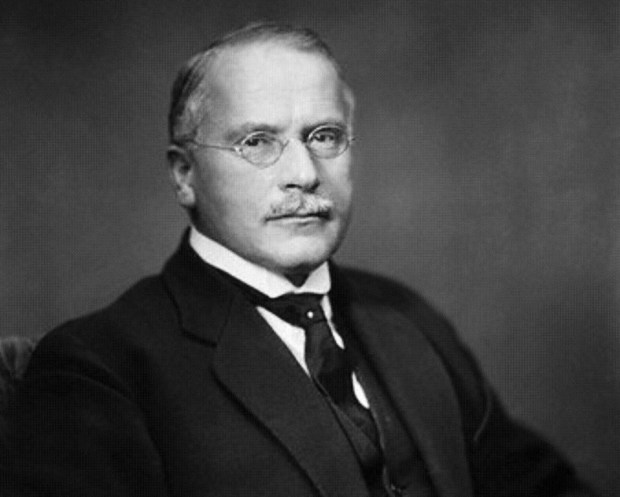
1922 --- Carl Gustav Jung (1875-1961) Swiss psychologist and psychiatrist.  Head and shoulders photo, 1922. --- Image by © Bettmann/CORBIS

1922 — Carl Gustav Jung (1875-1961) Swiss psychologist and psychiatrist. Head and shoulders photo, 1922. — Image by © Bettmann/CORBIS

You can download it!

Alchemy, Magic, Kabbalah (Foundation of the Works of C.G.Jung)

The Foundation of the Works of C.G.Jung is responsible for the preservation and cataloguing of C.G. Jung’s and Emma Jung-Rauschenbach’s literary and artistic legacy. The foundation administers the intellectual property rights to the estate and is thus dedicated to promoting the publication and academic analysis of their works. Another of its tasks in this role is to preserve and to make accessible the private library of C.G. Jung for research purposes, for example by publishing on e-rara.ch valuable rare books on alchemy, magic and Kabbala.

http://www.e-rara.ch/alch/nav/classification/1133851

Daily Chabad

chabad2To a teacher who felt discouraged, because she had not seen the fruits of her labor in many of her students:
Some grow like wheat of the field, bursting from under the ground and ripening in a single season. But their produce must be shelled and ground and refined and kneaded and baked before providing good to the world—and much must be cast aside.

Others grow like the date palm, which may weather seventy years before its first fruit arrives. But it is fruit that is immediately sweet and satisfying for the one that picks it, and every part of the palm and its fruit have value to provide.

Transmutations of Metals, by Steve Kalec (Part 1)

alch1

The symbols encountered with in the philosophic work of the transmutation of metals are very rewarding to the student on the esoteric path of the transformation of the soul and consciousness.

In all such noble endeavors, where one dares to die to the self of yesterday and unfold his consciousness towards the light of the resurrection, leading into a higher order of being, one must always keep in mind that as an entity he is also the microcosm.  If the “Above is as the Below, and the Below is as the Above”, what then, if one as an entity having transformed himself, has he then also transformed the Macrocosm?

Meister Eckhart said that, “the eye with which I see God is the same eye in which God sees me; my eye and God’s eye, that is one eye and one seeing and one recognizing and one loving.”

Rudolph Steiner said that, “everything that man undertakes in order to awaken the eternal within him, he does in order to raise the value of the world’s existence”.

alch3

The truth is that everything participates in a continuum of consciousness all linked as one. No one thing can change its consciousness without effecting and changing the consciousness of all else.

As each man or woman who raises to whatever little degree his or her consciousness, they pull along with themselves the whole. Nothing can change its consciousness without changing the whole, the All.

That is one reason why this work is called the “Great Work”.  As the Sepher Yetzirah says, “lead the Creator back to his Throne”. This is a very profound statement, and it is very Kabalistic.  Perhaps we don’t realize it fully yet, but we are each and every one of us a world. Meditating on this can result in a very fruitful realization. As many persons as there are in the world, that is how many worlds there are?

It is said that, within ourselves we have all that is required to arrive at the inner elixir of life, as the inner Stone.

By the stone here we mean the Philosopher’s stone. Within ourselves, within our bodies and in our blood, are resident all that we need for this precious work. We have the divine essence of spirit and we have the fire
of the soul. The most important secret in the work is to learn to kindle and fan into flames this “hidden fire”, as it is called by the alchemists. It is said that the work is one of a scareTo be continued with Part 2d and vigilant tending to this fire. Johannes Helmond in “Alchemy Unveiled” says that, when he is given his freedom, this fire will do all the work in its nature for us. Until it is awakened, this most adorable fire lies hidden under a hard shell, still weak and unable. How
do we light this fire? By deep Breathing, concentration, visualization, prayer, aspiration, mystical zeal and love for that which is the divine in us. (Meditation and spiritual exercises.)

In the practice of alchemy, the transmutation of the lower energies of the soul and consciousness are allegorized through the symbolisms encountered in the philosophic transmutation of the seven metals of the alchemists. There are seven archetypal metals that we work with as far as the alchemical process is concerned. These seven metals are also the intelligences of the seven planets as a kind of subterranean astronomy.

alch2

Julius Evola says, ” Thus we come to the esoteric doctrine of the seven points through which the higher powers enter into the corporeal context, whereupon they become vital currents and energies specific to man. “Metaphysically the work is powerful and very transforming, as one realizes the awesome archetypal energies that are released psychically that effect both our bodies and our consciousness.

What is very important for one to understand is that the alchemical symbols of the seven archetypal metals are also the same as those of the seven planets or the seven rays of creation. It is equally important to under stand what the symbol for each of these metals truly represents allegorically. One should also keep in mind that just as jewels and precious stones in symbolic traditions signify spiritual truths and inner qualities that need to be mined from the “Mons Philosophorum”, or the mountain of the philosophers, which is the alchemist himself, so too the archetypal energies of the seven traditional metals are within the alchemist in a very metaphysical way.

They do make up our inner energies as different energy levels of the soul. Gems and precious metals hidden in a cave represent intuitive and spiritual knowledge harbored in the unconscious. These are often realized in dreams and visions during meditation. A certain development can be recognized as such visions evolve ultimately leading to the brilliance of the pure light of the Spirit. Anyone interested in the art of transformation and alchemy, should take a closer look at the metaphysical aspects of the seven metals of the alchemists.

To be continued with Part 2

Greek Alchemists at Work: ‘Alchemical Laboratory’ in the Greco-Roman Egypt | Matteo Martelli – Academia.edu

“The paper focuses on the alchemical laboratory of ancient Greco-Egyptian alchemists, by taking into account especially the earliest alchemical texts (both in the Greek and in the Syriac tradition), ascribed to Pseudo-Democritus, Maria the Jewess and Zosimus. The first part analyzes the possible relationships between the workshops of Egyptian craftsmen (first of all, dyers, metals workers and glass workers) and the activity of the alchemists. The second part gives a general overview on the alchemical instruments described in the Corpus alchemicum .”

Academia.edu is a platform for academics to share research papers.

Source: Greek Alchemists at Work: ‘Alchemical Laboratory’ in the Greco-Roman Egypt | Matteo Martelli – Academia.edu