
Be Not That …
If you are kind, learn also to be fierce.
If you are wise, learn also to be simple.
If you are fire, learn also to stay cool.
Whatever you find yourself being, be the opposite as well.
Be Not That …
If you are kind, learn also to be fierce.
If you are wise, learn also to be simple.
If you are fire, learn also to stay cool.
Whatever you find yourself being, be the opposite as well.
The term Ain Sof, Ayn Sof, or Ayn Sof (/eɪn sɒf/, Hebrew: אין סוף) is used to describe the cycle of time that is circular in  motion. It is understood as God prior to his self-manifestation in the production of any spiritual Realm. Ain or атп, signifies a great circle, the vacuum of pure spirit, moved and created AIN SOPH, or Infinity. The meaning of Ain is nothingness, motionlessspace, and abstract space. Ain Sof may be translated as “no end”, “unending”, “there is no end”, or Infinity.
The Zohar explains the term “Ain Sof” as follows: “Before He gave any shape to the world, before He produced any form, He was alone, without form and without resemblance to anything else. Who then can comprehend how He was before the Creation?
Hence it is forbidden to lend Him any form or similitude, or even to call Him by His sacred name, or to indicate Him by a single letter or a single point… But after He created the form of the Heavenly Man, He used him as a chariot wherein to descend, and He wishes to be called after His form, which is the sacred name “YHWH“.
Many P. Hall had said, “THE Qabbalists conceive of the Supreme Deity as an Incomprehensible Principle to be discovered only through the process of eliminating, in order, all its cognizable attributes. That which remains–when every knowable thing has been removed–is AIN SOPH, the eternal state of Being. Although indefinable, the Absolute permeates all space. Abstract to the degree of inconceivability, AIN SOPH is the unconditioned state of all things. Substances, essences, and intelligences are manifested out of the inscrutability of AIN SOPH, but the Absolute itself is without substance, essence, or intelligence.
AIN SOPH may be likened to a great field of rich earth out of which rises a myriad of plants, each different in color, formation, and fragrance, yet each with its roots in the same dark loam–which, however, is unlike any of the forms nurtured by it. The “plants” are universes, gods, and man, all nourished by AIN SOPH and all with their source in one definitionless essence; all with their spirits, souls, and bodies fashioned from this essence, and doomed, like the plant, to return to the black ground–AIN SOPH, the only Immortal–whence they came.
AIN SOPH was referred to by the Qabbalists as The Most Ancient of all the Ancients. It was always considered as sexless. Its symbol was a closed eye. While it may be truly said of AIN SOPH that to define It is to defile It, the Rabbis postulated certain theories regarding the manner in which AIN SOPH projected creations out of Itself, and they also assigned to this Absolute Not-Being certain symbols as being descriptive, in part at least, of Its powers. The nature of AIN SOPH they symbolize by a circle, itself emblematic of eternity. This hypothetical circle encloses a dimensionless area of incomprehensible life, and the circular boundary of this life is abstract and measureless infinity.
According to this concept, God is not only a Center but also Area.

Centralization is the first step towards limitation. Therefore, centers which form in the substances of AIN SOPH are finite because they are predestined to dissolution back into the Cause of themselves, while AIN SOPH Itself is infinite because It is the ultimate condition of all things. The circular shape given to AIN SOPH signifies that space is hypothetically enclosed within a great crystal-like globe, outside of which there is nothing, not even a vacuum. Within this globe–symbolic of AIN SOPH–creation and dissolution take place. Every element and principle that will ever be used in the eternities of Kosmic birth, growth, and decay is within the transparent substances of this intangible sphere. It is the Kosmic Egg which is not broken till the great day “Be With Us,” which is the end of the Cycle of Necessity, when all things return to their ultimate cause.”
HP Blavatsky had written: “Ain Soph is also written En Soph and Ain Supk, no one, not even Rabbis, being sure of their vowels. In the religious metaphysics of the old Hebrew philosophers, the One Principle was an abstraction, like Parabrahmam, though modernKabbalists have succeeded now, by dint of mere sophistry and paradoxes, in making a ” Supreme God” of it and nothing higher. But with the early Chaldean Kabbalists Ain Soph is “without form or being”, having “no likeness with anything else” (Franck, Die Kabbala, p. 126).
That Ain Soph has never been considered as the “Creator” is proved by even such an orthodox Jew as Philo calling the ” Creator ” the Logos, who stands next the ” Limitless One “, and the ” Second God “. “The Second God is its (Ain Soph’s) wisdom “, says Philo (Quaest. et Solut.). Deity is No-thing; it is nameless, and therefore called Ain Soph; the word Ain meaning Nothing. (See Franck’s Kabbala, p. 153 ff.)”
We find the number nine associated with the continued motion of the three words AIN /SOPH/AUR. These three words contain three letters each, making nine letters total producing the Sephiroth.
In ancient Celtic Ireland where they spoke Gaelic or Old Irish, the people had called this the Bel-ain (атп), or Ba’al ain/Béal-ain, ie, the circle of Baal /Belus, or the solar circle or annual course of the Father and Sovereign Lord of the Heavens, Jupiter. The meaning of the name Baal is the same precise meaning in Gaelic as in Phoenician which is now called Hebrew as “the lord of heaven.” Ba’al ain to the modern Kabbalists is called “AIN SOPH” and was referred to as The Most Ancient of all the Ancients. They also symbolize AIN SOPH by a circle.

The Thick Lagoon of Ego
He has an opinion of how each person should be, how each thing should be done. Those who follow his choreography are his friends, those who dare dance their own dance are his enemies; and few, if any, are left without a label.
In truth, he has neither enemies nor friends. He has only himself, for that is all that exists in his world.
“If you don’t want to be so lonely,” we tell him, “make some room for the rest of us.”
 The Book of Thoth
Rameses the Great, Pharaoh of Egypt, had a son called Setna who was learned in all the ancient writings, and a magician of note. While the other princes spent their days in hunting or in leading their father’s armies to guard the distant parts of his empire, Setna was never so happy as when left alone to study.
Not only could he read even the most ancient hieroglyphic writings on the temple walls, but he was a scribe who could write quickly and easily all the many hundreds of signs that go to make up the ancient Egyptian language. Also, he was a magician whom none could surpass: for he had learned his art from the most secret of the ancient writings which even the priests of Amen-Re, of Ptah and Thoth, could not read.
One day, as he pored over the ancient books written on the two sides of long rolls of papyrus, he came upon the story of another Pharaoh’s son several hundred years earlier who had been as great a scribe and as wise a magician as he greater and wiser, indeed, for Nefrekeptah had read the Book of Thoth by which a man might enchant both heaven and earth, and know the language of the birds and beasts.
When Setna read further that the Book of Thoth had been buried with Nefrekeptah in his royal tomb at Memphis, nothing would content him until he had found it and learned all his wisdom.
So he sought out his brother Anherru and said to him, ‘Help me to find the Book of Thoth. For without it life has no longer any meaning for me.’
‘I will go with you and stand by your side through all dangers,’ answered Anherru.
The two brothers set out for Memphis, and it was not hard for them to find the tomb of Nefrekeptah the son of Amen-hotep, the first great Pharaoh of that name, who had reigned three hundred years before their day.
When Setna had made his way into the tomb, to the central chamber where Nefrekeptah was laid to rest, he found the body of the prince lying wrapped in its linen bands, still and awful in death. But beside it on the stone sarcophagus sat two ghostly figures, the Kas, or doubles, of a beautiful young woman and a boy – and between them, on the dead breast of Nefrekeptah lay the Book of Thoth.
Setna bowed reverently to the two Kas, and said, ‘May Osiris have you in his keeping, dead son of a dead Pharaoh, Nefrekeptah the great scribe; and you also, who ever you be, whose Kas sit here beside him. Know that I am Setna, the priest of Ptah, son of Rameses the greatest Pharaoh of all – and I come for the Book of Thoth which was yours in your days on earth. I beg you to let me take it in peace – for if not I have the power to take it by force or magic.’
“I come for the Book of Thoth which was yours in your days on earth. I beg you to let me take it in peace.”
Then said the Ka of the woman, ‘Do not take the Book of Thoth, Setna, son of today’s Pharaoh. It will bring you trouble even as it brought trouble upon Nefrekeptah who lies here, and upon me, Ahura his wife, whose body lies at Koptos on the edge of Eastern Thebes together with that of Merab our son – whose Kas you see before you, dwelling with the husband and father whom we loved so dearly. Listen to my tale, and beware!:
‘Nefrekeptah and I were the children of the Pharaoh Amen-hotep and, according to the custom, we became husband and wife, and this son Merab was born to us. Nefrekeptah cared above all things for the wisdom of the ancients and for the magic that is to be learned from all that is carved on the temple walls, and within the tombs and pyramids of long-dead kings and priests in Saqqara, the city of the dead that is all about us here on the edge of Memphis.
‘One day as he was studying what is carved on the walls in one of the most ancient shrines of the gods, he heard a priest laugh mockingly and say, “All that you read there is but worthless. I could tell you where lies the Book of Thoth, which the god of wisdom wrote with his own hand. When you have read its first page you will be able to enchant the heaven and the earth, the abyss, the mountains and the sea; and you shall know what the birds and the beasts and the reptiles are saying. And when you have read the second page your eyes will behold all the secrets of the gods themselves, and read all that is hidden in the stars.”
‘Then said Nefrekeptah to the priest, “By the life of Pharaoh, tell me what you would have me do for you, and I will do it – if only you will tell me where the Book of Thoth is.”
‘And the priest answered, “If you would learn where it lies, you must first give me a hundred bars of silver for my funeral, and issue orders that when I die my body shall be buried like that of a great king.”
“All around the iron box are twisted snakes and scorpions, and it is guarded by a serpent who cannot be slain.”
‘Nefrekeptah did all that the priest asked; and when he had received the bars of silver, he said, “The Book of Thoth lies beneath the middle of the Nile at Koptos, in an iron box. In the iron box is a box of bronze; in the bronze box is a sycamore box; in the sycamore box is an ivory and ebony box; in the ivory and ebony box is a silver box; in the silver box is a golden box – and in that lies the Book of Thoth. All around the iron box are twisted snakes and scorpions, and it is guarded by a serpent who cannot be slain.”
‘Nefrekeptah was beside himself with joy. He hastened home from the shrine and told me all that he had learned. But I feared lest evil should come of it, and said to him, “Do not go to Koptos to seek this book, for I know that it will bring great sorrow to you and to those you love.”
I tried in vain to hold Nefrekeptah back, but he shook me off and went to Pharaoh, our royal father, and told him what he had learned from the priest.
‘Then said Pharaoh, “What is it that you desire?” And Nefrekeptah answered, “Bid your servants make ready the Royal Boat, for I would sail south to Koptos with Ahura my wife and our son Merab to seek this book without delay.”
‘All was done as he wished, and we sailed up the Nile until we came to Koptos. And there the priests and priestesses of Isis came to welcome us and led us up to the Temple of Isis and Horus. Nefrekeptah made a great sacrifice of an ox, a goose and some wine, and we feasted with the priests and their wives in a fine house looking out upon the river.
‘But on the morning of the fifth day, leaving me and Merab to watch from the window of the house, Nefrekeptah went down to the river and made a great enchantment.
‘First he created a magic cabin that was full of men and tackle. He cast a spell on it, giving life and breath to the men, and he sank the magic cabin into the river. Then he filled the Royal Boat with sand and put out into the middle of the Nile until he came to the place below which the magic cabin lay. And he spoke words of power, and cried, “Workmen, workmen, work for me even where lies the Book of Thoth!” They toiled without ceasing by day and by night, and on the third day they reached the place where the Book lay.
Then Nefrekeptah cast out the sand and they raised the Book on it until it stood upon a shoal above the level of the river.
‘And behold all about the iron box, below it and above it, snakes and scorpions twined. And the serpent that could not die was twined about the box itself. Nefrekeptah cried to the snakes and scorpions a loud and terrible cry – and at his words of magic they became still, nor could one of them move.
‘Then Nefrekeptah walked unharmed among the snakes and scorpions until he came to where the serpent that could not die lay curled around the box of iron. The serpent reared itself up for battle, since no charm could work on it, and Nefrekeptah drew his sword and rushing upon it, smote off its head at a single blow. But at once the head and the body sprang together, and the serpent that could not die was whole again and ready for the fray. Once more Nefrekeptah smote off its head, and this time he cast it far away into the river. But at once the head returned to the body, and was joined to the neck, and the serpent that could not die was ready for its next battle.
‘Nefrekeptah saw that the serpent could not be slain, but must be overcome by cunning. So once more he struck off its head. But before head and body could come together he put sand on each part so that when they tried to join they could not do so as there was sand between them – and the serpent that could not die lay helpless in two pieces.
‘Then Nefrekeptah went to where the iron box lay on the shoal in the river; and the snakes and scorpions watched him; and the head of the serpent that could not die watched him also: but none of them could harm him.
‘He opened the iron box and found in it a bronze box; he opened the bronze box and found in it a box of sycamore wood; he opened that and found a box of ivory and ebony, and in that a box of silver, and at the last a box of gold. And when he had opened the golden box he found in it the Book of Thoth. He opened the Book and read the first page – and at once he had power over the heavens and the earth, the abyss, the mountains and the sea; he knew what the birds and the beasts and the fishes were saying. He read the next page of spells, and saw the sun shining in the sky, the moon and the stars, and knew their secrets – and he saw also the gods themselves who are hidden from mortal sight.
‘Then, rejoicing that the priest’s words had proved true, and the Book of Thoth was his, he cast a spell upon the magic men, saying, “Workmen, workmen, work for me and take me back to the place from which I came!” They brought him back to Koptos where I sat waiting for him, taking neither food nor drink in my anxiety, but sitting stark and still like one who is gone to the grave.
‘When Nefrekeptah came to me, he held out the Book of Thoth and I took it in my hands. And when I read the first page I also had power over the heavens and the earth, the abyss, the mountains and the sea; and I also knew what the birds, the beasts and the fishes were saying. And when I read the second page I saw the sun, the moon and the stars with all the gods, and knew their secrets even as he did.
‘Then Nefrekeptah took a clean piece of papyrus and wrote on it all the spells from the Book of Thoth. He took a cup of beer and washed off the words into it and drank it so that the knowledge of the spells entered into his being. But I, who cannot write, do not remember all that is written in the Book of Thoth – for the spells which I had read in it were many and hard.
“…a sudden power seemed to seize our little boy Merab so that he was drawn into the river & sank out of sight.”
‘After this we entered the Royal Boat and set sail for Memphis. But scarcely had we begun to move, when a sudden power seemed to seize our little boy Merab so that he was drawn into the river and sank out of sight. Seizing the Book of Thoth, Nefrekeptah read from it the necessary spell, and at once the body of Merab rose to the surface of the river and we lifted it on board. But not all the magic in the Book, not that of any magician in Egypt, could bring Merab back to life. Nonetheless Nefrekeptah was able to make his Ka speak to us and tell us what had caused his death. And the Ka of Merab said, “Thoth the great god found that his Book had been taken, and he hastened before Amen-Re, saying, ‘Nefrekeptah, son of Pharaoh Amen-hotep, has found my magic box and slain its guards and taken my Book with all the magic that is in it.’ And Re replied to him, ‘Deal with Nefrekeptah and all that is his as it seems good to you: I send out my power to work sorrow and bring a punishment upon him and upon his wife and child.’ And that power from Re, passing through the will of Thoth, drew me into the river and drowned me.”
‘Then we made great lamentation, for our hearts were well nigh broken at the death of Merab. We put back to shore at Koptos, and there his body was embalmed and laid in a tomb as befitted him.
‘When the rites of burial and the lamentations for the dead were ended, Nefrekeptah said to me, “Let us now sail with all haste down to Memphis to tell our father the Pharaoh what has chanced. For his heart will be heavy at the death of Merab. Yet he will rejoice that I have the Book of Thoth.”
‘So we set sail once more in the Royal Boat. But when it came to the place where Merab had fallen into the water, the power of Re came upon me also and I walked out of the cabin and fell into the river and was drowned. And when Nefrekeptah by his magic arts had raised my body out of the river, and my Ka had told him all, he turned back to Koptos and had my body embalmed and laid in the tomb beside Merab.
‘Then he set out once more in bitter sorrow for Memphis. But when it reached that city, and Pharaoh came aboard the Royal Boat, it was to find Nefrekeptah lying dead in the cabin with the Book of Thoth bound upon his breast. So there was mourning throughout all the land of Egypt, and Nefrekeptah was buried with all the rites and honors due to the son of Pharaoh in this tomb where he now lies, and where my Ka and the Ka of Merab come to watch over him.
‘And now I have told you all the woe that has befallen us because we took and read the Book of Thoth – the book which you ask us to give up. It is not yours, you have no claim to it, indeed for the sake of it we gave up our lives on earth.’
When Setna had listened to all the tale told by the Ka of Ahura, he was filled with awe. But nevertheless the desire to have the Book of Thoth was so strong upon him that he said, ‘Give me that which lies upon the dead breast of Nefrekeptah, or I will take it by force.’
Then the Kas of Ahura and Merab drew away as if in fear of Setna the great magician. But the Ka of Nefrekeptah arose from out of his body and stepped towards him, saying, ‘Setna, if after hearing all the tale which Ahura my wife has told you, yet you will take no warning, then the Book of Thoth must be yours. But first you must win it from me, if your skill is great enough, by playing a game of draughts with me – a game of fifty-two points. Dare you do this?’
And Setna answered, ‘I am ready to play.’
So the board was set between them, and the game began. And Nefrekeptah won the first game from Setna, and put his spell upon him so that he sank into the ground to above the ankles. And when he won the second game, Setna sank to his waist in the ground. Once more they played and when Nefrekeptah won Setna sank in the ground until only his head was visible. But he cried out to his brother who stood outside the tomb: ‘Anherru! Make haste! Run to Pharaoh and beg of him the great Amulet of Ptah, for by it only can I be saved, if you set it upon my head before the last game is played and lost.’
So Anherru sped down the steep road from Saqqara to where Pharaoh sat in his palace at Memphis. And when he heard all, he fastened into the Temple of Ptah, took the great Amulet from its place in the sanctuary, and gave it to Anherru, saying: ‘Go with all speed, my son, and rescue your brother Setna from this evil contest with the dead.’
Back to the tomb sped Anherru, and down through the passages to the tomb-chamber where the Ka of Nefrekeptah still played at draughts with Setna. And as he entered, Setna made his last move, and Nefrekeptah reached out his hand with a cry of triumph to make the final move that should win the game and sink Setna out of sight beneath the ground for ever.
But before Nefrekeptah could move the piece, Anherru leapt forward and placed the Amulet of Ptah on Setna’s head. And at its touch Setna sprang out of the ground, snatched the Book of Thoth from Nefrekeptah’s body and fled with Anherru from the tomb.
As they went they heard the Ka of Ahura cry, ‘Alas, all power is gone from him who lies in this tomb.’
But the Ka of Nefrekeptah answered, ‘Be not sad: I will make Setna bring back the Book of Thoth, and come as a suppliant to my tomb with a forked stick in his hand and a fire-pan on his head.’
Then Setna and Anherru were outside, and at once the tomb closed behind them and seemed as if it had never been opened.
When Setna stood before his father the great Pharaoh and told him all that had happened, and gave him the Amulet of Ptah, Rameses said, ‘My son, I counsel you to take back the Book of Thoth to the tomb of Nefrekeptah like a wise and prudent man. For otherwise be sure that he will bring sorrow and evil upon you, and at the last you will be forced to carry it back as “a suppliant with a forked stick in your hand and a fire-pan on your head.”
But Setna would not listen to such advice. Instead, he returned to his own dwelling and spent all his time reading the Book of Thoth and studying all the spells contained in it. And often he would carry it into the Temple of Ptah and read from it to those who sought his wisdom.
“One day as he sat the temple he saw a maiden, more beautiful than any he had ever seen with 52 girls in attendance.”
One day as he sat in a shady colonnade of the temple he saw a maiden, more beautiful than any he had ever seen, entering the temple with fifty-two girls in attendance on her. Setna gazed fascinated at this lovely creature with her golden girdle and head-dress of gold and colored jewels, who knelt to make her offerings before the statue of Ptah. Soon he learned that she was called Tabubua, and was the daughter of the high priest of the cat goddess Bastet from the city of Bubastis to the north of Memphis – Bastet who was the bride of the god Ptah of Memphis.
As soon as Setna beheld Tabubua it seemed as if Hathor the goddess of love had cast a spell over him. He forgot all else, even the Book of Thoth, and desired only to win her. And it did not seem as if his suit would be in vain, for when he sent a message to her, she replied that if he wished to seek her he was free to do so – provided he came secretly to her palace in the desert outside Bubastis.
Setna made his way thither in haste, and found a pylon tower in a great garden with a high wall round about it. There Tabubua welcomed him with sweet words and looks, led him to her chamber in the pylon and served him with wine in a golden cup.
When he spoke to her of his love, she answered, ‘Be joyful, my sweet lord, for I am destined to be your bride. But remember that I am no common woman but the child of Bastet the Beautiful – and I cannot endure a rival. So before we are wed write me a scroll of divorcement against your present wife; and write also that you give your children to me to be slain and thrown down to the cats of Bastet – for I cannot endure that they shall live and perhaps plot evil against our children.’
‘Be it as you wish!’ cried Setna. And straightway he took his brush and wrote that Tabubua might cast his wife out to starve and slay his children to feed the sacred cats of Bastet. And when he had done this, she handed him the cup once more and stood before him in all her loveliness, singing a bridal hymn. Presently terrible cries came floating up to the high window of the pylon – the dying cries of his children, for he recognized each voice as it called to him in agony and then was still.
But Setna drained the golden cup and turned to Tabubua, saying, ‘My wife is a beggar and my children lie dead at the pylon foot, I have nothing left in the world but you – and I would give all again for you. Come to me, my love!’
Then Tabubua came towards him with outstretched arms, more lovely and desirable than Hathor herself. With a cry of ecstasy Setna caught her to him – and as he did so, on a sudden she changed and faded until his arms held a hideous, withered corpse. Setna cried aloud in terror, and as he did so the darkness swirled around him, the pylon seemed to crumble away, and when he regained his senses he found himself lying naked in the desert beside the road that led from Bubastis to Memphis.
The passersby on the road mocked at Setna. But one kinder than the rest threw him an old cloak, and with this about him he came back to Memphis like a beggar.
When he reached his own dwelling place and found his wife and children there alive and well, he had but one thought and that was to return the Book of Thoth to Nefrekeptah.
‘If Tabubua and all her sorceries were but a dream,’ he exclaimed, ‘they show me in what terrible danger I stand. For if such another spell is cast upon me, next time it will prove to be no dream.’
So, with the Book of Thoth in his hands, he went before Pharaoh his father and told him what had happened. And Rameses the Great said to him, ‘Setna, what I warned you of has come to pass. You would have done better to obey my wishes sooner. Nefrekeptah will certainly kill you if you do not take back the Book of Thoth to where you found it. Therefore go to the tomb as a suppliant, carrying a forked stick in your hand and a fire-pan on your head.’
Setna did as Pharaoh advised. When he came to the tomb and spoke the spell, it opened to him as before, and he went down to the tomb-chamber and found Nefrekeptah lying in his sarcophagus with the Kas of Ahura and Merab sitting on either side. And the Ka of Ahura said, ‘Truly it is Ptah, the great god, who has saved you and made it possible for you to return here as a suppliant.’
Then the Ka of Nefrekeptah rose from the body and laughed, saying, ‘I told you that you would return as a suppliant, bringing the Book of Thoth. Place it now upon my body where it lay these many years. But do not think that you are yet free of my vengeance. Unless you perform that which I bid you, the dream of Tabubua will be turned into reality.’
Then said Setna, bowing low, ‘Nefrekeptah, master of magic, tell me what I may do to turn away your just vengeance. If it be such as a man may perform, I will do it for you.’
‘I ask only a little thing,’ answered the Ka of Nefrekeptah. ‘You know that while my body lies here for you to see, the bodies of Ahura and Merab rest in their tomb at Koptos.
Bring their bodies here to rest with mine until the Day of Awakening when Osiris returns to earth – for we love one another and would not be parted.’
Then Setna went in haste to Pharaoh and begged for the use of the Royal Boat. And Pharaoh was pleased to give command that it should sail with Setna where he would. So Setna voyaged up the Nile to Koptos. And there he made a great sacrifice to Isis and Horus, and begged the priests of the temple to tell him where Ahura and Merab lay buried. But, though they searched the ancient writings in the temple, they could find no record.
Setna was in despair. But he offered a great reward to any who could help him, and presently a very old man came tottering up to the temple and said, ‘If you are Setna the great scribe, come with me. For when I was a little child my grandfather’s father who was as old as I am now told me that when he was even as I was then his grandfather’s father had shown him where Ahura and Merab lay buried – for as a young man in the days of Pharaoh Amen-hotep the First he had helped to lay them in the tomb.’
Setna followed eagerly where the old man led him, and came to a house on the edge of Koptos.
‘You must pull down this house and dig beneath it,’ said the old man. And when Setna had bought the house for a great sum from the scribe who lived in it, he bade the soldiers whom Pharaoh had sent with him level the house with the ground and dig beneath where it had stood.
They did as he bade them, and presently came to a tomb buried beneath the sand and cut from the rock. And in it lay the bodies of Ahura and Merab. When he saw them, the old man raised his arms and cried aloud; and as he cried he faded from sight and Setna knew that it was the Ka of Nefrekeptah which had taken on that shape to lead him to the tomb.
So he took up the mummies of Ahura and Merab and conveyed them with all honor, as if they had been the bodies of a queen and prince of Egypt, down the Nile in the Royal Boat to Memphis.
And there Pharaoh himself led the funeral procession to Saqqara, and Setna placed the bodies of Ahura and Merab beside that of Nefrekeptah in the secret tomb where lay the Book of Thoth.
When the funeral procession had left the tomb, Setna spoke a charm and the wall closed behind him leaving no trace of a door. Then at Pharaoh’s command they heaped sand over the low stone shrine where the entrance to the tomb was hidden; and before long a sandstorm turned it into a great mound, and then leveled it out so that never again could anyone find a trace of the tomb where Nefrekeptah lay with Ahura and Merab and the Book of Thoth, waiting for the Day of Awakening when Osiris shall return to rule over the earth.
Be Something
The point is not to be a nothing.
The Creator created you to be a something.
But not a something because you are something.
A something because your purpose is everything.
Appakā te manussesu, ye janā pāragāmino.
Athāyaṃ itarā pajā, tīramevānudhāvati.
Ye ca kho sammadakkhāte dhamme dhammānuvattino
te janā pāramessanti, maccudheyyaṃ suduttaraṃ.
Few among people are those who cross to the farther shore.
The rest, the bulk of people, only run up and down the hither bank.
But those who act according to the perfectly taught Dhamma
will cross the realm of Death, so difficult to cross.
Dhammapada 6.85, 6.86
The Dhammapada: The Buddha’s Path of Wisdom, translated from the Pali by Acharya Buddharakkhita
 gambhīra — deep, profound, unfathomable, well founded, hard to perceive
 It’s not about you …
If you want to change anything in this world, you need to know it’s all in your hands.
If the change you want to make is going to be real, you need to know it’s not about you.
It’s about what has to be done.
Since ancient times, the number seven (7) has always held a special significance in our universe, the creation of human kind, 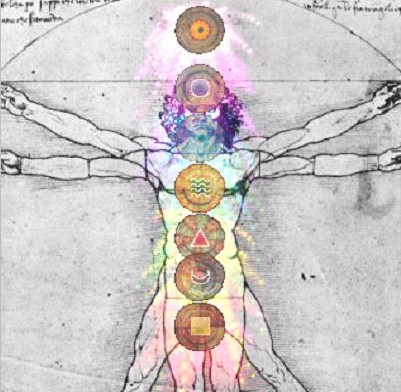 and in religion. The number 7 is often called the holy number, lucky number, the prophetic number, or the mystical number. In Eastern Philosophy there are the seven heavens of the Mohammedans and Hindoos, with the seven hells. The Christians in the West have the seven virtues and seven deadly sins, or what those in the New Age movement might call our seven light bodies, the seven chakras, or the seven states of being.
Plato had written in Timseus, that from the number seven was generated the soul of the World, Anima Mundana (Adam Kadmon). To the Greek Mathematician Pythagoras and the Pythagoreans, the number seven is “the essence or first principle of things,” which they applied to the secrets of the universe and creation. They had called the number seven in Greek ‘heptad, ‘ and thought of it as a religious and perfect number. The Heptad was said to be from the Greek verb “sebo,” to venerate (and from the Hebrew Shbo, seven, or satisfied, abundance), being Septos ” Holy,” “divine,” and “motherless,” and “a Virgin.” Hipporcrates said the number seven, a sepentary number had occult virtues, which ‘lends to the accomplishment of all things, and is the dispenser of life and foundation of all its changes.’
The significance of the number seven in math is explained eloquently In The Works of Philo Judaeus: The Contemporary of Josephus, by Philo of Alexandria;
But seven alone, as I said before, neither produces nor is produced, on which account other philosophers liken this number to Victory, who had no mother, and to the virgin goddess, whom the fable asserts to have sprung from the head of Jupiter: and the Pythagoreans compare it to the Ruler of all things. For that which neither produces, nor is produced, remains immovable. For generation consists in motion, since that which is generated, cannot be so without motion, both to cause production, and to be produced. And the only thing which neither moves nor is moved, is the Elder, Ruler, and Lord of the universe, of whom the number seven may reasonably be called a likeness. And Philolaus gives his testimony to this doctrine of mine in the following words:—”For God,” says he “is the ruler and Lord of all things, being one, eternal, lasting, immovable, himself like to himself, and different from all other beings.
Shakespeare has written on life and the number seven: “And one man in his time plays many parts, His acts being seven ages. Closely allied, of course, is the ‘seven years’ apprenticeship,’ and that dreaded ‘seven years’ penal servitude’—made so conspicuous in the case of Adolf Beck—which, when the sin merits such severity, becomes twice and three times seven.”
The first reference we have to creation and the number seven comes down to us from Babylonia, discovered in the Sumerian creation myth and flood myth that was found on a tablet excavated in Nippur. These tablets are dated to approximately 1600 B.C. After the Sumerians, the tradition of the number 7 was carried on by Assyrians with evidence of this found on their Tablets such as 7 gods of sky; 7 gods of earth; 7 gods of fiery spheres. 7 gods maleficent; seven phantoms; spirits of seven heavens, spirits of seven earths. There were the seven attendants to Osiris, whose body was divided into seven and twice seven parts; to Apollo (the Sun), between his seven planets.
The Israelites regarded the number 7 as sacred. Their Levitical purifications lasted seven days, the three great feasts lasted seven days, and between the first and second of these feasts were seven weeks. When someone dies, they perform a ceremony where they walk seven times round the body of the dead repeating prayers, in the belief that this will drive away evil spirits. They also believed, that to cure the body of a sick man, they had to be anointed seven times with purifying oil. All their oaths were witnessed by seven people. In the bible, the number seven is encoded all through the Old and New Testaments, such as the seven days of creation, the seven vices and seven virtues, and Noah who had seven days’ warning from God to build the Ark before the great Flood; all the way to the seven seals of the Revelation of St John.
Seven is also a sacred number in Masonic symbolism. It is said that in the last century, it took seven members to make a lodge perfect, although today 5 may hold one. The seventeeth degree, called the apocalyptic degree of the “Knight of the East and West,” there in the symbology is the Tracing Board with a man clothed in a white robe and surrounded by seven stars, that is direct reference to Revelation i. 16; “and he had in his right hand seven stars.” .
Let us explore the mythical and mysterious number seven below, with examples of how the number 7 has been used in various ways throughout his-story. I’m sure you will also come up with more 7’s to add to this list.
THE NUMBER SEVEN AND OUR BODY
* Our body has seven parts, the head, chest, abdomen, two legs and two arms
* Our 7th body part that rules all else, is the head with the mind that has seven parts for external use, two eyes, two ears, two nostrils and a mouth.
* We have seven internal organs, stomach, liver, heart, lungs, spleen and two kidneys.
* An adult is made up of around 7,000,000,000,000,000,000,000,000,000 (7 octillion) atoms.
* The Seven DNA Polymerase Families that can be further subdivided into seven different families: A, B, C, D, X, Y, and RT.
* Seven endocrines glands in the human body
* Seven Senses or Chakras
* The Seven bodies of the Human microcosm.
* Our voice is made in seven tones
* The Alchemists of the middle ages counted the following seven bodies: Sun- Gold, Moon- Silver, Mars- Iron, Mercury- Quicksilver, Saturn- Lead, Jupiter- Tin, Venus- Copper.
IN THE HEAVENS
* 7 classical planets
* The Moon passes through stages of 7 days in increase, full, decrease, and renewal.
* 7 colors on the rainbow
* 7 days on a week
* 7 sisters on the pleiades
 IN THE BIBLE
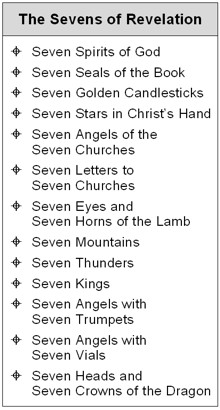
* The Seven Seals
* The Seven Churches
* Seven years for Repentance;
* Seven churches of Asia (or Assiah)
* Seven Angels with Trumpets
* Seven candlesticks of the Holy Places
* Seven Spirits stand before the Throne of God: Michael, Gabriel, Lamael, Raphael, Zachariel, Anael, and Oriphel. (Gustavini.)
* Seven trumpets
* Seven lampstands
* Seven stars
* Seven kings
* Seven thousands slain,
* Seven vials of wrath to be poured out, pace the Apocalypse
* Seven vices
* Seven dips in Jordan, to cleanse himself from Leprosy
* The seven spirits of God: 1. The Spirit of Wisdom. 2. The Spirit of Understanding. 3. The Spirit of Counsel. 4. The Spirit of Power. 5. The Spirit of Knowledge. 6. The Spirit of Righteousness. 7. The Spirit of Divine Awfulness.
* The seven deadly sins are: Pride, Wrath, Envy, Lust, Gluttony, Avarice and Sloth.
* The seven virtues are: Faith, Hope, Charity, Prudence, Justice, Fortitude and Temperance. The first three are called “the holy virtues.” (See Seven Deadly Sins.)
* The seven joys of the Virgin Mary are: The Annunciation, Visitation, Nativity, Adoration of the Magi, Presentation in the Temple, Finding Christ amongst the Doctors, and the Assumption.
* The seven sorrows of the Virgin Mary are: Simeon’s Prophecy, the Flight into Egypt, Christ Missed, the Betrayal, the Crucifixion, the Taking Down from the Cross, and the Ascension, when she was left alone.
* Whoever touches a human corpse will be unclean for seven days. – Numbers 19:11
* Jericho were encompassed seven days, by seven priests, bearing seven rams’ horns
* Solomon was seven years building the Temple, which was dedicated in the seventh month
IN CLASSIC MYTHOLOGY
Seven against Thebes
Seven Kings of Rome
Seven Emperors (and period; Rome, history)
Julius Caesar, Augustus, Galba, Hadrian, Nerva, Sallust, Vespasian
Seven hills of Rome
Seven Liberal Arts
Seven Sages of the Bamboo Grove in China
Seven Wise Masters, a cycle of medieval stories
Seven Wonders of the ancient world
The seven wise men of Greece were:
Bias who said, ” Most men are bad,” B.C. 550.
Chilo „ “Consider the end,” B.C. 590.
Cleobulos,, “Avoid extremes,” B.C. 580. .
* Periander „ “Nothing is impossible to perseverance,” B.C.
600.
* Pitticus „ “Know thy opportunity,” B.C. 569.
* Solon „ “Know thyself,” B.C. 600.
* Thales „ “Suretyship is ruin,” B.C. 550
NUMBER SEVEN IN LITERATURE
In Irish mythology, the epic hero Cúchulainn is associated with the number 7. He has 7 fingers on each hand, 7 toes on each foot, and 7 pupils in each eye.
ROMULUS IS 1ST OF 7 KINGS OF ROME
Rome was founded 21 April 753 BC from settlements around a fjord on the River Tiber by Romulus and Remus, sons of the Trojan prince Aenas. Romulus killed Remus and became the first of the seven kings of Rome.
BENEDICT RULED THE MONESTARY FOR 7 YEARS
Accordingly, St. Ceolfrid, appointed by St. Benet Biscop, “completed and ruled the monastery of St. Paul’s seven years, and afterwards ably governed…….the single monastery of St. Peter and Paul in its two separate localities.”
BEDE IS 7 AT SAME TIME AND CAME TO THE MONESTARY
About the same time as the dedication of St. Paul’s, there came to the monastery; Bede, then a child of seven. He was born, as he himself tells us “in the territory of that same monastery” and was sent there to be educated by Abbott Ceolfrid.
“The Principles of Truth are Seven; he who knows these, understandingly, possesses the Magic Key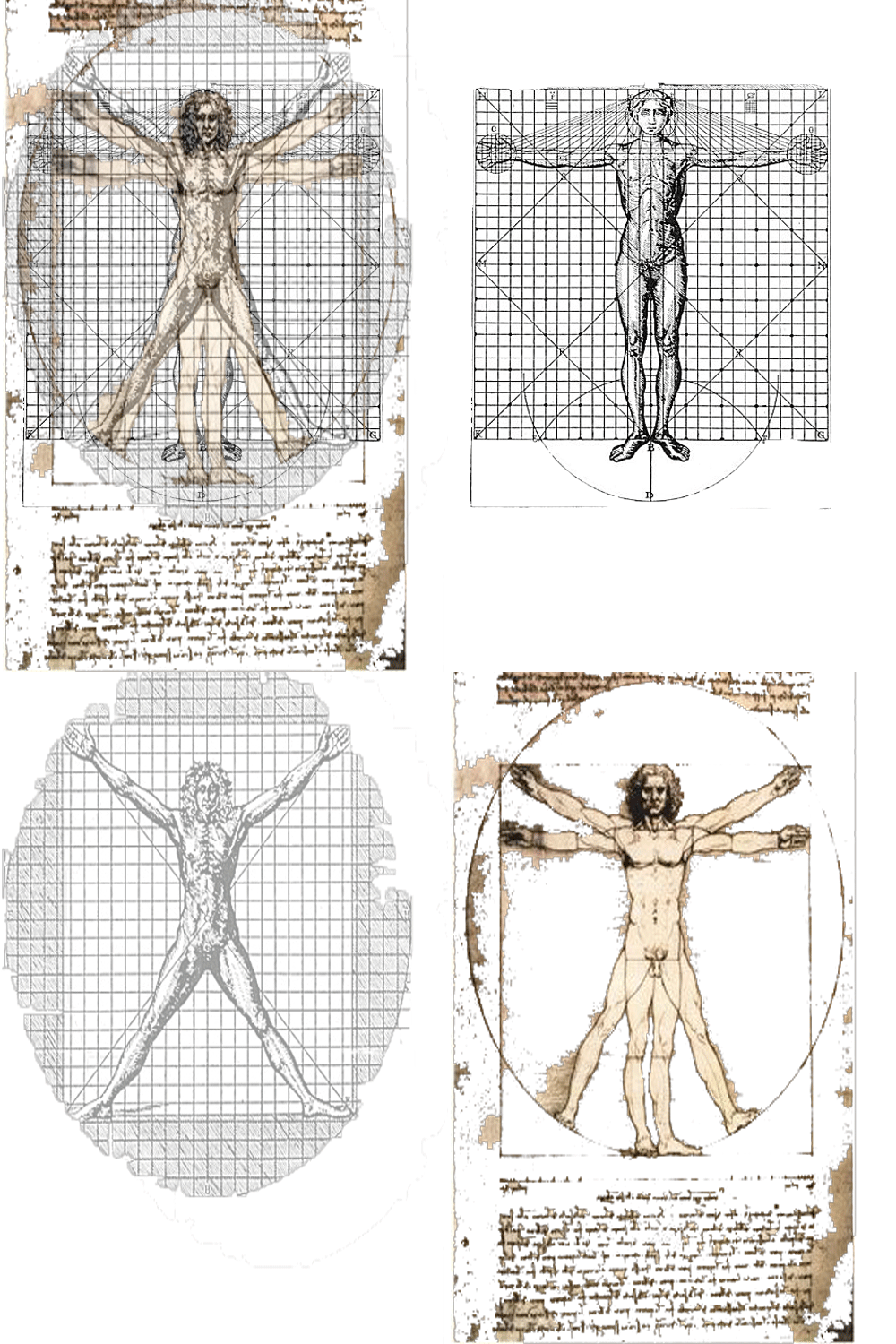
before whose touch all the Doors of the Temple fly open.”–The Kybalion.
The number 7 is often called the holy number, lucky number, the prophetic number, or the mystical number. Plato had written in Timseus, that from the number seven was generated the soul of the World, Anima Mundana (Adam Kadmon). To the Greek Mathematician Pythagoras and the Pythagoreans, the number seven is “the essence or first principle of things,” which they applied to the secrets of the universe and creation. They had called the number seven in Greek ‘heptad, ‘ and thought of it as a religious and perfect number.
In Eastern Philosophy there are the seven heavens of the Mohammedans and Hindoos, with the seven hells. The Christians have the seven virtues and seven deadly sins, or what those in the New Age movement might call our seven light bodies, the seven chakras, or the seven states of being.
The Seven Hermetic Principles, upon which the entire Hermetic Philosophy is based, are as follows:
1. The Principle of Mentalism.
2. The Principle of Correspondence.
3. The Principle of Vibration.
4. The Principle of Polarity.
5. The Principle of Rhythm.
6. The Principle of Cause and Effect.
7. The Principle of Gender.
1. The Principle of Mentalism – “THE ALL IS MIND; The Universe is Mental.”–The Kybalion.
2. The Principle of Correspondence – “As above, so below; as below, so above.”–The Kybalion.
3. The Principle of Vibration – “Nothing rests; everything moves;
everything vibrates.”–The Kybalion.
4. The Principle of Polarity – “Everything is Dual; everything has poles; everything has its pair of opposites; like and unlike are the same; opposites are identical in nature, but different in degree; extremes meet; all truths are but half-truths; all paradoxes may be reconciled.”–The Kybalion.
5. The Principle of Rhythm – “Everything flows, out and in; everything has its tides; all things rise and fall; the pendulum swing manifests in everything; the measure of the swing to the right is the
measure of the swing to the left; rhythm compensates.”–The Kybalion.
6. The Principle of Cause and Effect – “Every Cause has its Effect; every Effect has its Cause;
everything happens according to Law; Chance is but a name for Law not recognized; there are many planes of causation, but nothing escapes the Law.”–The Kybalion.
7. The Principle of Gender – “Gender is in everything; everything has its Masculine and Feminine Principles; Gender manifests on all planes.”–The Kybalion.“
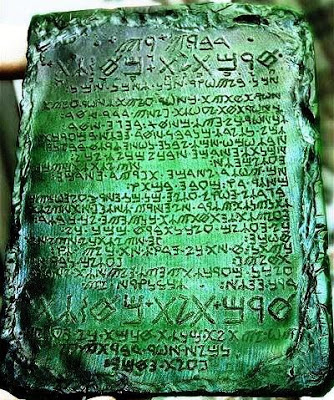
2) that which is below is like that which is on high, and that which is on high is like that
which is below; by these things are made the miracles of one thing.
3) And as all things are, and come from One, by the mediation of One, So all things are born
from this unique thing by adaption.
4) The Sun is the father and the Moon the mother.
5) The wind carries it in its stomach. The earth is its nourisher and its receptacle.
6 The Father of all the Theleme of the universal world is here. Its force, or power, remains entire,
7) You separate the earth from the fire, the subtle from the gross, gently with great industry.
8) It climbs from the earth and descends from the sky, and receives the force of things
superior and things inferior.
9) You will have by this way, the glory of the world and all obscurity will flee from you.
10) It is the power strong with all power, for it will defeat every subtle thing and penetrate
every solid thing
11) In this way the world was created.
12) From it are born wonderful adaptations, of which the way here is given.
13) That is why I have been called Hermes Tristmegistus, having the three parts of the
universal philosophy.
14) This, that I have called the solar Work, is complete.
 All of us come with a built-in spiritual fitness trainer.
The trainer’s job is to gauge our spiritual capacity at every step and adjust our program accordingly. Just when things start getting too easy, our trainer will turn up the friction on the standing bicycle or add more weights to the pulley-lift.
This innate personal trainer has many titles. It’s crucial to know at least some of those titles. If you don’t know the identity of this trainer, you might get the idea that you are failing when really you’re making great progress.
Most popular title: “the beast within.”

A mentor, our sages tell us, must be like an angel. That’s a problem.
Having never seen an angel, you will always be in doubt: Perhaps the mentor you have chosen is not like an angel. How can you ever rely on your mentor while so unsure of his or her qualifications?
So we will clarify: The mentor must be a human angel.
An angel, because just as an angel has no body, no hatred, no jealousy and is not in competition with you, so the mentor must remain objective and uninfluenced by any personal benefit from the advice.
And yet a human being: With compassion, with a conscience, and with a passion for kind deeds.
 pārimaṃ tīraṃ — the further shore, nibbāna
 Sex is the fountain of all life. However, let me warn you that this magnificent fountain is not something we humans should profane with our animal needs or wants, by treating the most beautiful act of sex similar to that of a dirty dog. But in our current world, many men and women seem to be doing just that by making this most beautiful fountain a possible poisoned Karmic well of death for the unsuspecting souls who treat this divine act like that of an animal.
The facts are that most people are completely ignorant to this “force” when it comes to the spiritual realm, their astral souls, and their animal bodies in the material world. The reason being is that most humans are not educated on these facts as they live their lives based on mostly pure materialism as they operate primarily from the seat of their animal selves, rather than from their divine selves which would be their souls.
These same people think of sex as purely a pleasure act where they feel good temporarily or reach a form of ecstasy, but they do not think beyond the joy we feel and or orgasm that it brings. This is a serious mistake that I have made myself more than once, and have lived through the resulting very bad Karma from these ill fated, and ignorantly chosen sexual unions.
When you have sex, you need to realize that the other persons soul becomes one with yours, and that some serious soul work may need to take place to release their astral connection to your astral self.
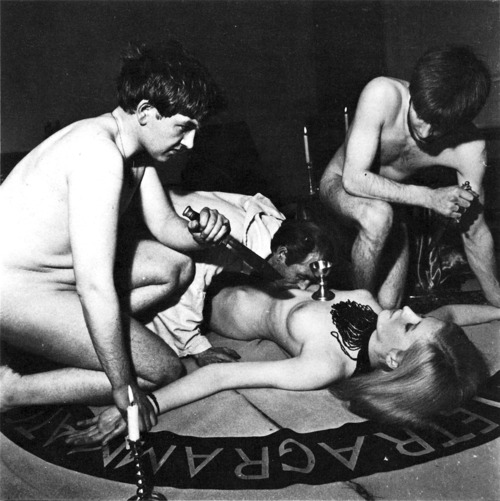 Think of these unseen forces that are like vampires that instead of feeding on your blood, feed on your energy which is your “life force.” It is almost akin to an exorcism that takes place when you are free from the other’s Astral influence. Some people can do this in days, weeks or months with the proper work, and some people who don’t understand this will take a year or more to get over one relationship. If you have multiple sexual relationships then you are creating multiple unions that will end up creating multiple vampires confusing you and making you a bit mad in the head. Hence, think about porn stars, prostitutes and strippers who always seem to have serious mental issues that never leave them and often plague them till death. Most of these people are going crazy not from the porn or the act of sex, but the many sexual unions with dark souls that never leave them. The same can be said about the girl or guy who sleeps with everyone in your school or town. They are always a bit weird and most of them end up dying or going absolutely crazy later in life.
This is really why many people take break ups with their partners or marriages so bad.

Here is an excerpt from the Occult Science in Medicine to help put this in perspective for you:
Popular medicine deals only with external effects and physical causes, occult science goes deeper, seeking for fundamental causes and final effects, which are of far greater importance than the passing manifestations taking place in the physical form. Thus, for instance, a promiscuous sexual intercourse not only causes venereal diseases; but as during that act a commingling of the inner natures takes place to a certain extent, a man cohabiting with a depraved woman takes on some of her characteristics and joins to a certain extent her future Karma and destiny to his own. The basis of the existence of human beings is what, for want of a better expression, has been called the Will (Spirit or Life), and as one body may colour or poison another, likewise a colouring, and perhaps poisoning, takes place by a blending of spirit during sexual intercourse; this “spiritual substance” being the essence of each human being.
“If a woman leaves her husband, she is then not free from him, nor he from her; for a marital union having once been established, remains a union for all eternity.” (” De Homunculis.”) (1)
The important thing to understand when it comes to yourself is that your body is comprised of two entities. One would be that of your material or animal body, and the other would be your astral soul which is your divine self. When you are born, these two separate entities go out into the physical world and are always somewhat at war with one another, with each trying to control your thoughts or actions in order to gain the upper hand in your daily affairs.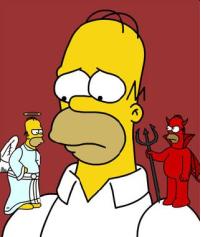
Think of it like you have an angel on one shoulder and a little devil on the other. The devil would be your animal self that encourages you to have as much sex as you please with whomever you please, and the angel would be your good side that hopes to find a soul mate to marry and start a family with whom you can make love with because you care deeply for this person.
Here is a quotation from H. P. Blavatsky to help explain this a bit further:
“The ‘harvest of life’ consists of the finest spiritual thoughts, of the memory of the noblest and most unselfish deeds of the personality, and the constant presence during its bliss after death of all those it loved with divine spiritual devotion. Remember the teaching: The human soul, lower Manas, is the only and direct mediator between the personality and the divine Ego. That which goes to make up on this earth the personality, miscalled individuality by the majority, is the sum of all its mental, physical, and spiritual characteristics, which, being impressed on the human soul, produces the man. Now, of all these characteristics, it is the purified thoughts alone which can be impressed on the higher immortal Ego. This is done by the human soul merging again, in its essence, into its parent source, commingling with its divine Ego during life, and reuniting itself entirely with it after the death of the physical man.”
Philo said that “God separated Adam into his two sexual component parts, one male, the other female—Eve—taken from his side. The longing for reunion which love inspired in the divided halves of the originally dual being, is the source of the sexual pleasure, which is the beginning of all transgressions.”
 This is where many of our problems had started; when our astral souls had left the heavenly spirit world to inhabit the animal, plant and mineral world that we now know as the planet earth. This is where our species of animal, man kind or Homo erectus has been perpetually lost, as many of us are trying to find their way home or search for our soul mates. Our soul mates are our other astral halves thus resulting in a perfect union of souls. We are all Adam’s or Eve’s looking for our other halves, so we can then truly be scientifically soul complete, but the wrong choice of a mate may just end up in a destructive union that causes negative consequences and or an outcome for both parties involved. I am sure you may have had this experience yourself or have seen this first hand in your lifetime.
The male element represents the energy, action, warmth, and productive principle in nature. The female represents, the maternal which is passive and procreative, the union of the two is the subjective man’s universal soul. The whole reason we humans have sex is for this union and not purely for the pleasure of the act, but for the reproduction of “souls”which just so happens to use our animal bodies, which I sometimes refer to as space suits, for this propagation process. To put it simply, we humans are used by astral soul entities who wish to propagate our physical bodies to further their Karmic development.
Here is an excerpt from Harry Houdini in his book , The Esoteric that will help those of you out there understand the difference between the soul and animal body;
“The human body is subject to a double law of nature, male and female, and when the student will throw aside this outer material body, as his hypothesis,and learns to comprehend the difference between the objective and subjective man; the animal and the soul body, the outer and the inner being: to polarize either with the astral-magno or astral-force, he can have the might power of nature, and become the grandest of magicians. But the student must not rest here but press on. The student of soul-light finds the union of sex in its dual being is the universal form of God ; unselfish love the “universal force, and wisdom the guiding hand; marriage of the soul with spirit the universal result.
 The bottom line is that, regardless if you are heterosexual or homosexual, the Occult Forces of Sex And The Sexual Union of Souls is not something that should be taken lightly or that which you should carelessly toy with. You need to understand that you have now entered into “soul union” with this other person’s soul because when we mate with another human, we are also mating with their soul.
If you care and love them from your heart,this is where you will find the divine spark that culminates from this union as you unite as one with them, and the magic can be very powerful. The reason is because this union of souls holds a special energy in a regenerating, as well as a generating force. The former, producing this union of souls which is astral and also physical, because in the material world we can all see, touch and feel the experience. The consequences of this act could turn out very bad if you simply cannot control these energies or Karma that may be a result of what you think is just “casual sex.”
All throughout the course of recorded human and religious history, you’ll find various images a very famous people and god’s 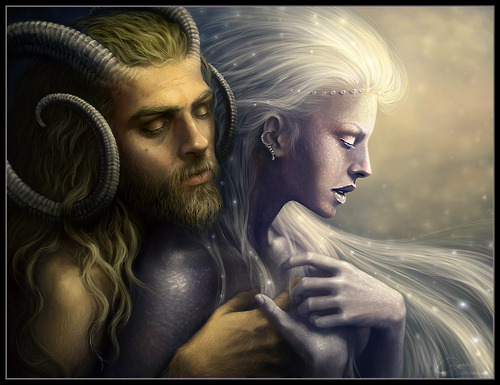 wearing horns. Often the horns are depicted as coming out of each sides of their skulls. If you look back during the Old Testament days prior to the coming of Jesus, you will find many ancient Hittite, Egyptian, Greek, Roman and Celtic gods, various military leaders and even Kings who can be found on statues, coins and on various tribal seals with two horns coming out of the sides of their heads.
Many modern Christians and other people influenced by Christian literature would most likely associate these horned deities with the devil and any people who wear horns would without a doubt be considered evil. But in ancient times, this was simply not the case.
The horns were the main symbol of the world wide Gnostic religion in which many of these Gods and people were its representatives. They were the intermediaries between God and or the spirit world and man.
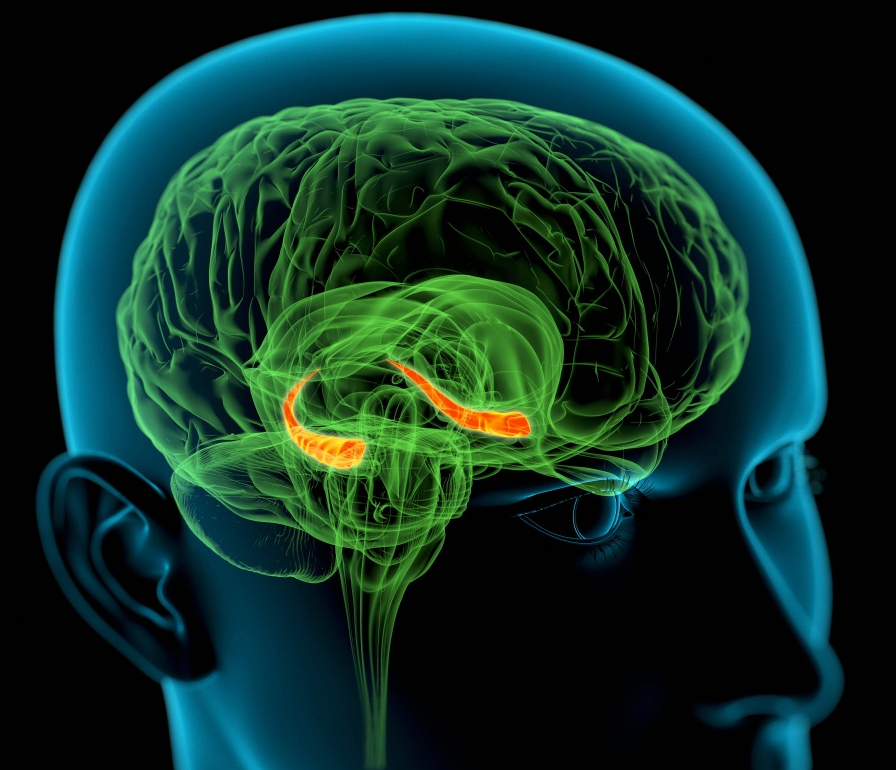
As I’ve written many times in the past, these horns were never meant to be an evil symbol, but were assigned to various Gnostic luminaries as a symbol for their Gnosis. As Plato had once said, “all learning is remembering,” and the horns are actually representative of a Gnostic science that deals with the human body and brain being that of the hippocampus is also called the Amon’s horn. A section of the brain that is used for storing and retrieving all of our memories. I have written many article on this subject that you can check out such as Ammon’s Horn, Amon – King of Gods and Lord of Thrones and The Third Eye to name a few.
Examples of old God’s who would represent this ancient Gnostic religion would be the great Greek Pan.

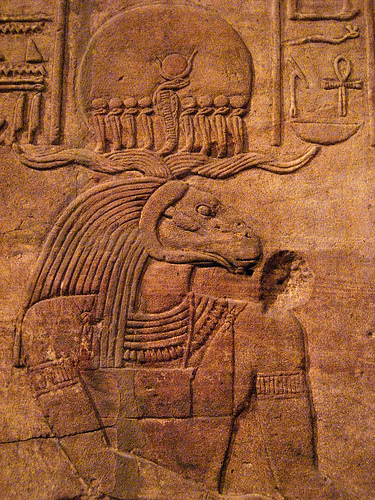
In ancient Egypt, you can find horned gods like Amon Ra
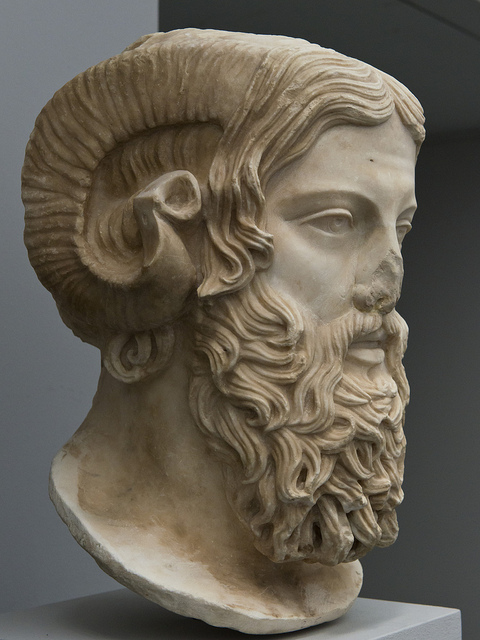
And Jupiter Amon.
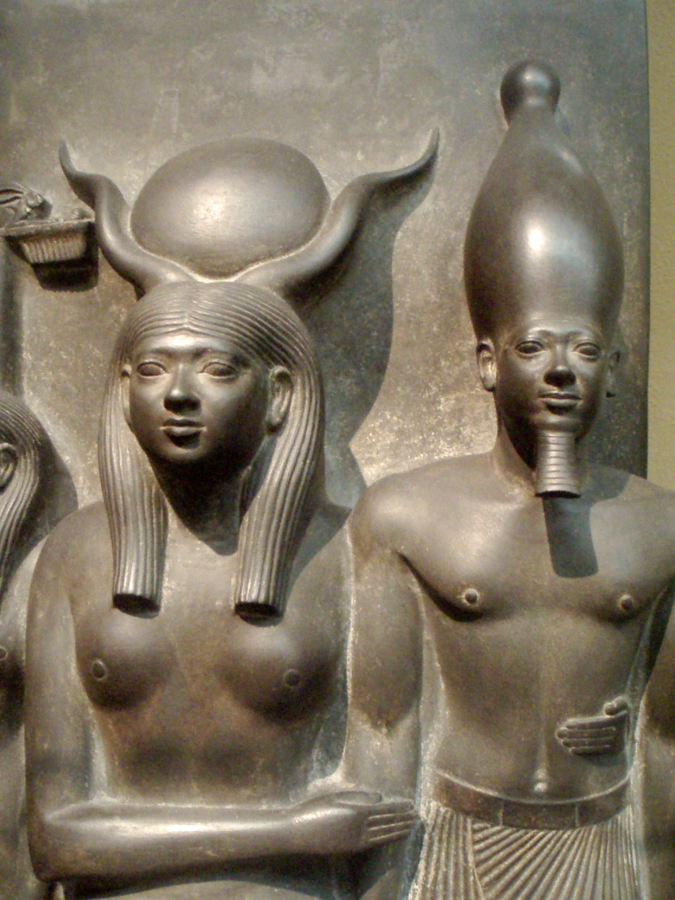
There were also horned women Gods who controlled the Gnosis of the state under a veil such as Hathor
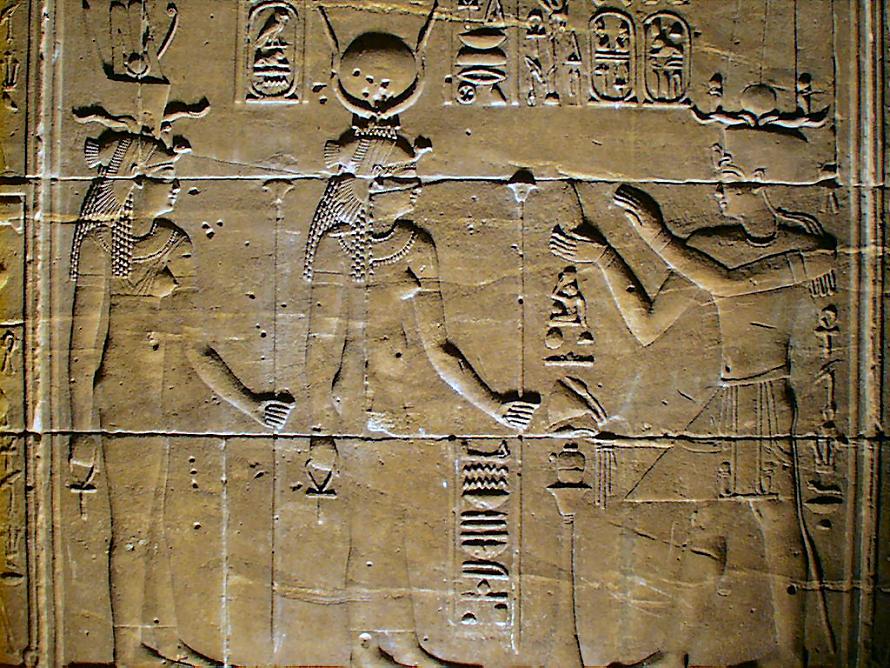
And the Goddess of Magic and War, Isis wore the horns.
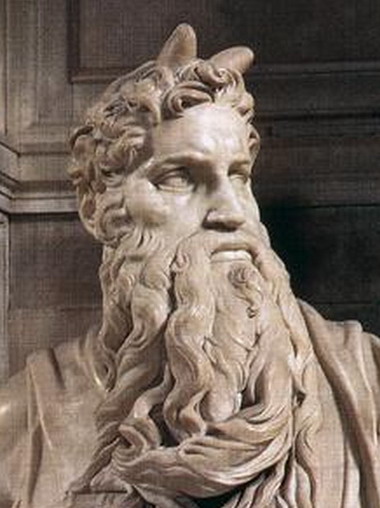
Even one the most famous Hebrew law givers that the world has ever known and we know as Moses is often depicted wearing horns on statues and in images such as just a few of the ones below that can be found all over the world.
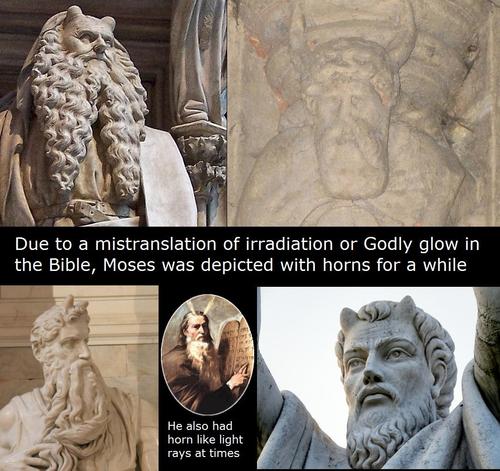
You’ll also find powerful military leaders, emperor’s and Kings who were often characterized as wearing horns such as Alexander the Great
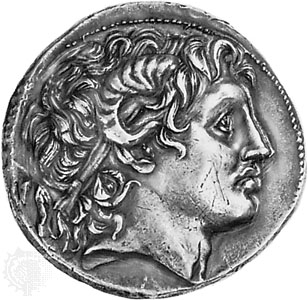
It is curious to also note that one of the most famous horned fallen god’s is known as Satan or the devil in the New Testament.
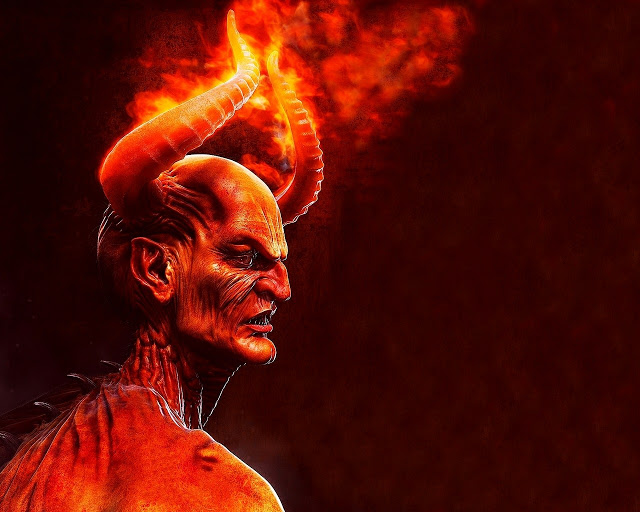
My question to you is that why is one of the most evil characters in the Christian new testament bible that we know the devil always wearing horns and carrying a pitchfork, but in ancient times horned wearing gods and men and pitchforks in the form of a trident were not only cool, it was the norm?
That question we will explore together in more detail in a future article. For now, I would like to share with you some of my research that I’ve collected over the years showing various gods and godmen who can be found wearing these horns that I speak of. I will try to place them in order from the most ancient to even modern times with U.S. President Barack Obama sporting the Gnostic horns.

Here are some of the oldest horned Gods and deities that have been found all around the world.
This is a horned God known to be associated with a people called the Elamites. It is a bronze statue of man with horns and upturned shoes just like the Hittites had worn and who also have horned Gods. It was is dated to around 3000 BC. The copper and bronze age of Crete extended to Mohenjo-daro has been assigned to 3000-2800 bc. The Elamites are said to have discovered the use of the wheel, both for vehicular and pottery purposes, earlier than the Babylonians.
From the Art Institute of Chicago – Cast in solid copper and executed with a remarkable degree of sophistication, this statuette is thought to represent a supernatural being that served as an intermediary between the physical world and the spiritual realm. It depicts a muscular, bearded male wearing a headdress of goat horns and ears, a raptor skin over his shoulders, a cylindrical belt around his trim waist, and ankle boots with long, curved toes.
His eyes are inlaid with bits of shell or stone; the now-missing pupils were probably made from a contrasting material. It is one of a pair of virtually identical figures (the other is in the collection of the Metropolitan Museum of Art, New York) that are unlike anything else that is known today. —Gallery label

Here is an incredibly crude image of the Hebrew God Yahweh. Do you notice the serpents or worms and how they are spotted in this old image? These are clues on how the supernatural world operates.
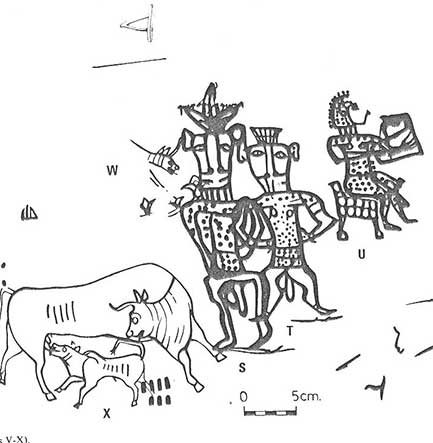
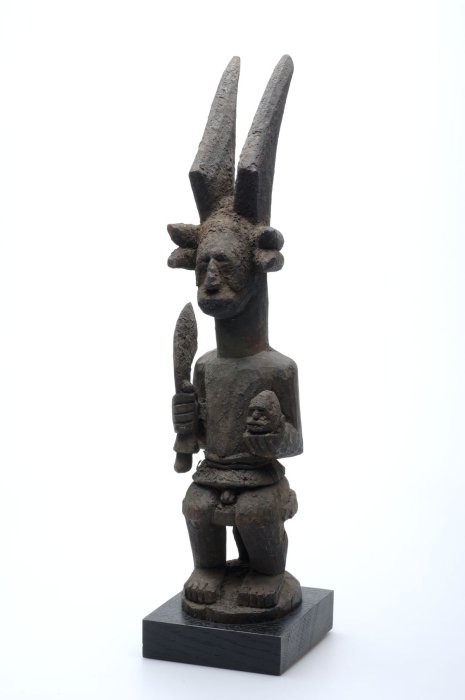
Ikenga (Igbo literal meaning “place of strength”) is a horned Alusi (deity) found among the Igbo people in southeastern Nigeria. It is one of the most popular symbols of the Igbo people, and the most common cultural artifact. The Gnostic Ikenga is a source of encoded knowledge unraveled through psychological principles.
Adherents of Odinani (the traditional folk religion of the Igbo people of south-eastern Nigeria) worship the Ikenga, a horned god of honest achievement, whose two horns symbolise self-will. Small wooden statues of him are made and praised as personal altars. Ikenga is mostly maintained, kept or owned by men and occasionally by women of high reputation and integrity in the society. It comprises someone’s Chi (personal god), his Ndichie (ancestors), aka Ikenga (right hand), ike (power) as well as spiritual activation through prayer and sacrifice.(Wikipedia)
Just as some people refuse to see their faults, so there are those who insist on digging too deep, persecuting themselves over every fault and making unreasonable demands upon their lives. Eventually they collapse from exhaustion, or worse, kick back with resentment.
This is why no person should go it alone. Everyone needs a mentor, someone who can look objectively and say, “This is where you are right now. This is what you can expect from yourself right now.”

As a person behaves here below, so he is treated above.
Perhaps someone once tried to tell you about the ugly deeds of another. Perhaps you responded, “I’m not interested.” And you didn’t listen.
Then there will be a time when a heavenly being will wish to report on your doings here on earth. If you have had the guts to respond this way, the Creator will also say, “I’m not interested. I don’t want to even listen.”

Thoth Hermes Trismegistus is portrayed by the Egyptians as the moon god with the body of a man, head of an ibis, and a crescent moon over his head. His symbol was the winged serpent staff. He was the god of wisdom, letters, and time. But he was not only known to the Egyptians. To the Sumerians he was Ningizzida; he may have been Enoch to the Jews, Odin to the Scandinavians, Wotan to the Teutons, and some even suggest Buddha.
Thoth Hermes Trismegistus is portrayed by the Egyptians as the moon god with the body of a man, head of an ibis, and a crescent moon over his head. His symbol was the winged serpent staff. He was the god of wisdom, letters, and time. But he was not only known to the Egyptians. To the Sumerians he was Ningizzida; he may have been Enoch to the Jews, Odin to the Scandinavians, Wotan to the Teutons, and some even suggest Buddha.
Before he was revered as a god, he was the first great Egyptian philosopher and founder of the Ancient Mystery Schools, receiving his wisdom while in meditative trances, writing over 40 books including (allegedly) the Emerald Tablet, The Book of Thoth and The Divine Pymander, with the Book of Thoth only being given to his enlightened initiates of the Mysteries.

A reconstruction of what the Emerald Tablet is believed to have looked like by the International Alchemy Guild. (Image source).
The topics he covered ranged from medicine, chemistry, law, art, music, rhetoric, magic, philosophy, geography, mathematics, anatomy, and oratory. To the Egyptians, his knowledge was so vast and all-encompassing that they first began to credit him as the communicator with the gods, eventually inducting him into the Egyptian pantheon.
Whether or not one agrees his is the hand that penned the books attributed to him, a quick perusal or in-depth study resounds in most readers, due to the similarity with Buddhism and Christianity. Perhaps the clearest examples are his teachings on reincarnation and the creation of the world.

Thoth, the ancient Egyptian god of wisdom, depicted with the body of a man, head of an ibis, and a crescent moon over his head. (Vladimiraz / Dreamstime.com)
Nothing is for certain about the Book of Thoth other than the fact that it was written in Egyptian Hieroglyphics. It was kept in a golden box in the inner sanctuary of the temple and only the highest initiate of the Hermetic Arcanum Mystery School had the key to it. It is said the book described the Key to Immortality, the process achieved through awakening certain areas of the brain, similar to the Buddhist monks’ practices. Gardner and other authors claimed the awakening of the brain was achieved through meditation, the use of a white powder, and the priestesses’ sacred essence.
The most powerful of the Mystery Schools was known as the Royal School of the Master Craftsmen at Karnak, founded by Pharaoh Thuthmosis III, though as with all the Mystery Schools, it is commonly believed that the true founders resided in Sumeria, emigrating to Egypt, which ties in to Sitchin’s claims that Enki and his sons (including Ningizzida) had Magan (Egypt) as their domain.
This school was also known as the Great White Brotherhood due to the members choice of raiment (white robes) and their dedication to producing the white powder known to the Mesopotamians as Shem-an-na, the High-Ward Fire Stone, or ‘white bread’ to the Egyptians. Pictures of it show it being offered to the Pharaohs, in the shape of a cone.

Man holding the Shem-an-na, white powder (subtleenergies.com)
Petrie discovered on the top of Mount Sinai, an Egyptian Temple which contained a bewildering discovery: laying some inches deep beneath heavy flagstones in a storeroom was a considerable supply of the finest pure white, unadulterated powder. Copper smelting and animal sacrifice were quickly ruled out.
Some of the mysterious powder was taken back to Britain for analysis and examination, but no results were ever published. The rest was left open to the elements after 3000 years to become a victim of the desert winds. What has become apparent, however, is that this powder was seemingly identical to the ancient Mesopotamian fire-stone or shem-an-na – the substance that was made into bread-cakes and used to feed the Babylonian kings and the pharaohs of Egypt. This, of course, explains the temple inscriptions denoting the importance of bread and light, while the white powder (the shem-an-na) has been identified with the sacred manna that Aaron placed in the Ark of the Covenant.

Petrie discovered a large quantity of pure white powder in a temple on top of Mount Sinai. ‘Ascent of the lower ranges of Mount Sinai’. Coloured lithograph by Louis Haghe after David Roberts, 1849. (Wikimedia Commons)
Eventually the Mystery Schools went into decline as new Dynasties emerged. The initiates left Egypt and brought the Book of Thoth to another land. Where it is now, no one knows, though supposedly the chain of succession of Grand Master since Thoth, has remained unbroken. The Rosicrucians are said to be descended from his school while the Freemasons are descended from the school founded by Solomon.
As for Thoth? He has remained revered by philosophers, occultists, alchemists and healers through the ages, though many of the texts accredited to him were lost in the Great Fire of the Library of Alexandria. Who know how different history might have been had the knowledge contained in that library not been lost?

Hermes Trismegistus (Thoth). Floor inlay in the Cathedral of Siena Russian, 1480s (Wikimedia Commons)
Featured image: A figure of Thoth carved on the back of the throne of the seated statue of Rameses II. (Wikimedia Commons)
References:
Ancient Mystic Order of Noble Knowledge – AncientMonks.com. Available from: http://www.ancientmonks.com/
Genesis of The Grail Kings – Laurence Gardner. Available from: http://www.graal.co.uk/genesis_lecture_full_5.php
The Great White Brotherhood – Wes Penre. Available from: http://www.illuminati-news.com/great-white-brotherhood.htm
By Katrina Sisowath, Author of the Dragon Court series.
Read more: http://www.ancient-origins.net/history-famous-people/thoth-hermes-trismegistus-and-his-ancient-school-mysteries-002676#ixzz3e5EkMudx
Follow us: @ancientorigins on Twitter | ancientoriginsweb on Facebook

Even the wrong road eventually takes you closer to the truth.
Even closer.
The ancient Egyptians were master alchemists, scientists and gnostics. Their whole religion was 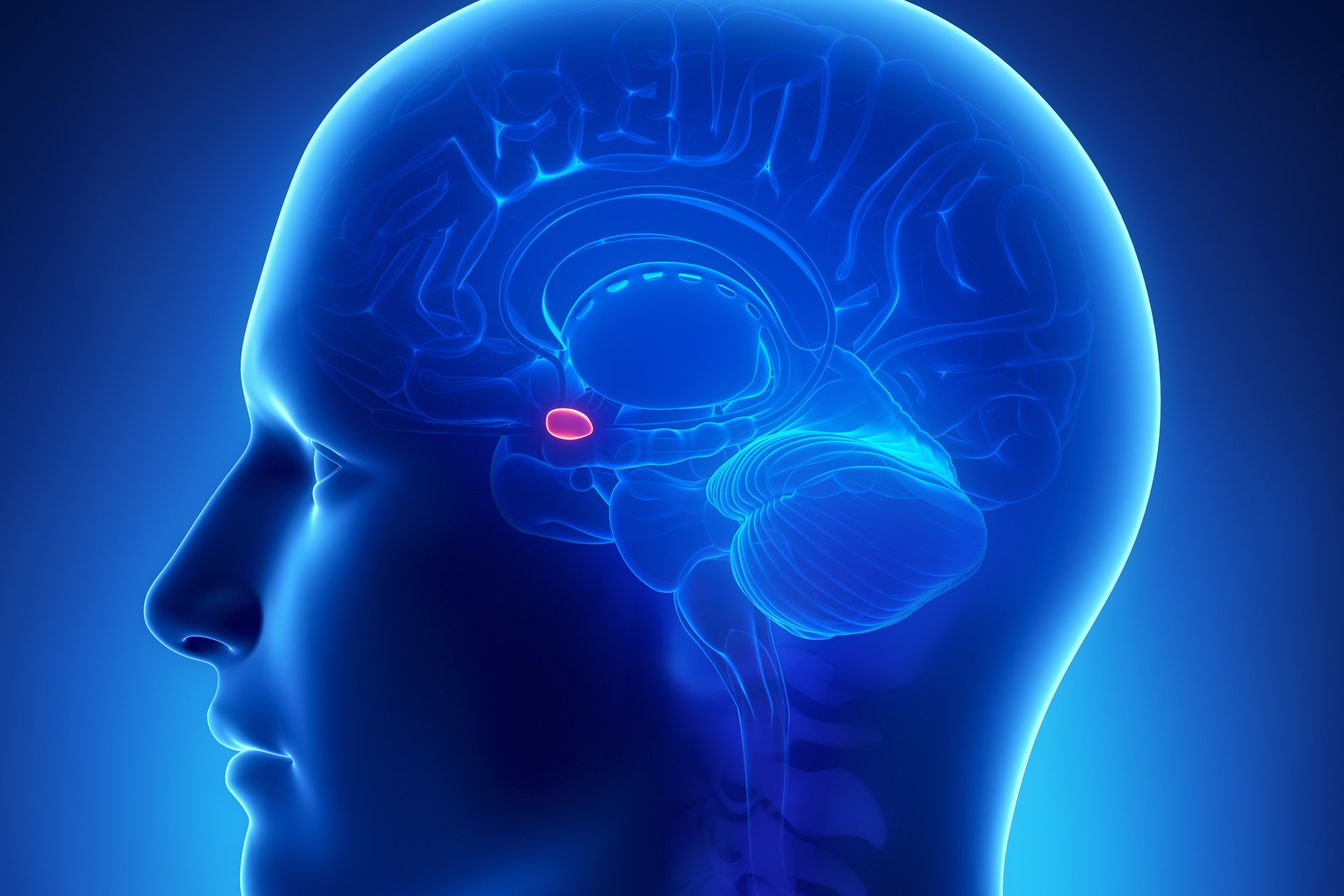 based on these three heavenly human practices that they used to not only stay healthy and live as long as possible, but also to obtain true gnosis so that they could evolve their souls.
This my brothers and sisters is the basis of human evolution.
They knew the secret hidden powers of the body, blood and brain. This was the seat of their power that they used to grow such a vast empire in which they ruled for thousands of years.
The rule of the first true ancient gnostic Egyptians.
You can find evidence of their scientific beliefs and secrets encoded into their hymns and hieroglyphs. What I would like to do with this article is just create a simple visual of this ancient science compared with modern science in order to help activate your own third eye memory code, so that you too can discover your own gnostic past.
Activation sequence engaged to the third eye memories of the past. Let’s walk like an Egyptian!
Here is the symbol of the Eye of Ra. It was known to symbolize the life-giving powers, and its dangerous aspect was invoked in the protection of the pharaoh, of sacred places, and of ordinary people and their homes.

Now compare the Eye of Ra with a recent image of our brain’s hippocampus. The similarities are not a coincidence, but scientific evidence that this was the basis of their alchemical gnostic religion.
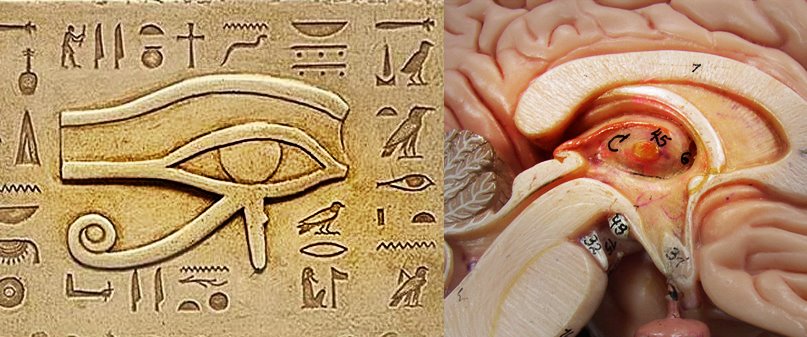
One of the Gods they had created to secretly encode this science into their religion, was the God known as Ammon or Ammon Ra(Amun, Amen, Jupiter Ammon etc.). The symbology of this God was specifically meant to place on his horns which is to symbolize what we call today the ammon’s horn and hippocampus.
Here are a couple of images of the Egyptian God Amon where you can see these facts for yourself.
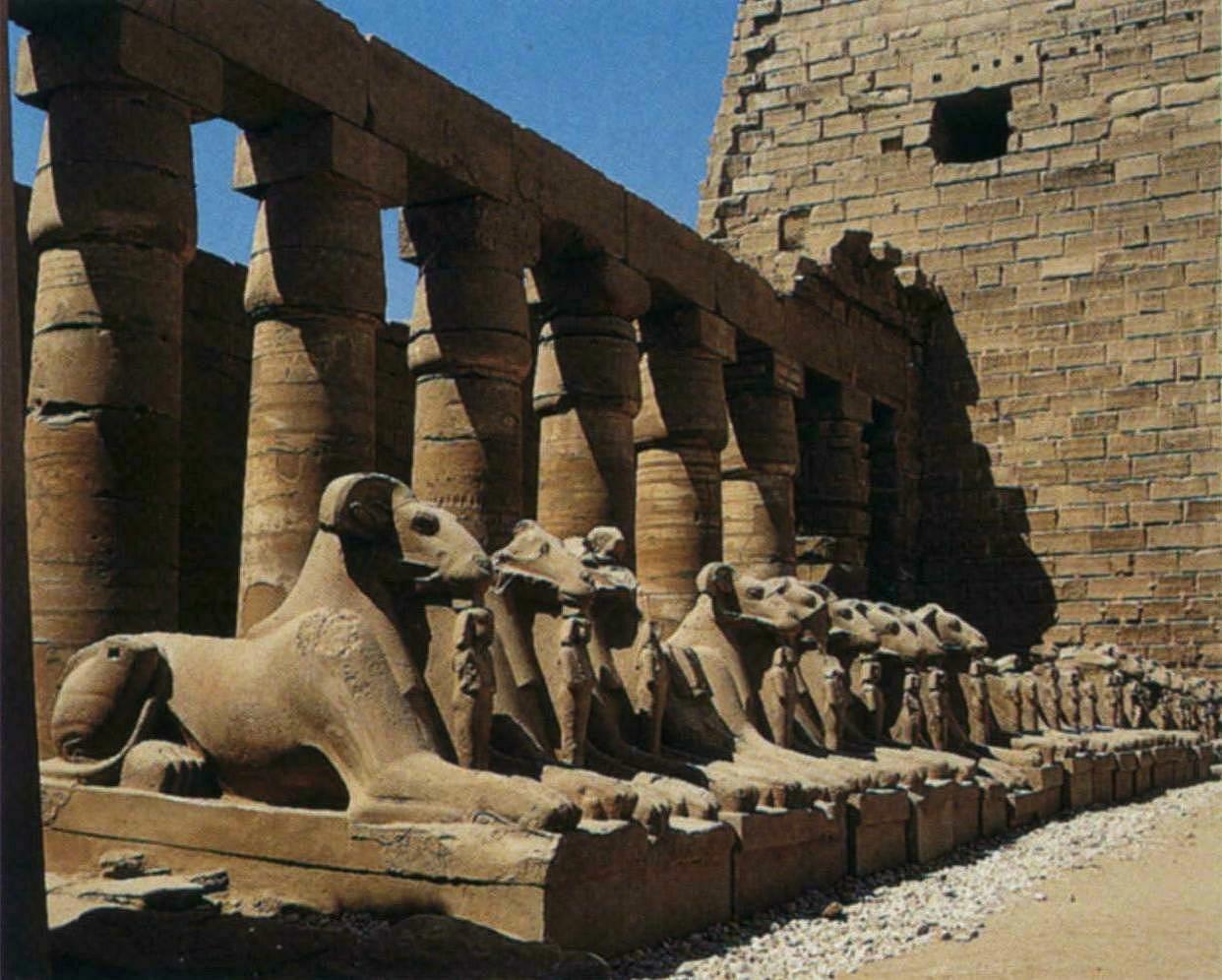

Later Ammon became Jupiter-Amon of the Greco Egyptians. This I believe was because they had proclaimed Jupiter the as above life and light giver to the so below with the Ammon’s Horn playing a crucial role in our ability to become Gods ourselves like the God Jupiter. Co-Creators who use our Jupiter born phosphorus light abilities to connect to our third eye so that we obtain gnosis, enlightenment and become immortal stars whose lights shine over the world.
These images are of ancient statues of Jupiter Ammon, with the horns we call today the third eye.
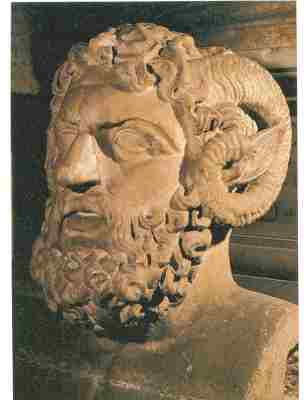
You will even find the Phoenician Hebrew King and lawgiver, Moses was often depicted with these horns of Jupiter Ammon to signify his gnostic lineage.
The Eye of Ra is a source of heat and light, and it is associated with fire and flames. This is why many ancient statues and hieroglyphs often depicted a type of planetary disk that people often mistake for the sun on the God’s head. It is not the sun, but the planet Jupiterwho they knew as the king, creator and life-giver to all life on earth. As I mentioned above, this is why in later kingdoms, Ammon becomes Jupiter-Ammon.
This fire and flames spoken about by the Egyptians can be seen in this modern image of the hippocampus showing the firing action within our brains that is caused by the alchemical element known as phosphorus, and in Latin as Lucifer. You can clearly see that a majority of this firing action takes place in the hippocampus or the ammon’s horn.

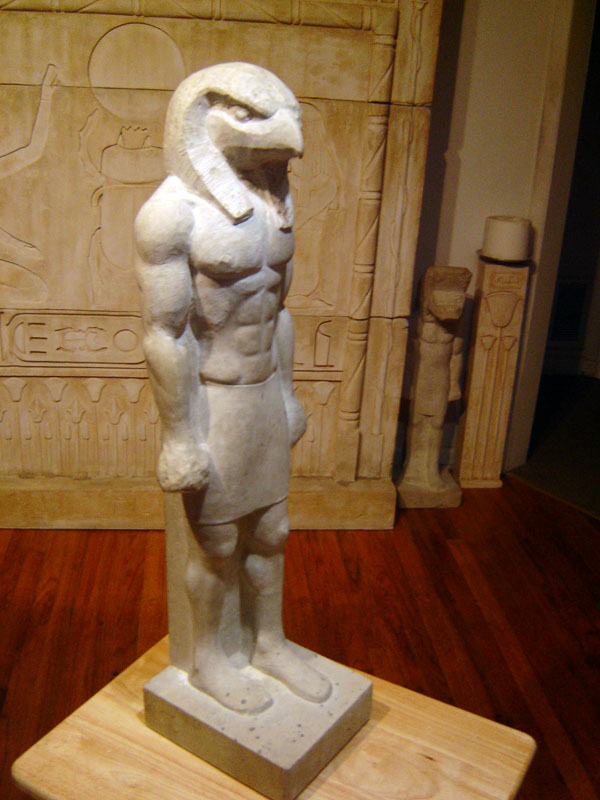
The son of God, Horus was also often symbolized in statues and hieroglyphs with his third eye prominently displayed on the sides of his head along with the disk of Jupiter on his head. Also please notice the serpent which is really a worm.
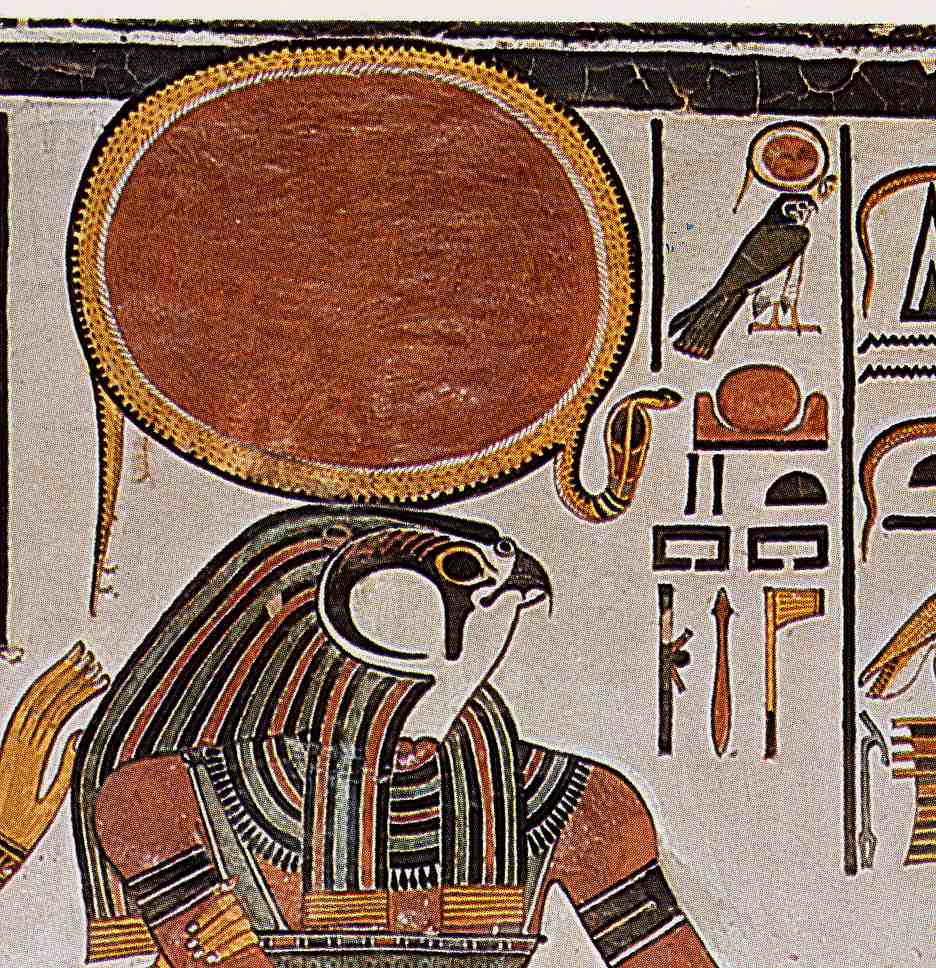
Here is another image of Horus as a man God with the secret ammon horns.
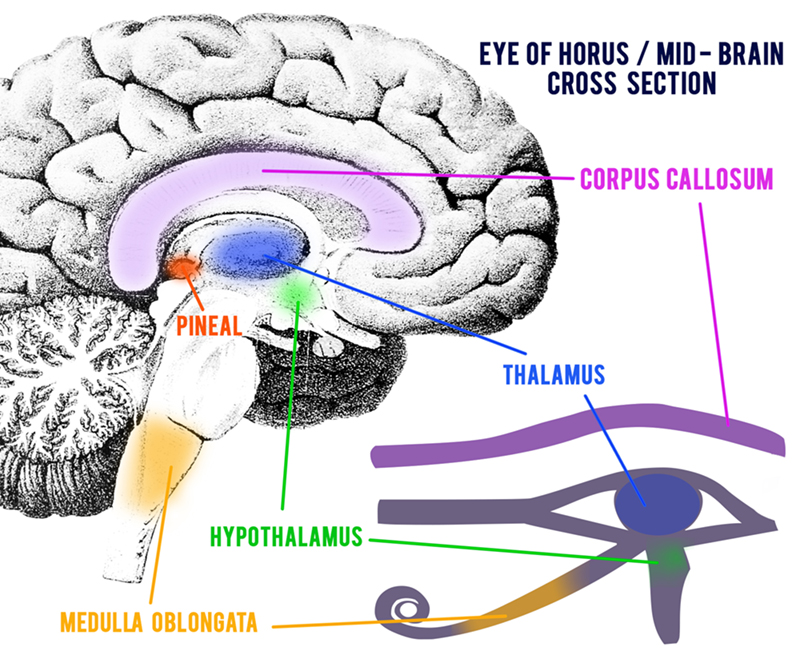
The eye of Horus can also be easily compared to the hippocampus.
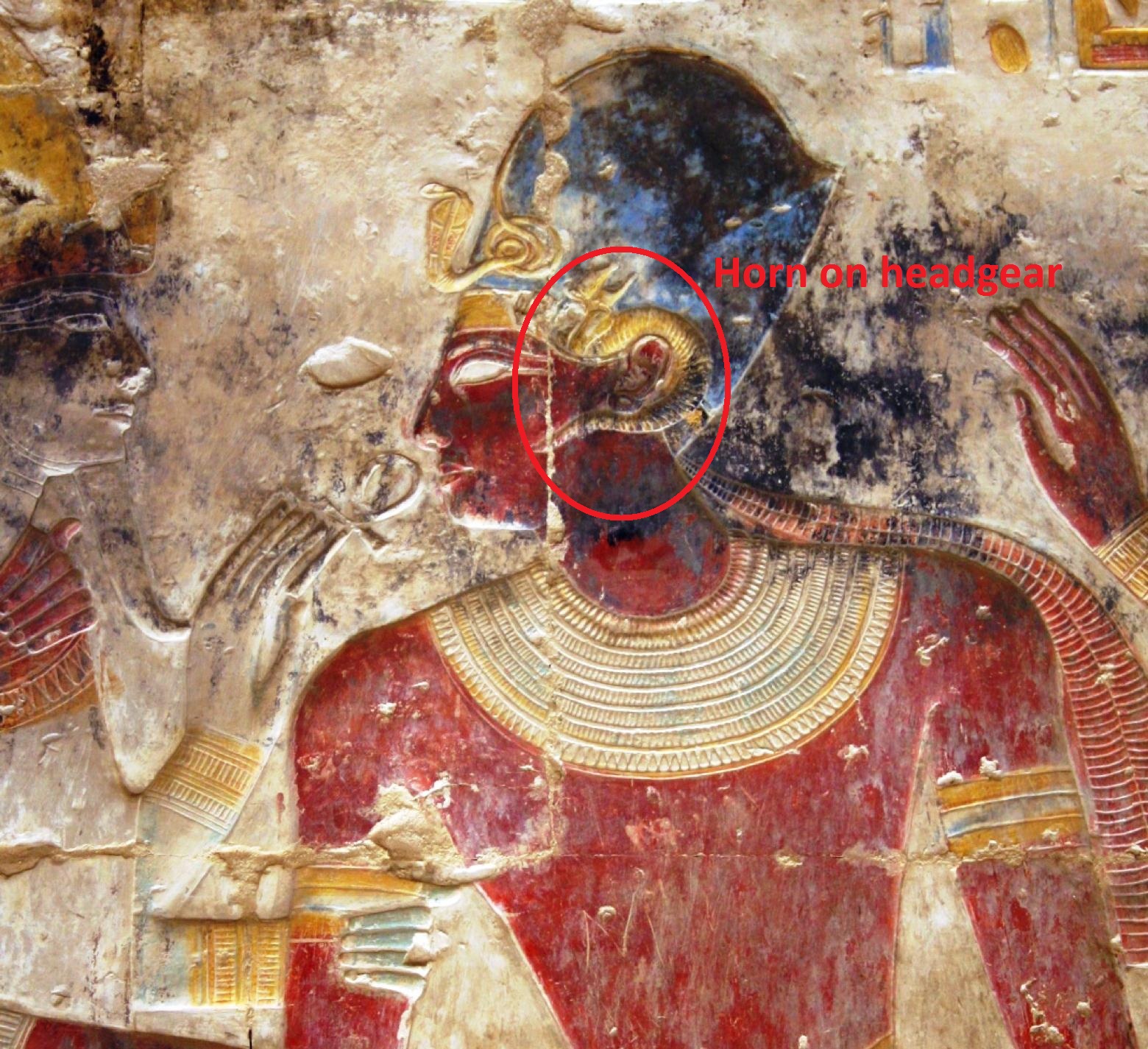
The sons of Ra (Jupiter) were the Pharaohs who also encoded this secret third eye gnostic religion into their own images. They did this so they would remember where they come from when they were reborn as reincarnated beings in a future life. Here are images of some famous Pharaohs, Kings, and Messiah’s of Jupiter sporting their gnostic hippocampus horns to symbolize their gnosis.
This is Menmaatre Seti I (or Sethos I as in Greek) who was a pharaoh of the New Kingdom Nineteenth Dynasty of Egypt, the son of Ramesses I and Queen Sitre, and the father of Ramesses II.
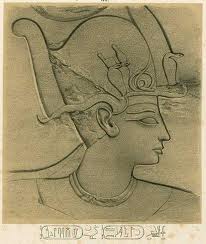
Now here is the son of Ramesses II, Ramesses III (my reincarnation). He was the second Pharaoh of the Twentieth Dynasty and is considered to be the last great New Kingdom Pharaoh.
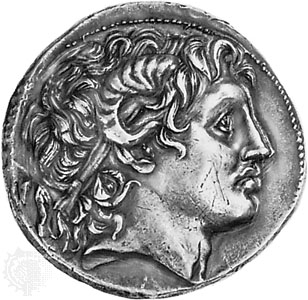
Alexander the Great
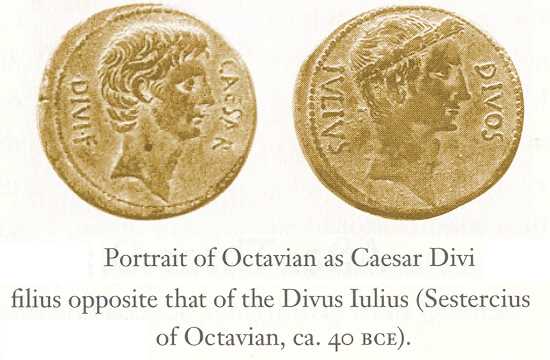
 Roman Emperor, Messiah, and First Pope of this 6th Age, Imperator Caesar Divi FiliusAugustus Caesar.
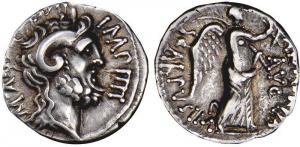
 The Roman politician, general and high priest of Jupiter, Marc Antony.
The current U.S. Commander and Chief, President Barack Obama sporting the gnostic horns.
Thanks for taking a walk in the past using my hippocampus to connect with my ancient ancestors who are me and I AM them. Back to the East we look to bathe our reincarnated souls in the gnostic light.
Now, let’s walk like an Egyptian……. – AMEN!
 Grand Temple of Horus Behdety