
Pat Zalewski has often spoken of the importance of the oral tradition imparted to members of the old Golden Dawn Temples as an integral part of their teaching. A perfect example of such tradition is the method of uttering the Adoration to the Lord of the Universe. Not all will be aware that this adoration is not spoken but chanted on very particular notes. This method was taught at Whare Ra and passed on to me by various ex members, including Frank Salt who produced a tape for instruction.
I am convinced that this method was not peculiar to the Stella Matutina or Whare Ra but was itself carried over from the original Golden Dawn. A possible surviving trace of this can also be seen in the fact that the same adoration is sung in the Temples of Builders of the Adytum (B. O.T.A.) and I suspect that this reflected a memory of the method used in the USA Golden Dawn Temples. The B.O.T.A. version is more musical and less chant-like that used in Whare Ra although there are similarities, and there is historical evidence to suggest that Ann Davies, when head of this Order, adapted the original chant to its current form in the 1950s. No B.O.T.A. secrets are being disclosed here for the Adoration is sung openly at its public meetings. The S.M. or Whare Ra method, however, remains relatively unknown and was transmitted to members solely by them hearing it in ritual.

William Butler Yates
The importance of sound within the G.D. cannot be overestimated. The uttering of Divine Names and the ritual speeches of the officers must be performed in a certain way if they are to be effective. Jack Taylor, Pat Zalewski’s mentor, once produced an excellent paper on “Magical Speech”. The theme was also emphasized again and again by W.B. Yeats and Florence Farr. Indeed these two illustrious members of the GD expounded their views in the context of an entire movement devoted to reviving the bardic arts, where magical effects are achieved by the marriage of uttering poetry and music. Farr was particularly accomplished at this and influenced Yeats hugely by the power of her “musical, incantatory voice”. They staged many exhibitions of this revived art in many cities of the UK and Farr undertook a similar and highly successful tour of the USA. Interestingly, she was also often helped by Pamela Coleman (Pixie) Smith, who was a member of the GD and the artist for the famous Waite Tarot deck. Smith too had a powerful singing and spoken voice.
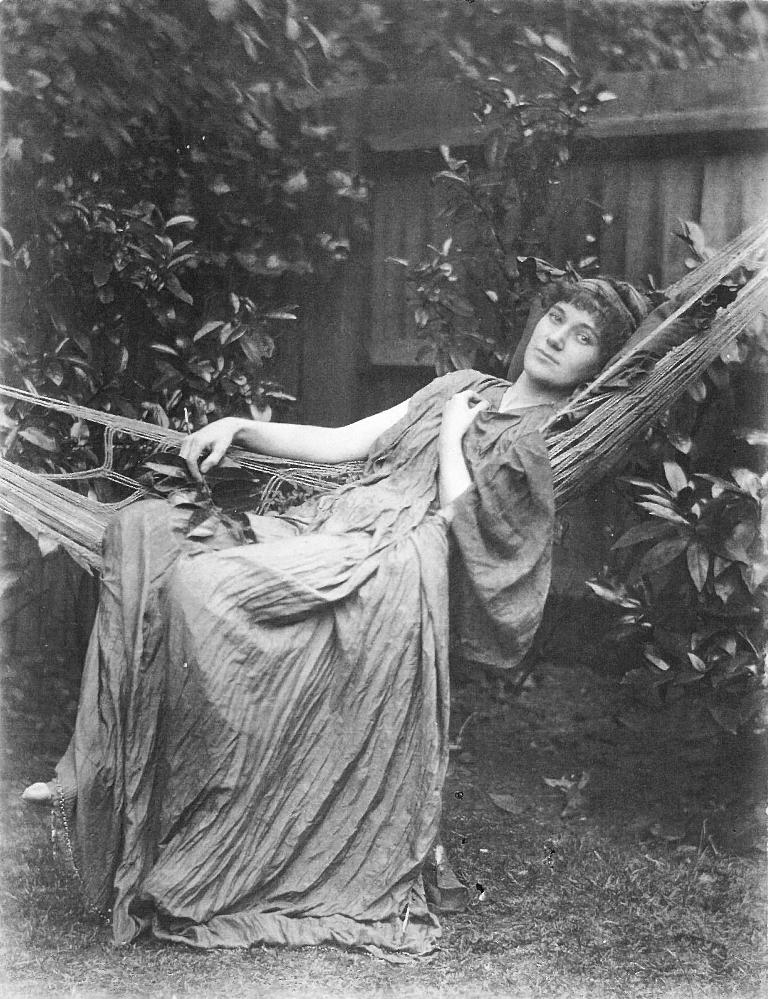
Florence Farr
Apart from the oral teaching about the importance of sound, and the method of uttering certain names and speeches there was advanced ThAM Grade teaching on the essential links between colour and sound which, in a short and highly condensed form, can be seen in the GD Note entitled “Flashing Sounds”. But it is expanded in several ThAM (later 6=5) papers dealing with the symbolism of the ‘Seven Branched Candlestick’ and the Second Order Vault. Florence Farr also explored the relation between the Colour Scales and musical notes but perhaps the most expansive development was carried out independently by Paul Foster Case who incorporated his findings into the B.O.T.A. lessons and rituals.

Paul Foster Case
While Case’s findings have been written down and disseminated, as has some of the GD teaching on this vital subject, much also remains as oral teaching and undoubtedly some has been lost. For those interested in the more public theories of Yeats and Farr with regard to poetry they are referred to the excellent “The Last Minstrels” by Yeats, and the Revival of the Bardic Arts” (2008) by Ronald Schuchard.
 Grand Temple of Horus Behdety