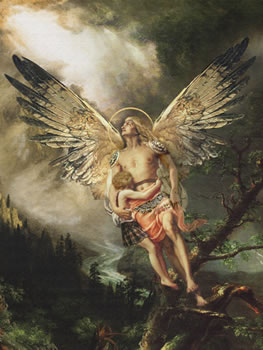
 The short biblical story of the blasphemer (Lev. 24: 10-23) received a unique mystical and mythical interpretation in the Zohar. When carefully examined, the Zoharic homilies of the story (Zohar III, Emor, 105b-106a) reveal hidden influences of Jewish polemic anti-gospel traditions. This article exposes the strong link between the biblical blasphemer and Jesus as well as between the blasphemer’s mother and Virgin Mary.
Several elements of the early counter-narrative history of Jesus, as it is found in the Talmud, for instance, were developed in Jewish anti-Christian polemic works and folklore formulated from Late Antiquity to the early Middle Ages (mainly in western Europe). These elements eventually became part of the famous polemical tract known (in its different variants and forms) as Toledot Yeshu (“the life story of Jesus”).
The article focuses on three central themes of the counter-narrative history of Jesus: a) The magical and lethal use of the Holy name; b) The Egyptian father; c) The mother as a prostitute / an adulterous woman.
The anti-Christian Zoharic homilies should be understood as part of a rise in Jewish anti-Christian polemic works in Western Europe in the early middle ages, many of them from the 13th and 14th centuries. Moreover, as shown in this article, the Zoharic anti-Christian polemics were likely also influenced by Kabbalistic traditions containing polemic material against Christianity, such as the material which can be found in the mystical medieval Misdrash Otiyot de-Rabbi Akiva (8-9th cen.), in the writings of Rabbi Abraham Abulafia (13th cen.), and in Sefer ha-Peli’a (14th cen.).
This Zoharic commentary of the blasphemer’s biblical story provides a significant understanding of the ambivalent Zoharic attitude towards Jesus as the Son of God – and of the Virgin Mary as linked to the Shekhina.
Research Interests:
Source: ‘Son of an Israelite Woman and an Egyptian Man’; Jesus as the Blasphemer (Lev. 24:10-23): An Anti-Gospel Polemic in the Zohar, Harvard Theological Review (forthcoming) | Jonatan Benarroch – Academia.edu


 Grand Temple of Horus Behdety