
Let the impartial critic compare the two accounts – the Vishnu Purâna and the Bible – and he will find that the “seven creations” of Brahmâ are at the foundation of the “week” of creation in Genesis i. The two allegories are different, but the systems are all built on the same foundation-stone. The Bible can be understood only by the light of the Kabala. Take the Zohar, the “Book of Concealed Mystery,” however now disfigured, and compare. The seven Rishis and the fourteen Manus of the seven Manvantaras – issue from Brahmâ’s head; they are his “mind-born sons,” and it is with them that begins the division of mankind and its races from the Heavenly man, “the Logos” (the manifested), who is Brahmâ Prajâpati. Says (V. 70 in) the “Ha Idra Rabba Qadisha” (the Greater Holy Assembly) of the skull (head) of Macroprosopus, the ancient One 1 (Sanat, an appellation of Brahmâ), that in every one of his hairs is a “hidden fountain issuing from the concealed brain.” “And it shineth and goeth forth through that hair unto the hair of Microprosopus, and from it (which is the manifest QUATERNARY, the Tetragrammaton) his brain is formed; and thence that brain goeth into THIRTY and TWO paths” (or the triad and the duad, or again 432). And again: (V. 80) “Thirteen curls of hair exist on the one side and on the other of the skull” – i.e., six on one and six on the other, the thirteenth being also the fourteenth, as it is male-female, “and through them commenceth the division of the hair” (the division of things, Mankind and Races).
“We six are lights which shine forth from a seventh (light),” saith Rabbi Abba; “thou art the seventh light”(the synthesis of us all, he adds, speaking of Tetragrammaton and his seven “companions,” whom he calls “the eyes of Tetragrammaton.”)
TETRAGRAMMATON is Brahmâ Prajâpati, who assumed four forms, in order to create four kinds of supernal creatures, i.e., made himself fourfold, or the manifest Quaternary (see Vishnu Purâna, Book I. ch. V.); and who, after that, is re-born in the seven Rishis, his Manasaputras, “mind-born sons,” who became later, 9, 21 and so on, who are all said to be born from various parts of Brahmâ. 2
There are two Tetragrammatons: the Macro- and the Microprosopus. The first is the absolute perfect Square, or the TETRACTIS within the Circle, both abstract conceptions, and is therefore called AIN – the Non-being, i.e., illimitable or absolute Be-ness. But when viewed as Microprosopus, or the “Heavenly man,” the manifested Logos, he is the triangle in the square – the sevenfold cube not the fourfold, or the plane Square. For it is written in the same “Greater Holy Assembly” (83): “And concerning this, the children of Israel wished to know in their minds, like as it is written (Exod. xvii. 7.): ‘Is the Tetragrammaton in the midst of us, or the Negatively Existent One?’ 3 (Where did they distinguish between Microprosopus, who is called Tetragrammaton, and between Macroprosopus, who is called AIN, Ain the negatively existent?) ” 4
Therefore, Tetragrammaton is the THREE made four and the FOUR made three, and is represented on this Earth by his seven “companions,” or “Eyes” – the “Seven eyes of the Lord.” Microprosopus is, at best, only a secondary manifested Deity. For, verse 1,152 of the “Greater Holy Assembly” (Kabala) says –
“We have learned that there were ten (companions) who entered into the Sod, (‘mysterious assembly or mystery’), and that seven only came forth” 5 (i.e., 10 for the unmanifested, 7 for the manifested Universe.)
1,158. “And when Rabbi Shimeon revealed the Arcana there were found none present there save those (seven companions) . . . . 1,159. And Rabbi Shimeon called them the seven eyes of Tetragrammaton, like as it is written, Zach. iii., 9, ‘These are the seven eyes (or principles) of Tetragrammaton,” ‘ – i.e., the four-fold Heavenly man, or pure spirit, is resolved into Septenary man, pure matter and Spirit.
Thus the Tetrad is Microprosopus, and the latter is the male-female Chochmah-Binah, the 2d and 3d Sephiroth. The Tetragrammaton is the very essence of number Seven, in its terrestrial significance. Seven stands between four and nine – the basis and foundation (astrally) of our physical world and man, in the kingdom of Malkuth.
For Christians and believers, this reference to Zaccharias and especially to the Epistle of Peter (I P. ii. 2-5) ought to be conclusive. In the old symbolism, man, chiefly the inner Spiritual man is called “a stone.” Christ is the corner-stone, and Peter refers to all men as “lively” (living) stones. Therefore a “stone with seven eyes” on it can only mean what we say, i.e., a man whose constitution (or “principles”) is septenary.
1 Brahmâ creates in the first Kalpa (day one) various “sacrificial animals” pasu –or the celestial bodies and the Zodiacal signs, and plants which he uses in sacrifices at the opening of Treta Yuga. The esoteric meaning of it shows him proceeding cyclically and creating astral prototypes on the descending spiritual arc and then on the ascending physical arc. The latter is the sub-division of a two-fold creation, subdivided again into seven descending and seven ascending degrees of spirit falling, and of matter ascending – the inverse of what takes place (as in a mirror which reflects the right on the left side) in this manvantara of ours. It is the same, esoterically, in the Elohistic Genesis (chap. i.), and in the Jehovistic copy, as in Hindu cosmogony.
2 It is very surprising to see theologians and Oriental scholars express indignation at the “depraved taste of the Hindu mystics” who, not content with having invented the “Mind-born” Sons of Brahmâ, make the Rishis, Manus, and Prajâpatis of every kind spring from various parts of the body of their primal Progenitor – Brahmâ (see Wilson’s footnote in his Vishnu Purâna, Vol. I., p. 102). Because the average public is unacquainted with the Kabala, the key to, and glossary of, the much veiled Mosaic Books, therefore, the clergy imagines the truth will never out. Let anyone turn to the English, Hebrew, or Latin texts of the Kabala, now so ably translated by several scholars, and he will find that the Tetragrammaton, which is the Hebrew IHVH, is also both the “Sephirothal Tree”– i.e., it contains all the Sephiroth except Kether, the crown – and the united body of the “Heavenly man” (Adam Kadmon) from whose limbs emanate the Universe and everything in it. Furthermore, he will find that the idea in the Kabalistic Books (the chief of which in the Zohar are the “Books of Concealed Mystery,” of the “Greater,” and the “Lesser Holy Assembly”) is entirely phallic and far more crudely expressed than is the four-fold Brahmâ in any of the Purânas. (See “Kabala Unveiled,”by Mr. S. L. Mathers, Chap. xxii., concerning the remaining members of Microprosopus).
For, this “Tree of Life” is also the “tree of knowledge of good and evil,” whose chief mystery is that of human procreation. It is a mistake to regard the Kabala as explaining the mysteries of Kosmos or Nature; it explains and unveils only a few allegories in the Bible, and is more esoteric than is the latter.
3 Simplified in the English Bible to: “Is the Lord (! !) among us, or not?” (See Exodus xvii. 7.)
4 See Kabala Denudata, by S. Liddell MacGregor Mathers, F.T.S., p. 121.
5 Translators often render the word “companion” (angel, also adept) by “Rabbi,”as the Rishis are called gurus. The “Zohar” is, if possible, more occult than the Books of Moses; to read the “Book of Concealed Mystery” one requires the keys furnished by the genuine “Chaldean Book of Numbers,” which is not extant.
The Secret Doctrine, ii 624–627
H. P. Blavatsky

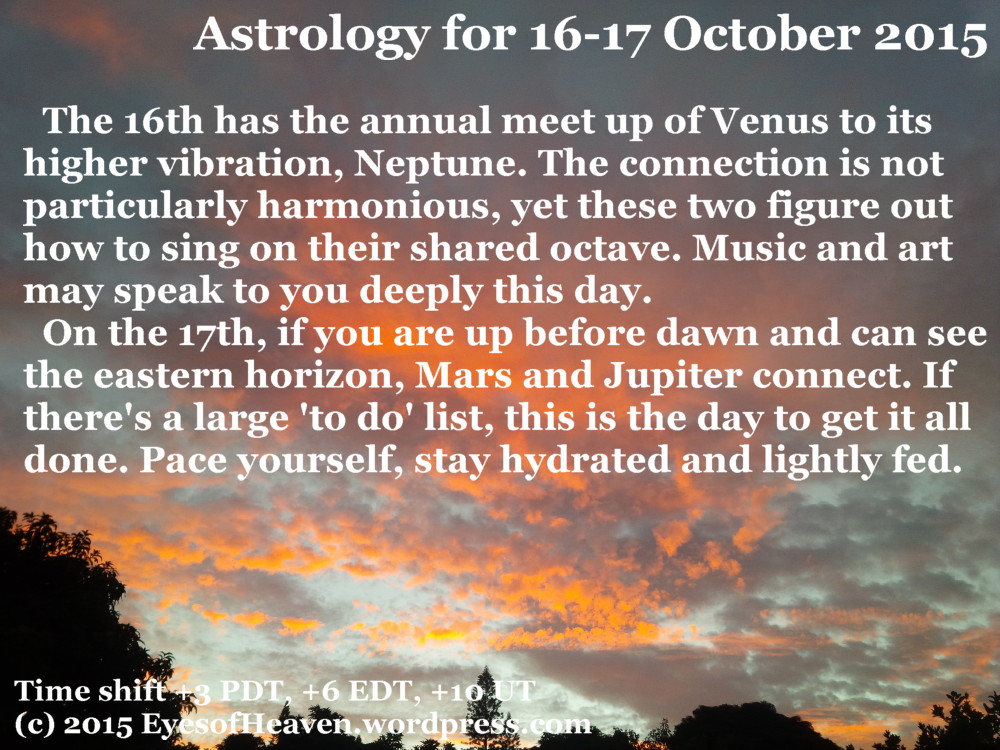
 HEADS UP: THE ORIONIDS METEOR SHOWER: OK, who’s dreaming of stars, other worlds, outer body travel and surreal happenings? Over the next two days the annual Orionids Meteor Shower peaks and we can expect our interest in everything metaphysical and the journey of the soul to peak…





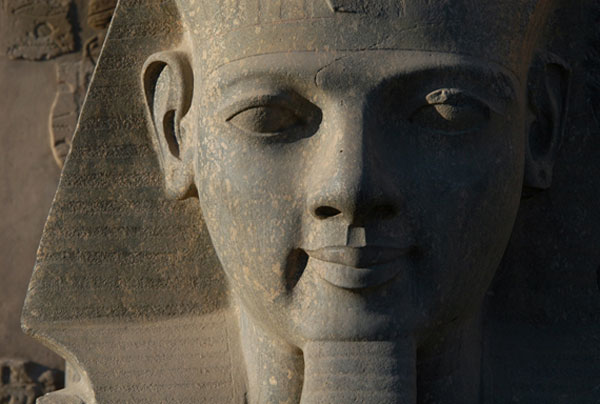




 Grand Temple of Horus Behdety