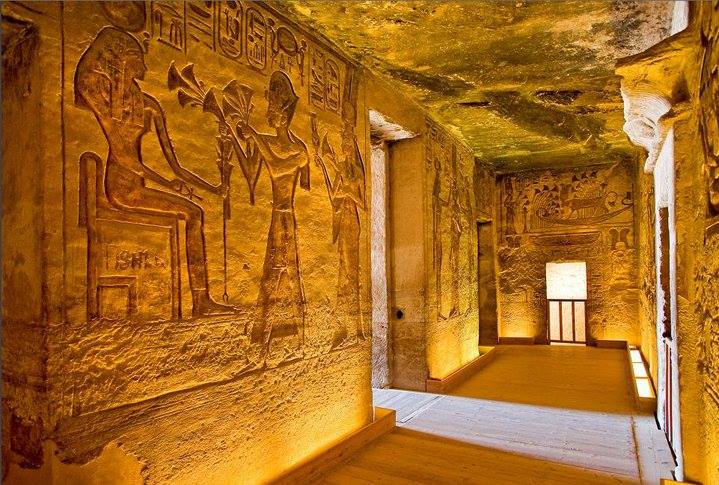
 “Generosity of spirit shines in the faces of those who are loving and kind.”
Author Archives: Hālau ʻĀha Hūi Lanakila
Pāli Word a Day for June 19, 2015

okappati— to believe in, arrange, make ready, settle on, feel confident in, trust in
Daily Meditation
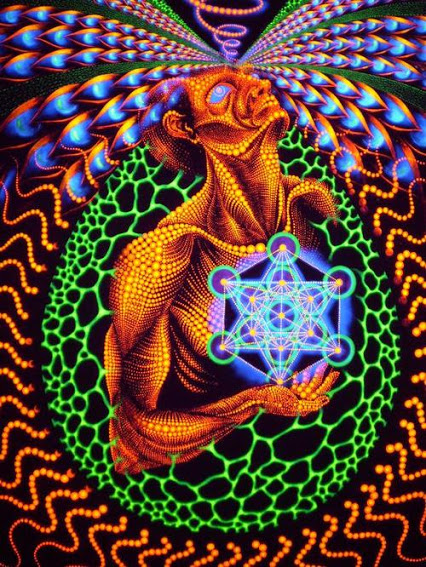
“I am connected to something far greater when I reside in stillness and in silence. “
Daily Chabad

A truly great soul is one whose presence in this world is felt more after his passing than before, and continues to be felt more and more every day that passes.
The Kybalion – The Ultimate Hermetic Introduction (Complete pdf)

The teaching of Hermes have been here distilled into one text.
We take great pleasure in presenting to the attention of students and investigators of the Secret Doctrines this little work based upon the world-old Hermetic Teachings. There has been so little written upon this subject, notwithstanding the countless references to the Teachings in the many works upon occultism, that the many earnest searchers after the Arcane Truths will doubtless welcome the appearance of the present volume.
The purpose of this work is not the enunciation of any special philosophy or doctrine, but rather is to give to the students a statement of the Truth that will serve to reconcile the many bits of occult knowledge that they may have acquired, but which are apparently opposed to each other and which often serve to discourage and disgust the beginner in the study. Our intent is not to erect a new Temple of Knowledge, but rather to place in the hands of the student a Master-Key with which he may open the many inner doors in the Temple of Mystery through the main portals he has already entered.

There is no portion of the occult teachings possessed by the world which have been so closely guarded as the fragments of the Hermetic Teachings which have come down to us over the tens of centuries which have elapsed since the lifetime of its great founder, Hermes Trismegistus, the “scribe of the gods,” who dwelt in old Egypt in the days when the present race of men was in its infancy. Contemporary with Abraham, and, if the legends be true, an instructor of that venerable sage, Hermes was, and is, the Great Central Sun of Occultism, whose rays have served to illumine the countless teachings which have been promulgated since his time. All the fundamental and basic teachings embedded in the esoteric teachings of every race may be traced back to Hermes. Even the most ancient teachings of India undoubtedly have their roots in the original Hermetic Teachings.From the land of the Ganges many advanced occultists wandered to the land of Egypt, and sat at the feet of the Master. From him they obtained the Master-Key which explained and reconciled their divergent views, and thus the Secret Doctrine was firmly established. From other lands also came the learned ones, all of whom regarded Hermes as the Master of Masters, and his influence was so great that in spite of the many wanderings from the path on the part of the centuries of teachers in these different lands, there may still be found a certain basic resemblance and correspondence which underlies the many and often quite divergent theories entertained and taught by the occultists of these different lands today. The student of Comparative Religions will be able to perceive the influence of the Hermetic Teachings in every religion worthy of the name, now known to man, whether it be a dead religion or one in full vigor in our own times. There is always a certain Correspondence in spite of the contradictory features, and the Hermetic. Teachings act as the Great Reconciler.
The lifework of Hermes seems to have been in the direction of planting the great Seed-Truth which has grown and blossomed in so many strange forms, rather than to establish a school of philosophy which would dominate the world’s thought. But, nevertheless, the original truths taught by him have been kept intact in their original purity by a few men in each age, who, refusing great numbers of half-developed students and followers, followed the Hermetic custom and reserved their truth for the few who were ready to comprehend and master it. From lip to ear the truth has been handed down among the few. There have always been a few Initiates in each generation, in the various lands of the earth, who kept alive the sacred flame of the Hermetic Teachings, and such have always been willing to use their lamps to re-light the lesser lamps of the outside world, when the light of truth grew dim, and clouded by reason of neglect, and when the wicks became clogged with foreign matter. There were always a few to tend faithfully the altar of the Truth, upon which was kept a light the Perpetual Lamp of Wisdom. These men devoted their lives to the labor of love which the poet has so well stated in his lines:
“O, let not the flame die out! Cherished age after age in its dark cavern — in its holy temples cherished. Fed by pure ministers of love — let not the flame die out!”

These men have never sought popular approval, nor numbers of followers. They are indifferent to these things, for they know how few there are in each generation who are ready for the truth, or who would recognize it if it were presented to them. They reserve the “strong meat for men,” while others furnish the “milk for babes.” They reserve their pearls of wisdom for the few elect, who recognize their value and who wear them in their crowns, instead of casting them before the materialistic vulgar swine, who would trample them in the mud and mix them with their disgusting mental food. But still these men have never forgotten or overlooked the original teachings of Hermes, regarding the passing on of the words of truth to those ready to receive it, which teaching is stated in The Kybalion as follows: “Where fall the footsteps of the Master, the ears of those ready for his Teaching open wide.” And again: “When the ears of the student are ready to hear, then cometh the lips to fill them with wisdom.” But their customary attitude has always been strictly in accordance with the other Hermetic aphorism, also in The Kybalion: “The lips of Wisdom are closed, except to the ears of Understanding.”
There are those who have criticised this attitude of the Hermetists, and who have claimed that they did not manifest the proper spirit in their policy of seclusion and reticence. But a moment’s glance back over the pages of history will show the wisdom of the Masters, who knew the folly of attempting to teach to the world that which it was neither ready or willing to receive. The Hermetists have never sought to be martyrs, and have, instead, sat silently aside with a pitying smile on their closed lips, while the “heathen raged noisily about them” in their customary amusement of putting to death and torture the honest but misguided enthusiasts who imagined that they could force upon a race of barbarians the truth capable of being understood only by the elect who had advanced along The Path.

And the spirit of persecution has not as yet died out in the land. There are certain Hermetic Teachings, which, if publicly promulgated, would bring down upon the teachers a great cry of scorn and revilement from the multitude, who would again raise the cry of “Crucify! Crucify.”
In this little work we have endeavored to give you an idea of the fundamental teachings of The Kybalion, striving to give you the working Principles, leaving you to apply them yourselves, rather than attempting to work out the teaching in detail. If you are a true student, you will be able to work out and apply these Principles — if not, then you must develop Yourself into one, for otherwise the Hermetic Teachings will be as “words, words, words” to you.
-The Three Initiates.
Written by three anonymous initiates the Kybalion is the first place any true master of alchemy must begin.
——-
Theosophy ~ Spiritual Attention – Part 2

One must use with care those living messengers called words, and this reference to messengers has to do with different classes of elementals, all the myriad invisible centres of energy that permeate the diverse departments of Nature. To be full of the fire of devotion and to do the best work one can, one must have the right basis in thinking. The immortal soul is capable of immortal love, of immortal longings that may summon the life-essence that permeates this globe, the omnipresent spirit that is dateless and deathless. Everyone is inherently capable of an unending, unconditional love and courage and endurance, ready “to suffer woes hope thinks infinite”. The depth of devotion depends upon the level of being. Those who are unafraid of death, who see themselves neither in terms of the body nor in terms of the mind, but as immortal monads, can generate and sustain devotion to the greater hearts and minds of the Bodhisattvas. This constant devotion is in the context of universal mind or Mahat, and the hebdomadal heart of the cosmos. They come under the protection of supreme compassion, the universal umbrella of Dharma. When devotion thus becomes a sovereign talisman, it is continually enriched by yajna and tapas, sacrificial meditation. The wise are those who, starting from small drops of genuine devotion, humility and wisdom, make them grow. They are wise because they grow the way Nature grows. They will, of course, make mistakes, but as long as they maintain their original recognition of the utter simplicity, the transparency and truth of devotion, they can strengthen the current of resolve and regeneration. Magic is possible where there is authenticity, continuity and a sense of proportion, where there is sacrifice, care and a willingness to learn, as well as a capacity to merge the little self in the greater Self.
The path of spiritual attention is not easy, although anyone can make a beginning by trying to understand. Those who still have desires should pursue the path of sublimation through sacrificial works. To those who are neither completely indifferent nor too much attached, the devotional path bears fruit. One is not expected to be perfectly indifferent to everything nor suddenly to show effortless mastery in the practice of devotion. Devotees have their many limitations, but they are expected to moderate their attachment to the fruits of results. Then the path of devotion will bear fruit at the moment of death or in other lives. The mathematics of the universe is exact; one merely does the best one can and leaves the rest to the Law. It is necessary to elevate what is mortal and unreal with the help of a mental posture which involves true obeisance. To remember properly the original moment is to gain glimpses into the future. The divisions of time into night and day, clock time and calendars, engender an illusory sense of past and present and future. It may be that in a certain year upon a certain day one had a spiritual awakening because one came into the presence of spiritual wisdom. If so, to be true to that means to keep going back again and again to the original moment, because the more one can do that, the more one will come closer to the Teachers of Wisdom. If on any issue one understood the original moment, then one would see that the whole story is compressed in that original moment. In that is already determined and defined the future outcome of everything that is connected with that original moment.
One cannot awaken the powers of spiritual attention if one is preoccupied with externals. One cannot be spiritually awake and attentive if one has forgotten that one is an immortal soul. Even if at some level one knew it and then forgot it, that is going to have an effect upon the power of attention. Understanding means making connections. When one truly enjoys thinking about what one is trying to recall, then one can summon other ideas connected with the same line of thinking. Correlations begin to emerge and connections can be made. With calm and detachment and true love of something larger than oneself, there can be access to a vaster perspective. The reason why people forget and why they fantasize is that they do not really know in the present. The reason they do not know in the present is that they are not fully attentive as immortal souls. They are misled by the sensorium, by the shadowy screen of prejudice, by the film of false anticipation and by the burden of failure, shame and regret. Therefore, they have neither lightness nor freedom nor joy, neither do they have any fullness of receptivity and devotion. The path of spiritual reminiscence has to be summoned, and the future is obscure to those who desperately want clues or cues from the outside.
Human beings define themselves during the day by how they relate to deep sleep, and during their lifetime by how they relate to their golden moments. They could know their karma if only they would have the courage to look at their vows, at their highest moments and the extent of their fidelity to them. If they can say that they have at some level made an effort to be true but failed, then they should go on and say that they are willing for Karma to work. They must be honest with themselves if they would gain the strength they need through rekindling a golden moment. This could again become real for them in the present. Then they do not have to see their future only in terms of failures, betrayals, forgetfulness and loss of vision. They could see it in terms of a renewal of vision and a rekindling of strength.
To work with Karma is to learn why one is what one is at any given time on any plane, to look at one’s strengths and with the help of this awareness to recognize the seeds of former resolve. One always has the opportunity to be grateful to those who made it possible, to have the courage to look at one’s weaknesses and understand calmly how they arose, and be determined to counteract them. Then one has a sense of actually shaping the future on the basis of true knowledge, not on the basis of mere chance or the whim of a capricious god. This is true spiritual knowledge based upon a courageous correction of one’s own relationship to the divine spirit within, the indwellingIshwara. Great teachers work under a law where every genuine striving is noticed, but all human beings throughout the world come under the same law. Those who can see the past, the present and the future simultaneously will only let their gaze fall where it is merited, because where it falls there is a tremendous quickening of opportunities for growth, but also an enormous increase of the hazards of neglect. In a dynamic universe of thought and of consciousness, a great difference can be made in one’s understanding of causality and of energy through one’s concept of time which is determined by one’s concept of self-hood and being. This is truly a function of how one thinks at this moment today, how one sleeps tonight and how one wakes up tomorrow, in a cycle of progressive awakenings through meditation and ethical practice, not for the sake of oneself but for the sake of all living beings in the visible and invisible cosmos.
Hermes, May 1979
Raghavan Iyer
Daily Chabad

Spiritual Junkies and Hedonist Activists
Some travel the path of inner serenity and wisdom, shunning engagement with this world
Others engage the world in full force, fighting day and night for their cause. To them, serenity is purposeless.
Both are following precarious roads.
The seeker is prone to spirituality addiction, abandoning his responsibility to others and to the world.
The activist is prey to the allure of achievement and acknowledgment, materialism and its pleasures, until his original goals may be corrupted and fall away.
The safe and sturdy path is to travel both roads at once. Bring wisdom into action. Act with serenity.
Yes, they are two opposite roads. But that is precisely where G‑d is found.
Theosophy ~ Spiritual Attention – Part 1
Sit evenly, erect, at ease, with palms folded on the lap, with eyes fixed on the nose: cleanse your lungs by taking a deep breath, holding it in and then discharging it, raise in your heart the OM sounding like the tolling of a bell, and in the lotus of your heart, contemplate My form as encircled by light.
The path of knowledge is for those who are weary of life; those who still have desires should pursue the path of sublimation through works: and to those who are not completely indifferent nor too much attached the devotional path bears fruit.
Perform your actions for Me and with thoughts fixed on Me: untainted like the sky, see yourself within your self; consider all beings as Myself and adore them; bow to everybody, high or low, great or small, kind or cruel; by seeing Me constantly in all, rid yourself of jealousy, intolerance, violence and egoism. Casting aside your pride, prestige, and sense of shame, fall prostrate in humility before all, down to the dog and ass. This is the knowledge of the learned, the wisdom of the wise – that man attains the Real with the unreal and the Immortal with the mortal.~ Krishna to Uddhava
The universe is mostly unmanifest, and every human being is a microcosmic reflection of the entire egg-like cosmos. Each individual is a vast but largely hidden force-field, but all are manifesting with varying degrees of knowledge, deliberation and discrimination. These diversities are the product of a long history of use, overuse and misuse of the sheaths and vestures in which immortal monads have been embodied in myriad environments over eighteen million years. Given this far-reaching perspective, how can any person use this potent teaching in order to become a better human being? How can an individual become more attentive and discriminating in using the sacred gift of creative imagination, training the mind as an instrument for concentrated thought, directed with a benevolent feeling towards goals compatible with the purposes of all living beings, towards universal good? Strange as it may seem, everyone can discover indispensable clues for answering this question in the simple fact that he or she is a certain kind of human being. The whole story is recorded from head to toe: the way a person walks and talks; the way a person holds himself or herself; the way a person thinks, feels and acts; the way a person relates to other beings; but, above all, the way a person lives through waking and sleeping from day to day, passing through the three halls of consciousness – jagrat, swapna and sushupti – connecting moments in childhood through the seasons of human life, growing, maturing and mellowing with intermittent glimpses of wisdom.
Every person can test motives and methods in the daily attempts to translate thought and intention into outer modes of expression. If someone gets a chance to work upon certain details of some part of a larger work in which the levels of motivation markedly vary, that person can learn through what karma brings to him or her. If, by mistake, one became involved in more than one can manage, this would be known within a short time because one would get burnt. To be unready is to have a shrunken sense of self and therefore a force-field that is very congested with blurred, contradictory and weak currents liable to short circuits and shocks. As long as there is the opportunity to learn and to correct, it is always possible to make a difference, because all human beings are capable in their finest moments of the highest possible motivation. There is hardly a person who has not had moments of pure love of the human race. There are few who have gone through the whole of life without even once having looked at the stars and sky and wondered at the magnitude of the universe. Nature cannot support a human being who cannot ever negate the suffocation of confinement within shallow perspectives of mind and heart. As long as there is the beneficence of sleep, every human being has abundant opportunities to renew the larger Self, the greater motive, the fuller perspective. The problem then is not that a human being is without spiritual resources, but rather how to make those resources tapped during deep dreamless sleep relevant when one is out in the field of duty, Kurukshetra. Wakeful deployment of resources will require sufficient noetic detachment to avert captivity to compulsive activity, and thereby avoid being cut off from the greater Self. When the only correction available is sleep, it is too inefficient to rely upon automatically because the daily passage through confused dream states vitiates the healing effects of deeper dreamless states.
Meditation is the source of noetic understanding, but this depends upon an initial humbling of the false self that otherwise undermines every effort. Learning without unlearning is not only useless, but, like eating without elimination, it can be fatal. Bad habits must be unlearnt while learning new ways of doing things that come from new ways of thinking, and in this continuous process one has to be courageous in assessing one’s spiritual strivings. By seeing where one is going wrong and why, it is possible to make significant connections between causes and consequences and then see where a real difference can be made. It is always possible to make a difference, but only on the basis of self-examination that leaves one more determined and relaxed – more relaxed because of seeing oneself in relation to the whole of humanity. Without running away from the facts, it is possible to take an honest inventory, and if this is done, one will soon begin to discover that it is not that one’s motive is entirely bad or that one is altogether no good. It is rather that one is not very good at learning because of having created blockages in the self through pride, blockages in the mind through prejudice, blockages in the heart through partiality, blockages in the will through perversity. These blockages precipitate very quickly in the presence of great resolves, and if they are not faced, it is difficult to avoid walking backwards. But if this realization brings a sense of defeat, that means one never really understood the teaching of Karma. The Self that has to make the effort of understanding is that ray of the immortal soul which is put in charge of the kingdom in which the different parts of one’s being must be dynamically balanced. When there is a greater harmony within, it is possible to contribute more to harmony without. This is what each is meant to do. The general accounting can be left to Karma. By altering radically one’s attitude to work, to motive and method, and one’s way of balancing them, there is the opportunity for growth on the basis of a larger and a firmer recognition of the invisible forces, realities and laws constantly at work in Nature and in oneself.
Hermes, May 1979
Raghavan Iyer
Daily Chabad
 A Luminous Being
Some believe that life is simply about each person doing what he or she must do. For them, there are no great differences between us. One may be wise, another thoughtless, one a pragmatist, the other a dreamer, one looks heavenward, the other earthward. But life is not about thoughts or dreams or heaven. Life is about what you do.
They are right, but they are also wrong. Life is about doing, but the doing must shine. It must shine such a brilliant light that this whole world of doing will transcend itself.
To shine with that light, we must be plugged in. We must be connected together as a single organism, bonded by those souls that entirely transcend this world, as a mind transcends the body while rendering it a single whole. Then, even our most simplest deeds shine brightly.
In truth, we are more than equal. We are a single, luminous being.
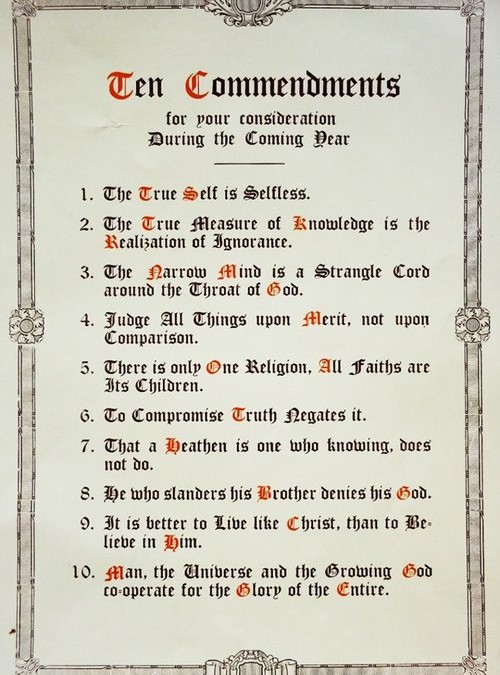
The Ten Commandments According To Manly P. Hall
Daily Chabad
 Plugged In
Good deeds, like light bulbs, need electricity.
Good deeds, like limbs of a living body, need life.
Good deeds, like a human being, require a mind and a heart.
A good deed has to connect you to your source above. If it is connected, it glows with life.
Tony Fuller ~ The Elusive Tarot of the Golden Dawn – A Small Part of a Solution

In his introduction to The Golden Dawn Companion Dr. R.A. Gilbert states, “Much remains to be discovered about the Hermetic Order of the Golden Dawn and many questions concerning the minutiae of its history… remain to be answered.” Nearly thirty years have passed since this observation was made and yet, despite many exciting discoveries during the period, it remains as valid today as it was in 1986 when the Companion was published. Indeed, as Dr. Gilbert also notes in this regard, the Golden Dawn does not and “will not willingly yield up its remaining secrets”.
One such secret, which has stubbornly resisted numerous attempts to provide a satisfactory answer, is the question as to the nature of the particular images of the Tarot used by the original Golden Dawn Order before it collapsed into schismatic fragments. Of the twenty-two cards in the so-called Major Arcana only nine have been positively identified and this is solely because their images and descriptions appear in the Order rituals. But what of the remaining thirteen?
Prima facie, this might seem to be not merely a relatively simple task but also an unnecessary one for surely, it might be said, there are already numerous books on the Golden Dawn Tarot in addition to the published decks produced by the Golden Dawn members A.E. Waite, R.W. Felkin, Paul Foster Case, and Aleister Crowley. And since their day there has been a proliferation of modern decks purporting to be “Golden Dawn’ which are based on an interpretation of their predecessors and on study of the Order material concerning the Tarot. Unfortunately none of the information derived from any of these sources enables us to form a clear, still less authoritative, view of how the thirteen cards were seen by the founders of the Order. Indeed, although the decks of the four Golden Dawn members share common imagery in many respects, they also differ significantly in many others. And the reason for such variation is the surprising fact that, aside from the rituals, no description is provided of the Major Arcana in any of the several Order papers which constitute the ‘official’ curriculum of the Order regarding the Tarot. It must be emphasized that the Tarot deck commonly assumed by many writers on the Golden Dawn to be the Order pack is not – this has never been published and, with the exception of the nine cards which appear in the rituals, the remaining thirteen cards are entirely the personal work of Felkin and his wife, albeit often based on publicly available information.
The formal curriculum up to the Second Order Grade of Zelator Adeptus Minor (ZAM) consists of just one manuscript issued to the Outer Order Grade of ‘Practicus’, and several documents provided to the ZAM, collectively known as “Book ‘T’”. What is remarkable about ‘Book T’ is that whereas fairly detailed descriptions are provided of the imagery involved in the 56 cards of the Minor Arcana none is given for the 22 Major cards. Several references to the Trump cards do occur in these papers but these relate entirely to their various attributions and associated meanings, and give no substantial clue as to what is actually depicted.
Clearly, it is because of this apparent silence of the Golden Dawn founders on the Major Arcana that both modern commentators on the Order and the Tarot, and modern occultists alike, have either concluded that there was no precise conception of how the elusive thirteen cards should look or that the packs created by Dr. R.W. Felkin and A.E. Waite are largely in accordance with such a conception. This is, of course, an entirely reasonable and logical approach, especially when combined with a study of the sources known to be available to the founders of the Order, which included descriptions of the cards within the works of the nineteenth century mage Eliphas Levi and the various European decks then extant.
One might assume, therefore, that this is as far as the subject can be taken and that significant variations between the decks of Waite and Felkin are either the result of personal whim or informed knowledge on which we are unable to judge today. This is decidedly not the case, however, for I have located one original Golden Dawn paper which until now has completely overlooked by every historian and enthusiast of the Order, including Dr. Gilbert and Ellic Howe, author of the seminal The Magicians of the Golden Dawn. This typed manuscript provides a skeletal outline of the imagery of all 22 Major Arcana as well as throwing some light on several other manuscripts and puzzles relating to the Tarot.
Entitled “Tarot Trumps”, it is absolutely certain that the paper was written by a member of the Golden Dawn sometime before 1900 and not by any member or Chief of the Stella Matutina. It has been suggested by Pat Zalewski, the acclaimed author of many books on the Golden Dawn, and with whom I have shared this paper, that it could be the work of one of the two founders, William W. Westcott:
“These are so skeletonic that they seem to follow the pattern of Westcott when he drafted up something and sent it to Mathers [co-founder S. M. L. MacGregor Mathers] to extrapolate. Because all the trumps are considered it had to be someone who was planning a great deal and I think it fits more Westcott than Mathers whom I suspect was the original author of the GD/AO 6=5 [ritual], which he most likely gave to Mathers to do his extrapolation on, but something he never did for one reason or another. This is absolutely fascinating.”
The astute reader will observe several subtle differences between even the nine known Tarot cards, which appear both in the rituals, and the so-called “Cipher Manuscripts” (from which the rituals were supposedly written) and the equivalent brief descriptions which appear here. A full analysis of these differences and similarities, in the context of the historical sources antecedent to the Golden Dawn, must await another occasion. However, one description of particular significance should be mentioned. In the Golden Dawn document Book T the Tarot card number called “Hanged Man” is also referred to as the “Drowned Man”. Within the published GD material no explanation is provided of the intriguing reference to the “Drowned Man” but it is a card which greatly exercised the thought of both A.E. Waite and Dr. R.W. Felkin around the period (1906) when they were drawing up ideas for writing their respective rituals for the Grade of Adeptus Major (6=5) in which the card appears.
Those familiar with the beautiful Major Arcana which the artist John Brahms Trinick produced under Waite’s direction for his F.R.C. Order will recall that the card, known as the ‘Drowned Giant’ depicts a ‘drowned’, and crowned, man lying underwater within a swastika shape. Crucially, Waite states in his 6=5 ritual (published in the Falcon edition of Israel Regardie’s “The Complete Golden Dawn System of Magic”) that “the drowned giant is depicted as reposing on the rocky bed of the ocean with the rainbow at his feet”. It is manifestly obvious
that Waite has taken this description, including the reference to ‘the Ark’, directly from this “Tarot Trumps” paper.
The skeletal description is capable of yielding even more valuable historical information, however, for it states that the card “should be held sideways” and the rough sketch shows the usual style of Hanged Man but placed on its side. Within the Golden Dawn 6=5 ritual, which was completely unknown to Waite, we find the following description of this Tarot card: “’The Hanged Man’, would be more commonly called – ‘The Drowned Giant’, and its position horizontal rather than perpendicular. In this position [an oblong box placed horizontally is shown], the lower side of the Key represents the Bed of the Waters, and the upper side the Keel of the Ark of Noah, flowing above the Drowned Figure”. In this context it should be noted that only one copy of the Golden Dawn 6=5 ritual is known to have survived and was located within a collection of Dr. W.E. Carnegie Dickson who received many original and rare Golden Dawn papers from Mathers’ successor, J.W. Brodie Innes. Thus, the skeletal description, almost certainly written before 1900, also provides invaluable confirmation that the 6=5 ritual was itself the genuine Golden Dawn ritual for this Grade, and not a document produced for Mathers’ Alpha et Omega Order, formed after the collapse of the Golden Dawn.
Serious students of the Golden Dawn Tarot are also urged to compare these brief descriptions with those which appear in the 6=5 paper entitled “The Order of the Ritual of the Heptagram – Part II – Of the Tarot Trumps” which has been published in Pat Zalewski’s “Inner Order Teachings of the Golden Dawn”. The original of this paper, like the 6=5 Ritual, was also part of Dickson’s collection [much of the collection came to me and which I made available to Pat Zalewski and others]. It will be observed that in places several of the skeletal descriptions also support the Heptagram paper which has been curiously neglected by Tarot scholars.
The above is merely a brief overview of this important discovery and a more in-depth study and comparison is required.
2015 Gemini New Moon

June 16, 2015
25 Gemini 7
7:05 AM PDT / 10:05 EDT / 2:05 GMT
The Gemini New Moon moves our mental faculties into a new gear. The fog of the past few weeks is not so much lifting as becoming more manageable. Confusion and snafus may still be part of the picture — the planet of illusion is still having its way — but thinking feels clearer and more resolved. What’s more, all eyes are on the future — and there’s no turning back.
Part of the comfort comes from the ruler of the Gemini New Moon, Mercury, being in his home sign. He’s traveling, for the time being, in a demanding aspect to Neptune that is tied to illusion — uncovering it, whipping it up and, in some instances, dispelling it. This formula can short-circuit rational thinking. Resorting to, and relying on, faith, hunches and guidance is the…
View original post 329 more words
Pāli Word a Day for June 15, 2015
 jotati— to shine, be splendid
Sweet Dreams!

Daily Chabad
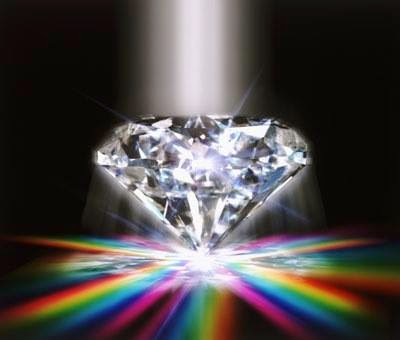
Gems That Shine
Every good deed is a precious gem. But even the most brilliant diamond can be caked mud. Rather than shine, it darkens—even obscures—the beauty of the one it is meant to adorn.
When you do something good, forget about the status it may get you, forget about how good it makes you feel, forget about how amazing you are for overcoming every challenge to get this done.
Forget about any other motive in the world other than fulfilling the purpose for which your Creator put you here.
Let your gems shine.
Pratum Book Company, Catalog 90

Click here to access the catalog: Pratum & Fields Catalog 90
Those of you who spent any time at Fields Book Store (http://www.fieldsbooks.com/cgi-bin/fields/index.html) between our 75th Anniversary remodelling in 2007 and our closing in 2013 will be familiar with Pratum Book Company. At that time we entered into a consignment partnership with Todd Pratum, an esoteric book dealer since 1981, and featured a great many of his books on our shelves. The books ranged from rare antiquarian tomes bound in vellum to unusual scarce works of scholarship or esoteric experience to well-selected and attractively priced paperbacks.
Todd Pratum is well-known for his incredibly well-researched catalogs of book offerings which he has been issuing over the decades. He has just issued Catalog Ninety. This is his first catalog offering in three years, so anxiously awaited. As Fields Book Store has partnered with Todd for a number of these catalogs in the past, we would like to promote his new catalog even though he is working independently on this one. It features an excellent selection of well-chosen books, and a wealth of knowledge about both the books and the subject matter.
Regardless of whether you are looking for inexpensive items such as David Fideler’s four issues of the “Alexandria” journal, or something as massive as the 754 folio volumes of the National Union Catalog (at a half-million pages, perhaps the largest book in the world) documenting the contents of the Library of Congress and much else, you will find much of value here.
You can find the Pratum Book Company web site (http://pratum.com) (where you can sign up for his mailing list), and Catalog Ninety itself here (PDF file). Be sure not to miss the description and photos of “The World’s Largest Book” on the last pages of the catalog.
Please note, all inquiries about books and sales in Catalog Ninety should go to Pratum Book Company (knowledge@pratum.com) and not Fields Book Store.
NB: Fields is web and phone orders only. You can still find them at www.fieldsbooks.com and 415-673-2027.
W.B Yeats’s Obsession with the Occult Celebrated With A Major New Exhibition

Megan Johnston, Director at The Model Credit: James Connolly
W.B Yeats’s spooky obsession with the occult is to be celebrated this weekend with a major new exhibition at The Model in County Sligo – his spiritual home.
Psychic Lighthouse will open to the public on Yeats Day, Saturday June 13, which this year sees a huge range of national events to mark the 150th anniversary of the great poet’s birth.
It will feature some of the best-known Irish and international artists who investigate ritual, spiritualism and occult practices.
The exhibition, curated by Emer McGarry, will include work by Irish artists including Clodagh Emoe, Deirdre McKenna, Susan MacWilliam and Stephen Rennicks as well as international artists Joachim Koester, Maria Loboda and Goshka Macuga.
Entry is free and it will run from June 13 to August 30.
Read More: Celebrating 150 years of WB Yeats, the true poet of Easter 1916
Psychic Lighthouse will be launched by The Model Director Megan Johnston at a recreation of the Victorian tradition of a Candlelight Salon with well-known artists and public figures.
In the late Victorian age, ‘salons’ were a popular form of entertainment featuring music and conversation.
This heady and mysterious tradition will be recreated with experts on Yeats, the occult and the arts discussing the poet and his interesting past-time.
Read More: The getaway… to Yeats country
Some of those taking part include the Abbot of Glenstal Abbey in Limerick, Mark Patrick Hederman; well-known American artist Susan Hiller; author of A Girl is a Half-Formed Thing Eimear MacBride and poet and playwright Vincent Woods.
Also taking part in the discussion is Margaret Harper, Glucksman Professor in Contemporary Writing in English at the University of Limerick.
She is Director of the Yeats International Summer School and the President of the International Yeats Society.
Read More:
Meanwhile, The Model is also launching ‘Entwined Memories’, an exhibition of contemporary Irish textiles.
The event is in its fifth year.
Entry is free and it will run from June 13 to July 12.
For further information, visit http://www.themodel.ie

William Butler Yeats
Daily Chabad
 THE TALLER THEY ARE
You might think that divine sparks are meted out by simple protocol: The lowlier the creation, the lowlier the divine spark it holds.
Just the opposite: Only the highest sparks could descend to the lowest places and retain their power to sustain a being.
Those are the sparks remaining to be rescued today.
Anna Kingsford: The Moon Under Her Feet
Here is a biography of Anna Kingsford titled: The Moon Under Her Feet. It contains good information but not a lot of new findings.
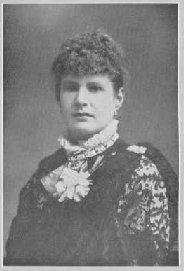
Madam Dr. Anna Mary Bonus Kingsford
(Inductee of the Order of the Eagle of of the United States Grand Lodge of Ordo Templi Orientis)
Click on image to read the entire article.
Daily Chabad
SLAYING MONSTERS
Sometimes you might connect with someone who has a severe moral challenge in life. And you can’t see how this person can possibly overcome this challenge.
But then, you have your own challenges. And you also can’t see how you can possibly overcome these challenges.
Because each person has their own battle to fight, unique from any other.
So what should you do?
You fight those battles that you can win—including those the other guy can’t handle. The other guy will fight those battles that he can win—including those that you can’t handle. Eventually, both of you will find that those impossible battles have somehow become possible.
We are, after all, a single being, all of humanity.
 Grand Temple of Horus Behdety