The Mayan civilization is one of the most mysterious and fascinating in history. There is much we still don’t know, but they are much-admired for their fully developed writing system
Hello everyone and happy midweek to you all:) Hair is something that is fairly easy to obtain and its a way to add various types of energy into your work. Often we hear about using your own hair or […]
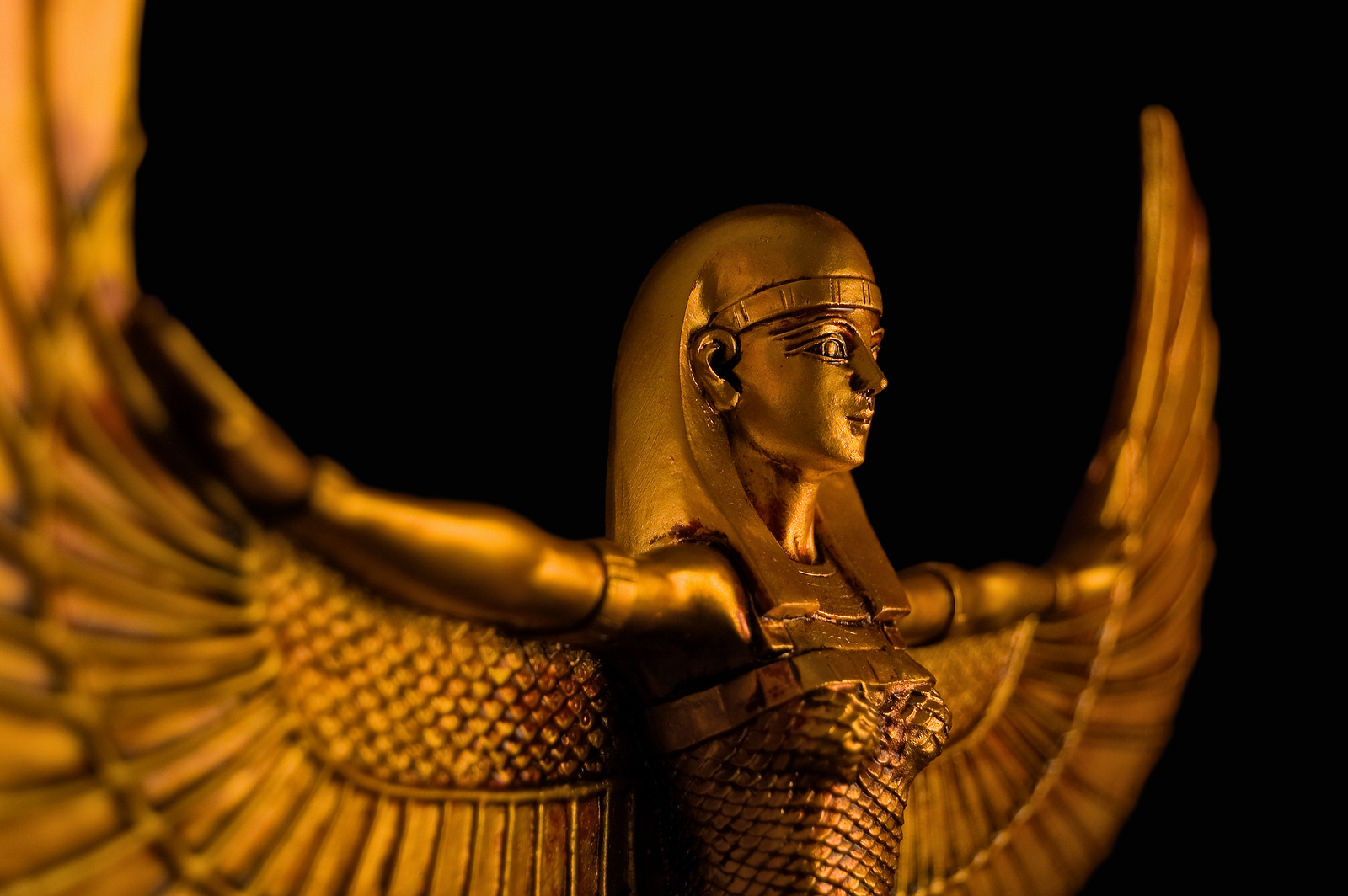
Last time we saw that there is no evidence for temple prostitution in ancient Egypt. Yet we still find modern writers (usually very well-meaning ones discussing sacred sexuality) who relay the tale that Isis spent ten years as a prostitute in Tyre, that She was beloved by prostitutes, and that Her temples were located near brothels and were reputed to be good places to meet prostitutes.
Where does all that come from?
Well, this is definitely one of those “consider the source” situations.
The bit about prostitution in Tyre is from Epiphanius, a 4th century CE Christian bishop writing against what he sees as heresies. He complains about the sister-brother marriage of Isis and Osiris then launches into the prostitution accusation. There’s no other evidence of this story circulating at the time. He may have made it up. He may have confused Isis with Astarte…
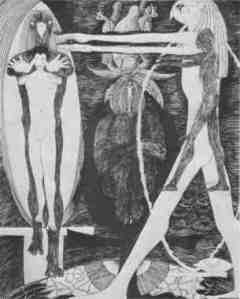
An artistic representation of Kheperu by Steffi Grant; note the human inside the figure of Horus
The Key to Egyptian Magic, Part 3
We’ve been talking about what I call (for lack of a known ancient Egyptian term for it) Kheperu, “Forms” or “Transformations.” It is a way of taking the imaginal Form or Image of a Deity upon ourselves and—for a specific, limited period—thus Transforming ourselves into the Deity; in this case, Isis.
It’s not exactly the same thing as trance possession or “being ridden” by a Loa, as in Voudon. In the case of Kheperu, the ritualist does not lose their own consciousness. Rather, consciousness is expanded. Assuming a Kheper (sing.) is more like stepping into a stream of Divine power, more like being carried than carrying.
When successfully done, Kheperu puts us in touch with a deeper wisdom that serves as guide in any…
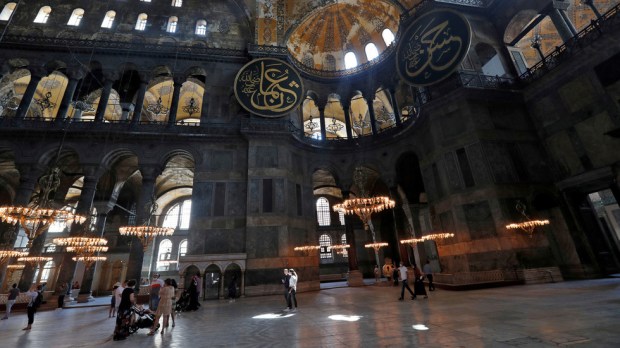
If Turkey decides to convert Istanbul’s Hagia Sophia, now a museum and originally a Byzantine Christian church, into an active mosque, this could sow discord between Christians and Muslims, the Russian Orthodox Church has warned. […]
In 1798, the French under Napoleon Bonaparte launched a military campaign in Egypt. Along with soldiers and military personnel, Napoleon brought a large number of scholars and scientists known as savants when he invaded the country. The involvement of these scholars in the war resulted in a renewed European interest in ancient Egypt, known as Egyptomania. […]
Most people know of the great construction achievements of the dynastic Egyptians such as the pyramids and temples of the Giza Plateau area as well as the Sphinx. Many books and videos show
Art seems to capture Kheperu best; this is The Lotus Soul by Frantisek Kupka, 1898. This is what the energy feels like in Kheperu
The Key to Egyptian Magic, Part 2
Last week, we talked about Kheperu or “Transformations” as the key to Egyptian magic. This is the technique by which a human magician, priest/ess, or other adept practitioner, may briefly partake of Divine powers through the use of sacred images, ritual speech, and right action. It is a way of empowering our magic.
To develop this technique, a society would need to understand that human beings could become godlike—which ancient Egypt did—and further, that human and Divine beings naturally interact with each other and mutually affect each other.
This is a magical and participatory world. In Jeremy Naydler’s book TheTemple of the Cosmos, he comments that the Egyptians believed human beings depended on the Deities, but that…
I admire the blogging work of John Beckett on Patheos. His recent post talks about the period of disruption we are in right now, which he (and some of his compatriots, I gather) call Tower Time, after the tarot card.
In this particular post, I was struck by his recommendation to magic workers to “take your magic up a notch” in response to current times. I do agree. As I said a couple weeks ago, this time of change, this time of flux, is precisely when magic can have an outsized effect.
So today I’m going to start a series on what I believe is THE key to Egyptian magic. It has no known Egyptian name, but you find it everywhere throughout Egyptian sacred written materials. It freaked out the Greeks when they learned about it from Egypt. And it…




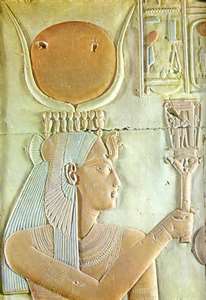


 Grand Temple of Horus Behdety