Happy Aquarius Season 2026! Tap into your inner Aquarius: Spend time getting to know people Be a humanitarian Be curious Be an independent thinker Be a visionary Be unapologetically you […]
Source: Aquarius Season
Happy Aquarius Season 2026! Tap into your inner Aquarius: Spend time getting to know people Be a humanitarian Be curious Be an independent thinker Be a visionary Be unapologetically you […]
Source: Aquarius Season

Here is a card for each zodiac sign Check your sun, moon and rising. This message is valid whenever you see this post. Deck used: The Fountain Tarot. Aries ♈ (The Hanged Man) Don’t assume. Ju […]

When Pluto transits the natal Moon your need for transformation and power influences your feelings, habits and emotional patterns. Pluto destroys and regenerates old structures and represents your …
Source: Pluto Transits to the Moon

This is the second Eclipse of September and the second New Moon in Virgo. The first took place on August 23 at 0° Virgo, inaugurating the sign from its threshold; the second arrives on September 21 […]
Source: A full “VIRGO month”: two New Moons in the same sign and two Eclipses – September 21st, 2025

The Moon will be Void-of-Course for 38 hours from July 2 to July 4 at 5:33 am EDT […]
Source: Void of Course Moon July 2-4
Shakeups, Revelations & Revelry While the first few days of July begin quietly, don’t let the stillness fool you, this month builds into a crescendo of powerful alignments, planetary shifts, an […]
Source: July 2025 Astrology Forecast

Jupiter moves into Cancer on 9 June 2025 and will stay in this sign until 30 June 2026. Generally speaking, Jupiter is known as the Greater Benefic, and is associated with expansion, prosperity, ju […]
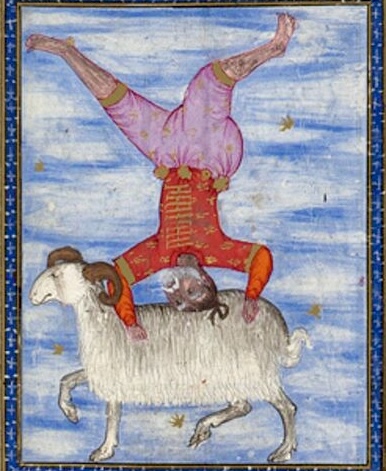
Saturn moves into Aries on 25 May and will stay in this sign for the next three years. The only exception will be between 1 September 2025 and 14 February 2026, when he will move back into Pisces. […]
Source: Saturn in Aries Ingress May 2025

On April 27, the New Moon in Taurus invites us, as it does each year, to plant intentions in fertile ground. But this time, the earth is not still. Something stirs in the deep dark of Gaia. Beneath […]

Source: TAURUS New Moon and the dance of fixed signs choreographed by Lilith – April 27th, 2025
APRIL 7 VENUS RETROGRADE IN PISCES CONJUNCT SATURN, 25 PISCES 4:01 AM PDT, 7:01 am EDT, 11:01 am GMT’. This is serious karmic stuff, Venus rules money, values, relationships and SATURN puts a […]
Source: Astrology April 7-17 Mercury Direct, roller coaster markets, Libra Full Moon, plus

Researchers have identified a fascinating six-planet system that offers a different take on planetary configurations. The newly reported configuration features six planets around a single star. Their orbits line up in a synchronized manner, which astronomers call resonance.
When planets move in resonance, their orbital periods stay in a fixed ratio for millions or even billions of years. This pattern can be so exact that it reminds some observers of musical tempos.
Spotting this kind of rhythmic harmony helps scientists figure out why some stars gather families of planets that have stood the test of time.
The analysis was led by Rafael Luque from the University of Chicago.
Known as HD110067, this star sits approximately 100 light-years away in the northern constellation of Coma Berenices.
Astronomers first recognized unusual dips in the star’s brightness when NASA’s Transiting Exoplanet Survey Satellite (TESS) started surveying that region.
Each tiny dip hinted that one of the star’s planets was crossing its face. Data from both TESS and the European Space Agency’s CHaracterizing ExOPlanet Satellite (Cheops) revealed something rare: a neat chain of six sub-Neptune planets in close orbits.
“This discovery is going to become a benchmark system to study how sub-Neptunes, the most common type of planets outside of the solar system, form, evolve, what are they made of, and if they possess the right conditions to support the existence of liquid water in their surfaces,” remarked Luque.
Many stars in our galaxy hold at least one planet that’s bigger than Earth but smaller than Neptune. These in-between worlds are often called sub-Neptunes, and they’re more plentiful than massive gas giants like Jupiter.
Scientists are intrigued by this class of planet because it covers a range of possible compositions. Some might hold thick, gas envelopes, while others could have dense, rocky surfaces.
Observing these in sync can show how these planets get locked in place and remain that way for an incredibly long span of time.
Resonant systems form when planets start out with orbits that nudge each other in a balanced way. Small gravitational pulls set up a regular rhythm. But big objects or random gravitational jostling can break these patterns.
That makes resonance a tricky arrangement to maintain. Astronomers estimate that only about one percent of multi-planet systems preserve this stable choreography.
Not all stars are lucky enough to keep their planetary brood free of turbulence. Some lose this delicate pattern when a larger planet barges in or when stars drift near one another.
The lack of large neighbors in HD110067’s environment might have helped these six sub-Neptunes remain nestled in their precise arrangement for so long.
Without any violent intrusions, the orbits can carry on as they have since formation. This level of cooperation in one system could provide hints about how others might form or break apart.
For experts who study planet formation, every new system that shows a clear pattern provides more evidence about how dust and gas swirl together and eventually become planets.
Some calculations suggest planets might typically start in resonance, but migration and collisions can make them drift.
An untouched system paints a cleaner picture of early planet-building. Pinpointing each planet’s mass and density can also highlight the proportions of rocky materials, water, and gas they contain.
Researchers plan to keep a close eye on HD110067’s planets using more precise techniques. Improving measurements of the planets’ masses and densities will help astronomers to figure out what these sub-Neptunes look like on the inside.
Deeper analysis can also show whether any might have conditions that allow water to stick around on the surface. These tasks will probably involve instruments on large ground-based telescopes and future space observatories.
Astronomers hope the data from this oddly balanced system will reveal reasons why some worlds remain in tight-knit formation, while others never stabilize.
Stumbling upon a collection of planets that circle in smooth synchronization gives a glimpse into the hidden patterns that shape the galaxy.
This compact group orbiting HD110067 might be just one example of what sub-Neptunes can do when left undisturbed.
Folks who are fascinated by the way planetary families and planet systems form see this system as a chance to learn.
It challenges scientists to look for other hidden resonances in our galaxy and sparks the question of how many have slipped past our detection.
The full research paper was published in the journal Nature.
Vastu & Feng Shui News: The Year of the Wood Snake in 2025 promises introspection, wisdom, and growth. Each Chinese zodiac sign will experience unique challenges and opportun[…]
Source: Chinese Horoscope 2025: The Year of Wood Snake, Check all zodiac signs | – Times of India

Nov 1, 2024 at 5:47 am PT is a new Moon in Scorpio. Water sign Scorpio rules the eighth house of sex, death, and rebirth. This lunar month will bring powerful emotions and deep-felt passions includ […]
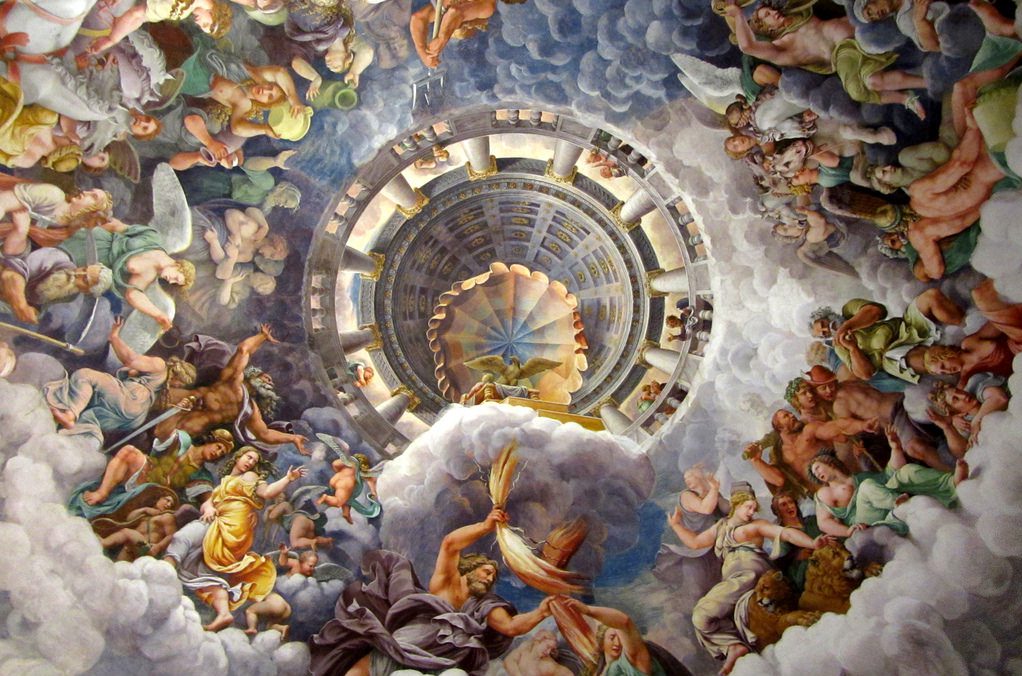
From now until the end of July 2025, we will be experiencing the square between Jupiter and Saturn. This is the first, or rather a waxing square, of this new cycle of conjunctions between Jupiter a […]


(This article was written in 2020 when Saturn was moving into Aquarius) Every three years, sometimes two and a half, Saturn changes signs. At 3:58 GMT on March 22, the “Lord of the Rings,R […]

Source: The GREAT JUPITER-SATURN CONJUNCTION of December 2020

June 24-30 Weekly Horoscopes and Moon Calendar. Saturn turns Retrograde … After last week’s very emotional Cancer ingress, Solstice and Lunar Standstill, you may feel like you are still reeling from that impactful energy. […]

This Full Moon is special in many ways. It is the “first” Full Moon in Capricorn, with the second one on July 21st. This first one, which coincides with the Summer/Winter Solstice, form […]

Source: FULL MOON in Capricorn coinciding with Summer/Winter SOLSTICE – June 21st, 2024
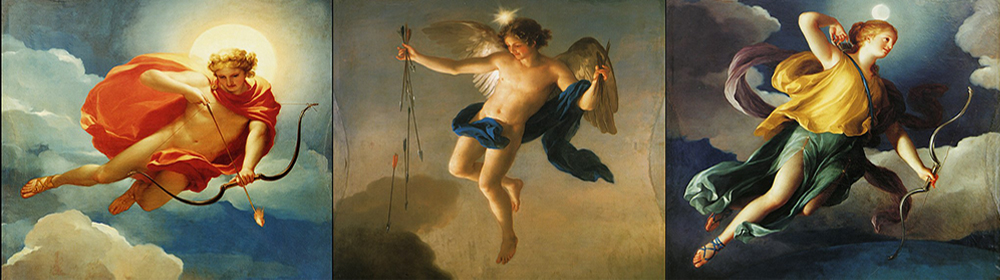
Sabian Symbol of Sagittarius Full flower Moon and Wesak […]
Source: Sabian Symbol Full Moon Sagittarius Moon and Buddha Moon

How to see the 2024 eclipse — which is from 11:42 a.m. until 4:52 p.m. EDT on April 8 — including a state-by-state guide and a livestream. […]
Source: 2024 eclipse guide: Times, places, states and livestream

Solstice happens December 21 at 7:28 pm PST/10:28 pm EST/December 22 at 3:38 am GMT. The astrology chart is a predictor for the next 3 months into 2024. Solstice happens December 21 at 7:28 pm PST/ […]
 September astrology and Tarot card Guidance and video for you.
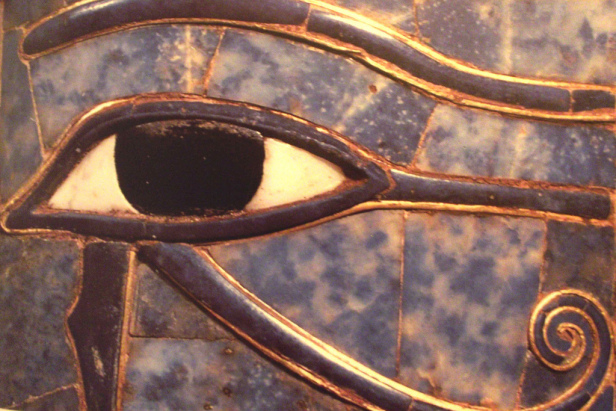
 Grand Temple of Horus Behdety