The Fire Behind Desire: 1 John 2:16 and the Work of the Golden Dawn Philosophus | Victoria Generao, PhD

There is a moment in the initiatory journey when the greatest obstacle confronting the magician is no longer ignorance.

The student has learned correspondences. Ritual forms have become familiar. Divine Names can be vibrated with confidence. The Tree of Life is no longer an unfamiliar diagram but a living map of consciousness. The elements have been contemplated, invoked, banished, balanced, and experienced.

Yet with increased knowledge comes a more difficult question:

Who within us is seeking all of this attainment?

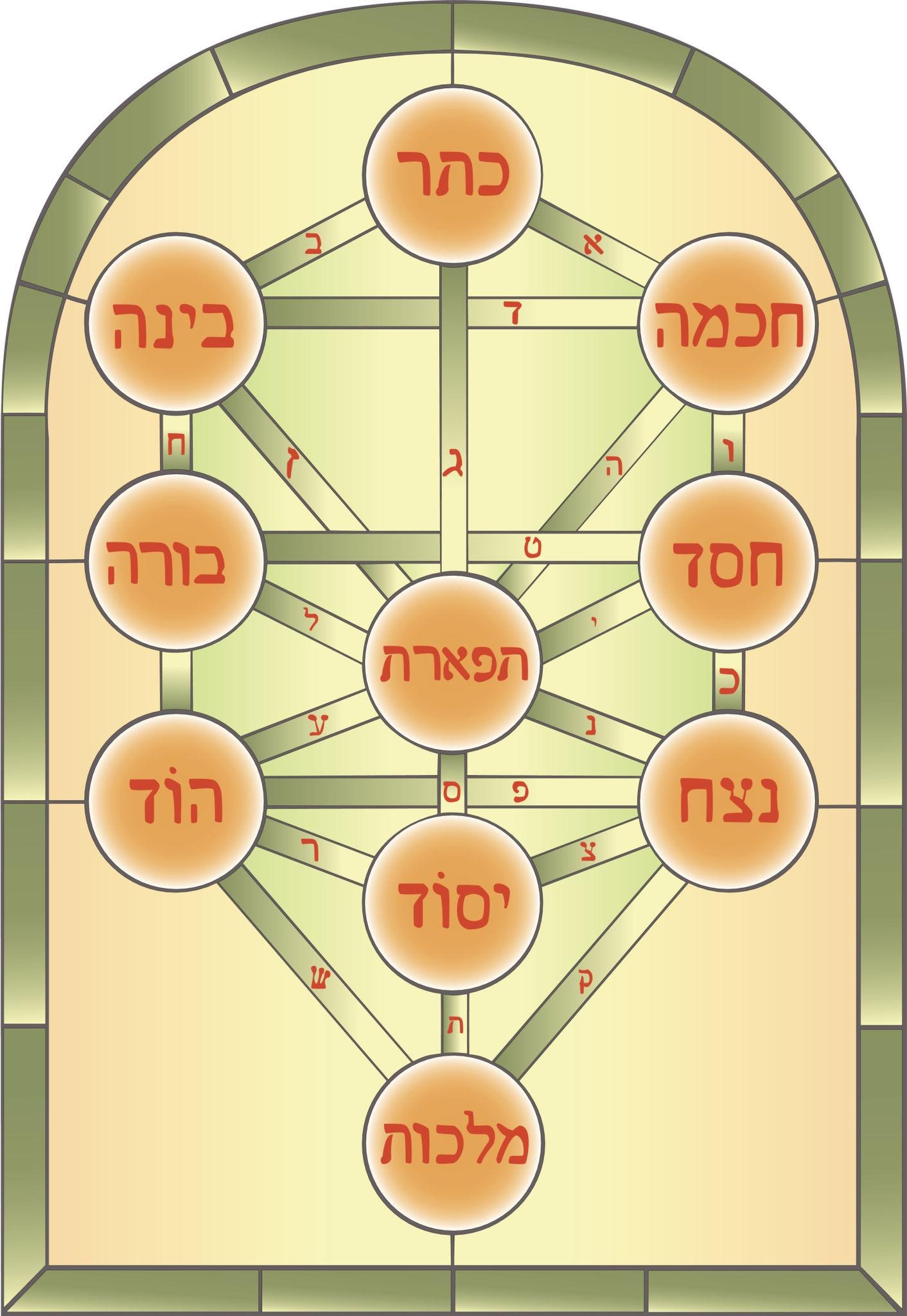
For the Golden Dawn Philosophus, this question belongs naturally to the mysteries of the 4=7 Grade. The Philosophus is associated with Netzach, the seventh Sephirah of the Qabalistic Tree of Life, and with the Element of Fire. (The Hermetic Order of The Golden Dawn®) Netzach is the sphere of Venus: attraction, desire, beauty, love, imagination, passion, aesthetic consciousness, and the magnetic force by which one thing reaches toward another.

It is therefore fitting that the Philosophus should confront not simply the existence of desire, but the deeper mystery of what desire does to consciousness.

Into this initiatory landscape we may place a brief but striking passage from the First Epistle of John:

“For all that is in the world, the lust of the flesh, and the lust of the eyes, and the pride of life, is not of the Father, but is of the world.”
— 1 John 2:16, KJV

Modern translations render the three expressions somewhat differently; for example, the NRSVUE speaks of “the desire of the flesh, the desire of the eyes, [and] the pride in riches.” (Bible Gateway) But beneath the variations in translation remains a threefold warning concerning appetite, attraction, and self-exaltation.

For the Philosophus, these three forces can become more than moral categories.

They can become a mirror.

This essay does not propose that 1 John 2:16 was itself a formal Golden Dawn grade teaching. Rather, it places the Johannine verse beside the established symbolism of the 4=7 Grade and asks what happens when the two are contemplated together.

What emerges is an unexpectedly precise meditation upon the purification of desire.


Netzach and the Mystery of Desire

It would be a serious misunderstanding of Netzach to imagine that its lesson is the destruction of desire.

Netzach is alive with desire.

It is longing, beauty, attraction, art, pleasure, devotion, affection, enthusiasm, imagination, and emotional force. It is that part of consciousness that reaches outward and declares:

I love.

I want.

I am drawn toward this.

Without such a faculty there could scarcely be spiritual aspiration at all.

After all, what is aspiration except desire directed toward something greater than the ordinary personality?

What is devotion except desire concentrated upon the Divine?

What is mystical longing except the soul remembering, however faintly, that it is separated from something it wishes desperately to recover?

Even ceremonial magic depends upon desire. The magician imagines, concentrates, wills, invokes, and directs force toward an intended end.

The question of Netzach is therefore not:

Can you stop wanting?

The question is:

Can you learn what is worthy of wanting?

And even more deeply:

Can you discover what within you is doing the wanting?

Here 1 John 2:16 becomes especially valuable, because its threefold formula describes three different ways desire can capture consciousness.

The lust of the flesh.

The lust of the eyes.

The pride of life.

They may be understood as three progressive movements:

I crave.

I grasp.

I build an identity around what I have craved and grasped.

This is not merely a Christian ethical problem.

It is an initiatory problem.


The Lust of the Flesh: When Appetite Becomes Master

The “lust of the flesh” is often reduced almost entirely to sexual desire, but such a reading is unnecessarily narrow.

The flesh is the realm of embodied appetite.

Food.

Sexuality.

Comfort.

Pleasure.

Security.

Possession.

Physical gratification.

The avoidance of pain.

The desire to remain comfortable when transformation demands discomfort.

None of these things need be regarded as inherently evil.

The Golden Dawn magician does not transcend the body by despising it.

The body is the very instrument through which ritual enters physical manifestation. The magician stands within the circle. The lungs breathe. The voice vibrates Divine Names. The hand traces the pentagram. The feet circumambulate the Temple. The nervous system responds to visualization, sound, color, gesture, and intention.

The body is therefore not the enemy.

Enslavement to appetite is the problem.

The distinction is enormous.

One may enjoy food without becoming governed by hunger.

One may experience sexuality without becoming governed by compulsion.

One may value physical comfort without allowing comfort to determine every important decision.

One may possess material things without allowing those things to become the measure of personal worth.

The Philosophus must gradually discover the difference between:

“I experience this desire”

and

“I must obey this desire.”

Before training, these two experiences often appear identical.

An impulse arises, and the personality assumes that the impulse deserves expression simply because it exists.

Initiatory discipline introduces a space between impulse and action.

Within that space the magician begins to ask:

Where did this desire originate?

What will happen if I obey it?

What will happen if I refuse it?

Does it strengthen me?

Does it diminish me?

Is it consistent with my deeper Will?

Can its energy be redirected?

Can its fire be consecrated?

The Philosophus does not become less alive by asking these questions.

The Philosophus becomes more free.

The desire remains a force, but it ceases to be a ruler.


The Lust of the Eyes: The Magical Danger of Appearance

The second phrase is more subtle.

The lust of the eyes.

The eyes do more than see.

They compare.

They evaluate.

They imagine.

They project.

They encounter an image and whisper:

“I want that.”

“I want to possess that.”

“I want to become that.”

“I want others to see me that way.”

Here the teaching becomes profoundly Netzachian.

Netzach is deeply concerned with beauty, attraction, image, feeling, art, imagination, and the power of forms to move consciousness. Dion Fortune’s influential presentation of the Hermetic Qabalah treats Netzach within precisely this wider symbolic and psychological structure of the Tree. (Red Wheel/Weiser)

The magician knows better than most people that images possess power.

A color can alter consciousness.

A Tarot card can awaken an entire interior landscape.

A sigil can become the focus of sustained magical intention.

A robe can change the psychological state of the wearer.

A temple arrangement can communicate meaning before a single word is spoken.

Incense, lamps, geometric forms, weapons, banners, gestures, and sacred images all work upon the imagination.

But herein lies the danger.

The image can reveal Reality, but the image can also replace Reality.

This is one of the great temptations of occultism.

The student may fall in love with the appearance of attainment.

Beautiful robes.

Impressive titles.

Rare books.

Magical tools.

Grade insignia.

Secret names.

Certificates.

Lineages.

Visions.

Astral experiences.

Extraordinary stories.

These things may have legitimate uses.

But they can also become the occult equivalent of jewelry displayed before a mirror.

One can accumulate the symbols of Adeptship while remaining remarkably unchanged.

One may speak eloquently about Tiphareth while being unable to control anger.

One may explain the Qabalah while remaining incapable of forgiveness.

One may describe the Abyss yet be emotionally devastated by a minor insult.

One may possess exquisite ritual implements while possessing very little mastery over oneself.

This is the lust of the eyes in magical clothing.

The question for the Philosophus therefore becomes:

Am I seeking Reality, or have I become fascinated by its appearance?

Ritual exists to transform consciousness.

Symbols exist to communicate and awaken force.

Initiatory titles exist to identify stages of work.

The Temple is not a theatrical stage upon which the personality demonstrates its importance.

It is an alchemical vessel in which the personality is supposed to change.


The Pride of Life: When the Ego Becomes an Initiate

The third expression may be the most dangerous.

The pride of life.

If the lust of the flesh says:

“I must experience,”

and the lust of the eyes says:

“I must possess,”

the pride of life declares:

“I must become somebody.”

This temptation follows the aspirant directly into the Temple.

Ordinary people may derive their identity from money, education, profession, influence, attractiveness, reputation, or social standing.

The occultist can reproduce precisely the same structure using spiritual language.

Instead of saying:

“I am important because I am wealthy,”

the ego says:

“I am important because I am initiated.”

Instead of:

“I possess social rank,”

it declares:

“I possess magical rank.”

Instead of:

“I know influential people,”

it announces:

“I know secret teachings.”

Instead of:

“I am better because of what I own,”

it whispers:

“I am superior because of what I know.”

The ego has not disappeared.

It has merely learned Qabalah.

It has put on a robe.

It has learned the Signs.

It has acquired a magical motto.

And now it bows very solemnly before itself.

This is one of the most subtle dangers encountered by any advanced student of esotericism.

Initiation can transform the personality.

But the personality can also appropriate initiation.

The Golden Dawn corpus preserved and transmitted through Israel Regardie’s The Golden Dawn remains one of the major documentary sources for the system’s initiatory structure, rituals, teachings, correspondences, and grade work. (Google Books) Within such a structured initiatory environment, distinctions of grade are useful—but psychologically they can also become material from which a spiritual identity is constructed.

The Philosophus must therefore learn the difference between authority and self-importance.

Authority grows from competence, responsibility, experience, and alignment.

Self-importance requires recognition.

Authority can serve quietly.

Self-importance needs witnesses.

Authority accepts responsibility.

Self-importance collects titles.

The spiritually maturing magician begins asking not:

“How advanced do others believe me to be?”

but:

“What has actually changed within me?”

That question is far more demanding.


The Three Temptations Are Really One

Seen together, the three expressions reveal a single mechanism.

The lust of the flesh says:

I am what I experience.

The lust of the eyes says:

I am what I possess, behold, or attract.

The pride of life says:

I am the identity I have constructed from these things.

Experience.

Possession.

Identity.

From these, the personality constructs its kingdom.

And yet initiation continually points toward something deeper than the constructed personality.

The Higher Self.

The Divine Spark.

The inner Genius.

The spiritual center that does not depend for its existence upon applause, possession, gratification, or status.

This leads to an uncomfortable insight.

Even the desire for spiritual attainment may become an attachment.

One person desires money.

Another desires magical power.

One desires social recognition.

Another desires recognition as an Adept.

One collects luxury objects.

Another collects initiations.

One pursues sensual experiences.

Another becomes addicted to visions.

Externally, these may appear radically different.

Psychologically, the mechanism can be almost identical.

I need this experience in order to know that I am significant.

That is the deeper problem.

The Philosophus must learn to recognize it.


“Not of the Father, but of the World”

The Johannine text contrasts these desires with what is “of the Father.”

Biblical scholars have devoted considerable attention to the distinctive ethical and theological dualisms of the Johannine writings—light and darkness, truth and falsehood, God and world, love and hatred, abiding and passing away. Raymond E. Brown and Judith Lieu provide two substantial scholarly treatments of these themes within the Johannine epistles. (AbeBooks)

For the esoteric reader, however, “the world” need not be interpreted simply as physical matter.

Such an interpretation would fit poorly with ceremonial magic, which continually discovers sacred meaning within material forms.

Earth.

Water.

Air.

Fire.

Planets.

Stars.

Metals.

Perfumes.

Colors.

Plants.

Stones.

Sounds.

Bodies.

All can become carriers of correspondence.

The problem is not the manifested world.

The problem is consciousness that encounters manifestation and sees nothing beyond appearance.

Consider a rose.

One person sees a desirable object.

Another sees beauty.

The Qabalist may perceive Venus.

Beyond Venus, Netzach.

Beyond Netzach, the architecture of the Tree of Life.

Beyond the Tree, the Divine Reality toward which the entire symbolic structure points.

The rose has not changed.

The consciousness beholding the rose has changed.

This is initiation.

The world is not necessarily abandoned.

It becomes transparent.

Things begin pointing beyond themselves.

Beauty becomes revelation.

Pleasure becomes gratitude.

Desire becomes aspiration.

Knowledge becomes responsibility.

Power becomes service.

Love becomes devotion.


The Secret Severity of Venus

Venus is frequently imagined as gentle.

Beauty.

Love.

Harmony.

Attraction.

Pleasure.

Yet the initiatory mysteries of Netzach contain a hidden severity.

For love becomes spiritually significant precisely where possession ends.

The question of Netzach is not merely:

Can you love?

Almost everyone loves something.

The deeper questions are:

Can you love without controlling?

Can you admire beauty without needing to own it?

Can you experience pleasure without requiring constant gratification?

Can you serve without demanding recognition?

Can you perform magical work without needing others to know that you perform magical work?

Can you receive praise without becoming intoxicated?

Can you receive correction without becoming shattered?

Can you encounter a powerful mystical experience without immediately constructing a grand identity around having experienced it?

Can you become accomplished without needing to feel superior?

These are severe questions.

They reveal why the purification of Netzach is much more than emotional refinement.

It is the purification of motive.

The immature magician may seek attainment in order to become extraordinary.

The maturing Philosophus seeks attainment in order to become capable.

Capable of service.

Capable of responsibility.

Capable of carrying greater force without distortion.

Capable of approaching the higher mysteries without turning them into ornaments for the personality.

This is the victory concealed within Netzach.


Fire Does Not Merely Destroy—It Transforms

The Element of Fire provides the perfect image for this work.

The traditional Philosophus ritual symbolism explicitly associates the Grade with Fire and Netzach. (Stichting Argus)

Fire consumes.

But fire also illuminates.

Fire warms.

Fire transforms.

Fire rises.

And fire must be governed.

A controlled flame lights the Temple.

An uncontrolled flame destroys it.

So it is with desire.

Passion governed by Will becomes power.

Passion without direction becomes compulsion.

The task of the Philosophus is therefore not to extinguish the fire of desire but to consecrate its fuel.

The threefold formula of 1 John can then be understood alchemically.

The lust of the flesh can become reverence for embodiment.

The lust of the eyes can become contemplation of sacred beauty.

The pride of life can become dignified service to the Higher Will.

Appetite becomes stewardship.

Possession becomes appreciation.

Vanity becomes responsibility.

Desire becomes devotion.

Beauty becomes revelation.

Identity becomes vocation.

The force remains.

Its orientation changes.

That is spiritual alchemy.


The Philosophus Standing Before Tiphareth

The 4=7 Grade is not an end.

The Philosophus stands near the completion of the elemental grades, looking toward the Portal and the mysteries that eventually lead toward the Adeptus Minor work associated with Tiphareth.

This gives the struggle with desire an even greater significance.

Netzach says:

I desire.

The Solar mystery asks:

What does the Higher Self desire through me?

Netzach says:

I love.

The higher work asks:

Can love become sacrifice?

Netzach says:

I seek beauty.

The higher work asks:

Can you perceive Beauty as an expression of Divine harmony rather than an object of possession?

Netzach says:

I wish to attain.

The higher work asks the most dangerous question of all:

Who is the “I” that wishes to attain?

This question can dismantle years of spiritual vanity.

Why do I want initiation?

Why do I want knowledge?

Why do I want power?

Why do I want mystical experience?

Why do I want recognition?

Why do I want others to perceive me as advanced?

The Philosophus need not answer these questions with shame.

The proper attitude is observation.

The magician studies consciousness.

One identifies a force.

One names it.

One traces its origin.

One examines its effect.

One transforms it.

The goal is not self-condemnation.

The goal is freedom.


A Threefold Examination for the Philosophus

The verse can therefore become a practical daily examination.

When powerful appetite arises, ask:

Is this the lust of the flesh?

In other words:

Is an appetite demanding obedience merely because I feel it strongly?

When fascination or comparison arises, ask:

Is this the lust of the eyes?

Am I being captivated by appearance, glamour, possession, fantasy, envy, or image?

When spiritual self-importance arises, ask:

Is this the pride of life?

Am I turning knowledge, office, attainment, experience, lineage, or initiation into proof that I am superior?

Then a fourth question may be added:

What would this same energy become if offered to the Great Work?

That is the Philosophus question.

Not merely:

How do I resist desire?

But:

How do I transform its fire?


The Meaning of Victory

Netzach means Victory.

Yet what kind of victory should the Philosophus seek?

Certainly not victory over everyone else.

Not victory in argument.

Not victory through prestige.

Not victory through displaying occult knowledge.

Not victory through collecting grades.

The greater victory occurs when those forces that once ruled the personality become servants of the Will.

When desire no longer determines destiny.

When beauty no longer deceives.

When praise no longer intoxicates.

When criticism no longer destroys equilibrium.

When pleasure can be enjoyed without becoming necessary.

When power can be exercised without becoming identity.

When knowledge creates humility rather than superiority.

When love expands rather than possesses.

That is Netzach as Victory.

Perhaps then the profound relevance of 1 John 2:16 to the Philosophus can be stated very simply.

The verse is not ultimately asking the Initiate to hate the body, reject beauty, or become insignificant.

It is asking something much harder.

Do not become enslaved to what the body wants.

Do not become hypnotized by what the eyes behold.

Do not mistake the identity constructed by the personality for the deepest Self.

Live in the world.

Experience the world.

Create within the world.

Love within the world.

Serve within the world.

But do not forget what lies behind appearance.

Behind form is force.

Behind force is consciousness.

Behind consciousness is Spirit.

And behind every authentic hunger for Truth burns a deeper Fire—the Fire that ultimately draws the Initiate toward the Divine.

The great prayer of the Philosophus therefore ceases to be:

“Give me what I desire.”

It becomes:

“Teach me what is worthy of desire.”

And with that change something begins to happen within Netzach.

Attraction becomes aspiration.

Passion becomes devotion.

Beauty becomes revelation.

Knowledge becomes service.

Desire becomes consecrated Will.

The scattered fires of the personality begin gathering around a single center.

The many loves begin remembering the One Love from which they came.

And the Philosophus begins to discover that Victory does not consist in possessing everything one desires.

Victory consists in becoming master of the fire by which one desires at all.


Annotated Bibliography

Brown, Raymond E. The Epistles of John: A New Translation with Introduction and Commentary. Anchor Bible 30. Garden City, NY: Doubleday, 1982.

Brown’s extensive commentary remains an important scholarly resource for the Johannine epistles. The original Anchor Bible edition was published by Doubleday in 1982. (AbeBooks) Brown provides detailed historical, linguistic, theological, and literary treatment of 1 John. For the present essay, his work is particularly useful for keeping the interpretation of 1 John 2:16 grounded in its actual Johannine context before applying a later esoteric reading. Readers wishing to distinguish historical biblical exegesis from Golden Dawn-style contemplative interpretation should begin here.

Cicero, Chic, and Sandra Tabatha Cicero. Self-Initiation into the Golden Dawn Tradition: A Complete Curriculum of Study for Both the Solitary Magician and the Working Magical Group. St. Paul, MN: Llewellyn Publications, 2002.

The Ciceros present a large-scale curriculum based upon the Golden Dawn initiatory tradition, including ritual work, Qabalah, Tarot, astrology, elemental study, meditation, and grade progression. The 2002 Llewellyn edition is documented as a substantial self-directed curriculum. (Amazon) It is particularly useful for understanding Golden Dawn work not simply as intellectual study but as progressive transformation through structured practice. In relation to this blog, it provides context for treating the Philosophus Grade as a stage of active spiritual discipline rather than merely a collection of correspondences.

Fortune, Dion. The Mystical Qabalah. Weiser Classics. Newburyport, MA: Weiser Books, 2022.

Fortune’s classic work remains one of the most accessible twentieth-century introductions to the psychological and esoteric interpretation of the Tree of Life. The current Weiser Classics edition was issued in 2022. (Red Wheel/Weiser) Her treatment of the Sephiroth is especially useful for understanding Netzach as more than a simple planetary attribution. She approaches the Tree as a map of consciousness, making her work valuable for exploring desire, instinct, emotion, polarity, beauty, and the relationship between the personality and higher spiritual consciousness.

The Holy Bible. 1 John 2:15–17.

This passage forms the primary textual foundation for the essay. Verse 16 presents the threefold formula traditionally translated in the King James Version as “the lust of the flesh, and the lust of the eyes, and the pride of life.” Contemporary translations vary in wording; the NRSVUE, for example, renders the verse in terms of the desire of the flesh, desire of the eyes, and pride in riches. (Bible Gateway) Reading verses 15–17 together is important because verse 17 adds the theme of impermanence—the world and its desire are passing away—while setting the will of God in contrast with transient desire. For Philosophus contemplation, this creates a useful tension between temporary attraction and enduring spiritual orientation.

Lieu, Judith M. I, II & III John: A Commentary. New Testament Library. Louisville, KY: Westminster John Knox Press, 2008.

Lieu’s commentary offers a more recent scholarly study of the Johannine epistles. The volume was published in the New Testament Library series by Westminster John Knox in 2008. (Logos Bible Study Platform) Her work is useful for examining Johannine language, community identity, ethical dualisms, and the relationship between theological claims and lived conduct. For readers of this essay, Lieu provides an important corrective against lifting 1 John 2:16 entirely out of its original Christian setting. The Golden Dawn interpretation presented here should be understood as a later contemplative application rather than the historical meaning of the text itself.

Regardie, Israel. The Golden Dawn: The Original Account of the Teachings, Rites, and Ceremonies of the Hermetic Order. Edited by John Michael Greer, with contributions by Chic Cicero and Sandra Tabatha Cicero. Woodbury, MN: Llewellyn Worldwide, 2016.

Regardie’s publication of Golden Dawn ritual and instructional material became one of the principal means by which the Order’s teachings entered the modern esoteric world. The 2016 Llewellyn edition, edited by John Michael Greer, collects the ritual, magical, Qabalistic, elemental, and initiatory material associated with the system. (Google Books) It is indispensable for grounding discussion of the Philosophus Grade in Golden Dawn sources. Particularly relevant to this essay are the associations of 4=7 with Netzach and Fire and the larger understanding of elemental initiation as internal development rather than merely theoretical learning.


Suggested Comparative Study

For students working specifically at the 4=7 level, the richest study method is to read 1 John 2:15–17 first as scripture, using Brown and Lieu to understand the Johannine context, and only afterward read it Qabalistically, alongside the Philosophus material preserved by Regardie and interpreted through works such as Fortune and the Ciceros.

This preserves an important distinction:

Biblical exegesis asks what the text meant within its own religious and historical world.

Esoteric contemplation asks what the text may reveal when placed within an initiatory symbolic system.

The two approaches need not be confused in order to illuminate one another.

For the Philosophus, that comparative contemplation returns again and again to the central mystery of Netzach:

What do I love?

What do I desire?

What possesses my attention?

What identity am I building from these desires?

And finally:

Can the Fire that once carried me outward toward gratification be turned upward toward the Great Work?

That is where 1 John 2:16 becomes more than a warning.

It becomes a mirror held before the Fire of Netzach.

Victoria Generao, PhD | The Benefits of Incorporating Magic Into One’s Life

There is a quiet tragedy in modern adulthood: we are trained to be efficient, optimized, scheduled… but rarely enchanted.

And yet, beneath the spreadsheets and status updates, something ancient hums.

Let’s call it what it is.

Magic.

Not rabbits in hats. Not superstition. Not fantasy.

Magic as the art and science of manifesting one’s will into reality.

That definition alone feels like striking flint against stone. Sparks fly. 🔥

Because suddenly, magic is not escapism. It is agency.

Magic Is Intent Made Tangible

At its core, magic is deliberate creation.

You choose a direction.
You focus attention.
You align thought, emotion, and action.
Reality bends.

Every entrepreneur who builds a company, every artist who shapes an idea into form, every parent who shapes a human soul is practicing magic in its most grounded sense.

When you decide:

“I will build this.”
“I will heal this.”
“I will become this.”

You are declaring will. And when that will is paired with disciplined action, reflection, and refinement, it becomes science as well as art.

Magic is not wishful thinking.
It is structured intention.

The Psychological Power of a Magical Framework

To live magically is to live consciously.

When you frame your life as an act of willful creation, several things happen:

1. You Reclaim Responsibility

Circumstances matter. But so does interpretation. So does response.
Magic shifts you from passive recipient to active participant.

You stop asking, “Why is this happening to me?”
You begin asking, “What am I building here?”

That subtle pivot changes everything.

2. You Train Attention

Attention is the currency of reality.

What you consistently notice grows in your experience. Gratitude multiplies. Fear multiplies. Opportunity multiplies.

Magic, properly understood, is applied attention.
It is choosing where your mental spotlight shines. 🎯

3. You Activate Symbolic Thinking

Humans are meaning-making creatures. Ritual, symbolism, journaling, intentional habits, and reflective practices encode intention deeper into the psyche.

Light a candle before working.
Write your goals in ink, not in fleeting thought.
Speak your commitments aloud.

These are not theatrics. They are neurological anchors.

The brain loves ritual. It interprets repetition as importance.

Magic becomes behavioral neuroscience in ceremonial clothing.

The Creative Edge of Living Magically

People who consciously practice “manifesting will into reality” often display a few shared traits:

  • Clarity of vision
  • Emotional resilience
  • Comfort with delayed gratification
  • Creative adaptability

Why?

Because magic demands alignment.

You cannot manifest chaos with disciplined will.
You cannot build long-term reality from short-term impulse.

Magic is the long game.

It is strategic imagination paired with consistent action.

It asks:
What future are you rehearsing daily?

Ritual as Architecture

Daily ritual does something extraordinary: it builds invisible architecture.

Morning journaling.
Evening reflection.
A walk taken with a specific intention.
A gratitude practice before sleep.

These small acts create internal order.

And internal order produces external coherence.

In this way, magic becomes habit design with poetry.

You are not just living.
You are sculpting.

The Spiritual Dimension

Even for the secular mind, there is something profound in this framework.

To view yourself as a being capable of directing will into form is to affirm dignity.

It restores mystery without abandoning reason.
It allows reverence without requiring dogma.

You become both architect and apprentice.

Both sculptor and stone.

There is humility in that.
There is power in that.

✨

The Real Benefit: Integration

The greatest benefit of incorporating magic into your life is integration.

Mind and action align.
Emotion and intention align.
Dream and discipline align.

You stop fragmenting yourself.

You begin living as a coherent force.

And coherence is magnetic.

A Simple Practice to Begin

If magic is the art and science of manifesting one’s will into reality, then begin small.

Tonight, write one clear intention for tomorrow.

Not vague.
Not aspirational.
Concrete.

“I will complete the proposal draft.”
“I will speak calmly in the meeting.”
“I will train for 30 minutes.”

Then act.

Observe.

Refine.

That is magic in motion.

No smoke.
No mirrors.
Just will, attention, and embodied action.

In a world that often feels random and overwhelming, incorporating magic into your life is not about escaping reality.

It is about participating in it deliberately.

It is about remembering that you are not merely drifting through circumstances.

You are shaping them.

And when you live that way, life ceases to feel accidental.

It begins to feel authored. ✍️

THE SOLAR MYSTERY OF CORPUS CHRISTI | A Golden Dawn Reflection for the Thoughtful Reader | By Victoria Generao, PhD

THE SOLAR MYSTERY OF CORPUS CHRISTI

A Golden Dawn Reflection for the Thoughtful Reader

By Victoria Generao, PhD

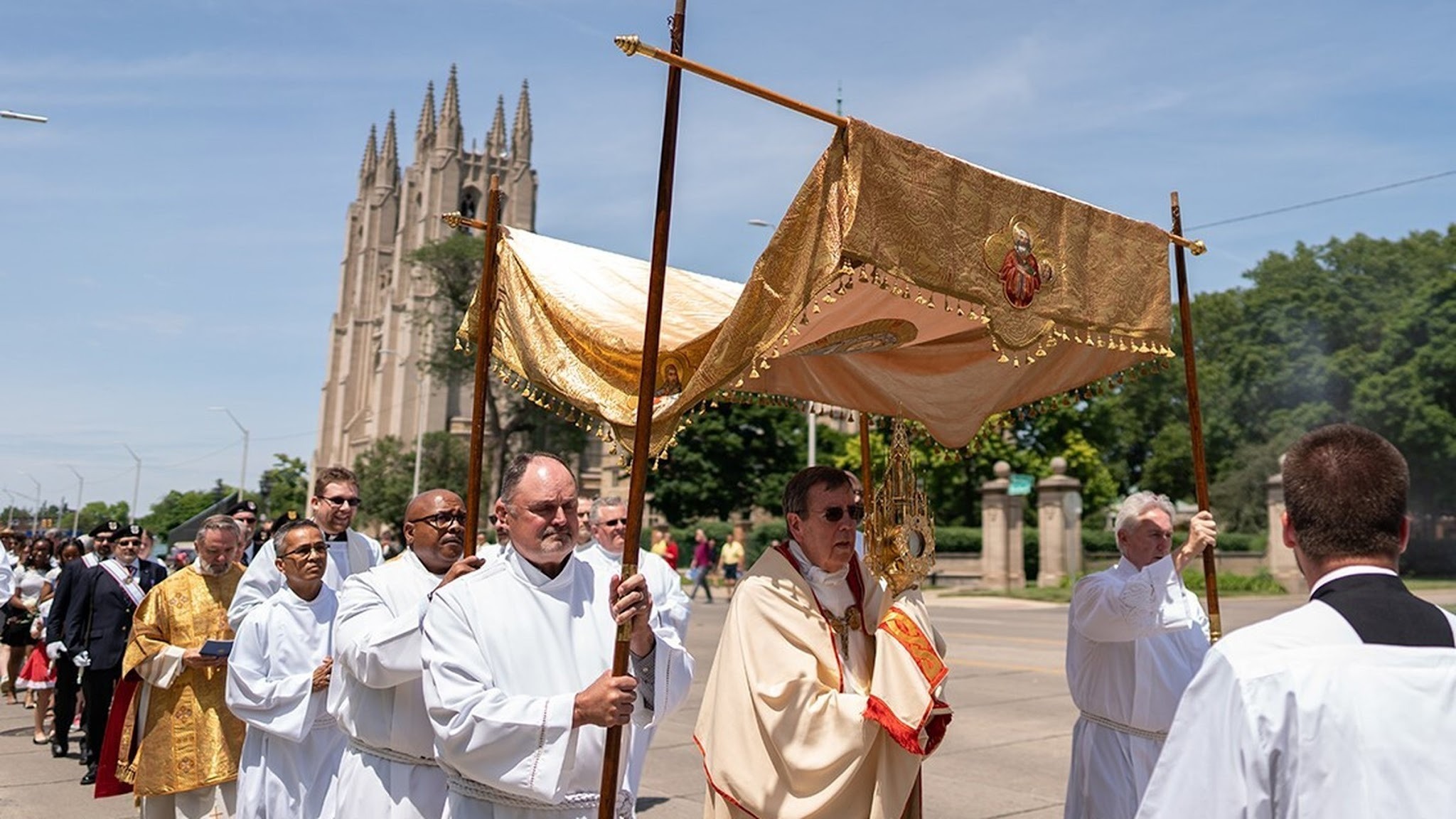
Each year, on the feast of Corpus Christi, streets in many parts of the world are briefly transformed. Flowers are scattered. Bells are rung. A radiant sun of gold is lifted above the heads of the faithful.

To some, this is devotional pageantry.
To others, theological affirmation.

To the student of Western esotericism, it is something more subtle: a public enactment of a solar mystery.


The Sun at the Heart

In the symbolic language of the Hermetic Order of the Golden Dawn, the Sun occupies a central and mediating role. It stands between the heights and the depths, between abstraction and embodiment. It is the harmonizing center.

Corpus Christi celebrates the presence of the Divine within consecrated matter. Esoterically considered, this is the same principle: light entering substance without destroying it.

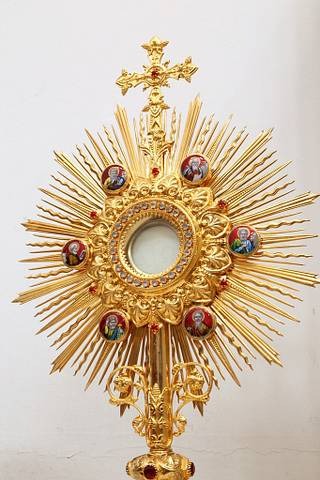
The image of the host placed within a radiant sunburst monstrance is not accidental ornament. It is a visual formula:

  • Center: luminous presence
  • Circle: perfected vessel
  • Rays: life extending outward

The symbolism speaks quietly of something universal. Spirit is not opposed to matter. It seeks expression through it.

The Mystery of Transformation

The theological language of the feast describes transformation at the level of essence. What appears unchanged outwardly is inwardly transfigured.

Western esoteric tradition recognizes this as a key principle of spiritual development. Transformation does not always announce itself with spectacle. The outer life may remain recognizable, yet the interior orientation is altered.

The bread of daily existence becomes transparent to meaning.
The ordinary reveals its hidden architecture.

Corpus Christi, viewed symbolically, affirms that matter can become a bearer of light. The human being, too, may undergo such refinement.

The Solar Pattern in the Individual

Many spiritual systems describe an inner center, a point of balance or illumination. In Golden Dawn symbolism, this is often associated with the solar sphere on the Tree of Life, the harmonizing heart of the structure.

The annual celebration of Corpus Christi can be understood as a reminder of this center. The Divine Presence is not merely distant or transcendent. It may be encountered in lived reality, in embodied life.

The ritual procession through streets and neighborhoods subtly mirrors a deeper procession: light carried into the visible world.

The question posed is simple yet searching:

Can illumination walk within the structures of daily life?

The Mystical Body and Invisible Continuity

Corpus Christi also celebrates communion, not only with the Divine but with one another. It speaks of a living body composed of many members.

Esoteric tradition similarly speaks of a chain of transmission, a fellowship of those who have sought to refine perception and character across generations. Whether described as a mystical body or an initiatory lineage, the idea is the same: awakening is not solitary.

The feast becomes, in this light, an affirmation of belonging to a living stream of light-bearing consciousness.

Why It Endures

In a world inclined toward abstraction or fragmentation, Corpus Christi offers a different message. It insists that the sacred is not merely conceptual. It can be touched, tasted, embodied.

For the esoteric student, the significance is quiet but profound. The celebration is not only about veneration. It is about realization.

Each year, the solar emblem is lifted. Each year, light is proclaimed within form.

The inner work asks:

Has that light found expression in thought, word, and deed?
Has the center held?
Has the ordinary become radiant?

Corpus Christi, read symbolically, is less a memory of an event and more an invitation. It suggests that illumination is not meant to remain in heaven, nor in theory, nor in private meditation alone.

It is meant to take flesh in the world.

And that work, like the rising of the Sun, is renewed each year. ☉🌹

Theosophy | SELF-EMANCIPATION – III

 In order progressively to dissipate and dissolve the elements by which, through the desire for consolidation, people limit and bind themselves, the persisting root of illusion must be sought in the mind. The mental image of oneself as separate from other human beings, feverishly moving places but periodically depressed if not ascending all the time, is entirely false. Each human being is merely one of myriads of centres of sensation and observation, but while such centres in the lower kingdoms have a certain precision, humans are all too often lazily and inefficiently trying to observe and record on the basis of mayavic conceptions amidst a kind of day-dreamy existence. It is an important and difficult task to cut through this veil of illusion, and this can only be done by coming down from the cosmic to the mundane. First, one must rise upwards to a cosmic perspective and perceive the whole universe from a unitary standpoint. Then one can come down to oneself and one’s daily orbit of duties and obligations. Human beings are assuming an impossible task when they attempt the opposite, starting with the lower self and then trying to dispel their root illusions. Only by ascending to the universal and then descending to the particular can one find greater meaning in every atom and every aspect of oneself, as well as every event upon life’s journey and the soul’s pilgrimage.

 Hermetic wisdom holds that everything in the universe follows analogy, that as it is above, so it is below, and that man is a microcosm of the universe. H.P. Blavatsky expresses this axiom in exact terms which clearly show the critical relevance of the evolution of human mentality to corresponding transformations in the subhuman kingdoms: “That which takes place on the spiritual plane repeats itself on the Cosmic plane. Concretion follows the lines of abstraction; corresponding to the highest must be the lowest; the material to the spiritual.” Pointing to the dangers of the anti-intuitive, or below-above approach to the task of liberating consciousness from the bonds of form, she warns: “It would be very misleading to imagine a Monad as a separate Entity trailing its slow way in a distinct path through the lower Kingdoms, and after an incalculable series of transformations flowering into a human being.” To think in such a limiting and linear way is to repeat the error of nineteenth century Darwinian speculation, effectually cutting oneself off both from the prospects of emancipation and the possibilities of service to the entire life-stream of evolution – monadic, mental and astral. To think of oneself and a tiny pebble, and to suppose that the pebble or stone is a separate entity which will eventually become an equally separate human being, is essentially false.

 The Monadic Host is a collective force below the human level, working conjointly, by descent of Spirit into Matter, to raise all that which has become differentiated to a higher power of porosity or luminous reflection of intelligence. Until the human stage the indestructible monadic spark of the One Central Fire is only collectively involved in evolution as part of the great Monadic Host. At the human stage it becomes creatively capable by the potent power of self-reflection, Svasamvedana, of being able to consider itself as an object of its own thought and imagination. This is an extraordinary power, denied to the animal, which the human being has, the sacred gift of visualization. Thought is an essentially divine power belonging to human beings, and when exercised properly it can become an irresistibly potent agent of transformation in human nature and Nature in general. The collective Monadic Host in its descent is only a vast collection of creative centres because the atom “is not a particle of something, animated by a psychic something, destined after aeons to blossom as a man. But it is a concrete manifestation of the Universal Energy which itself has not yet become individualized.” The human Monad is that same universal energy, not separate in any way, but individuated.

 Many of the problems that arise in trying to understand this process are due to thinking in terms of terrene rather than aquatic analogies. When one thinks of the ocean, it is clear that there is no less differentiation there than on the earth. But the untutored and ungoverned senses are practised liars. Hence there is a profound need for true science. Occultism begins in the recognition that raw sense-perceptions not only tell nothing, but are actually poor reporters of inaccurate information. They falsely convey an impression that there are myriad separate things ‘out there’. This is why people who close their eyes and begin to meditate work hard from early on to destroy this delusion. It is sometimes held that this misconception is strong in human life because of the deception of language and the actual activities of naming and particularization, but these themselves arise merely from a priori consolidation in consciousness of one’s image as a separate being. These psychological differentiations exist only as incomplete reflections.

 In essence, there is no differentiation. All drops in the ocean are within one great collective being, and the moment one speaks of ‘drops,’ this is only in relation to some water taken out of the ocean and put in a jar. These are ephemeral ‘drops.’ What applies to the ocean also applies to the earth and everything else, contrary to what the casual eye reports. To understand this truly at its root requires the return, through the power of abstract meditation, to the noumenal source of consciousness, and then smoothly descending in concentrated thought. One thus takes hold of a single torch in the darkness, lighting it up, and through it one may light up other receptive beings. In a sense this is mayavic because all Monads are exactly the same, whether manifest or not, whether illuminated or in darkness. Yet, to recover a sense of true being independently of what has happened in the external fields of sensory contrast, material disaggregation, seeming cohesion and dispersion, and mayavic manifestation, is to recover a noetic sense of the entire ocean and its invisible, unfathomable depths. Then, as Manasa, one may readily appreciate the depth of responsibility implied by the statement that “The ocean (of matter) does not divide into its potential and constituent drops until the sweep of the life-impulse reaches the evolutionary stage of man-birth.”

Raghavan Iyer
The Gupta Vidya III

Theosophy | SELF-EMANCIPATION – II

 The spiritual will alone is constantly able to alchemize, renovate and refine the life-atoms of the vestures, increasing their lightness and porosity to Divine Light. When the vestures are suffused by that Light, it becomes possible to think, feel, act, breathe, smell, taste, touch, see and hear benevolently. One is enabled to employ Divine Wisdom as a science governing every relationship to the atoms that one touches and blesses. The process of refinement involves the full and vast range of Monads that have passed collectively through the various kingdoms at different levels, coming down from the most ethereal in the early Rounds to the existing fourth stage with its kaleidoscopic variety of alternative opportunities for apperceptive and perceptive consciousness. Passing this mid-point, the cycle of monadic evolution moves upwards again to that plane which was in the beginning a state of spiritual and intellectual unconsciousness for the Monads, but which must become the plane of universal self-consciousness for perfected Monads by the end of the Seventh Round.

 Behind and beyond all these changes of state and form there remains, unchanging and intact, one and the same Monad. It is an inward centre of light which does not participate in all the many alterations that affect the vestures. To put it differently, there must be beyond all the material vestures the perpetual motion of the Atman, which is the indwelling noumenal and invisible core of every Monad. Those who regularly meditate derive much benefit from the instruction of the Catechism of Gupta Vidya, which teaches one to draw inwards in consciousness to an inmost noumenal centre or point, which then immediately becomes a point in a line, a point in a cross, and finally the central point in relation to all possible forms. By entering into the Divine Darkness of pure abstraction, by becoming a Point without extension and receding behind all the planes of differentiation, one removes all awareness of forms and all evidence that there are many Monads. In the absence of manifest light, one experiences a deeper sense of the unity of all Monads and fundamentally destroys the all-pervasive illusion that there are many different beings separate from each other, sitting or moving in their separate bodies. Krishna teaches that the Eye of Wisdom has the intrinsic capacity to distinguish Spirit itself from a world of diverse objects and ultimately destroys the persisting illusion of manifold objects. When noetic consciousness has majestically risen above separations of objects and forms, it now experiences the world differently, omni-dimensionally and in depth, entering the noumenal realm of what is unmanifest on the illusory plane of contrasts, beyond which there is the homogeneous plane of radiant matter, which lends luminosity to the subtlest vestures of the immortal Soul. This elevation of consciousness to a laya point is an experiment through which one can visualize at a preliminary level the plenitude of the field of noetic ideation, but it may be taken even further and simultaneously applied to all classes of human beings throughout the earth. This requires the progressive deepening of one’s perception through intense meditation, so that over a period of time one may gain a greater sense of the noumenal depths of life-energy, and the magical properties of the Alkahest, the universal solvent.

 The Monad, which is essentially ever the same, participates through the various vestures in succeeding cycles of partial or total obscuration of Spirit or of Matter. Everything occurring in daily life could be seen entirely in terms of the continuous ascent or descent from the One, or in terms of obscuration and illumination, but these could pertain either to Matter or to Spirit. Once one has grasped this philosophical and metaphysical basis for comprehending the complex scheme of monadic life and transformation, one can reckon with the fact that there are seven kingdoms of Monads:

 The first group comprises three degrees of elementals, or nascent centres of forces – from the first stage of differentiation of (from) Mulaprakriti (or rather Pradhana, primordial homogeneous matter) to its third degree – i.e., from full unconsciousness to semi-perception; the second or higher group embraces the kingdoms from vegetable to man; the mineral kingdom thus forming the central or turning point in the degrees of the ‘Monadic Essence,’ considered as an evoluting energy. Three stages (sub-physical) on the elemental side; the mineral kingdom; three stages on the objective physical side – these are the (first or preliminary) seven links of the evolutionary chain.

The Secret Doctrine, i 176

 Between the three elemental kingdoms on the subjective side and the vegetable, animal and human kingdoms on the objective side, lies the mineral kingdom. Poised in the fourth, or balance position, the Mineral Monad becomes crucially important. Indeed, one cannot understand either Evolution or Magic without apprehending the process of immetalization through which the abstract Monas reaches a maximum of condensation in the mineral kingdom. After this stage there comes a rapid dispersion, a continuous loosening up, which then produces the three kingdoms on the ascending arc. Viewed in one way, there is “a descent of spirit into matter equivalent to an ascent in physical evolution.”

 The more Spirit descends into Matter, the more there is conscious evolution on the physical plane. This is part of the cosmic sacrifice, because the bringing down of Spirit into Matter enables the latter at a greater level of density to evolve further and thus be quickened by noetic intelligence. If, for example, one handles with natural reverence and spiritual wakefulness any so-called object, which may seem to be a book, a piece of jade or a wristwatch, but which is actually an aggregate of elementals and life-atoms, then one can wisely instruct and initiate. Those who are truly awake spiritually can take anything, and with selfless love they can quicken latent intelligence, vivifying active awareness and higher self-consciousness. It is not as if there is not much to do in this visible universe. At any given moment one can touch and elevate every sentient point of energy. Looked at in this way, all life becomes extraordinarily meaningful, holding innumerable opportunities to aid monadic life in “a re-ascent from the deepest depths of materiality (the mineral) towards its status quo ante.”

 Since reascent implies a corresponding dissipation of the concrete organism, it is frightening to most people as it means the renunciation of identification with the sense of being in a body. Hence it is a disadvantage for them to have clocks and calendars. By thinking in terms of the distance or closeness in years to birth or death, and the waste of time since the birth of the body, little indeed is done for the care or tendance of the immortal soul. Seeing this makes many people nervous, but this is to lose the proper perspective. One must see all life in the context of the invisible whole. One cannot reascend consciously without a progressive series of dissipations and a continual breaking up of skandhas accumulated throughout a lifetime. For instance, an emotional person needs to reduce the liabilities of the lower vestures to certain basic patterns of consolidation and break up these unhelpful clusters at their very core. Whence the need to belong? What is this concern to appropriate? Whence the desire for material or psychological security? One must burst the consolidating sources of emotion in order to keep pace with forward Manasic evolution. Humanity is in the Fifth Race of the Fourth Round, the long epoch of Manas, and to be emotional is only to go racially backwards. To catch up with the forward impulse of humanity in the Fifth Race means becoming a self-sufficient being of creative thought and deep meditation, freed from the evanescent impulses of mere emotional reaction.

Raghavan Iyer
The Gupta Vidya III

Theosophy | Self-Emancipation – 1

BUDDHI YOGA

 Every form on earth, and every speck (atom) in Space strives in its efforts towards self-formulation to follow the model placed for it in the ‘HEAVENLY MAN.’

The Secret Doctrine, i 183

 Monadic evolution aims initially at establishing individuated centres of human self-consciousness. Once millions upon millions of these have emerged under natural law, the distinctive purpose of human evolution thereafter is to arouse and activate universal self-consciousness through a series of progressive awakenings. The monad “in its absolute totality and awakened condition” as “the culmination of the divine incarnations on earth” represents a critical state which will be fully perfected at the end of the Seventh Round by the whole of humanity, under the common cosmic laws of growth and retardation. In this long process there are many casualties and tragedies, but there are also shining examples of truly heroic, Promethean self-emancipation by moral geniuses. Having sunk into the depths of matter, such exemplars have pulled themselves up by self-effort and emerged through creative suffering into exalted states of enlightened consciousness, through which they could keep pace with the Avataric Saviours and Teachers of the entire human race. At all times the spiritual vanguard at the forefront of human evolution points towards the noetic possibilities of human life and architectonic perfection in spiritual consciousness. Every creative advance in monadic evolution depends upon the critical range and potent fullness of self-consciousness. Through its depth of perception in reference to the world, it impels a natural movement towards the Heavenly Man, the Divine Prototype, the Daimon of the immortal Self in every human being. By withdrawal from the selfish clutches of the grosser vestures and the demoniac tendencies, the human Monad reascends through Buddhi Yoga to the state of transcendental union with its parent Self, the universal Ishwara, the Logos in the cosmos and the God in man.

 The degrees of differentiation in the Monadic Host below the human kingdom, as well as the distinctive marks of the human Monad, are conveyed by H.P. Blavatsky in a critical series of propositions which commences with a reference to the earliest period in the ethereal formation of the earth chain:

 The Monadic Host may be roughly divided into three great classes:

 1. The most developed Monads (the Lunar Gods or ‘Spirits,’ called, in India, the Pitris), whose function it is to pass in the first Round through the whole triple cycle of the mineral, vegetable, and animal kingdoms in their most ethereal, filmy, and rudimentary forms, in order to clothe themselves in, and assimilate, the nature of the newly formed chain.

The Secret Doctrine, i 174

  These Monads come over progressively from the previous lunar chain in a series of stages in order to animate all the nascent forms in the coalescing matrix of the earth chain. These lunar forms, extremely subtle and refined in the First Round, incipiently belong from the first to the seven different kingdoms. Then come “those monads that are the first to reach the human stage during the three and a half Rounds.” This great descent of the Monadic Host does not take place all at once, but over immense cycles of manvantaric time, and according to the innate characteristics of these Monads, reflecting an inherent sevenfold division. Owing to the degrees of development that have already taken place, all human Monads roughly fall into seven classes connected with the seven cosmic hierarchies, the seven planets and other sets of seven in Nature. They come therefore in a certain order, and those Monads that are the first to reach the human stage during the three and a half Rounds become Men, or attain to self-consciousness, by the middle of the Fourth Round. These constitute most of Humanity.

 The key to the internal continuity of this entire process, linking together these various stages and phases on diverse planes and globes, is given in the ideational power of the Monad, manifesting as self-conscious intelligence:

  The MONAD emerges from its state of spiritual and intellectual unconsciousness; and, skipping the first two planes – too near the ABSOLUTE to permit of any correlation with anything on a lower plane – it gets direct into the plane of Mentality. But there is no plane in the whole universe with a wider margin, or a wider field of action in its almost endless gradations of perceptive and apperceptive qualities, than this plane.

The Secret Doctrine, i 175

 The term ‘mentality’ is used here to indicate Manas or self-consciousness, and has little or nothing to do with what is normally called mind or brain-power. Manasic beings function on a plane of consciousness saturated with inexhaustible possibilities for mental creation acting through ideal projections, pictures and images. Through this power, or rather through its truncated specialization on the plane of incarnation, all human beings, most of the time unconsciously and ignorantly, are constantly creating affinities with different classes of living centres of energy. Since there is no intrinsic difference between Spirit and Matter, but only an extrinsic difference of degree, the two are inseparable, and one can neither find ideation without substance nor energy without form. This continual coalescence or interaction of energy and form, of ideation and substance, is a pervasive principle in this dynamic universe of ceaseless change and has an intimate bearing upon the whole course of human evolution. Not only do human beings experience alterations of state in the brain-mind and modifications of the vestures at every moment, but correlative changes are also experienced at the level of cohesion in the mineral kingdom, and at the level of instinct in the animal kingdom. In the human kingdom these interrelated changes encompass emotion and feeling in the realm of ‘affect’, the sense of comparison and contrast, identification and differentiation, in the realm of intellectual awareness, as well as the power of noetic discrimination in recognizing subtle nuances of meaning and in the continual interplay of light and darkness.

 These evolutionary processes on the plane of mentality produce the human sense-organs, which are perfected through imaginative precision. Indeed, they must be contemplated calmly and carefully, as without proper mental attention they will remain under-utilized. Most persons are barely able to tap all that is possible even within the entire range of the seven sense-powers. Most people barely hear, barely see, barely touch, barely taste and barely smell, much less activate higher sense-powers. As an obvious example, anyone who develops a refined ability to differentiate the most subtle fragrances will regard the ordinary sense of smell as extremely crude. This would be true not only in regard to herbs or perfumes, but especially in regard to the familiar experience of cooking. It is quite possible to develop and refine the capacity to recognize the invisible essences underlying what seems to be physical food, and to be directly aware of the myriad effects of different combinations of spiritual essences upon the sevenfold human constitution, with its latent forty-nine fires. Such sensory refinement has to do with wise magnetic attunement, and vitally affects the vestures in both their constitution and composition. The alchemical process of distilling the combinations and correlations of essences in each of the invisible vestures proceeds through etherealization which must necessarily work through the spiritual will.

Raghavan Iyer
The Gupta Vidya III

Theosophy | THE VIGIL NIGHT OF HUMANITY – I

 If the Higher Mind-Entity – the permanent and the immortal – is of the divine homogeneous essence of ‘Alaya-Akasa,’ or Mahat, – its reflection, the Personal Mind, is, as a temporary ‘Principle,’ of the Substance of the Astral Light. As a pure ray of the ‘Son of the Universal Mind,’ it could perform no functions in the body, and would remain powerless over the turbulent organs of Matter. Thus, while its inner constitution is Manasic, its ‘body,’ or rather functioning essence, is heterogeneous, and leavened with the Astral Light, the lowest element of Ether. It is a part of the mission of the Manasic Ray, to get gradually rid of the blind, deceptive element which, though it makes of it an active spiritual entity on this plane, still brings it into so close contact with matter as to entirely becloud its divine nature and stultify its intuitions.

H.P. Blavatsky

 The poet Tennyson proclaimed: “Ring out the old, ring in the new.” There is, at this point in the history of human evolution, a tremendous and unprecedented golden opportunity. Its origin is not in outward forms and institutions, but in consciousness itself; its promise is rooted in a radical restructuring of the ratios in human consciousness between the unmanifest and manifest. Since this revolution arises within the very principle of Manasic self-consciousness, it can be neither understood nor entered through tellurian conceptions of human history or egoity below the fourth plane. Yet, everywhere, men and women of moral courage can glimpse this subtle transformation through the intimations of awakened intuition, and can authentically respond to the noumenal initiatives of our time. Each may uncover within himself the spiritual resources to contribute to the humanity of the future and the strength of mind to take those decisions at the moment of death which will assure participation in that future.

 Before the dawning of the new order of the ages, in which the relations of nations will be changed significantly, humanity will witness the dismantling of the old structures. The clarion call has been sounded and it will be maintained continuously until all the obsolete megaliths that wallow in the debris of the past and the humbug of history, and until all the appalling vicissitudes of the Karma of Israel over two thousand years, will come to an end, and end not with a bang but a whimper. It is the solemn duty of those who have had the sacred privilege of entering the orbit of the 1975 Cycle to draw apart, in the words of St. Paul, from the multitudes of fatalists and to insert themselves into the whole human family. This is not easy, for everyone is a victim of his own karma over millions of years. All this karma may be strangely brought together in a concentrated form in a single lifetime, through a process which defies analysis and baffles imitation, and which can only be glimpsed intermittently, in hints and whispers, until the moment of death, when the immortal soul lays down its garment and gains, at last, some inkling of the hidden meaning of human life.

 One of the long-standing problems with the western world, especially over the past two hundred and fifty years, has been its baseless assumption that the entire world owes it an explanation. The many owe no explanation to the few, and above all, there is no explanation owed to the ignorant and uninitiated by the Society of Sages. Krishna owes no one any explanation. If this is understood, it will become clear that human beings have assumed needless burdens of false knowledge. Through a mistaken conception of knowledge they assume that what they repeat below the fourth plane they truly know, because they have failed to grasp the crucial distinction between ‘knowing how’ and ‘knowing that’. Reading a textbook on carpentry does not ensure that one can become a carpenter. A cookbook does not make a chef. If this is true of carpentry and cooking, of music and mathematics, it is even more true of spiritual wisdom. The mere fact of repeating words below the fourth plane does not admit the soul of man to the stream of search. No one becomes a mountain climber by dreaming about it, or by exchanging images and fantasies with others. The truth can only be known by testing and training one’s psyche, and this cannot be done without first asking who is really testing and training the psyche. If a human being were merely one of the six specialized principles of human nature, it would be impossible to engage in self-redemption.

 All the principles of man are derivatives and reflections, on different planes of substance, of One Life, One Light and One Energy. When a human being ascends above the fourth plane and becomes immortal, living in the instrument but in the name of the music, inhabiting the vessel but in the name of the Light, remaining in the mask but in the name of the Nameless, he has become attuned to humanity at large. Anyone at any time can become more attentive to the vast milling crowds of human souls, who, though they may wander in the dark and sometimes tumble in the dust, come together in the dusk. As souls, all withdraw into deep sleep and come closer to the Divine within, finding in “nature’s second course” the nourishment and strength which enables them to arise the next day and continue with courage their pilgrimage. To become attentive to the cry of the human race, to become responsive to the immemorial march of all human souls on this vast and uncharted pilgrimage, is also to come closer to Krishna within, and to comprehend the affirmation: “I am seated in the hearts of all beings and from me comes knowledge and memory and loss of both.”

 There is that facet of the Logos which is karma, the complex interaction of all life-atoms below the fourth plane in the great wheel of life, as Buddha called it. All of these participate at different rates and with different degrees of semi-unconsciousness – partial, imperfect self-consciousness –in the long pilgrimage. Therefore, human beings generally do not know who they are, where they are or what goal they seek. This threefold ignorance is an integral part of the human enterprise. In the modern world, those who failed spiritually, being unable to maintain even minimal standards of what it is to be human, developed theories based upon the corruption of consciousness to apply to most human beings, who, however imperfect, are not warped in the essential intuitions of the heart. It is the tragedy of man and of human history that the monstrous necromancy and extreme sickness of so few should have imposed so great and so intolerable a burden upon large masses of human beings. This is the fault of modern miseducation, rooted in false ideas of human life, which asserts the quaint dogma – for which there is no evidence and never will be – that the human being is the body, that there is only one life, that this is a universe without moral law, that everything is chaos and without meaning, and that by counting the heads of the mindless, by collating the opinions of cerebrating machines, there is an accredited basis for either Truth or Equality or Freedom. There is none, and therefore the ritual of democracy has failed. All the deceptive tokenism that resulted from the eighteenth century revolution has evaporated.

 Each human being is a Monad or individual, a ray of the Divine, immortal in essence, yet only potentially so as an incarnated ray working in vestures that are evidently mortal. These vestures, ever changing and evanescent, compel every human being to interact with all the seven kingdoms of nature. There is not an animal, not a plant or mineral, not a star or galaxy or planet, which does not feel every subterranean influence in nature. Therefore, all human beings are brought together in a vast solidarity of being in which breathe millions upon millions of centers of light in all the variegated kingdoms of nature. In finding itself, humanity must rediscover its ontological basis in the entire cosmic scheme. Five million years ago in Atlantis, human beings sought the mystery fires but then, alas, degraded them. They sought thaumaturgic powers at the expense of the majority of mankind. They exploited the theurgic traditions of their wiser ancestors. They generated the intoxicating idea of individual perfection, for which exclusiveness there is no cosmic provision in the grand scheme of evolution. There is not a human being on earth who could truly ascend above the planes without coming into a compassionate relationship with all life. The true Teaching, which has always existed in the world, guarded in sanctuaries around the globe, reminds us that no one can ever make any real spiritual progress except on behalf of all humanity.

Raghavan Iyer
The Gupta Vidya III

Astrology | April 7-17 Mercury Direct, roller coaster markets, Libra Full Moon, plus

APRIL 7 VENUS RETROGRADE IN PISCES CONJUNCT SATURN, 25 PISCES 4:01 AM PDT, 7:01 am EDT, 11:01 am GMT’. This is serious karmic stuff, Venus rules money, values, relationships and SATURN puts a […]

Source: Astrology April 7-17 Mercury Direct, roller coaster markets, Libra Full Moon, plus