For Your E-Library … Manly P. Hall’s Library

Manly_P_HallYou can download it:

“During the early 1930s, using money from the Lloyds, “Hall traveled to France and England, where he acquired his most extensive collection of rare books and manuscripts in alchemy and esoteric fields from London auctioneer, Sotheby & Company.” Through an agent, due to the depressed economic conditions of the era, Hall was able to buy a substantial number of rare books and manuscripts at reasonable prices. When Caroline Lloyd died in 1946, she bequeathed Hall a home, $15,000 in cash, and “a roughly $10,000 portion of her estate’s annual income from shares in the world’s largest oil companies for 38 years.””

https://archive.org/search.php?query=manly+p+hall+box

Transmutations of Metals, by Steve Kalec (Part 1)

alch1

The symbols encountered with in the philosophic work of the transmutation of metals are very rewarding to the student on the esoteric path of the transformation of the soul and consciousness.

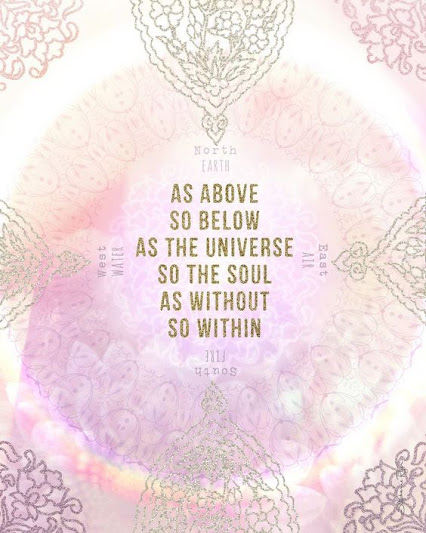
In all such noble endeavors, where one dares to die to the self of yesterday and unfold his consciousness towards the light of the resurrection, leading into a higher order of being, one must always keep in mind that as an entity he is also the microcosm.  If the “Above is as the Below, and the Below is as the Above”, what then, if one as an entity having transformed himself, has he then also transformed the Macrocosm?

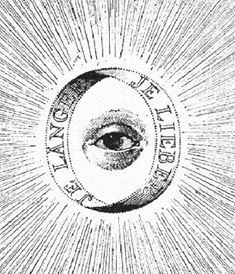
Meister Eckhart said that, “the eye with which I see God is the same eye in which God sees me; my eye and God’s eye, that is one eye and one seeing and one recognizing and one loving.”

Rudolph Steiner said that, “everything that man undertakes in order to awaken the eternal within him, he does in order to raise the value of the world’s existence”.

alch3

The truth is that everything participates in a continuum of consciousness all linked as one. No one thing can change its consciousness without effecting and changing the consciousness of all else.

As each man or woman who raises to whatever little degree his or her consciousness, they pull along with themselves the whole. Nothing can change its consciousness without changing the whole, the All.

That is one reason why this work is called the “Great Work”.  As the Sepher Yetzirah says, “lead the Creator back to his Throne”. This is a very profound statement, and it is very Kabalistic.  Perhaps we don’t realize it fully yet, but we are each and every one of us a world. Meditating on this can result in a very fruitful realization. As many persons as there are in the world, that is how many worlds there are?

It is said that, within ourselves we have all that is required to arrive at the inner elixir of life, as the inner Stone.

By the stone here we mean the Philosopher’s stone. Within ourselves, within our bodies and in our blood, are resident all that we need for this precious work. We have the divine essence of spirit and we have the fire
of the soul. The most important secret in the work is to learn to kindle and fan into flames this “hidden fire”, as it is called by the alchemists. It is said that the work is one of a scareTo be continued with Part 2d and vigilant tending to this fire. Johannes Helmond in “Alchemy Unveiled” says that, when he is given his freedom, this fire will do all the work in its nature for us. Until it is awakened, this most adorable fire lies hidden under a hard shell, still weak and unable. How
do we light this fire? By deep Breathing, concentration, visualization, prayer, aspiration, mystical zeal and love for that which is the divine in us. (Meditation and spiritual exercises.)

In the practice of alchemy, the transmutation of the lower energies of the soul and consciousness are allegorized through the symbolisms encountered in the philosophic transmutation of the seven metals of the alchemists. There are seven archetypal metals that we work with as far as the alchemical process is concerned. These seven metals are also the intelligences of the seven planets as a kind of subterranean astronomy.

alch2

Julius Evola says, ” Thus we come to the esoteric doctrine of the seven points through which the higher powers enter into the corporeal context, whereupon they become vital currents and energies specific to man. “Metaphysically the work is powerful and very transforming, as one realizes the awesome archetypal energies that are released psychically that effect both our bodies and our consciousness.

What is very important for one to understand is that the alchemical symbols of the seven archetypal metals are also the same as those of the seven planets or the seven rays of creation. It is equally important to under stand what the symbol for each of these metals truly represents allegorically. One should also keep in mind that just as jewels and precious stones in symbolic traditions signify spiritual truths and inner qualities that need to be mined from the “Mons Philosophorum”, or the mountain of the philosophers, which is the alchemist himself, so too the archetypal energies of the seven traditional metals are within the alchemist in a very metaphysical way.

They do make up our inner energies as different energy levels of the soul. Gems and precious metals hidden in a cave represent intuitive and spiritual knowledge harbored in the unconscious. These are often realized in dreams and visions during meditation. A certain development can be recognized as such visions evolve ultimately leading to the brilliance of the pure light of the Spirit. Anyone interested in the art of transformation and alchemy, should take a closer look at the metaphysical aspects of the seven metals of the alchemists.

To be continued with Part 2

Greek Alchemists at Work: ‘Alchemical Laboratory’ in the Greco-Roman Egypt | Matteo Martelli – Academia.edu

“The paper focuses on the alchemical laboratory of ancient Greco-Egyptian alchemists, by taking into account especially the earliest alchemical texts (both in the Greek and in the Syriac tradition), ascribed to Pseudo-Democritus, Maria the Jewess and Zosimus. The first part analyzes the possible relationships between the workshops of Egyptian craftsmen (first of all, dyers, metals workers and glass workers) and the activity of the alchemists. The second part gives a general overview on the alchemical instruments described in the Corpus alchemicum .”

Academia.edu is a platform for academics to share research papers.

Source: Greek Alchemists at Work: ‘Alchemical Laboratory’ in the Greco-Roman Egypt | Matteo Martelli – Academia.edu

12 Ordinary Channels and 7 Alchemical Metals | | TheKingdomWithin

12 Ordinary Channels and 7 Alchemical Metals ~ Raz Iyahu In Eastern and Western Alchemy the body consists of 12 Ordinary Channels (called the Microcosmic Orbit) that circulate and surround the inner three Cauldrons called Essence, Vitality and Spirit which related to the lower (belly), middle (heart) and higher (mind). These three inner cauldrons represent the stages of energy refinement which leads from the more dense to the less dense energy ending in spiritual Oneness with Divinity. In Judaism, the arrangement of the 12 tribes and the three sections of the Tabernacle are like this (yellow image below) In Alchemy, the precious cauldron is behind the eyes where spiritual sight is achieved. In Judaism, the Holy of Holies, where the High Priest went to speak to God at the innermost part of the Temple. The lowest cauldron in Alchemy is called the ‘Stove’ and it is to be kept burning night and day. In Judaism, the ‘Brazen Altar’ was the first section of the tabernacle and it was to be

Source: 12 Ordinary Channels and 7 Alchemical Metals | | TheKingdomWithin

Exploring The Hermetic Tradition – with Terence McKenna

Scholar, Shaman, and Psychedelic-Mystic, Terrence McKenna explored many interesting avenues of psychology, anthropology, and ethnobotany. What many don’t know is that he also explored the esoteric. In this fascinating lecture, McKenna addresses the topic of Hermeticism among other things. He gives us his unique perspectives on this enigmatic tradition. Hope you enjoy!

Alchemy – The Seven Stages of Alchemy

alchemy3

1. Calcination

This is the first stage of the alchemical practice and essentially represents the process of burning. It represents a burning within the self, of energies repressed due to trauma, projection of others thoughts, ego, and feelings or emotions. Calcination allows us to bring the energy or feelings to the surface, experience them fully and cause the fires of calcination to burn the energy away. Once this step is complete, the process leaves us with a feeling of freedom from the energy.

2. Dissolution

Dissolution is the process of adding the element of water to the ashes of what has been burned by the fires of calcination. This is an emotional stage where the person takes themselves back to “the womb” of childhood where some of the impurities (repressed feelings) were attached and need to be washed away. The feelings, reactions, opinions, thoughts, beliefs, and attitudes must be examined for reality, to find whether they are based on repressed feelings or present facts. This is a stage of anxiety, fear, denial, illusion and possible mental breakdown. When a person moves through this stage they can then look at what is real because feeling all of the negative feelings has now penetrated the illusions.

3. Separation

In this stage of the alchemical process the individual is able to see himself in two parts or the opposites within. The two worlds represented are the world we have created — fueled by what we come from — and the world of consciousness and reality– a world much different from the one we ourselves created. Repressed feelings cause a veil to be produced that causes reality to be skewed. Separation is a process of being able to see and separate the ego self that has been burned in the fires of Calcination and the feelings expressed and released in Dissolution and choosing what is now important to keep of you.

4. Conjunction

Conjunction gives us our first look at the higher realms of existence such as spiritual connection, concept of God, or something greater than ourselves that is outside of and connected to our self. This stage is described in the Emerald Tablet, “That which is Below corresponds to that which is Above, and that which is Above corresponds to that which is Below, to accomplish the miracles of the One Thing.”

5. Fermentation

Fermentation is also known as Putrefaction or decomposition. This decomposition is the rotting of the dead self. There is realization on a deep level of ones deficiencies, and a possibility of mental depression at this stage. To look into the dark shadows of one’s self is to look at what most deny. Jung spoke of the importance of embracing one’s shadow so that the darkness of it could be illuminated. When the shadow is embraced it can be healed with the introspection and understanding of what gave it birth. Regeneration and growth begins to take place during this stage.

6. Distillation

Distillation is another wash of the parts of the personality that no longer work with the new self that has been uncovered. Human beings grow attached to the material world along with their thoughts, beliefs and opinions. This stage of the work calls us to release attachment to everything and feel detachment as a true form of love. This form of love is from a higher level and not a form that is usually practiced until we have let go of our attachments to end results or the future. Distillation helps wash away the dark matter of attachment and reveal the deeper intuitive self in its purest form– light and Oneness.

7. Coagulation

This is the last stage of the alchemical process. The balance of the opposites creates a balance and harmony necessary to easily move between the two realms of matter and spirit. The person that has successfully accomplished this stage has completed unification within themselves on all levels. They have been able to join spirit and soul with the body, separating them from everything that would hinder them ascension into the union with the Divine. This is the stage of the phoenix rising from the ashes and the complete resurrection.

Top 5 Foods for the Pineal Gland | Wake Up World

If you’re seeking enlightenment through meditation, or perhaps you’re just looking to obtain a good night’s rest, you need a healthy pineal gland. Often referred to as the third eye, this small, pinecone-shaped endocrine organ located in the brain secretes and regulates melatonin, the hormone that regulates your circadian rhythms (your sleep-wake cycle) and certain sex hormones. Calcification is an issue that occurs to everyone, but it’s increased in individuals that eat a poor diet. The problem is that overexposure to fluoride and phosphorus destabilizes your body’s mineral balance. This causes your pineal gland to calcify quickly. Nearly half of Americans experience pineal calcification by the age of 18! Try these 5 foods for the best pineal gland health. By Guest Writer Dr Edward Group

Source: Top 5 Foods for the Pineal Gland | Wake Up World

Daily Chabad

Why Can't We Celebrate Love Everyday

Why can’t we celebrate love every day?
After all, nothing makes us happier than loving others and being loved, so why not nurture it and enjoy it each day of the year? As a scientist and Kabbalist, I learned that the key to a meaningful life is giving and receiving. The trick is that both need to be carried out with a feeling of connection, unity, and love. Without giving and receiving through love, life would not be possible; it is how we are all created.
Nature acts this way on every level of reality, but we humans often forget it and focus on hatred and denial of the other rather than on love and embracing of each other. These days the world is filled with hatred, intolerance, and xenophobia. But embracing the differences between us make us stronger, agile, open to ideas, and generally more alive. If we could find a way to always live that way, every day, humanity would be happy.

– Dr. Michael Laitman

The 7 Biggest Mistakes People Make When Learning Magic

Avoid these common pitfalls when studying magic, meditation or mysticism
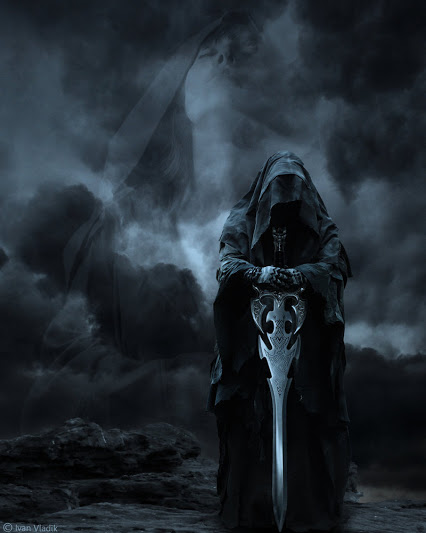
hoodedMagic is a very strange hobby. If you’re like me, you’ve probably been drawn to it for lofty reasons: You want to understand the universe and your place in it. You want answers to the questions of life, the universe and everything—not just second-hand faith in somebody else’s proclamations. You want a heightened sense of personal dignity, integrity and power to achieve the goals that matter to you the most. And—most of all—you want enchantment. You want to live an enchanted life—one in which you can immerse yourself in wonders and mysteries, and experience intensity that people who are checked out in front of their phones or TV screens never will. You want a heightened reality, or even to quest for absolute reality itself.

So, for any of these reasons or more, you step into the Circus of Magic. You might spend some time browsing occult Web sites, or visit a New Age bookstore. You might buy a workbook or two, and try the exercises. You might join a society like Freemasonry, a Wiccan coven, or even a Meetup group, and begin to meet others in your community with similar questions.

As you do this, you will slowly be leaving the “consensus trance,” the one created by the daily ritual of Commute-Job/School-Consume-Television. And you will find yourself in a new “trance,” one defined by ideas of magic, personal possibility, awakening, new group dynamics, alternative life paths. You will likely encounter a lot of incredibly inspiring ideas, and also, unfortunately, a lot of disempowering ideas and beliefs.

Here’s a useful way to think about it:  Mainstream society is a program designed to work the best it can for the widest number of people possible. Generally speaking, that means good, decent people who are happy to live quiet, decent lives, and content themselves with the victories of career, family, health, happiness and making it through another day. And that’s a beautiful thing.

Outside of mainstream society, however, you will find a very different reality—the “wildlands” of modern civilization. Its denizens, for one reason or another, don’t feel satisfied by consensus reality. That could be because they’re ahead of the curve, or it could be because they’re far behind the curve. That makes the “wildlands” an exciting, and dangerous, place. The “wildlands” are where society puts the ideas that are too disruptive of its daily activities, for better or worse. The strange ideas, the discredited ideas, the untested ideas, the potentially liberating ideas.

Magic is one of those ideas—or, rather, a gigantic cluster of ideas (a memeplex). Many of those ideas are really cool, and many should stay in the trash-heap.

But let’s be clear: To engage with magic is to begin to sort through society’s trash, looking for anything of value. Glamorous, no? Remember, alchemy is the art of turning shit into gold. “The stone the builders rejected has become the cornerstone…”

Well, if you’re going to go looking for gold out there, at least allow me to guide you through the territory, so that you can avoid the seven biggest mistakes that people make when learning magic (we’ve made them all!).

1. Poorly Defined Goals

What do you want?

It’s a simple question, but most who enter the world of magick and alternative spirituality never ask it, or never fully define the answer. As a result, they’re caught up in the “dazzling lights” of the New Age Pinball Machine, and bounced around between experiences, groups and teachers, never finding themselves or getting to their core issues and drives.

You need to ask this question up front: What do you want? Do you want greater creative skill and power? Do you want to fix a trauma or personal challenge? Are you willing to give up everything and seek enlightenment? Whatever it is, define it now, and then ask yourself if magical means are really the answer, or if more mundane means would be a lot easier. Be clear on this, or you risk getting caught up in the glamour of magick, and forgetting that it’s just a tool, and only one tool of many available to you right now.

2. Staying in the Shallows

Magic is a giant buffet table. Thanks to the shrinking of the world by global communications, you’ll find material from every world faith and esoteric path readily available to you. Hermeticism/Golden Dawn/Thelema; Yoga; Vedanta; Vajrayana Buddhism; Sufism; NLP … the list is limited only by the demand of the New Age marketplace for the next big kick. Just a hundred years ago—in some cases, just a few decades ago—all of these subjects would have been incredibly hard to discover information on. You wouldn’t have been able to just pop down to Barnes & Noble or go on Amazon and have it all handed to you. And in all cases, once you discovered the entry to a path, you would be confronted with a teacher who would explain that the path was the work of a lifetime.

That puts modern seekers in a unique position. We don’t lack access—but what we do often lack is commitment to a path. Most likely, students will browse here and there, reading on a wide variety of paths, or even joining several groups in sequence. This is an incredible way to learn quickly; however, if the buffet table approach takes the place of deep, committed learning in one path or tradition, what happens is you stop making progress. You just get to the edge of your comfort zone in one path before starting over in another, never taking that crucial jump into the unknown. Ironically, this probably takesmore time than sticking to one path, at least until you reach that path’s completion stages.

However, if you go in the complete opposite direction, and become a “Path Zealot,” you will make the third mistake:

3. Thinking There is One True Path

Once you’ve experienced peak states or personal breakthroughs in a system, it’s easy to generalize: “This is absolutely incredible … everybody should experience this!”

If you’re not careful, you soon become a missionary, talking non-stop about what you’ve experienced, trying to get your friends or family into whatever practice caused the peak state or breakthrough, or even, at the high registers of “Kool-Aid Intoxication,” thinking that you have found the One True Path, and that all other paths are lesser or deluded.

People can stay stuck in this state for days, weeks, months, or years—even their whole life. It tends to be a blockage to progress. It’s a classic behavior of an individual with a weak sense of self:  Deep down, they feel themselves to be inferior or lesser than others, so they place all their focus on an all-consuming ideology or charismatic leader that they derive strength and self-worth from serving. If this sounds like an obvious trap, and one you would never fall for, think again: The “One True Path” disease has been responsible for many of history’s greatest tragedies, including the Third Reich or the many historical genocides committed by overzealous religious missionaries that worked to “convert by sword.”

If your path is the One True Path, it’s time to leave your cloistered room or insular community and experience what life is like for others of different faiths and life backgrounds. Make some new friends.

4. Us vs. Them Mentality

Because people who are into magic and alternative spirituality are often on the fringes, it’s easy to adopt belief systems that reinforce an oppressed identity or “us vs. them” story. This becomes a particularly acute problem when the magic that people are doing isn’t working, or not producing a good quality of life, and instead of changing the behaviors or beliefs that aren’t working, people create a narrative in which some “other” individual or group is keeping them down. These stories about why failure is OK quickly blossom and cross-pollinate, becoming wide-scale conspiracy theories potent enough to infect whole cultures, leaving disempowerment, misery and even genocide in their wake (again see the Third Reich). Examples of this include:

• “The Illuminati are out to get me because I have secret knowledge.”

• “Shapeshifting reptilians/Archons/evil spirits/Satan/etc. are controlling reality and don’t like me.”

• “I’m way too enlightened/edgy/intense/real for mainstream society to handle.”

• “I am a lightworker charged with battling the dark forces, and the dark forces are in control.”

Do you have any of these beliefs, or any similar ones? Let’s take a look at them—what’s the underlying message of all of them? Personal significance. Me me me. All of these scripts allow for personal significance through failure. They all allow you to be a complete fuckup and to simultaneously have the illusion of “winning.”

They are all poison. Jettison them immediately, and instead focus on your personal growth and happiness, and how you can be of service to the people around you.

5. Substance Abuse

Drugs and magic have been linked since the very first prehistoric shaman chewed some strange bark or fungus that let her talk to the spirits of the forest, and the spirits of the forest turned out to have some pretty useful stuff to say.

In recent times, magicians like Aleister Crowley, William S. Burroughs, Terence McKenna, Carlos Castaneda and others have hyped the spiritual potential of psychedelics and even harder substances. Some of them have also fallen prey to addiction, and the destructive behaviors that come with the disease of addiction. This is one of the major reasons why magic has been so discredited—it allows people to say “Yeah, but you were just high,” or to look at the addiction behaviors of people like Crowley and attribute them to magic instead of their true source, the drug addiction itself.

Drugs may be a fast route to altered states, but they are not a sustainable one. In our current moment—world economic crisis, instability and uncertainty—I suggest that magicians don’t have the time or luxury of drug use. We need to be sharp, frosty—Navy SEALs, not Deadheads. Remember: The Baby Boomer generation could burn decades with drug experimentation because it was the richest, most financially secure generation in history. That is not the case for Millenials or those younger. The world reality is a live-fire situation, a war zone, and you don’t dull your edge or disorient yourself in a war zone.

(It’s not an “Us vs. Them” war zone, by the way. It’s a free-for-all, as everybody scrambles to survive the challenges created by the acceleration of technology and growth of the human population.)

6. Trying to Be the “Best Magician” Instead of the “Best You”

When overachiever types get into magic, they try to learn every single aspect of it and become a Total and Formidable Master. There is no mastery; leave this archetype in the Saturday morning cartoons it came from. Remember: Magic is just a tool. Know your goal, and use the tool to achieve your goal.

Of course, it doesn’t have to be so linear: You may simply be seeking the regular, sustainable spiritual growth that comes from a regular practice of meditation, dreamwork, journalling, yoga, ritual and any other tool you have chosen to use. Wonderful.

The key here is:  It’s not a competition. There is no prize, other than becoming more yourself.

7. Giving Your Power Away

Particularly as a young and untested magician, you will likely be confronted with situations or people that tempt you to surrender your power. Whether it’s an autocratic or abusive guru, a regimented and controlling magical order, or even a tightly controlling ideology, you might be tempted or even frightened into surrendering control of your life in exchange for some tangible or intangible reward.

If you do this, get ready for a painful learning experience!

Though it can sometimes be easy to forget, you are the true magician, the true master of your reality. To fully illustrate this point, I’d like to include a story from the author John Fowles, who kindled my early teenage interest in testing the nature of reality. It’s from his 1965 novel The Magus:

Once upon a time there was a young prince who believed in all things but three. He did not believe in princesses, he did not believe in islands, he did not believe in God. His father, the king, told him that such things did not exist. As there were no princesses or islands in his father’s domains, and no sign of God, the prince believed his father.

But then, one day, the prince ran away from his palace and came to the next land. There, to his astonishment, from every coast he saw islands, and on these islands, strange and troubling, creatures whom he dared not name. As he was searching for a boat, a man in full evening dress approached him along the shore.

“Are those real islands?” asked the young prince.

“Of course they are real islands,” said the man in evening dress.

“And those strange and troubling creatures?”

“They are all genuine and authentic princesses.”

“Then God must also exist!” cried the prince.

“I am God,” replied the man in evening dress, with a bow.

The young prince returned home as quickly as he could.

“So, you are back,” said his father, the king.

“I have seen islands, I have seen princesses, I have seen God,” said the prince reproachfully.

The king was unmoved.

“Neither real islands, nor real princesses, nor a real God exist.”

“I saw them!”

“Tell me how God was dressed.”

“God was in full evening dress.”

“Were the sleeves of his coat rolled back?”

The prince remembered that they had been. The king smiled.

“That is the uniform of a magician. You have been deceived.”

At this, the prince returned to the next land and went to the same shore, where once again he came upon the man in full evening dress.

“My father, the king, has told me who you are,” said the prince indignantly. “You deceived me last time, but not again. Now I know that those are not real islands and real princesses, because you are a magician.”

The man on the shore smiled.

“It is you who are deceived, my boy. In your father’s kingdom, there are many islands and many princesses. But you are under your father’s spell, so you cannot see them.”

The prince pensively returned home. When he saw his father, he looked him in the eye.

“Father, is it true that you are not a real king, but only a magician?”

The king smiled and rolled back his sleeves.

“Yes, my son, I’m only a magician.”

“Then the man on the other shore was God.”

“The man on the other shore was another magician.”

“I must know the truth, the truth beyond magic.”

“There is no truth beyond magic,” said the king.

The prince was full of sadness. He said, “I will kill myself.”

The king by magic caused death to appear. Death stood in the door and beckoned to the prince. The prince shuddered. He remembered the beautiful but unreal islands and the unreal but beautiful princesses.

“Very well,” he said, “I can bear it.”

“You see, my son,” said the king, “you, too, now begin to be a magician.”

Egyptians Spiritual Elixir – White Gold, White Ormus and Shrewbread

Many have spoken about Monoatomic Gold/Ormus on the forum this past week, some say that this element when taken, can enhance ones spirituality/knowledge. So i have done some research along with P.A. member VaughnB and came up with a wealth of information going back to Egyptian Times. Perhaps the Egyptians utilized this type of Elixir to make them more knowledgeable/spiritual as well. When they refer to Shrewbread here i believe they are referring to White Gold/Monoatomic Gold. Give this a look.

Source: Egyptians Spiritual Elixir – White Gold, White Ormus and Shrewbread

The Magdalene’s Alchemy Exposed, by Jude Warren

Magdalene1

There is a process in nature that, when unlocked can give longevity and perfect animal, vegetable and mineral. Disguised in present day society as the philosopher’s stone myth, it is based on the Isis and Osiris story from ancient Egypt. I am convinced the elite Egyptians knew about this stone and worshipped nature and nature Gods for giving it to them. Furthermore, present day Christianity is also based on the making of it.

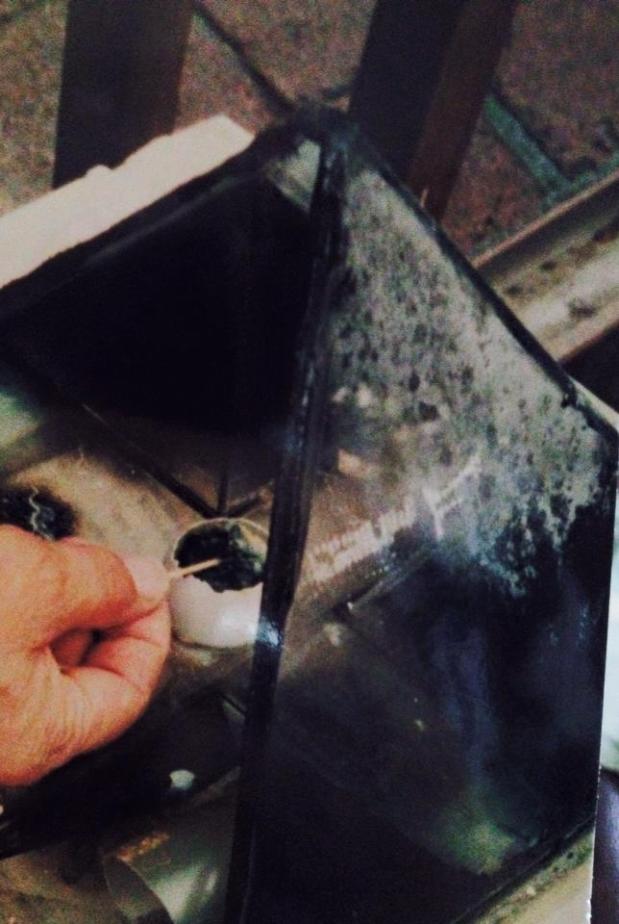
The making of the stone, which is rooted in much earlier myth, is a 16 month process and follows the path of the sun. It is made using what you might call the ‘nothings: A glass pyramid (pi Ra mid), dew or rain (mercury – murkunos – spirit), sun (sulphur – sol fire) time, and a little matter in the form of an egg, or the Great Cackler: Geb. This is also the divided waters of Genesis. The shell of the egg here is likened to the firmament, also containing pi and being hermetically sealed. I believe the Egyptians used ostrich and crocodile eggs.

This knowledge has been kept secret for a long time and confined only to the elite mystery schools and secret societies of the enlightened ones – denigrated to fairy story so that people dismiss it altogether. The alchemists of Europe later sought it and a few actually found it, including the great Nicolas Flamel. I would like as many people as possible to start understanding that it is real and super undefined matter like a human compost for growth. It is the universal medicine and can set us free from bondage.

magdalene2

The process in the Northern hemisphere starts on the 21st of December – sol invictus (saturnalia, the birth of the sun), when you prepare the dew for the work. On the 21st January, the egg is rotted with the dew for 4 months and kept in darkness (Set).

From the 21st May until the 21st August, dew is added, like Osiris in the coffin and it is kept in the sunlight, locked away. It becomes androgynous matter.

In september, the matter is moved to the top of the pyramid and it is dry for one month in moonlight only. It turns pure white under the constellation virgo – the virgin. Isis brings forth Osiris as a new baby. This is the origin of the virgin birth. It is linked to the making of the stone and gives eternal life.
From this primary white material, stripped bare the stone will be birthed.

From the 21st September until December 21st (12 months so far) it needs strong sun if going for a red stone. It is connected to Horus in December. Keep it wet with dew, work it in the eye of the pyramid towards the top. The moisture in the sealed pyramid rises and falls (ouroboros) this is the water that does not wet the hands, as the alchemists called it. I think at this time in Egypt, the Tit and lion cloth was tied to the djed pilar. The following Easter it has a full resurrection and is finished. It turns brilliant red or purple, the colours of royalty. This is now crowned matter. The Easter egg of Mary Magdalene – and in my version of the Da Vinci code, the Louvre pyramid at the end of the book is not where she is buried – it is the oven of her work……and rooted in the land of Khem.

— Jude Warren

alchemy-pyramid1

Alchemy – An Excerpt from THE SECRET TEACHINGS OF ALL AGES, by Manly P. Hall

12494798_1665246513731330_1165153577543028758_n

During the Middle Ages, alchemy was not only a philosophy and a science but also a religion. Those who rebelled against the religious limitations of their day concealed their philosophic teachings under the allegory of gold-making. In this way they preserved their personal liberty and were ridiculed rather than persecuted. Alchemy is a threefold art, its mystery well symbolized by a triangle. Its symbol is 3 times 3–three elements or processes in three worlds or spheres. The 3 times 3 is part of the mystery of the 33rd degree of Freemasonry, for 33 is 3 times 3, which is 9, the number of esoteric man and the number of emanations from the root of the Divine Tree.

It is the number of worlds nourished by the four rivers that pour out of the Divine Mouth as the verbum fiat. Beneath the so-called symbolism of alchemy is concealed a magnificent concept, for this ridiculed and despised craft still preserves intact the triple key to the gates of eternal life. Realizing, therefore, that alchemy is a mystery in three worlds–the divine, the human, and the elemental–it can easily be appreciated why the sages and philosophers created and evolved an intricate allegory to conceal their wisdom.

Alchemy is the science of multiplication and is based upon the natural phenomenon of growth. “Nothing from nothing comes,” is an extremely ancient adage. Alchemy is not the process of making something from nothing; it is the process of increasing and improving that which already exists. If a philosopher were to state that a living man could be made from a stone, the unenlightened would probably exclaim, “Impossible!” Thus would they reveal their ignorance, for to the wise it is known that in every stone is the seed of man. A philosopher might declare that a universe could be made out of a man, but the foolish would regard this as an impossibility, not realizing that a man is a seed from which a universe may be brought forth.

God is the “within” and the “without” of all things. The Supreme One manifests Himself through growth, which is an urge from within outward, a struggle for expression and manifestation. There is no greater miracle in the growing and multiplication of gold by the alchemist than in a tiny mustard seed producing a bush many thousands of times the size of the seed. If a mustard seed produces a hundred thousand times its own size and weight when planted in an entirely different substance (the earth), why should not the seed of gold be multiplied a hundred thousand times by art when that seed is planted in its earth (the base metals) and nourished artificially by the secret process of alchemy?

Alchemy teaches that God is in everything; that He is One Universal Spirit, manifesting through an infinity of forms. God, therefore, is the spiritual seed planted in the dark earth (the material universe). By arc it is possible so to grow and expand this seed that the entire universe of substance is tinctured thereby and becomes like unto the seed–pure gold. In the spiritual nature of man this is termed regeneration; in the material body of the elements it is called transmutation. As it is in the spiritual and material universes, so it is in the intellectual world. Wisdom cannot be imparted to an idiot because the seed of wisdom is not within him, but wisdom may be imparted to an ignorant person, however ignorant he may be, because the seed of wisdom exists in him and can be developed by art and culture. Hence a philosopher is only an ignorant man within whose nature a projection has taken place.

Through art (the process of learning) the whole mass of base metals (the mental body of ignorance) was transmuted into pure gold (wisdom), for it was tinctured with understanding. If, then, through faith and proximity to God the consciousness of man may be transmuted from base animal desires (represented by the masses of the planetary metals) into a pure, golden, and godly consciousness, illumined and redeemed, and the manifesting God within that one increased from a tiny spark to a great and glorious Being; if also the base metals of mental ignorance can, through proper endeavor and training, be transmuted into transcendent genius and wisdom, why is the process in two worlds or spheres of application not equally true in the third? If both the spiritual and mental elements of the universe can be multiplied in their expression, then by the law of analogy the material elements of the universe can also be multiplied, if the necessary process can be ascertained.

That which is true in the superior is true in the inferior. If alchemy be a great spiritual fact, then it is also a great material fact. If it can take place in the universe, it can take place in man; if it can take place in man, it can take place in the plants and minerals. If one thing in the universe grows, then everything in the universe grows. If one thing can be multiplied, then all things can be multiplied, “for the superior agrees with the inferior and the inferior agrees with the superior.” But as the way for the redemption of the soul is concealed by the Mysteries, so the secrets for the redemption of the metals are also concealed, that they may not fall into the hands of the profane and thereby become perverted.


— From The Theory and Practice of Alchemy