The Eternal City | by Brendan Heard, Contributing Writer, Classical Wisdom

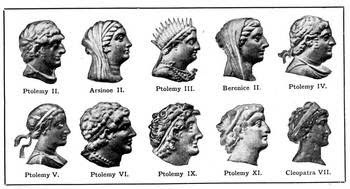
The succession of the Ptolemaic Dynasty, from Ptolemy to Cleopatra.

The Ptolemaic Dynasty of Egypt is a unique reference point in classical history. Most notably, our very notion of classical wisdom itself largely depends on this period, insofar as it played a role in  the documentation, preservation, and accumulation of the wisdom of the Greek world. It was a singular cultural epoch that sprang up into its own golden age, flourishing for a time, followed by rapid decline and acquiescence to Rome. Egypt was ruled for roughly three hundred years under Ptolemies (from 323 BC to 30 BC), ending with the death of Cleopatra.

As a civilization it was a relatively rare example of a largely tranquil symbiosis; where the philosophical ideas of a Greek ruling class took fertile root in an Egyptian culture—a culture already at that time considered impossibly ancient. The particular Ptolemaic world view which rooted and ripened in that immortal Nile valley soil gave classical history three hundred years of highly innovative, self-actuated, archaic-romantic civilization. The Greek rulers were as much influenced and altered by that eldritch land of ancient gods as the land was by them.

Most notably, this vibrant community led to the creation of the most important place of learning and wisdom in the ancient world. Perhaps ever. The much celebrated and lamented Library of Alexandria.

Its history began with the god-like Macedonian conqueror Alexander The Great, who overtook Egypt in 332 BC. He was regarded there as a liberator from the Persian oppression of the Achaemenid Empire (Artaxerxes III). Alexander was afterward crowned Pharaoh. To the Egyptians, pharaohs were the divine link between gods and men, who ascended to godhood in death. The Great Alexander, in turn, secured his own Egyptian godhood by consulting the Oracle of Siwa Oasis, who declared him a son of the god Ammon. From that point on, Alexander considered and referred to himself the son of Zeus-Ammon.

It is reported that Alexander, while dreaming, asked Ammon what he was to do. The god responded to him saying that his destiny in Egypt was to found an illustrious city at the site of the island of Pharos. This the great conqueror set forth to do, and this was henceforth to be named after him: the city of Alexandria.

But Alexander left Egypt before the city was built and never had a chance to return, dying soon after in 323 BC.

After his death, one of Alexander’s somatophylakes, the historian Ptolemy, was appointed satrap of Egypt. Soon after he declared himself pharaoh Ptolemy Soter I (soter meaning saviour). Ptolemy and his descendants adopted Egyptian customs, including religion, and had themselves portrayed sculpturally in Egyptian style. They built magnificent new temples in honor of ancient Egyptian deities and adopted the monarchic system of dynastic pharaohs. This was not unusual, as the Greeks from the onset had revered Egypt and it’s magnificent longevity, and within a hundred years they had developed a new Greco-Egyptian educated middle class.
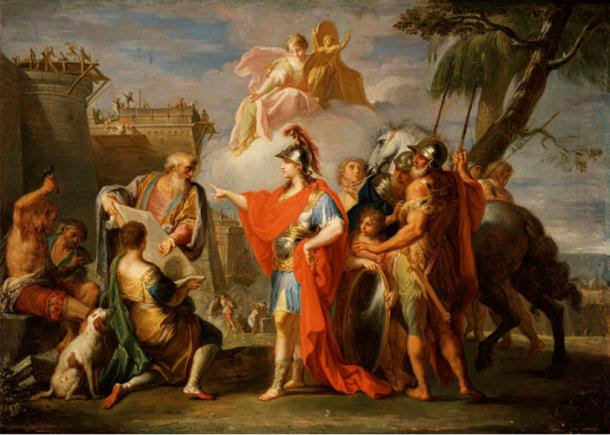
 

Alexander the Great founding Alexandria, Placido Costanzi (Italy, 1702-1759)

Ptolemy I Soter also went so far as to create new gods in order to unite his plural populace. Serapis was one such God, a combination of two Egyptian gods: Apis and Osiris. Additionally, Serapis combined elements of the main Greek gods: Zeus, Hades, Asklepios, Dionysos, and Helios, as well as influence from many other cults. Serapis had powers over fertility, the sun, funerary rites, and medicine, and included the worship of the new Ptolemaic line of pharaohs. To him they built the enormous Serapeum of Alexandria. Ptolemy I also promoted the cult of the deified Alexander, who became the state god of the Ptolemaic kingdom. This was a time when mortal men of sufficient influence really could become gods. Also in homage to the aims of Alexander, Ptolemy soon proclaimed the port city of Alexandria as the new capital of Egypt.
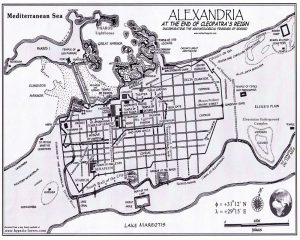
A map of Alexandria at the end of Cleopatra’s reign.

Fortunately, Ptolemy’s desire was to continue the work of his former master, which was to spread Hellenistic culture and Greek wisdom concepts throughout the known world. Where the Greeks had conquered, gymnasiums and libraries were erected. And libraries in particular enhanced a city’s reputation, attracted scholars, and augmented the available intellectual assets of a kingdom.

Any kingdom or nation faces threats to its existence. For Ptolemy the primary hazard came from his former comrades, the somatophylakes of Alexander who themselves had been granted rulers of surrounding satrapies. Each new kingdom which sprung up in the wake of one of the world’s greatest conquerors were thus set in competition against one other.
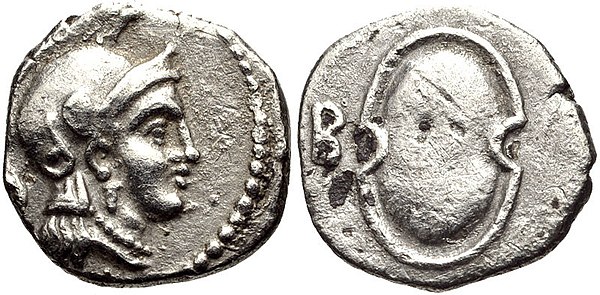
Coin of Balacrus, somatophylakes of Alexander, as Satrap of Cilicia, with letter “B” next to the shield, standing for B[AΛAKPOI],

Luckily for us, this rivalry often manifested itself in competitive feats of wealth and grandeur, of which exhibition of genuine culture was a token of magnificence. A kind of cold-war high-culture-race was underway: to have the largest or most impressive edifice, the most athletic and intellectual populace, to produce the greatest genius, artist, or astronomer, the most ground breaking scientific theory or understanding of archaic mystic philosophy. These were the conditions under which the Greek Pharaoh Ptolemy sought to make Alexandria an unrivaled center of knowledge and learning, and began plans (actual construction was likely begun under Ptolemy II) of the great Library. The construction of which was possibly managed by Demetrius of Phalerum, a student of Aristotle. Ptolemy sought nothing less than a repository of all knowledge, and his library would prove to be unprecedented in scope and scale, one that has gone unrivaled over the ages.
The library was not merely the largest collection of books (scrolls) in antiquity, but was also a kind of think tank, a research institution lavishly funded by the pharaoh. The actual library was housed within a larger building, known as the Mouseion (origin of our word museum), dedicated to the nine Greek goddesses of the arts, the Muses. Written research was officially conducted in both Egyptian and Greek. Scholars from across the Greek world and beyond were sought after and invited to live at the library, to practice their science, to teach, and to learn from each other, without domestic distractions. The first-century BC Greek geographer Strabo wrote that scholars were provided with a large salary, free food, lodging, and exemption from taxes.
It was a state-funded elite study group, only with the added advantage of not being invested in consolidating state power. The Greek scholars made no contribution to the economy. The aim of the library was nothing less than the virtuous pursuit of knowledge for its own sake. A place where scholars could come together and exchange ideas. Isolationist Egyptian temples had historically contained libraries but the books were kept largely secret from the public. Yet the combination of the Greek attitude toward philosophy and the impossibly ancient and staid nature of Egypt, served to abet the pursuit of new knowledge.
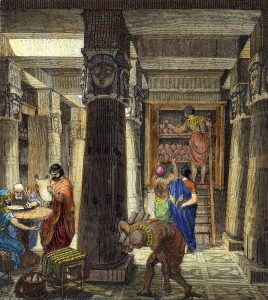
Artistic Rendering of the Library of Alexandria, based on some archaeological evidence.

In characteristically Greek fashion, the collecting of scrolls itself became an idealized vocation, a paramount obsession. Visitors to Alexandria arrived with their versions of famous literary texts, while agents were sent abroad collecting everything they could find. Books became a kind of currency, and in terms of this wealth, the library of Alexandria became the largest collection in antiquity. Some estimates suggest the number was as high as 700,000 scrolls, which were not just stored but used for reference and research by the active scholars. These scholars then spent time copying and spreading this accumulated knowledge further across the Greek world and beyond, and it is to this effect that we can thank our own surviving awareness of Classical wisdom. Because of this, Alexandria became the symbolic brain of a scattered and oppositional ancient world.
The feats of scholarship soon began to gain notoriety and, as visitors increased, so did reputation.  There may have been up to fifty learned men in the community, teaching and interacting at one time. Completely free from daily material burdens to indulge their intellectual pursuits. There were lecture halls, dormitories, and cafeterias, all enmeshed and linked in a manner to encourage the various experts of different disciplines to interact. There was a large communal dining hall, meeting rooms, reading rooms, gardens, lecture halls, and a great hall for the scrolls known as bibliothekai. It is speculated that the Mouseion may have also had a zoo for exotic animals. There was certainly a medical school where animals were used in the research of human anatomy (using human bodies was forbidden in the wider Greek world). Later, the library scholar Herophalus performed medical exams on dead human bodies, elevating the science of anatomy. Herophalus’ sacrilege was tolerated because the Egyptian embalming tradition gradually influenced Ptolemaic Greeks towards a more relaxed view regarding human dissection. Again, we note the creative virility of the symbiotic relationship of two quite different cultures, existing stably, mutually influencing one another.
Of the many poets who resided at the library, there were three of great fame for masters of Hellenistic verse: Callimachus, Apollonius of Rhodes, and Theocritus. Of astronomers there is Hipparchus, who figured out the path of stars, and length of solar years while in Alexandria. Eratosthanes figured out the circumference of the earth while studying there, by examining the length of cast shadows at certain times of day about sun-drenched Alexandria. He calculated this to an accuracy within 200 miles. The astronomer Aristarchus devised the first heliocentric model of the solar system (the known universe). Later, the Mouseion-educated mathematician and astronomer, Claudius Ptolemy (no relation), wrote his three influential treatises on astronomy, geography and astrology. Developing what we famously know today as the Ptolemaic system of astronomy.

An illustration of Ptolemy holding a cross-staff, published in Les vrais portraits et vies des hommes illustres (1584). Image by © Bettmann/CORBIS.

Overall, Alexandrian research was strongly centered towards mathematics. Among mathematicians under Ptolemaic patronage the most famous was the inventor Archimedes (inventor of the Archimedes screw), the polymath Eratosthenes, and the greatest geometer of all time, Euclid. After studying at the library of Alexandria, Euclid published his great text, The Elements, that immediately surpassed all previous geometric literature to that date and remains the foundation of that science today. It was Euclid’s access to the bibliothekai that allowed him to codify the collected results of basic theorems postulated by others through the centuries. Legend has it that when Euclid showed his work to the pharaoh, he was asked if there was any shortcut to understanding his work, to which Euclid replied, “there is no royal road to geometry.”
Along with poetry and mathematics, matters of philosophy and religion were treated with equal reverence, study, and proselytism. Many ancient texts became at this point translated into Greek, including the Septuagint translation of the bible, which made the story accessible to others. This is the primary Greek translation of the Old Testament, also known as the Greek Old Testament. Again, this work was done purely out of intellectual interest…to catalogue, examine, and learn from all available ancient sources.
In this sense the pagan world view had its advantages, in its ability to honestly assess other religions without offending its own dogmas, in a way that monotheism historically has not. These combined efforts to know all things in a spiritual context of understanding, united disciplines such as poetic literature and mathematics in common purpose, which we today might find unusual. They did not seem to share our quandary over the division of physical and metaphysical, or materialistic and spiritual. Astronomy and astrology were equally venerated, even if the latter was more open to interpretation, or understood to be spiritually speculative. Very seldom, if at all, in the ancient world do we see overt supplications to atheism or hard materialism. And that is despite it being a world where the gods changed with the generations, and the good ones became evil, and vice versa, and new kings invented new gods altogether.
All the studied disciplines at Alexandria, from anatomy to Platonism to topography, were interwoven in a tapestry of mutually educative striving, beneath the hierarchy of the Pharaonic society. The monarchic system itself, quite alien to us now, was also woven into this mesh as the unquestionable order, the foundational bedrock supporting the pursuit of high culture. We are reminded of these more esoteric and archaic foundations in the name Alexandria itself. For let us not forget, the city was named after and founded by the great god-king Alexander, and all that followed was based on his vision for it.
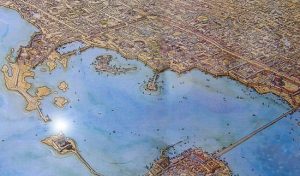
Artist’s Impression of Ancient Alexandria.

Concerning philosophy and mysticism more specifically, Alexandria nourished Neo-Pythagoreanism, Middle Platonism, NeoplatonismTheurgy, and Gnosticism, which all flourished and were studied and transcribed by busy scholars under patronage of the Ptolemies over the centuries. In the name of these mystic and rational philosophies, and to the copying of scribes, and to the boundless ideas therein represented, we may also pay our respects to the memory of this golden classical city.
Abstractly speaking, the library, acting as a storehouse of philosophy, religions, history, and science, secured beyond its finite physical existence its sacred purpose: the dissemination and preservation of knowledge across distance and time. Many manuscripts that were ancient in Ptolemy’s day survive down to us thanks to the care of the various scholars that visited and lived in Alexandria. In this way the historic reverberations of the library issue about recorded history like ripples upon the surface of water—reaching ever outward.
The decline and fall of this institution was synonymous with that of the Ptolemies themselves. The precise cause of destruction is lost to time amid conflicting reports, and is often a controversial subject, beginning with the rise of Rome in that region.
Roman interest in Egypt was typically due to the reliable delivery of grain to the city of Rome. To this end the Roman administration made no essential change to the Ptolemaic system of government, however they were in all but name subjugated before the powerful new empire. The Romans, like the Ptolemies, respected and protected Egyptian religion and customs, although the cult of the Roman state and of the Emperor was gradually introduced. The great library was at least in part burned accidentally by Julius Caesar in 48 BC. But there are accounts of its existence by notable visitors who accessed its resources around 20 BC. However, overall, it dwindled during the roman period, and suffered from a lack of funding after the Ptolemaic dynasty ended with the death of Cleopatra.
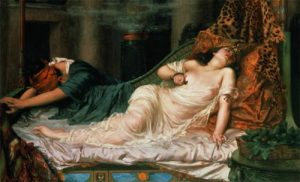
The Death of Cleopatra by Reginald Arthur, 1892. (Public Domain).

Around 270 AD the library may have been destroyed further in a rebellion. By 400 AD paganism was outlawed and the Serapeum was demolished by Christians under orders from pope Theophilus of Alexandria. However, it may not have housed many books at that time, and was primarily a meeting place for Neo-Platonist philosophers following Iamblichus. In 616 AD the Persians conquered, and this was followed in the same century by Arab conquest, and whatever remained then of the library was finally destroyed for good in their sacking of the city by the order of Caliph Omar.
Whatever had remained of the collection at that point was no doubt finally lost. But as all things that exist for a time, there is a portion that belongs to the infinite (at least according to the Neo-Platonists thought).
The life of the mind, that epitome of Plato’s teaching—which the library of Alexandria embodied—was preserved in that eternal city, leaving traces of itself for us to cherish today.
===
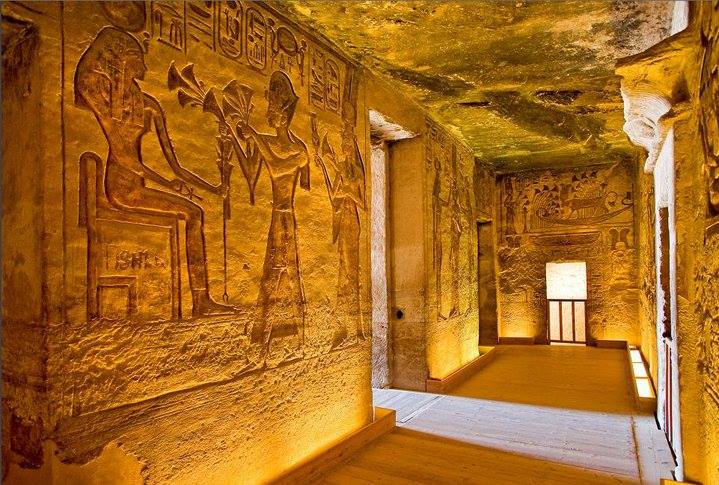
The Eternal City was Written by Brendan Heard, Author of the Decline and Fall of Western Art 

The Lady of Magic & the Lord of Ecstasy

Isidora's avatarIsiopolis

Of course the Egyptians made wine!

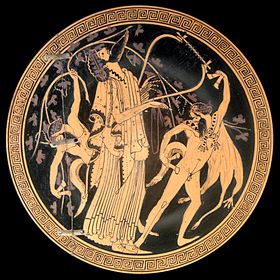
Dionysos in musical ecstasy

I missed posting the last couple of weeks. Life, the Universe, Everything…and the Fall EQ Festival. This year was dedicated to one of my two Beloved Ones, Dionysos, so I had to be there. It was a very fine Festival and Divine Madness was had by all. Anyway, in His honor, and Hers, I’d like to show you how, in antiquity, these two Divine Ones came together…as They do even today in my heart.

Now, at first glance, the Greek God of Ecstatic Intoxication & Wine doesn’t seem to have much to do with our Egyptian Lady of Magic & Power, Isis. After all, He’s the Sex, Drugs & Rock-n-Roll God and She’s, well, She’s a bit more serious.

Ah, but wait. All is not as it seems. (All is almost never as it seems.) There are, in fact…

View original post 915 more words

The Tetragrammaton – Masonry Meets Theurgy

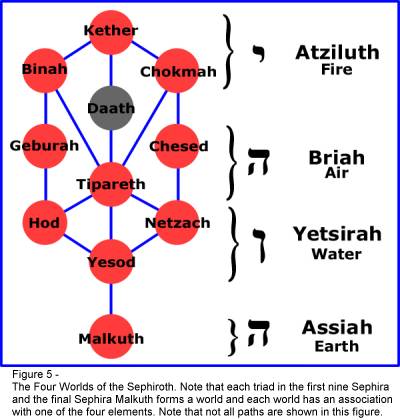
The Tetractys and the Sephiroth represent similar concepts; however the link between these two concepts would not be readily apparent were it not for their common use of the Tetragrammaton. The Tetagrammaton serves as a bridge between these concepts which span time, culture (Greek and Hebrew), and multiple Masonic rites and rituals. This paper discusses the Tetragrammaton, the Tetractys, and the Sephiroth and shows how the three are related.  […]

Source:  http://rosacruzes.blogspot.com/2009/02/tetragrammaton.html

Stationary Powerpoint

Tara Greene www.taratarot.com's avatarTara Greene,Tarot,Astrology,Psychic

Saturn is now Stationary to be exact, September 18- 23rd at 13+ degrees Capricorn. 13+ degrees Capricorn is a potent powerpoint for the next 5 days. Dig into the karmic patterns and release them now. Saturn is death and time. It’s not easy work but turning lead into Gold is awesome.

13+ degrees Capricorn. 13+ degrees Capricorn is a potent powerpoint for the next 5 days. Saturn moves forward to the 14th degree on the New Moon, how synchronous.

This Saturn station is s a very powerful point. Put all your discipline into understanding what you are supposed to learn about in going over these lessons over lifetimes and get it and let it go. 

We are stuck in the rut with the wheels spinning around, we are tired of being stuck and now its time to release what has kept us here. Look at the deep patterns in your…

View original post 612 more words

Venus in Libra brings balance in 2019

Tara Greene www.taratarot.com's avatarTara Greene,Tarot,Astrology,Psychic

VENUS enters her home sign of LIBRA September 14-October 8

Venus 1024px-Birth_of_VenusSandro Botticelli [Public domain] Venus in Cancer water born, Botticelli Sandro Botticelli [Public domain] Which means its time for Women, beauty, love, creativity and justice time as Venus is in her Air and daytime sign September 14-October 8.
VENUS in LIBRA will be bringing sexy back as she is THE LOVE GODDESS HERSELF along with Mercury who is very close by to her right now in Libra.
We are thinking an talking and texting and twittering about all things Venusian and Mercurial during this time.

VENUS in the TAROT is symbolised by Card #3 The EMPRESS

There will be a NEW MOON in LIBRA @ 5+ degrees on September 28 with  Mercury and venus. triple Libra times.
LILITH WILL BE CONJUNCT NEPTUNE EXACTLY DURING THIS NEW MOON

Hopefully, Venus will help to bring some balance to all out of balance situations in the world…

View original post 425 more words

Profile | Who was A.E. Waite?


Arthur Edward Waite (1880)

Arthur Edward Waite was a scholarly American mystic who wrote extensively on occult and esoteric matters, and was the co-creator of the Rider-Waite Tarot deck. He was the first to attempt a systematic study of the history of Western occultism, viewed as a spiritual tradition rather than as aspects of proto-science or as the pathology of religion.  […]

Source:   http://www.witchcraftandwitches.com/witches_waite.html

Friday the 13th, Pisces Harvest Moon Golden opportunities

Tara Greene www.taratarot.com's avatarTara Greene,Tarot,Astrology,Psychic

The Big old Harvest Moon is exact Friday the 13th @ 9:32 pm GMT Sept.14th @ 12:32 am GMT and 4:32 am GMT @  21+ degrees PISCES.

A Micro Harvest Pisces Moon with so much going on!

[CC BY 2.0 1024px-A_Full_moon_(6868821212) Silver Blue from India(https://creativecommons.org/licenses/by/2.0)%5D If you are superstitious this Friday the13th Full Moon may freak you out. The last time there was a Full Moon on Friday the 13th was Oct.13, 2000, and you can relax because there won’t be another until August 13, 2049!

This is a jampacked last Full moon before the Equinox.

PISCES Full Moon is about letting things flow and go blessing it all. The PISCES energies are enhanced, Psychic, spiritual, meditative, envisioning, merging, boundaries, addictions, delusions, and dreams are all at peak. This is an ending of endings as Pisces is the last sign and full moons are conclusions.

the Harvest moon is time…

View original post 911 more words

Theosophy | METAPHYSICS AND ETHICS – II, by Raghavan Iyer

Tat tvam asi

   Despite its contempt for metaphysics and for ontology, materialistic science is honeycombed with metaphysical and contradictory implications, and even its “atoms” are “entified abstractions”. “To make of Science an integral whole necessitates, indeed, the study of spiritual and psychic, as well as physical Nature.” But although real science is inadmissible without metaphysics, and those scientists who trespass on the forbidden grounds of metaphysics, who lift the veil of matter and strain their eyes to see beyond, are “wise in their generation”, H.P. Blavatsky declared towards the end of The Secret Doctrine that the man of exact science must realize that

   he has no right to trespass on the grounds of metaphysics and psychology. His duty is to verify and to rectify all the facts that fall under his direct observation; to profit by the experiences and mistakes of the Past in endeavouring to trace the working of a certain concatenation of cause and effects, which, but only by its constant and unvarying repetition, may be called A LAW. . . . Any sideway path from this royal road becomes speculation.

The Secret Doctrine, ii 664

   It is a sign of advance that scientists today are less given than their predecessors in the latter half of the nineteenth century to “metaphysical flights of fancy”. Bad metaphysics is clearly worse than none. On the other hand, as modern psychology becomes less materialistic and as race evolution proceeds, a greater appreciation of the higher intuitive and cognitive capacities will emerge and may enable the most intuitive scientists to venture more effectively into metaphysics.

It is, therefore, necessary for students of Theosophy to see the fundamental difference between what goes by the name of metaphysics and has rightly become suspect today, and the “metaphysics, pure and simple”, with which The Secret Doctrine is concerned. We cannot, however, grasp the metaphysics given in Theosophical teachings unless we perceive its close and inseparable connection with Theosophical ethics. We are told in The Secret Doctrine that the “highly philosophical and metaphysical Aryans” were the authors of “the most perfect philosophical systems of transcendental psychology” and of “a moral code (Buddhism), proclaimed by Max Müller the most perfect on earth”. Without a proper understanding of Theosophical psychology and the teachings regarding the nature and constitution of man and the working of karmic law, we cannot appreciate the metaphysical basis of Theosophical ethics or the ethical significance of Theosophical metaphysics. Hence the importance of a careful study and application, from the first, of the Ten Items from Isis Unveiled or the Propositions of Oriental Psychology, and of the Aphorisms on Karma by W.Q. Judge. Until this is done, we cannot begin to see the ethical import of the statements in The Secret Doctrine or the metaphysical basis of the statements in The Voice of the Silence and Light on the Path.

We are told explicitly in The Secret Doctrine that “to make the workings of Karma, in the periodical renovations of the Universe, more evident and intelligible to the student when he arrives at the origin and evolution of man, he has now to examine with us the esoteric bearing of the Karmic Cycles upon Universal Ethics”. Our ethical progress depends on an increasing awareness of the “cycles of matter” and the “cycles of spiritual evolution”, and of racial, national and individual cycles. The kernel of Theosophical ethics is contained in the statement that “there are external and internal conditions which affect the determination of our will upon our actions, and it is in our power to follow either of the two”. This contains a great metaphysical and psychological truth, which is illuminated by the seminal article on “Psychic and Noetic Action”, written, late in life, by H.P. Blavatsky, the Magus-Teacher of the 1875 cycle.

Theosophical ethics is in the end no easier to understand properly than Theosophical metaphysics. It can no more be grasped by the mentally lazy than Theosophical metaphysics can be comprehended by the morally obtuse. There is nothing namby-pamby about Theosophical ethics and it is as fundamentally different from conventional ethics as Theosophical metaphysics is from conventional metaphysics. Just as modern metaphysics is a shadowy distortion of archaic metaphysics, modern ethics is a sad vulgarization of the archaic ethics taught by the early religious Teachers of humanity. It is to be welcomed that more and more questioning people today are less and less prepared to accept blindly conventional ethical codes merely because they are traced back to so-called scriptural revelations, just as they have little use for the metaphysical speculations of even the formidable minds of the past. If the ethical nihilism of today is even more repugnant to the Theosophist than sterile positivism, he would do well to regard both as the karmic price we have to pay for the moral and metaphysical dogmatism of the past.

Although we may talk of Theosophical metaphysics and Theosophical ethics, and classify texts broadly under these heads, we must get beyond the conventional distinction between metaphysical and ethical statements and grasp central concepts, such as Dharma and Karma, which are protean in scope and profound in content, and incapable of being regarded as purely metaphysical or exclusively ethical. It is significant that the supposedly anti-metaphysical and superbly moral teaching of the Buddha was centred in the complex concept of Dharma rather than in Brahman or moksha, in the stern law of moral compensation and universal causality, rather than in a conception of infinite Deity constructed by the finite mind of man or in any notion of salvation or redemption which caters to the spiritual selfishness of the individual.

In the European tradition, a natural reaction to theocentric systems of thought was the Cartesian affirmation of the autonomy of the individual in relation to knowledge and the later Kantian proclamation of the autonomy of the individual in relation to morality. The Theosophist, however, holds to the Pythagorean and ancient Eastern maxim that man is the mirror and microcosm of the macrocosm. It is in this context that he must evolve from egoism to egoity, from personal self-love to individual self-consciousness, which is impossible without a heart-understanding of the Law of Universal Unity and Moral Retribution. The close connection between metaphysics and ethics in Theosophy is ultimately based on the workings of Universal Law, which affects the exact and occult correspondences between the constituents of man and of the cosmos. This ancient doctrine of correspondences has been ignored by modern metaphysicians and moralists, but it was known to modern mystics and poets from Boehme to Swedenborg, Blake to Baudelaire.

Hermes, May 1975
Raghavan Iyer

Theosophy | Metaphysics & Ethics – 1, by Raghavan Iyer

Tat tvam asi

It is natural for us to make a firm distinction between our study and our application of Theosophy, between theory and practice. As a result, we contrast the capacities of the head and the heart, and assume that we seek and secure different kinds of nourishment from The Secret Doctrine and The Voice of the Silence. At the same time, we also know that Theosophy is essentially the Heart Doctrine, distinct from the head-learning with which our world abounds. What is more, the whole purpose of Theosophical discipline is to blend the head and the heart, to broaden our mental sympathies and to awaken and direct the intelligence of the heart. Does this simply mean that we need for conceptual clarity the dualistic view of the spiritual life as long as we remain as inwardly divided as we are, and that this dichotomy is made only so that it may be destroyed as we become rooted in the holiness that reflects an inner wholeness? It is certainly convenient to regard all conceptual distinctions and classifications as mere scaffoldings and to choose the best available at any particular stage of our growth. But in order to appreciate the distinctive significance of Theosophical classifications, we cannot merely regard them like the maps of early mariners, whose explorations needed as well as corrected their initial cartographical knowledge. We need, in fact, to acquire an entirely new and original view of the relation between true metaphysics and enduring ethics and to appreciate the profound epistemological nature and the peculiar therapeutic value of Theosophical statements as indicated in the First Item of The Secret Doctrine.

Metaphysics, as normally understood, is speculative rather than gnostic and is often the product of the propensity to subsume existing knowledge under a complete system, an imposing pattern that is then ascribed to reality with a dogmatism that pretends to a certainty that it cannot possibly possess. It is in accord with cyclic law that this kind of metaphysical system- building is suspect today and has even led to an extremist and naively positivistic reaction among die-hard empiricists. Similarly, ethics, in the everyday sense, consists of injunctions and imperatives that are rarely susceptible of rational enquiry and are either endowed with spurious absoluteness or are regarded as relativist and subjectivist preferences, from which we choose as from a menu. Given the pretentious nature of ordinary metaphysics and conventional ethics, we can understand the insistence of Hume, the sceptical Scot of the eighteenth century, that metaphysical statements are a priori assertions that are incapable of verification, that we cannot logically derive any ethical imperatives either from them or from statements of fact, and that our ethical preferences cannot possess certainty or universality or freedom from arbitrariness. The metaphysical assertion that “X is true or must be true” cannot help us to answer the question “Why ought I to do Y?” It is indeed not surprising that the speculations of most metaphysicians do not give us a basis for moral conduct and moral growth, and that the injunctions of many conventional ethical codes do not have their basis in the moral and spiritual order of our law-governed cosmos.

In Theosophical literature, however, every metaphysical statement has an ethical corollary and connotation, and every ethical injunction has a distinct metaphysical basis. It is impossible to grasp the force of any of the seven paramitas of The Voice of the Silence without a comprehension of the Three Fundamental Propositions regarding God, Nature and Man that underlie the order of reality intimated by the Stanzas of the Book of Dzyan, on which The Secret Doctrine is closely based. Theosophical literature assumes, as shown especially by Light on the Path, the truth and validity of the Socratic axiom “Knowledge is virtue.” For example, to know, with the heart as well as the head, and to be fully aware that the sin and the shame of the world are verily our own must totally transform our actions as well as our attitudes in relation to all our fellow men and also to our own sins and lower self. We cannot rely on that which is not real, in an ultimate and philosophical sense. Theosophical ethics teaches the only possible reliance — on the Divine Ground of all Being and beyond — that is available to those who become aware of the degrees of reality in an ever-evolving universe that is itself only a relatively real emanation from the Eternal Reality. Our conduct consists of emanations that cannot but harm us and others if they are not emanated in the creative and impersonal manner and with the conscious control that marks the ceaseless process of cosmic emanations from a single source — Life of our life, Force of our force. Until we are free from the dire heresy of separateness (attavada), we cannot claim to have grasped the doctrine of samvriti or of the nidanas that teaches us about the origins of delusions and chains of causation. To know is to become, and to become is truly to know.

In an illuminating passage in The Secret Doctrine on the Causes of Existence” and on the Buddhist concept of nidana and the Hindu concept of maya, H.P. Blavatsky said that …

   science and religion, in trying to trace back the chain of causes and effects, jump to a condition of mental blankness much more quickly than is necessary, for they ignore the metaphysical abstractions which are the only conceivable cause of physical concretions. These abstractions become more and more concrete as they approach our plane of existence, until finally they phenomenalise in the form of the material Universe, by a process of conversion of metaphysics into physics.

The Secret Doctrine, i 45

If we consider this even as a logical possibility, then clearly the knowledge of these metaphysical abstractions gained and given by trained Initiates is epistemologically prior to the external order of reality in the material universe. Such metaphysics, the product of intuitive apprehension and capable of patient verification by the extrasensory experiences of independently acting individuals, is different in kind from the speculative metaphysics of the ordinary variety and is more analogous to the methods of investigation of the greatest natural scientists. This is why we are told that   it is difficult to find a single speculation in Western metaphysics which has not been anticipated by Archaic Eastern philosophy. From Kant to Herbert Spencer, it is all a more or less distorted echo of the Dwaita, Adwaita, and Vedantic doctrines generally.

The Secret Doctrine, i 79

The very nature of Theosophical metaphysics is such that we cannot approach it merely with the head, independently of the heart. The purely ratiocinative and intellectualist approach to ordinary metaphysics is itself the result of “the inadequate distinctions made by the Jews, and now by our Western metaphysicians”, so that “the philosophy of psychic, spiritual, and mental relations with man’s physical functions is in almost. inextricable confusion”. Our metaphysical conceptions are clearly conditioned by our own mental development and cannot have the absolute validity that we claim for them. This is especially true of the evolution of the GOD-IDEA. Hence, says Theosophy, for every thinker there will be a “Thus far shalt thou go and no farther”, mapped out by his intellectual capacity.   Outside of initiation, the ideals of contemporary religious thought must always have their wings clipped and remain unable to soar higher; for idealistic as well as realistic thinkers, and even free-thinkers, are but the outcome and the natural product of their respective environments and periods.

The Secret Doctrine, i 326

Not merely does modern metaphysics fall far short of the truth, but even its basic concepts and usages of terms like “Absolute”, “Nature” and “matter” are shallower and cruder than their corresponding concepts propounded by the Theosophical Adepts. Initiation into Theosophical metaphysics is more than an intellectual or moral enterprise; it is a continuous spiritual exercise in the development of intuitive and cognitive capacities that are the highest available to men, a process that includes from the first a blending of the head and the heart through the interaction of viveka and vairagya, discrimination and detachment. Even our initial apprehension of a statement of Theosophical metaphysics involves an ethical as well as mental effort, just as even the smallest application of a Theosophical injunction to our moral life requires some degree of mental control and the deeper awareness, universal and impersonal in nature, that comes from our higher cognitive capacities. Moral growth, for a Theosophist, presupposes the silent worship of abstract or noumenal Nature, the only divine manifestation”, that is “the one ennobling religion of Humanity.”

Hermes, May 1975
Raghavan Iyer

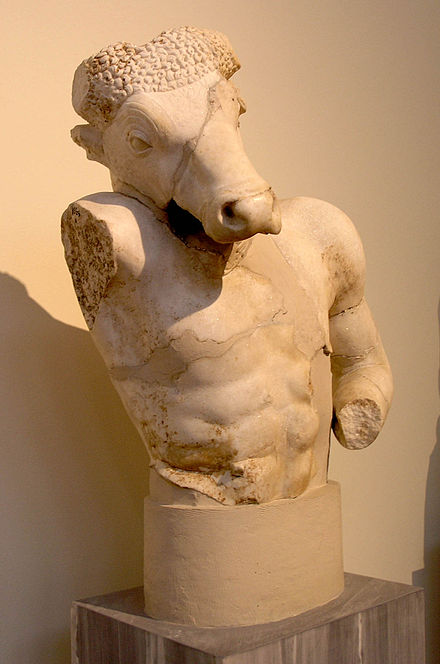
Minotaur — A Beastie of Epic Proportions

Down, down below the imperial Palace of Knossos, the capital of Crete and home to King Minos, legend has it that there lurks a mythical beast. A beast so terrible, so ferocious, that it could not be allowed to see the light of day. Contained within a maze, and fed by sacrificial rites, it is doomed to a storybook ending.  […]

Source:  https://classicalwisdom.com/mythology/monsters/minotaur-a-beastie-of-epic-proportions/ 

Isis, Women & Magic in Antiquity

Isidora's avatarIsiopolis

The astral light!
The astral light!

With a subject like magic, one of the first things you have to do is define what you mean by “magic.”One of my personal definitions is, “magic is what happens when we DO religion.” This works for me because I tend to consider all my spiritual practices as magical. You’ve no doubt heard a number of others, such as Crowley’s famous statement that magick (with a k for him) is “the Science and Art of causing change to occur in conformity with will.”

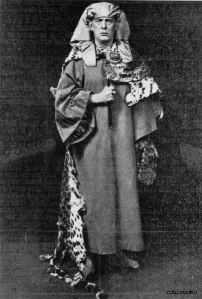
Mr. Crowley in full ritual gear. "Who told you you could take my picture?"
Mr. Crowley in full ritual gear. “Who said you could take my picture?”

Or Dion Fortune’s version in which consciousness is changed in conformity with will. Starhawk,inThe Spiral Dance, defines it as“the art of sensing and shaping the subtle, unseen forces that flow through the world, of awakening deeper levels of consciousness beyond the rational” and emphasizes that magic is natural, not supernatural.

View original post 1,210 more words

The High Priest of Lemuria – Lord Zeniel Melchizedek

sanctarosablog's avatarSancta Rosa

The land of Lemuria is right here on Earth and I have felt it’s vibrations and that of its High Priests and Priestesses for a very long time if not all of my life. There are many humans throughout history who have been drawn to the enigma of this ancient place and people and who have tried and succeeded in connecting with the frequencies of Mu. I am also one of those people yet what I have learned during my meetings with the Lemurians does not come from any book or what someone has told be but what they have taught me themselves.

View original post 2,801 more words