Theosophy | SELF-EMANCIPATION – III

 In order progressively to dissipate and dissolve the elements by which, through the desire for consolidation, people limit and bind themselves, the persisting root of illusion must be sought in the mind. The mental image of oneself as separate from other human beings, feverishly moving places but periodically depressed if not ascending all the time, is entirely false. Each human being is merely one of myriads of centres of sensation and observation, but while such centres in the lower kingdoms have a certain precision, humans are all too often lazily and inefficiently trying to observe and record on the basis of mayavic conceptions amidst a kind of day-dreamy existence. It is an important and difficult task to cut through this veil of illusion, and this can only be done by coming down from the cosmic to the mundane. First, one must rise upwards to a cosmic perspective and perceive the whole universe from a unitary standpoint. Then one can come down to oneself and one’s daily orbit of duties and obligations. Human beings are assuming an impossible task when they attempt the opposite, starting with the lower self and then trying to dispel their root illusions. Only by ascending to the universal and then descending to the particular can one find greater meaning in every atom and every aspect of oneself, as well as every event upon life’s journey and the soul’s pilgrimage.

 Hermetic wisdom holds that everything in the universe follows analogy, that as it is above, so it is below, and that man is a microcosm of the universe. H.P. Blavatsky expresses this axiom in exact terms which clearly show the critical relevance of the evolution of human mentality to corresponding transformations in the subhuman kingdoms: “That which takes place on the spiritual plane repeats itself on the Cosmic plane. Concretion follows the lines of abstraction; corresponding to the highest must be the lowest; the material to the spiritual.” Pointing to the dangers of the anti-intuitive, or below-above approach to the task of liberating consciousness from the bonds of form, she warns: “It would be very misleading to imagine a Monad as a separate Entity trailing its slow way in a distinct path through the lower Kingdoms, and after an incalculable series of transformations flowering into a human being.” To think in such a limiting and linear way is to repeat the error of nineteenth century Darwinian speculation, effectually cutting oneself off both from the prospects of emancipation and the possibilities of service to the entire life-stream of evolution – monadic, mental and astral. To think of oneself and a tiny pebble, and to suppose that the pebble or stone is a separate entity which will eventually become an equally separate human being, is essentially false.

 The Monadic Host is a collective force below the human level, working conjointly, by descent of Spirit into Matter, to raise all that which has become differentiated to a higher power of porosity or luminous reflection of intelligence. Until the human stage the indestructible monadic spark of the One Central Fire is only collectively involved in evolution as part of the great Monadic Host. At the human stage it becomes creatively capable by the potent power of self-reflection, Svasamvedana, of being able to consider itself as an object of its own thought and imagination. This is an extraordinary power, denied to the animal, which the human being has, the sacred gift of visualization. Thought is an essentially divine power belonging to human beings, and when exercised properly it can become an irresistibly potent agent of transformation in human nature and Nature in general. The collective Monadic Host in its descent is only a vast collection of creative centres because the atom “is not a particle of something, animated by a psychic something, destined after aeons to blossom as a man. But it is a concrete manifestation of the Universal Energy which itself has not yet become individualized.” The human Monad is that same universal energy, not separate in any way, but individuated.

 Many of the problems that arise in trying to understand this process are due to thinking in terms of terrene rather than aquatic analogies. When one thinks of the ocean, it is clear that there is no less differentiation there than on the earth. But the untutored and ungoverned senses are practised liars. Hence there is a profound need for true science. Occultism begins in the recognition that raw sense-perceptions not only tell nothing, but are actually poor reporters of inaccurate information. They falsely convey an impression that there are myriad separate things ‘out there’. This is why people who close their eyes and begin to meditate work hard from early on to destroy this delusion. It is sometimes held that this misconception is strong in human life because of the deception of language and the actual activities of naming and particularization, but these themselves arise merely from a priori consolidation in consciousness of one’s image as a separate being. These psychological differentiations exist only as incomplete reflections.

 In essence, there is no differentiation. All drops in the ocean are within one great collective being, and the moment one speaks of ‘drops,’ this is only in relation to some water taken out of the ocean and put in a jar. These are ephemeral ‘drops.’ What applies to the ocean also applies to the earth and everything else, contrary to what the casual eye reports. To understand this truly at its root requires the return, through the power of abstract meditation, to the noumenal source of consciousness, and then smoothly descending in concentrated thought. One thus takes hold of a single torch in the darkness, lighting it up, and through it one may light up other receptive beings. In a sense this is mayavic because all Monads are exactly the same, whether manifest or not, whether illuminated or in darkness. Yet, to recover a sense of true being independently of what has happened in the external fields of sensory contrast, material disaggregation, seeming cohesion and dispersion, and mayavic manifestation, is to recover a noetic sense of the entire ocean and its invisible, unfathomable depths. Then, as Manasa, one may readily appreciate the depth of responsibility implied by the statement that “The ocean (of matter) does not divide into its potential and constituent drops until the sweep of the life-impulse reaches the evolutionary stage of man-birth.”

Raghavan Iyer
The Gupta Vidya III

Theosophy | SELF-EMANCIPATION – II

 The spiritual will alone is constantly able to alchemize, renovate and refine the life-atoms of the vestures, increasing their lightness and porosity to Divine Light. When the vestures are suffused by that Light, it becomes possible to think, feel, act, breathe, smell, taste, touch, see and hear benevolently. One is enabled to employ Divine Wisdom as a science governing every relationship to the atoms that one touches and blesses. The process of refinement involves the full and vast range of Monads that have passed collectively through the various kingdoms at different levels, coming down from the most ethereal in the early Rounds to the existing fourth stage with its kaleidoscopic variety of alternative opportunities for apperceptive and perceptive consciousness. Passing this mid-point, the cycle of monadic evolution moves upwards again to that plane which was in the beginning a state of spiritual and intellectual unconsciousness for the Monads, but which must become the plane of universal self-consciousness for perfected Monads by the end of the Seventh Round.

 Behind and beyond all these changes of state and form there remains, unchanging and intact, one and the same Monad. It is an inward centre of light which does not participate in all the many alterations that affect the vestures. To put it differently, there must be beyond all the material vestures the perpetual motion of the Atmanwhich is the indwelling noumenal and invisible core of every Monad. Those who regularly meditate derive much benefit from the instruction of the Catechism of Gupta Vidya, which teaches one to draw inwards in consciousness to an inmost noumenal centre or point, which then immediately becomes a point in a line, a point in a cross, and finally the central point in relation to all possible forms. By entering into the Divine Darkness of pure abstraction, by becoming a Point without extension and receding behind all the planes of differentiation, one removes all awareness of forms and all evidence that there are many Monads. In the absence of manifest light, one experiences a deeper sense of the unity of all Monads and fundamentally destroys the all-pervasive illusion that there are many different beings separate from each other, sitting or moving in their separate bodies. Krishna teaches that the Eye of Wisdom has the intrinsic capacity to distinguish Spirit itself from a world of diverse objects and ultimately destroys the persisting illusion of manifold objects. When noetic consciousness has majestically risen above separations of objects and forms, it now experiences the world differently, omni-dimensionally and in depth, entering the noumenal realm of what is unmanifest on the illusory plane of contrasts, beyond which there is the homogeneous plane of radiant matter, which lends luminosity to the subtlest vestures of the immortal Soul. This elevation of consciousness to a laya point is an experiment through which one can visualize at a preliminary level the plenitude of the field of noetic ideation, but it may be taken even further and simultaneously applied to all classes of human beings throughout the earth. This requires the progressive deepening of one’s perception through intense meditation, so that over a period of time one may gain a greater sense of the noumenal depths of life-energy, and the magical properties of the Alkahest, the universal solvent.

 The Monad, which is essentially ever the same, participates through the various vestures in succeeding cycles of partial or total obscuration of Spirit or of Matter. Everything occurring in daily life could be seen entirely in terms of the continuous ascent or descent from the One, or in terms of obscuration and illumination, but these could pertain either to Matter or to Spirit. Once one has grasped this philosophical and metaphysical basis for comprehending the complex scheme of monadic life and transformation, one can reckon with the fact that there are seven kingdoms of Monads:

 The first group comprises three degrees of elementals, or nascent centres of forces – from the first stage of differentiation of (from) Mulaprakriti (or rather Pradhana, primordial homogeneous matter) to its third degree – i.e., from full unconsciousness to semi-perception; the second or higher group embraces the kingdoms from vegetable to man; the mineral kingdom thus forming the central or turning point in the degrees of the ‘Monadic Essence,’ considered as an evoluting energy. Three stages (sub-physical) on the elemental side; the mineral kingdom; three stages on the objective physical side – these are the (first or preliminary) seven links of the evolutionary chain.

The Secret Doctrine, i 176

 Between the three elemental kingdoms on the subjective side and the vegetable, animal and human kingdoms on the objective side, lies the mineral kingdom. Poised in the fourth, or balance position, the Mineral Monad becomes crucially important. Indeed, one cannot understand either Evolution or Magic without apprehending the process of immetalization through which the abstract Monas reaches a maximum of condensation in the mineral kingdom. After this stage there comes a rapid dispersion, a continuous loosening up, which then produces the three kingdoms on the ascending arc. Viewed in one way, there is “a descent of spirit into matter equivalent to an ascent in physical evolution.”

 The more Spirit descends into Matter, the more there is conscious evolution on the physical plane. This is part of the cosmic sacrifice, because the bringing down of Spirit into Matter enables the latter at a greater level of density to evolve further and thus be quickened by noetic intelligence. If, for example, one handles with natural reverence and spiritual wakefulness any so-called object, which may seem to be a book, a piece of jade or a wristwatch, but which is actually an aggregate of elementals and life-atoms, then one can wisely instruct and initiate. Those who are truly awake spiritually can take anything, and with selfless love they can quicken latent intelligence, vivifying active awareness and higher self-consciousness. It is not as if there is not much to do in this visible universe. At any given moment one can touch and elevate every sentient point of energy. Looked at in this way, all life becomes extraordinarily meaningful, holding innumerable opportunities to aid monadic life in “a re-ascent from the deepest depths of materiality (the mineral) towards its status quo ante.”

 Since reascent implies a corresponding dissipation of the concrete organism, it is frightening to most people as it means the renunciation of identification with the sense of being in a body. Hence it is a disadvantage for them to have clocks and calendars. By thinking in terms of the distance or closeness in years to birth or death, and the waste of time since the birth of the body, little indeed is done for the care or tendance of the immortal soul. Seeing this makes many people nervous, but this is to lose the proper perspective. One must see all life in the context of the invisible whole. One cannot reascend consciously without a progressive series of dissipations and a continual breaking up of skandhas accumulated throughout a lifetime. For instance, an emotional person needs to reduce the liabilities of the lower vestures to certain basic patterns of consolidation and break up these unhelpful clusters at their very core. Whence the need to belong? What is this concern to appropriate? Whence the desire for material or psychological security? One must burst the consolidating sources of emotion in order to keep pace with forward Manasic evolution. Humanity is in the Fifth Race of the Fourth Round, the long epoch of Manas, and to be emotional is only to go racially backwards. To catch up with the forward impulse of humanity in the Fifth Race means becoming a self-sufficient being of creative thought and deep meditation, freed from the evanescent impulses of mere emotional reaction.

Raghavan Iyer
The Gupta Vidya III
Theosophy | Self-Emancipation – 1

BUDDHI YOGA

Every form on earth, and every speck (atom) in Space strives in its efforts towards self-formulation to follow the model placed for it in the ‘HEAVENLY MAN.’

The Secret Doctrine, i 183

 Monadic evolution aims initially at establishing individuated centres of human self-consciousness. Once millions upon millions of these have emerged under natural law, the distinctive purpose of human evolution thereafter is to arouse and activate universal self-consciousness through a series of progressive awakenings. The monad “in its absolute totality and awakened condition” as “the culmination of the divine incarnations on earth” represents a critical state which will be fully perfected at the end of the Seventh Round by the whole of humanity, under the common cosmic laws of growth and retardation. In this long process there are many casualties and tragedies, but there are also shining examples of truly heroic, Promethean self-emancipation by moral geniuses. Having sunk into the depths of matter, such exemplars have pulled themselves up by self-effort and emerged through creative suffering into exalted states of enlightened consciousness, through which they could keep pace with the Avataric Saviours and Teachers of the entire human race. At all times the spiritual vanguard at the forefront of human evolution points towards the noetic possibilities of human life and architectonic perfection in spiritual consciousness. Every creative advance in monadic evolution depends upon the critical range and potent fullness of self-consciousness. Through its depth of perception in reference to the world, it impels a natural movement towards the Heavenly Man, the Divine Prototype, the Daimon of the immortal Self in every human being. By withdrawal from the selfish clutches of the grosser vestures and the demoniac tendencies, the human Monad reascends through Buddhi Yoga to the state of transcendental union with its parent Self, the universal Ishwara, the Logos in the cosmos and the God in man.

 The degrees of differentiation in the Monadic Host below the human kingdom, as well as the distinctive marks of the human Monad, are conveyed by H.P. Blavatsky in a critical series of propositions which commences with a reference to the earliest period in the ethereal formation of the earth chain:

 The Monadic Host may be roughly divided into three great classes:

 1. The most developed Monads (the Lunar Gods or ‘Spirits,’ called, in India, the Pitris), whose function it is to pass in the first Round through the whole triple cycle of the mineral, vegetable, and animal kingdoms in their most ethereal, filmy, and rudimentary forms, in order to clothe themselves in, and assimilate, the nature of the newly formed chain.

The Secret Doctrine, i 174

  These Monads come over progressively from the previous lunar chain in a series of stages in order to animate all the nascent forms in the coalescing matrix of the earth chain. These lunar forms, extremely subtle and refined in the First Round, incipiently belong from the first to the seven different kingdoms. Then come “those monads that are the first to reach the human stage during the three and a half Rounds.” This great descent of the Monadic Host does not take place all at once, but over immense cycles of manvantaric time, and according to the innate characteristics of these Monads, reflecting an inherent sevenfold division. Owing to the degrees of development that have already taken place, all human Monads roughly fall into seven classes connected with the seven cosmic hierarchies, the seven planets and other sets of seven in Nature. They come therefore in a certain order, and those Monads that are the first to reach the human stage during the three and a half Rounds become Men, or attain to self-consciousness, by the middle of the Fourth Round. These constitute most of Humanity.

 The key to the internal continuity of this entire process, linking together these various stages and phases on diverse planes and globes, is given in the ideational power of the Monad, manifesting as self-conscious intelligence:

  The MONAD emerges from its state of spiritual and intellectual unconsciousness; and, skipping the first two planes – too near the ABSOLUTE to permit of any correlation with anything on a lower plane – it gets direct into the plane of Mentality. But there is no plane in the whole universe with a wider margin, or a wider field of action in its almost endless gradations of perceptive and apperceptive qualities, than this plane.

The Secret Doctrine, i 175

 The term ‘mentality’ is used here to indicate Manas or self-consciousness, and has little or nothing to do with what is normally called mind or brain-power. Manasic beings function on a plane of consciousness saturated with inexhaustible possibilities for mental creation acting through ideal projections, pictures and images. Through this power, or rather through its truncated specialization on the plane of incarnation, all human beings, most of the time unconsciously and ignorantly, are constantly creating affinities with different classes of living centres of energy. Since there is no intrinsic difference between Spirit and Matter, but only an extrinsic difference of degree, the two are inseparable, and one can neither find ideation without substance nor energy without form. This continual coalescence or interaction of energy and form, of ideation and substance, is a pervasive principle in this dynamic universe of ceaseless change and has an intimate bearing upon the whole course of human evolution. Not only do human beings experience alterations of state in the brain-mind and modifications of the vestures at every moment, but correlative changes are also experienced at the level of cohesion in the mineral kingdom, and at the level of instinct in the animal kingdom. In the human kingdom these interrelated changes encompass emotion and feeling in the realm of ‘affect’, the sense of comparison and contrast, identification and differentiation, in the realm of intellectual awareness, as well as the power of noetic discrimination in recognizing subtle nuances of meaning and in the continual interplay of light and darkness.

 These evolutionary processes on the plane of mentality produce the human sense-organs, which are perfected through imaginative precision. Indeed, they must be contemplated calmly and carefully, as without proper mental attention they will remain under-utilized. Most persons are barely able to tap all that is possible even within the entire range of the seven sense-powers. Most people barely hear, barely see, barely touch, barely taste and barely smell, much less activate higher sense-powers. As an obvious example, anyone who develops a refined ability to differentiate the most subtle fragrances will regard the ordinary sense of smell as extremely crude. This would be true not only in regard to herbs or perfumes, but especially in regard to the familiar experience of cooking. It is quite possible to develop and refine the capacity to recognize the invisible essences underlying what seems to be physical food, and to be directly aware of the myriad effects of different combinations of spiritual essences upon the sevenfold human constitution, with its latent forty-nine fires. Such sensory refinement has to do with wise magnetic attunement, and vitally affects the vestures in both their constitution and composition. The alchemical process of distilling the combinations and correlations of essences in each of the invisible vestures proceeds through etherealization which must necessarily work through the spiritual will.

Raghavan Iyer
The Gupta Vidya III
In Celebration of Yule – Winter Solstice

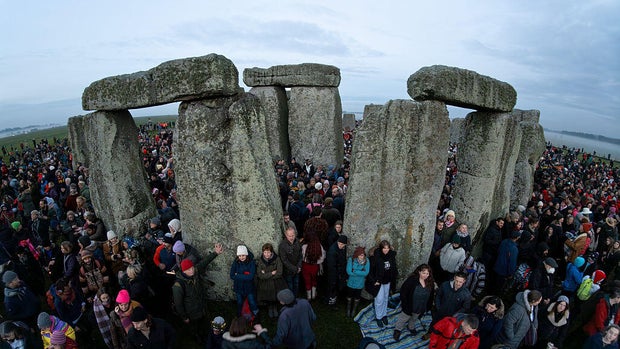
Confratres et sorores, custodes ignis occulti,

In hac nocte Yulii, sub solstitio hiemali, convenimus in silentio operis. The year has inclined toward shadow, and the world has entered its most secret laboratory. Lux recedit, non ut pereat, sed ut se componat. Thus does nature instruct us: in tenebris nascitur semen.

Yule is the turning of the great wheel and the sealing of the vessel. What appears as diminution is in truth conservation. This is nigredo, the sacred black, wherein forms are dissolved and essences disclosed. Let none fear the dark of this season. We who practice the Art know that obscurity is not negation but preparation. Solve ut coagula is the law written into time itself.

Let us therefore examine the year now sealed behind us. What was broken down? What resisted refinement? What unexpected compound emerged from error and patience? Record faithfully the failures as well as the triumphs, for the residue upon the crucible is a scripture of corrections. Experientia docet more surely than ambition.

Remember also the subtle work not entered in any ledger: the tempering of the self, the quiet steadiness offered to another, the discipline of restraint when fire invited excess. These are not lesser arts. They are the prima materia of wisdom. No stone is perfected without them.

As alchemists we stand at thresholds. We mediate between the gross and the subtle, the volatile and the fixed. Yet the Work demands humility. The elements obey their own natures. The adept persuades, but does not command. Let surprise remain a teacher. Ars longa, vita brevis reminds us that mastery unfolds across cycles, not seasons.

Let us set forth three observances for the coming turn of the wheel:

Primum: We shall tend the fire with measure. Flame gives form when governed, and ruin when indulged. May our heat be sufficient and our vessels uncracked.

Secundum: We shall honor dissolution. That which must be reduced will be reduced, without sentimentality or haste. From true decay comes true recombination.

Tertium: We shall alloy our knowledge. Wisdom hoarded becomes brittle; wisdom shared gains resilience. Concordia parvae res crescunt.

Now, let each who is willing mark the passage. Commit to flame one intention for transmutation in the coming year: an error, an attachment, a fear long calcified. Let it pass into ash, and let the ash be kept as memento laboris.

Finally, we give thanks. To the crucible, which endures. To the retort, which reveals. To the dark, which shelters becoming. To the sun unseen, already turning homeward. And to one another, companions in the Art, whose steady hands keep the Work honest.

May this Yule renew our discipline, clarify our purpose, and guide us from blackness toward light, from confusion toward coherence, from matter toward meaning. Ex umbra, aurum.

So is the season marked. So is the Work continued. ⚗️🔥🌑

Theosophy | INTEGRATION AND RECURRENCE – I

If, on the one hand, a great portion of the educated public is running into atheism and skepticism, on the other hand, we find an evident current of mysticism forcing its way into science. It is the sign of an irrepressible need in humanity to assure itself that there is a Power Paramount over matter; an occult and mysterious law which governs the world, and which we should rather study and closely watch, trying to adapt ourselves to it, than blindly deny, and break our heads against the rock of destiny. More than one thoughtful mind, while studying the fortunes and reverses of nations and great empires, has been deeply struck by one identical feature in their history, namely, the inevitable recurrence of similar historical events reaching in turn every one of them, and after the same lapse of time. This analogy is found between the events to be substantially the same on the whole, though there may be more or less difference as to the outward form of details.

H.P. Blavatsky
The Theosophist, July 1880

 Cyclic causation or the eternal law of periodicity stands midway between the affirmation of the Absolute and the postulate of progressive enlightenment in the set of fundamental axioms of Gupta Vidya. Pointing to the inexorable alternation of day and night, of birth and death, of manvantara and pralaya, cyclic law ensures that all events along with their participants, great or small, are comprehended within the archetypal logic of the Logos in the cosmos. Gupta Vidya indicates the mayavic nature of all manifestation in relation to the Absolute, whilst at the same time stressing that karmic responsibility is the pivot of all spiritual growth. The essential significance of the complex doctrine of cycles sometimes seems difficult to grasp in theory or to apply in practice. If the mind misconceives the metaphysical distinction between TAT and maya, then the dignity of spiritual striving through cycles under karma will be minimized. Self-examination and self-correction may be neglected owing to a false and merely intellectualist theory of transcendence. Conversely, the mind which embraces a too literalized conception of the immanence of the Absolute will find itself mired in experience with no accessible power of transcendence. It will tend to acquiesce in a sanguine or despairing doctrine of mechanical destiny which is psychological fatalism resulting from a mistaken conflation of causality with the ephemeral forms of outward events.

 The true teaching of cyclic causation implies neither a trivialization nor a mechanization of life in a vesture in terrestrial time. Instead, it intimates the mysterious power of harmony, the irresistible force of necessity, which resides in the eternal balance of the manifest and the unmanifest in every living form and phase of the One Life. The ceaseless vibratory motion of the unmanifest Logos is the stimulus of the complex sets and subsets of hierarchies of being constituting the universe; and of the intricate and interlocking cycles and subcycles of events that measure out its existence. The intimate relationship between temporal identity and cyclic existence is symbolized in the identification of the lifetime of Brahmā with the existence of the universe, a teaching which also conveys the true meaning of immortality in Hiranyagarbha.

 From the standpoint of universal unity and causation, the universe is a virtual image of the eternal motion or vibration of the unmanifest Word, scintillating around a set of points of nodal resonance within that Word itself. From the standpoint of individual beings involved in action, the universe is an aggregation of interlocking periodic processes susceptible to reasoned explanation in terms of laws. Understanding the nature of cycles and what initiates them, together with apprehending the mystery of cyclic causation itself, requires a progressive fusion of these two standpoints. The exalted paradigm of the union of Eternity and Time is Adhiyajna, seated near the circle of infinite eternal light and radiating compassionate guidance to all beings who toil in the coils of Time. Established in Boundless Duration, all times past, present and future lie before his eye like an open book. He is Shiva, the Mahayogin, the leader of the hosts of Kumaras, and also Kronos-Saturn, the lord of sidereal time and the ruler of Aquarius. If humanity is the child of cyclic destiny, Shiva is the spur to the spiritual regeneration of humanity. And, if the Mahatmas and Bodhisattvas, the supreme devotees of Shiva, live to regenerate the world, then it is the sacred privilege and responsibility of those who receive their Teachings to learn to live and breathe for the sake of service to all beings.

 It is in this spirit that H.P. Blavatsky, in her essay entitled “The Theory of Cycles”, suggested several keys to the interpretation of cyclical phenomena. We can readily discern the vast variety of periodic phenomena which has already been noticed in history, in geology, in meteorology and in virtually every other arena of human experience. We can also recognize the statistical recurrence of certain elements in reference to economics, to wars and peace, to the rise and fall of empires, to epidemics and revolutions, and also to natural cataclysms, periods of extraordinary cold and heat. H.P. Blavatsky’s intent was not merely to persuade the reader of the pervasiveness of periodic phenomena through the multiplication of examples, but rather to convey the immanent influence of the power of number and of mathematics within all cyclic phenomena. She reviewed the original analysis of certain historical cycles made by Dr. E. Zasse and published in the Prussian Journal of Statistics. Dr. Zasse presented an account of a series of historical waves, each consisting of five segments of two hundred and fifty years, which have swept over the Eurasian land mass from east to west.

 According to Dr. Zasse’s chronology, which began at approximately 2000 B.C., the year 2000 of the present era should mark the conclusion of the fourth such wave, and the inception of yet another wave from the east. Commenting briefly upon the importance of one-hundred-year cycles within the longer cycles indicated by Dr. Zasse, H.P. Blavatsky cited his analysis of ten-year and fifty-year cycles of war and revolution affecting European nations. In order to draw attention away from external events and to direct it towards deeper psychological causes, she pointed out:

 The periods of the strengthening and weakening of the warlike excitement of the European nations represent a wave strikingly regular in its periodicity, flowing incessantly, as if propelled onward by some invisible fixed law. This same mysterious law seems at the same time to make these events coincide with astronomical wave or cycle, which, at every new revolution, is accompanied by the very marked appearance of spots in the sun.

 Elsewhere, both in Isis Unveiled and The Secret Doctrine, she made reference to the eleven-year sunspot cycle, suggesting something of its occult significance in the respiration and heartbeat of the solar system.

 During the nineteenth century a number of scientists speculated about the relationship of sidereal and terrestrial events. Dr. Stanley Jevons, one of the founders of econometrics, saw a correlation between sunspot cycles and the rises and falls of economic output and productivity. Jevons went so far as to speculate that “the commercial world might be a body so mentally constituted . . . as to be capable of vibrating in a period of ten years”. In The Secret Doctrine, H.P. Blavatsky observed:

 Drs. Jevons and Babbage believe that every thought, displacing the particles of the brain and setting them in motion, scatters them throughout the Universe, and they think that ‘each particle of the existing matter must be a register of all that has happened’.

The Secret Doctrine, i 104


 Correlating this idea to the occult conception of the enduring impress of thought upon the subtle matter of the invisible human vestures, H.P. Blavatsky intimated the vital relationship between the impress of sidereal influences upon the psyche and the cyclic destiny of human souls.

 The Hindu Chitra-Gupta who reads out the account of every Soul’s life from his register, called Agra-Sandhani; the ‘Assessors’ who read theirs from the heart of the defunct, which becomes an open book before (whether) Yama, Minos, Osiris, or Karma – are all so many copies of, and variants from the Lipika, and their Astral Records. Nevertheless, the Lipika are not deities connected with Death, but with Life Eternal.

 Connected as the Lipika are with the destiny of every man and the birth of every child, whose life is already traced in the Astral Light – not fatalistically, but only because the future, like the PAST, is ever alive in the PRESENT – they may also be said to exercise an influence on the Science of Horoscopy.

The Secret Doctrine, i 105


 From such considerations a complex picture emerges of a myriad overlapping cycles and subcycles on several planes of existence. Whilst the enormous breadth and depth of cyclic phenomena would render elusive and exacting analysis of cycles for the neophyte in Gupta Vidya, one should attempt to nurture a cool apprehension of the regular periodicity in the excitement of mental and physical forces affecting both collective and distributive karma. It may help to begin with a relatively simple example. Consider the case of a single family living within a larger household and a local community. Each member of the family is born at a different moment. Each, therefore, has a different constellation in the ascendant at the moment of birth, and each has different cycles determined by the positions of the moon, the planets and the stars in the heavens at the moment of birth. For each, the angular relationships between these sidereal bodies – and their placement relative to the zenith and horizon in the place of the individual’s birth – will vary. Already, even at the simplest level, one can see an inherent complexity to the cyclic destiny of every individual.

Raghavan Iyer
The Gupta Vidya III

Theosophy | SPIRITUAL WILL – I

 The vital interrelationship of Nature and of humanity, as well as the complex process of evolution and of history, is essentially the manifestation of unity in diversity. Every human being is a compact kingdom with manifold centres of energy that are microcosmic foci connected with macrocosmic influences. There is a fundamental logic to the vast unfolding from One Source through rays of light in myriad directions into numerous centres that are all held together by a single Fohatic force, an ordering principle of energy. The logic of emanation is the same for the cosmos and for the individual. The arcane teaching of the divine Hierarchies, of Dhyani Buddhas, of the three sets of Builders and of the mysterious Lipika conveys intimations of invisible, ever-present, noumenal patterns that underlie this immense cosmos of which every human being is an integral part. The ordered movement of the vast whole is also mirrored in the small, in all the atoms, and is paradigmatically present in the symmetries and asymmetries of the human form with its differentiated and specialized organs of perception and of action.

 Modern man, burdened by irrelevant and chaotic cerebration, often fails to ask the critical, central questions: What does it mean to have a human form? Why does the face have seven orifices? What does it mean to have a hand with five fingers? Why is one finger called the index finger and what is the purpose of pointing in human life? What is the significance of the thumb and what is its connection with will and determination, which must be both strong and flexible? Can flexibility and fluidity be combined in human life in ways analogous to what is exemplified in the physical world by all the lunar hierarchies impressed with the intelligence that comes from higher planes? What is the function of the little finger, which is associated with Mercury? What is the connection between speech and this seemingly unimportant digit which is important for those who have skill in the use of hands, whether in instrumental music or in craftsmanship? When one is ready to ask questions of this kind, taking nothing for granted, then one can look at statues of the Buddha and of various gods in many traditions, where the placement of the hand is extraordinarily significant: whether it is pointing above, pointing below, whether it is extended outwards, whether it is in the form of an oblation or receiving an offering, or in the familiar mudra of the hand that blesses. What is the meaning of joining the thumb and the central finger, which is given great importance in mystical texts like the Hymn to Dakshinamurti?

 The moment one begins to raise such innocent questions about the most evident aspects of human existence, it immediately becomes clear that pseudo-sophisticated people are prisoners of the false idea that they already know. And yet self-reliance and spontaneous trust are so scarce in the world of the half-educated. Many people are so lacking in elementary self-knowledge that when a person meets another, instead of a natural response of receptivity and trust, there is an entrenched bias engendered by fear and suspicion. This has been consolidated through the establishment of a Nietzschean conceptual framework in which all human relationships are viewed simply in terms of domination and being dominated. This obsessive standpoint drains human relationships of deeper content, of spiritual meaning and moral consciousness. All moral categories and considerations become irrelevant when one entirely focuses upon an ethically neutral and colourless conception of the will. To assume and act as if everything turns upon the master-slave relation is a major block to the development of self-consciousness, as Hegel recognized. Humanity has left behind its feverish preoccupation with false dominance in formal structures. The seventeenth and eighteenth centuries witnessed the emergence of a higher plateau of individual and collective self-consciousness. All men and women are the inheritors of the Enlightenment, with its unequivocal affirmation of the inalienable dignity of the individual, who can creatively relate to other human beings in meaningful dialogue and constructive cooperation.

 Rooted in a simplistic but assertive mentality, dissolving all moral issues, the language of confrontation and of submission is irrelevant to the universal human condition and to the hierarchical complexity of Nature. Any person with a modicum of thought who begins to ask questions about the marvelous intricacy and dynamic interrelationships of Nature – questions about the sun and the stars, the trees and forests, the rivers and oceans, and above all about human growth – will readily recognize that no real understanding of the organic processes of Nature can be properly expressed in terms of such jejune categories as dominance and submission. Nor can any meaningful truths about the archetypal relations between teachers and disciples, parents and children, friends and companions, be apprehended through the truncated notion of an amoral will. Human life is poetic, musical and poignant. It has an open texture, with recurrent rhythms, and it continuously participates in concurrent cycles. To know this is to recognize, when viewing the frail fabric of modern societies, that human evolution has not abrogated the primordial principles of mutuality and interdependence, but indeed abnormal human beings and societies have become alienated from their inner resources of true strength and warmth, trust and reciprocity. The Golden Rule remains universal in scope and significance. There is not a culture or portion of the human race, not an epoch in history, in which the Golden Rule was not understood. Without this awareness there would be no social survival, let alone its translation into the language of roles and obligations and into the logic of markets. Reciprocity is intrinsic to the human condition.

 By rethinking fundamentally what it means to confer the potency of ideation upon primal facts such as the conscious use of the human hand, one can discard much muddIed thinking which is the prolific parent of a vast progeny of distrustful, fearful, weak and wayward thoughts that are constantly tending in a downward direction. Spiritual will can be strengthened when a person meditates upon the cosmic activity which is partly conveyed through creation myths, and may be grasped metaphysically in terms of the abstract becoming more and more, yet only incompletely, concrete. There must be a firm recognition of the necessary gap – inherently unbridgeable – between the unconditioned and the conditioned, between noumenal light and its phenomenal reflections. For those who begin to sense this in the ever-changing world, it can help to initiate a revolution in their everyday relationships. The true occultist starts at the simple level of constant thoughtfulness and moves to a mode of awareness whereby he can effortlessly put himself into the position of another human being.

 It is the hallmark of spiritual maturity that one has no sense of psychological distance from another, that one cannot only salute but also share the unspoken subjectivity of another human being. When a thoughtful person begins to look at others in this way, the need for involuntary karma and mere extensions to superficial human contact will be replaced by the inward capacity, through every opportunity that comes naturally, to discover the universal meaning of human evolution, the potential richness and actual limitations of human nature, and the shared pathos of the spiritual pilgrimage of humanity. As depth of awareness is gained, it is possible to educate one’s perceptions and one’s responses to the world, cleansing the mind and the heart, and releasing the spiritual will. One can cultivate a real taste for the rarefied altitudes of Himalayan heights whereupon sublime truths are experienced as noumenal realities.

 The awakening of intuitive insight is an essential prerequisite to authentic participation in human life. Noetic awakening presupposes that one learns to take nothing for granted, and repeatedly re-creates a sense of wonder and openness. It is necessary to increase silence in relation to speech, contemplation in relation to action, and deliberation in relation to impetuous response. Living from within, each day becomes charged with rich significance and is a vital link in a continuous thread of creative ideation. So immense are the potentials of human consciousness that for a true yogin a single day is like an entire incarnation. When individuals truly kindle the spark of Buddhi-Manas, they can rapidly move away from the nether region of dark distrust and abject dependence, and actively think in terms of the high prerogatives and vast possibilities of human life. Through calm contemplation they can come closer to the highest energies in the cosmos. Through proper alignment with what is above and within, they readily perceive the world as a shadowy reflection of reality, and also see beyond fleeting images to the hidden core of what gives vitality and continuity to the stream of consciousness. The restoration of Buddhic perception gives a preliminary understanding of what it is like to become constitutionally incapable of distrust, delusion, cowardice and craving. The mental portrait of the self-governed Sage, whoever remains in effortless attunement to the parentless Source, becomes a transforming reality in daily life. One no longer inhabits the terrestrial region of time and space in which linger many deluded souls for whom one feels true compassion, but one ascends to the empyrean of divine ideation.

Raghavan Iyer
The Gupta Vidya III

A full “VIRGO month”: two New Moons in the same sign and two Eclipses – September 21st, 2025

This is the second Eclipse of September and the second New Moon in Virgo. The first took place on August 23 at 0° Virgo, inaugurating the sign from its threshold; the second arrives on September 21 […]

Source: A full “VIRGO month”: two New Moons in the same sign and two Eclipses – September 21st, 2025

Theosophy | THE PILGRIMAGE OF HUMANITY – I

Paranirvana is that supreme state of unconditioned consciousness which connotes freedom from the entire process of becoming, the ‘chain of dependent origination’ and involuntary incarnations. The soul’s pilgrimage over eighteen million years of self-conscious existence, and for a much longer period in the future, is truly an awesome and arduous journey through the great Circle of Necessity. Each immortal soul has been repeatedly embodied in the seven kingdoms of Nature, and participated in every possible form through a collective monadic host. Each individual monad has at some remote time experienced the myriad modes of mineral, vegetable and animal life, as well as the variegated centres of consciousness of the three elemental kingdoms. In more recent manvantaric time every human being has traversed the tremendous gamut of contrasting states of mind that are induced by the polarities of self-conscious existence. All this is possible and necessary, according to arcane metaphysics, because “every atom in the Universe has the potentiality of self-consciousness in it, and is, like the Monads of Leibnitz, a Universe in itself, and for itself. It is an atom and an angel.” The Paranirvanic consummation of the soul’s pilgrimage presupposes the existential realization that the individual self-consciousness of human beings is the dim reflection of the universal self-consciousness of the Dhyanis. These are the Buddhas of Contemplation, such as Amitabha overbrooding Gautama Sakyamuni, “manifesting through him whenever this great Soul incarnates on earth as He did in Tzon-kha-pa”.

 Since the enormous potential for divine regeneration is present in every atom, the conventional distinction between animate and inanimate matter is extremely misleading. Everything is alive through awareness; all is consciousness. A few people know intuitively, and many sense psychically, what the ancient schools of wisdom openly taught – that spiritual growth involves the interaction of incipiently self-conscious invisible centres of energy with already perfected human monads. The Hindu teachings about the thirty-three crores of devas and devatas, echoed in mythic allusions to sylphs, salamanders, undines and gnomes, are all references to elementals. In every single elemental life and in every point of invisible space there is potential self-consciousness and some degree of active intelligence. Owing to this ubiquitous presence throughout the course of evolution, the deeper the self-consciousness of human beings, the more effectively they can quicken the intellectual unfoldment of what is potentially present in the whole of life. In Gupta Vidya there are strict rules about magnetic specialization, an essential prerequisite to the creation through meditation of beneficent channels for consciousness. Nourished by meditation and protected by magnetic purity, consciousness becomes so charged with universal light that it can exercise complete control over the entire sphere of perception and activity.

 There is a sum-total of potentials in consciousness, perception and energy that pertains to each self-conscious human monad over eighteen million years. This sum-total has a necessary connection with the spectrum of possibilities in any given lifetime for any human being. Owing to the immersion of consciousness in illusory time, the real person does not consist solely of what is seen at any particular moment, but is constituted by the sum of all the varied and changing conditions from the initial appearance in material form to eventual disappearance from the earth. From birth till death each human incarnation is a series of transformations that is seemingly endless, but which may be partly understood by considering the permutations and combinations of the seven sacred planets and twelve zodiacal signs acting through a variety of aspects and angles. Yet the myriads of transformations a human being undergoes on earth from birth to death are all encompassed by the small circle of time within which a single life is lived. Therefore there is a sum-total, which in turn is included within a much vaster sum-total, unknown to human beings in general, but which exists from eternity in the future and passes by degrees through matter to exist for eternity in the past. To intuit this existence is to awaken to the immense potential of self-consciousness as the guiding force of evolution; to sense its presence in each event is to embark on the path of Paranirvana. To witness its universal dimensions, so that the past and future lie before one like an open book, is to become a Mahatma for whom the grand sum-total is archetypally reflected in the earthly existence of every human soul.

 It is possible in principle for the immortal soul to draw into the realm of self-conscious awareness any portion of the experience and knowledge that is already summed up in its immemorial pilgrimage. This would have been very difficult to conceive in the nineteenth century, but is more comprehensible in the age of DNA and the microprocessor. One needs little familiarity with electronics to recognize that millions of items of information can be registered in minute devices, and little awareness of contemporary biology to apprehend that every possible transformation of a human body over a lifetime is potentially present in the embryonic germ cell. Ancient wisdom teaches that by the end of the seventh month of development much more than can be grasped by modern biology is already inscribed in the foetal vesture as a set of possibilities. Crucial among these is the noetic capacity to make a decisive difference in the extent to which one draws upon and experiences the sum-total of possible configurations. By deep thought and study, by the daily use of true knowledge, by meditation and calm contemplation, by creative interaction with Nature and with other minds, human beings can affect the degree to which they self-consciously experience what is actually going on in all the vestures from the moment of birth to the moment of death.

Maya or illusion is inextricably involved in the idea of separate existence as a monad. From the philosophical perspective of universal self-consciousness, the immense pilgrimage of the human soul is somewhat unreal. Even from the standpoint of the monad enduring over eighteen million years, a hundred lives in succession is mayavic, rather like glancing through a few slides. A single life on earth is barely an instant, if entire solar systems which emerge and disappear over millions upon millions of years are mere winks in the Eye of Self-existence. What then is the meaning and value of a single human life? While there is an extraordinary range in potential human awareness, most beings are “living and partly living”, in the phrase of T.S. Eliot. They are hardly aware of the dynamic processes behind incarnate existence, and from the perspective of the immortal soul they are not awake and scarcely alive. One has to come out of the psychic sleep of a lifetime for there to be a moment of true spiritual awakening to universal causation, human solidarity and the reality of a law-governed universe working ceaselessly through thought, will and feeling, on a cosmic plane but also in and through every single human being on earth. Spiritual awakening is not merely a shift in one’s plane of consciousness, but a fundamental alteration of perspective regarding consciousness itself beyond all its planes of embodiment and manifestation.

Maya or illusion is an element which enters into all finite things, for everything that exists has only a relative, not an absolute, reality, since the appearance which the hidden noumenon assumes for any observer depends upon his power of cognition. To the untrained eye of the savage, a painting is at first an unmeaning confusion of streaks and daubs of colour, while an educated eye sees instantly a face or a landscape. Nothing is permanent except the one hidden absolute existence which contains in itself the noumena of all realities. The existences belonging to every plane of being, up to the highest Dhyan-Chohans, are, in degree, of the nature of shadows cast by a magic lantern on a colourless screen; but all things are relatively real, for the cogniser is also a reflection, and the things cognised are therefore as real to him as himself.

The Secret Doctrine, i 39

Raghavan Iyer
The Gupta Vidya III