
Jupiter moves into Cancer on 9 June 2025 and will stay in this sign until 30 June 2026. Generally speaking, Jupiter is known as the Greater Benefic, and is associated with expansion, prosperity, ju […]

Jupiter moves into Cancer on 9 June 2025 and will stay in this sign until 30 June 2026. Generally speaking, Jupiter is known as the Greater Benefic, and is associated with expansion, prosperity, ju […]

No one can separate himself from the meanest and most wretched of the earth. As soon as human beings utter the sacred sound of the AUM, yet harbour selfish thoughts and intentions, consolidating them and presuming to judge harshly a single being (let alone those who have played such sacrificial roles throughout eighteen million years), they are warped and self-condemned. They cannot hope to benefit at the moment of death from the regenerative compassion of the Bodhisattvas. It is in blind ignorance that human beings perform these extraordinary antics, becoming mere mediumistic entities, collections of diseased and distorted life-atoms, brought together by a pathetic preoccupation with personal failure. The very idea is false. It is false at the very root. There can be no solace for the individual except in the context of universal enlightenment, universal progress and universal welfare. Any human being not threatened by the fact that other human souls exist, not disturbed by the fact that humanity is on the march, can receive help, but only in proportion under law and provided that he does not ask for any more than he deserves and not at the expense of any other being.
Thus, when the Avataric affirmation of Krishna is made and humanity is given its warning, this is done with a calm indifference to the opinions of individuals but with an unqualified insistence upon the simple proposition that the whole is greater than the part, that the tree is greater than the branch, that the mighty forest is greater than any individual tree. That eternal principle is the enduring basis of the custodianship of the sacred Mysteries amongst the Brotherhood of Bodhisattvas, who serve Krishna faithfully in ceaseless and effortless devotion, without let or hindrance, “without variableness or shadow of turning”. This principle has been assiduously upheld without exception in every ancient nation and civilization of the earth, and it will not be forgotten in the future. The doors of the Mystery Temples must remain forever sealed, except to those whose Buddhic intuition resonates to the larger vision, the deeper purpose of all humanity.
All ancient nations knew this. But though all had their Mysteries and their Hierophants, not all could be equally taught the great metaphysical doctrine; and while a few elect received such truths at their initiation, the masses were allowed to approach them with the greatest caution and only within the farthest limits of fact. ‘From the DIVINE ALL proceeded Amun, the Divine Wisdom . . . give it not to the unworthy,’ says a Book of Hermes. Paul, the ‘wise Master-Builder,’ but echoes Thoth-Hermes when telling the Corinthians ‘We speak Wisdom among them that are perfect (the initiated) . . . divine Wisdom in a MYSTERY, even the hidden Wisdom.’
H.P. Blavatsky
The golden tones of the humanity of the future have already begun to ring out around the globe, and have been greeted with gladness in the hearts of myriads of unknown human beings in every land. For those who have not yet felt it fully, or only intermittently within themselves, the problem is tunnel vision, an inability to see beyond and outside the narrow horizon of one’s own myopic perception. This tunnel vision is a great obstacle to each and every one who wishes to come out of the multitude, especially in this extremely visual culture, descended from the peasants of the earth. In narrowness and instantaneity there is no basis for growth and enlightenment. The eyes and ears are proverbial liars. Rather, one must learn to use the eye of mind, to awaken the eye of the soul. Above all, in mystic meditation one must draw within one’s own sanctuary in one’s inmost heart, because only there can one come closer to the Logos in the Cosmos, closer to the living god in every man, woman and child on this earth. Many people are ready for this, now more than ever. But there are also, alas, some who are part of the sickness of the past.
Each human being, as a self-determining agent, is responsible for the opportunities and obstacles of his own making. Therefore, each must learn that to wish all human beings well means to hope that everyone may become a friend of the best in himself, may draw apart from the snake of separateness and the slime of selfishness, and emerge from the pit of ignorance, learning instead to use the senses and organs, and especially the sacred organ of the Logos called the tongue, on behalf of universal good. Yet, one cannot learn to affirm the authentic accents of human brotherhood all at once. Those who have made resolves to do so should not expect that they are abruptly going to become new people. At the same time, new beginnings are indeed possible.
All human beings know that they have had many opportunities to make some small difference to the quality of their life and consciousness. It is possible to make a much greater difference in the presence of the Guru and the Divine Wisdom, especially if one makes use of every opportunity, in the dawn and at twilight, at midday and perhaps even at midnight. Everyone can find some few moments during the day to devote himself to the sacred purpose of self-regeneration. That is the critical message of metapsychology. And that is why the opportunity is given to various individuals, though they may be ignorant of the ABCs of the Sanatana Dharma, to do that which over a hundred years very few could do effectively, to study Gupta Vidya, the Secret Doctrine, in a way that provides the basis for meditation. When the teachings are meditated upon daily, in conjunction with the use of bija sutras (mantrams given for the sake of creating a current that may be carried throughout the day), together with self-correction, hope is awakened. Regardless of the gravity effect from the past, individuals may make a new beginning; the more that beginning is made on behalf of all that lives, the more that beginning will become a holy resolve. It will be blessed by all the gods and guardians of the globe, and by the Avatar of the age.
This has nothing to do with nineteenth century rituals and Victorian habits, with slavish adherence to calendars and clocks. No one need labour under false burdens of expectation and regret bolstered by pseudo-psychological theories of human nature. These are but the rationalizations and residues of the failure of individuals to sort out their own lives, to see and acknowledge the nature of their obligations, needs and wants. Today, all over the globe, more courageous men and women than ever before are preparing themselves to become true learners and have already sensed and saluted in their hearts a new current of global awakening. Seeing beyond roles and discerning the principles of metapsychology within their own experience, by honest and voluntary work they are making their own modest but genuine contributions to the whole, thus inserting themselves into the humanity of the future and quietly unravelling the spiritual promise glimpsed in the vigil night of meditation.
The quintessential meaning of the contemporary revolution in human self-awareness is contained in the metapsychological teachings that are the basis of Buddhi Yoga. The moral diversity human beings exhibit, ranging from pure compassion to abject selfishness, is to be understood in terms of the distinction between human individuality and its transitory mask, the personality. The tendency of the outward character is determined by the inward polarity of Manas. As H.P. Blavatsky explains:
The mind is dual in its potentiality: it is physical and metaphysical. The higher part of the mind is connected with the spiritual soul or Buddhi, the lower with the animal soul, the Kama principle. There are persons who never think with the higher faculties of their mind at all; those who do so are the minority and are thus, in a way, beyond, if not above, the average of human kind. These will think even upon ordinary matters on that higher plane.
H.P. Blavatsky
Raghavan Iyer
The Gupta Vidya III

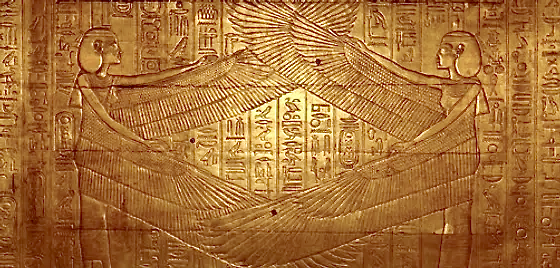
In the Oxyrhynchus Invocation of Isis, it is stated quite plainly: “Thou [Isis] didst make the power of women equal to that of men.” I know of no other ancient texts that lay out the me […]
Source: Isis the Rebel
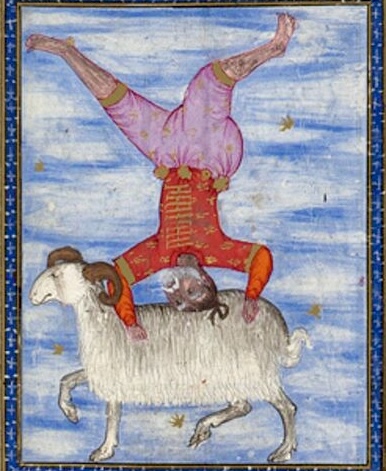
Saturn moves into Aries on 25 May and will stay in this sign for the next three years. The only exception will be between 1 September 2025 and 14 February 2026, when he will move back into Pisces. […]
Source: Saturn in Aries Ingress May 2025

If the Higher Mind-Entity – the permanent and the immortal – is of the divine homogeneous essence of ‘Alaya-Akasa,’ or Mahat, – its reflection, the Personal Mind, is, as a temporary ‘Principle,’ of the Substance of the Astral Light. As a pure ray of the ‘Son of the Universal Mind,’ it could perform no functions in the body, and would remain powerless over the turbulent organs of Matter. Thus, while its inner constitution is Manasic, its ‘body,’ or rather functioning essence, is heterogeneous, and leavened with the Astral Light, the lowest element of Ether. It is a part of the mission of the Manasic Ray, to get gradually rid of the blind, deceptive element which, though it makes of it an active spiritual entity on this plane, still brings it into so close contact with matter as to entirely becloud its divine nature and stultify its intuitions.
H.P. Blavatsky
The poet Tennyson proclaimed: “Ring out the old, ring in the new.” There is, at this point in the history of human evolution, a tremendous and unprecedented golden opportunity. Its origin is not in outward forms and institutions, but in consciousness itself; its promise is rooted in a radical restructuring of the ratios in human consciousness between the unmanifest and manifest. Since this revolution arises within the very principle of Manasic self-consciousness, it can be neither understood nor entered through tellurian conceptions of human history or egoity below the fourth plane. Yet, everywhere, men and women of moral courage can glimpse this subtle transformation through the intimations of awakened intuition, and can authentically respond to the noumenal initiatives of our time. Each may uncover within himself the spiritual resources to contribute to the humanity of the future and the strength of mind to take those decisions at the moment of death which will assure participation in that future.
Before the dawning of the new order of the ages, in which the relations of nations will be changed significantly, humanity will witness the dismantling of the old structures. The clarion call has been sounded and it will be maintained continuously until all the obsolete megaliths that wallow in the debris of the past and the humbug of history, and until all the appalling vicissitudes of the Karma of Israel over two thousand years, will come to an end, and end not with a bang but a whimper. It is the solemn duty of those who have had the sacred privilege of entering the orbit of the 1975 Cycle to draw apart, in the words of St. Paul, from the multitudes of fatalists and to insert themselves into the whole human family. This is not easy, for everyone is a victim of his own karma over millions of years. All this karma may be strangely brought together in a concentrated form in a single lifetime, through a process which defies analysis and baffles imitation, and which can only be glimpsed intermittently, in hints and whispers, until the moment of death, when the immortal soul lays down its garment and gains, at last, some inkling of the hidden meaning of human life.
One of the long-standing problems with the western world, especially over the past two hundred and fifty years, has been its baseless assumption that the entire world owes it an explanation. The many owe no explanation to the few, and above all, there is no explanation owed to the ignorant and uninitiated by the Society of Sages. Krishna owes no one any explanation. If this is understood, it will become clear that human beings have assumed needless burdens of false knowledge. Through a mistaken conception of knowledge they assume that what they repeat below the fourth plane they truly know, because they have failed to grasp the crucial distinction between ‘knowing how’ and ‘knowing that’. Reading a textbook on carpentry does not ensure that one can become a carpenter. A cookbook does not make a chef. If this is true of carpentry and cooking, of music and mathematics, it is even more true of spiritual wisdom. The mere fact of repeating words below the fourth plane does not admit the soul of man to the stream of search. No one becomes a mountain climber by dreaming about it, or by exchanging images and fantasies with others. The truth can only be known by testing and training one’s psyche, and this cannot be done without first asking who is really testing and training the psyche. If a human being were merely one of the six specialized principles of human nature, it would be impossible to engage in self-redemption.
All the principles of man are derivatives and reflections, on different planes of substance, of One Life, One Light and One Energy. When a human being ascends above the fourth plane and becomes immortal, living in the instrument but in the name of the music, inhabiting the vessel but in the name of the Light, remaining in the mask but in the name of the Nameless, he has become attuned to humanity at large. Anyone at any time can become more attentive to the vast milling crowds of human souls, who, though they may wander in the dark and sometimes tumble in the dust, come together in the dusk. As souls, all withdraw into deep sleep and come closer to the Divine within, finding in “nature’s second course” the nourishment and strength which enables them to arise the next day and continue with courage their pilgrimage. To become attentive to the cry of the human race, to become responsive to the immemorial march of all human souls on this vast and uncharted pilgrimage, is also to come closer to Krishna within, and to comprehend the affirmation: “I am seated in the hearts of all beings and from me comes knowledge and memory and loss of both.”
There is that facet of the Logos which is karma, the complex interaction of all life-atoms below the fourth plane in the great wheel of life, as Buddha called it. All of these participate at different rates and with different degrees of semi-unconsciousness – partial, imperfect self-consciousness –in the long pilgrimage. Therefore, human beings generally do not know who they are, where they are or what goal they seek. This threefold ignorance is an integral part of the human enterprise. In the modern world, those who failed spiritually, being unable to maintain even minimal standards of what it is to be human, developed theories based upon the corruption of consciousness to apply to most human beings, who, however imperfect, are not warped in the essential intuitions of the heart. It is the tragedy of man and of human history that the monstrous necromancy and extreme sickness of so few should have imposed so great and so intolerable a burden upon large masses of human beings. This is the fault of modern miseducation, rooted in false ideas of human life, which asserts the quaint dogma – for which there is no evidence and never will be – that the human being is the body, that there is only one life, that this is a universe without moral law, that everything is chaos and without meaning, and that by counting the heads of the mindless, by collating the opinions of cerebrating machines, there is an accredited basis for either Truth or Equality or Freedom. There is none, and therefore the ritual of democracy has failed. All the deceptive tokenism that resulted from the eighteenth century revolution has evaporated.
Each human being is a Monad or individual, a ray of the Divine, immortal in essence, yet only potentially so as an incarnated ray working in vestures that are evidently mortal. These vestures, ever changing and evanescent, compel every human being to interact with all the seven kingdoms of nature. There is not an animal, not a plant or mineral, not a star or galaxy or planet, which does not feel every subterranean influence in nature. Therefore, all human beings are brought together in a vast solidarity of being in which breathe millions upon millions of centers of light in all the variegated kingdoms of nature. In finding itself, humanity must rediscover its ontological basis in the entire cosmic scheme. Five million years ago in Atlantis, human beings sought the mystery fires but then, alas, degraded them. They sought thaumaturgic powers at the expense of the majority of mankind. They exploited the theurgic traditions of their wiser ancestors. They generated the intoxicating idea of individual perfection, for which exclusiveness there is no cosmic provision in the grand scheme of evolution. There is not a human being on earth who could truly ascend above the planes without coming into a compassionate relationship with all life. The true Teaching, which has always existed in the world, guarded in sanctuaries around the globe, reminds us that no one can ever make any real spiritual progress except on behalf of all humanity.
Raghavan Iyer
The Gupta Vidya III

June 27-29, 2025 Portland Oregon area The ritualists for this festival are meeting today at my house for rehearsal. It’s getting REAL and I’m getting excited! If you’re in or near…
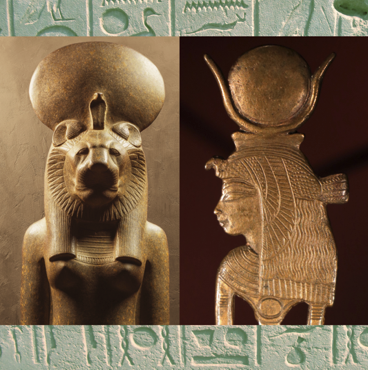

On April 27, the New Moon in Taurus invites us, as it does each year, to plant intentions in fertile ground. But this time, the earth is not still. Something stirs in the deep dark of Gaia. Beneath […]

Source: TAURUS New Moon and the dance of fixed signs choreographed by Lilith – April 27th, 2025

“The external world is not God, and will not be God in all eternity. The world is merely a state of existence wherein God is manifesting Himself.” (Stief., ii. 316.)
“If you consider the depth of heaven, the stars, the elements, and the earth, you will, of course, not grasp with your eyes the pure and clear Godhead, although God is there and within it; but if you rise up in your thoughts and direct your mind to God, who in His holiness rules within the All, you are then penetrating through heaven and grasping the very sacred heart of God Himself.” (Aurora, xxiii. 11.)
“Before the time of the creation of heaven, the stars, the elements, and also before the creation of the angels, there was nothing but Deity, reproducing itself for ever sweetly and lovely, and conceiving of its own image.” (Aurora, xxiii. 15.)
“God did not create for the purpose of perfecting Himself, but to reveal Himself to Himself in great joy and magnificence. This joy did not begin with the beginning of creation, but it has been from all eternity a subjective state in God.” (Signature, xvi. 2.)
“We cannot reasonably suppose any formation or differentiation to have existed in the eternal One from which, or according to which (formation) something could have been made; for if such a form, or predisposition to making a form, had existed, there would have been another cause, besides God, from which the form would have resulted, and then there would have been something else (another god), and not the one only and eternal God.” (Baptism, i. 1.)
“Creation is nothing else but a revelation of the all-essential, unfathomable God, and whatever exists in His own eternal evolution, which is without a beginning, is also in that creation. But the latter is in regard to God what an apple that grows upon a tree is to the tree. The apple is not the tree, but grows out of the power of the tree. Likewise all things have their origin in divine desire, and that desire caused them to enter into being. In the beginning there was nothing to produce them, except the mystery of eternal generation (evolution).” (Signature, xvi. 1.)
“No creature can issue from the purely divine state of being, because this state has neither cause nor beginning, nor can it be brought into a beginning.” (Grace, viii. 45.)
“Within the light and the heart of God, as such, there can be nothing created; because the light is the end of nature and has no quality. Therefore it cannot change or be made into anything, but remains for ever the same in eternity.” (Three Principles, x. 41.)
— Jacob Boehme (1575-1624)

APRIL 7 VENUS RETROGRADE IN PISCES CONJUNCT SATURN, 25 PISCES 4:01 AM PDT, 7:01 am EDT, 11:01 am GMT’. This is serious karmic stuff, Venus rules money, values, relationships and SATURN puts a […]
Source: Astrology April 7-17 Mercury Direct, roller coaster markets, Libra Full Moon, plus
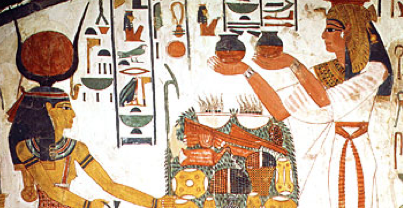
Nefertari making offering to Isis I (almost) have my author copies of Offering to Isis! It’s been a long time coming, but it’s finally here. The shipment is on the way from the printer […]

Source: ‘Offering to Isis’ is here
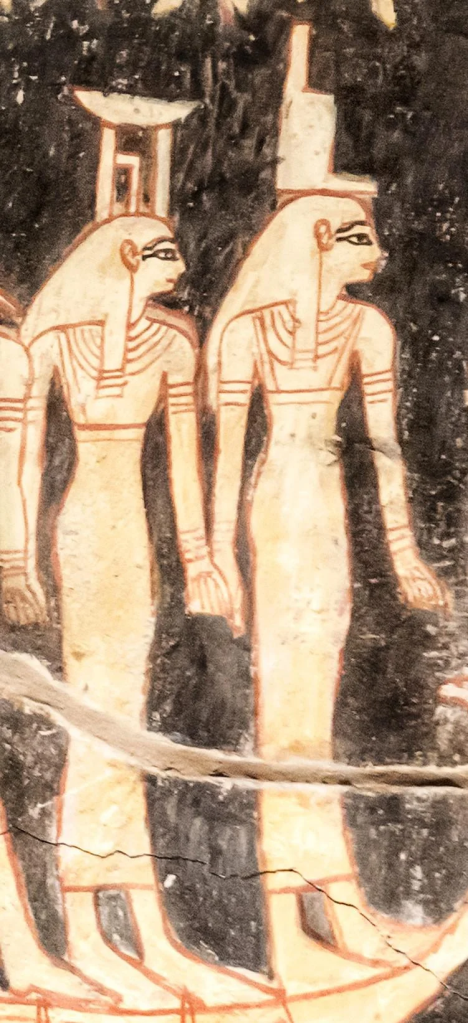
This is a longish post because I found out some things I didn’t know about the Kite, the Kites, and Isis and Nephthys as the Kites. I’ll bet you’ll find out something you didn’t […]
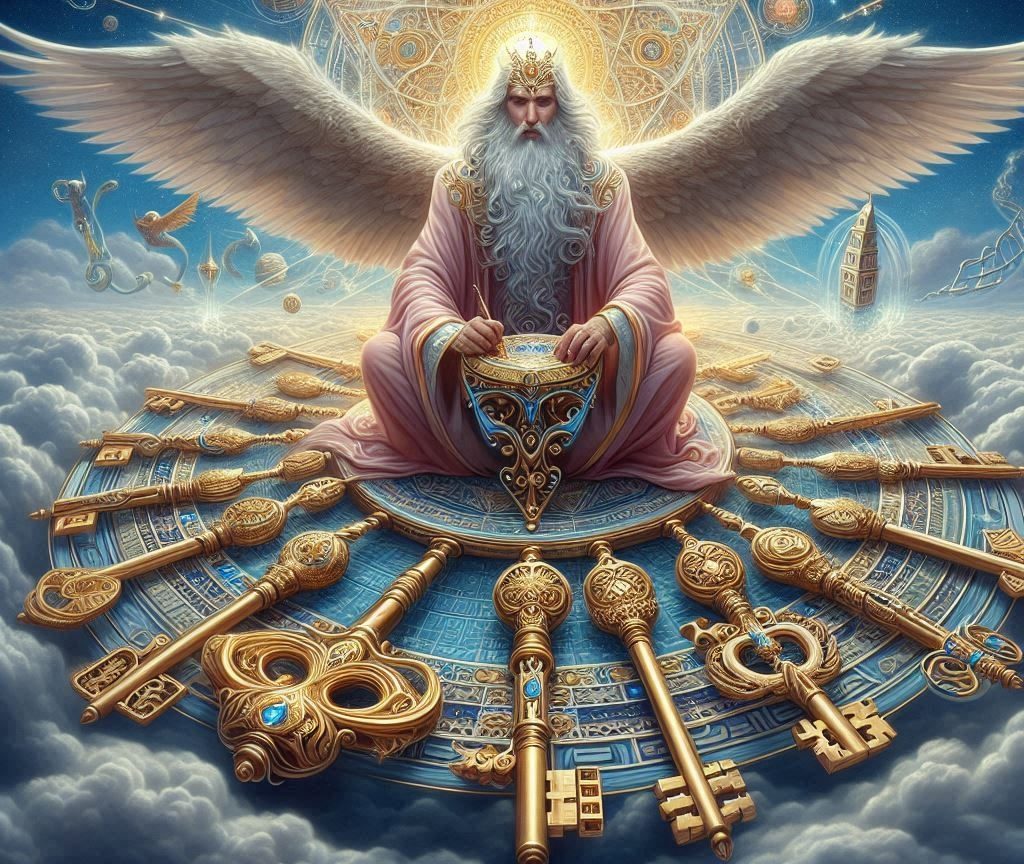
Master Melchizedek is a revered Ascended Master known for his profound wisdom, spiritual teachings, and the sacred keys and codes he imparts to those seeking spiritual growth and ascension. Often r […]

Researchers have identified a fascinating six-planet system that offers a different take on planetary configurations. The newly reported configuration features six planets around a single star. Their orbits line up in a synchronized manner, which astronomers call resonance.
When planets move in resonance, their orbital periods stay in a fixed ratio for millions or even billions of years. This pattern can be so exact that it reminds some observers of musical tempos.
Spotting this kind of rhythmic harmony helps scientists figure out why some stars gather families of planets that have stood the test of time.
The analysis was led by Rafael Luque from the University of Chicago.
Known as HD110067, this star sits approximately 100 light-years away in the northern constellation of Coma Berenices.
Astronomers first recognized unusual dips in the star’s brightness when NASA’s Transiting Exoplanet Survey Satellite (TESS) started surveying that region.
Each tiny dip hinted that one of the star’s planets was crossing its face. Data from both TESS and the European Space Agency’s CHaracterizing ExOPlanet Satellite (Cheops) revealed something rare: a neat chain of six sub-Neptune planets in close orbits.
“This discovery is going to become a benchmark system to study how sub-Neptunes, the most common type of planets outside of the solar system, form, evolve, what are they made of, and if they possess the right conditions to support the existence of liquid water in their surfaces,” remarked Luque.
Many stars in our galaxy hold at least one planet that’s bigger than Earth but smaller than Neptune. These in-between worlds are often called sub-Neptunes, and they’re more plentiful than massive gas giants like Jupiter.
Scientists are intrigued by this class of planet because it covers a range of possible compositions. Some might hold thick, gas envelopes, while others could have dense, rocky surfaces.
Observing these in sync can show how these planets get locked in place and remain that way for an incredibly long span of time.
Resonant systems form when planets start out with orbits that nudge each other in a balanced way. Small gravitational pulls set up a regular rhythm. But big objects or random gravitational jostling can break these patterns.
That makes resonance a tricky arrangement to maintain. Astronomers estimate that only about one percent of multi-planet systems preserve this stable choreography.
Not all stars are lucky enough to keep their planetary brood free of turbulence. Some lose this delicate pattern when a larger planet barges in or when stars drift near one another.
The lack of large neighbors in HD110067’s environment might have helped these six sub-Neptunes remain nestled in their precise arrangement for so long.
Without any violent intrusions, the orbits can carry on as they have since formation. This level of cooperation in one system could provide hints about how others might form or break apart.
For experts who study planet formation, every new system that shows a clear pattern provides more evidence about how dust and gas swirl together and eventually become planets.
Some calculations suggest planets might typically start in resonance, but migration and collisions can make them drift.
An untouched system paints a cleaner picture of early planet-building. Pinpointing each planet’s mass and density can also highlight the proportions of rocky materials, water, and gas they contain.
Researchers plan to keep a close eye on HD110067’s planets using more precise techniques. Improving measurements of the planets’ masses and densities will help astronomers to figure out what these sub-Neptunes look like on the inside.
Deeper analysis can also show whether any might have conditions that allow water to stick around on the surface. These tasks will probably involve instruments on large ground-based telescopes and future space observatories.
Astronomers hope the data from this oddly balanced system will reveal reasons why some worlds remain in tight-knit formation, while others never stabilize.
Stumbling upon a collection of planets that circle in smooth synchronization gives a glimpse into the hidden patterns that shape the galaxy.
This compact group orbiting HD110067 might be just one example of what sub-Neptunes can do when left undisturbed.
Folks who are fascinated by the way planetary families and planet systems form see this system as a chance to learn.
It challenges scientists to look for other hidden resonances in our galaxy and sparks the question of how many have slipped past our detection.
The full research paper was published in the journal Nature.
Vastu & Feng Shui News: The Year of the Wood Snake in 2025 promises introspection, wisdom, and growth. Each Chinese zodiac sign will experience unique challenges and opportun[…]
Source: Chinese Horoscope 2025: The Year of Wood Snake, Check all zodiac signs | – Times of India
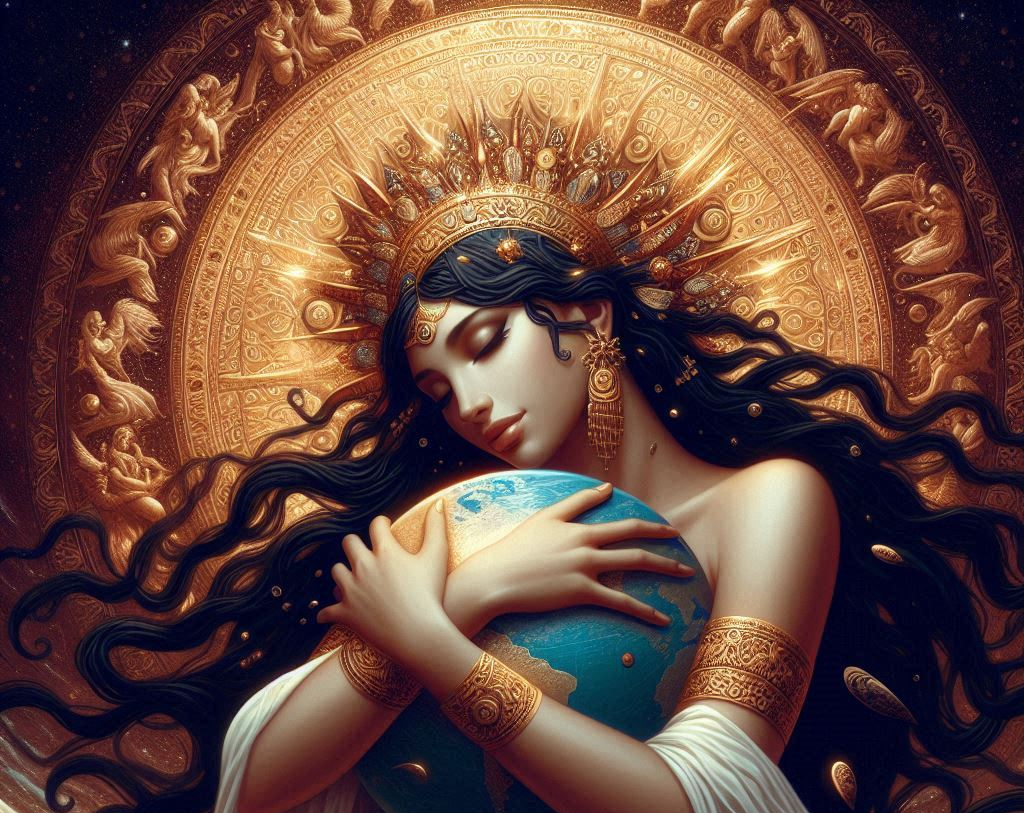
Goddess Inanna Speaks: “Pay close attention to understand. The foundation for current events was set long ago, but in 2025, you will witness the visible outcomes of these preparations, and you are […]
Source: 2025: Birthing Pains
 The Aethiopika is an ancient Greek novel and the only known work by a writer named Heliodorus. It was written in the second or third centuries CE. It is a tale of love and adventure, and yes of cou […]

Source: Isis in the Aethiopika

Art by Rafał Kowalski, Rebis, 2021 (This image appears originally in the book of Basil Valentine)
“I am the dragon, venomous, present everywhere, and to be obtained at the smallest price. Upon that which rests above me do I rely, and whoever investigates me within myself shall discover the truth. My water and fire destroy, and by compounding them you will extract from my body the green and the red lion. If you do not know me precisely, you will abuse my fire with your five senses.
A scorching venom emerges from my nostrils, which has brought ruin to many. Therefore, carefully separate the coarse from the subtle, and you will rejoice in extreme wealth. I generously bestow upon you the riches of the heavens and the earth, equally for men and women. But the mysteries of my soul must be handled courageously and magnanimously. If you desire to operate in this work, which involves many labors and much wealth, you must subject yourself to the fire of my soul.
I am the egg of nature, known to the wise by the sun alone, who have generated from me the pious and modest microcosm. It is prepared by the divine will of the Supreme God, yet granted to very few, even though many fruitlessly desire it. It has been given that the poor may be enriched by my treasure, but let them not fix their souls on perishable gold. I am called Mercury by the philosophers, my spouse is gold (the Philosophical Stone).
I am the ancient dragon, present everywhere on the earth, father, mother, youth, and elder. I am the strongest and most subtle, visible and invisible, hard and soft, mortal and rejuvenating. I descend to the earth and ascend to the heavens, the highest and the lowest, the heaviest and the lightest. In the natural order, I am often found in color, number, weight, and measure, containing natural light, both obscure and luminous. Emerging from the earth, I am known and am as though nothing at all, and yet I bring forth all colors to shine, and metals are perfected through the rays of the sun: the solar carbuncle, the most noble earthly matter, by which copper, iron, tin, and lead are transmuted into gold.”
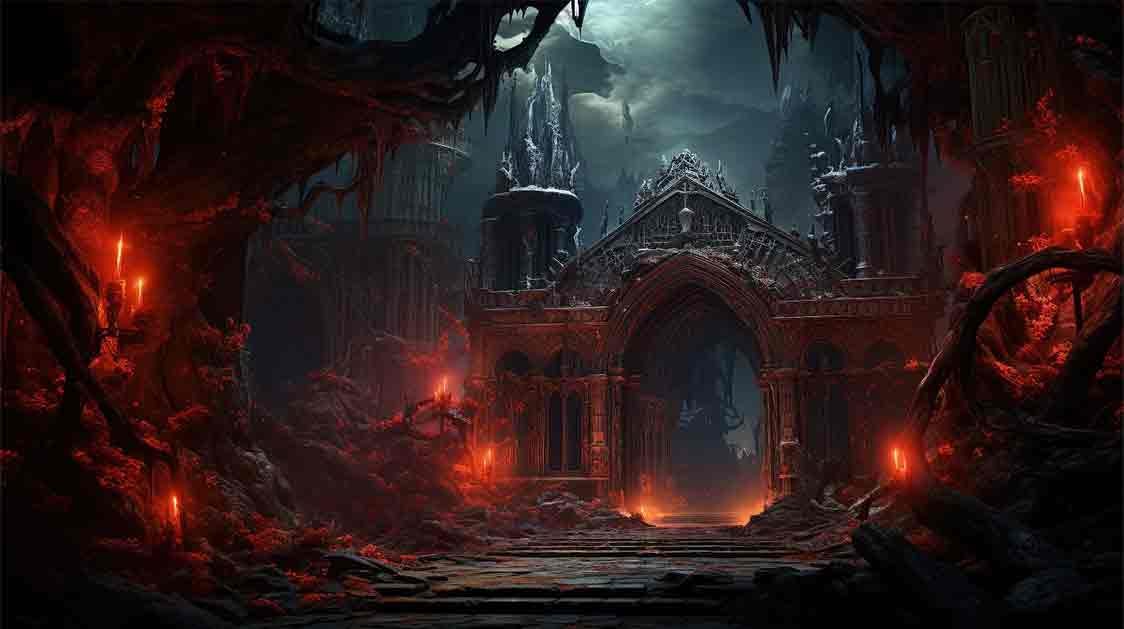
Unexplained Mysteries …
If you have not heard of the Scholomance, perhaps you should have. Abraham Van Helsing, Bram Stoker’s mercurial expert on maladies both material and mystical, had certainly heard of it; he suspected the Count Dracula of being a student of the place.
This hidden school in the mountains of Romania was where the Dutch doctor thought Dracula had learned his dark arts. A fabled school for witchcraft and wizardry to rival any dark palace of gothic nightmares, it was known to produce the most powerful of warlocks, just as it was known to exact a heavy price on its students.
From where do these stories come, of a school where students would learn the secrets of dark magicks from the Devil itself? Where was, and perhaps is, the Scholomance, and what can one learn there?
The students of Scholomance were also called the Solomonari. The school would enroll only 10 student, the strongest, finest and most devoted to be found from all around the world.
The Solomonari would learn different spells and harness magic powers to become witches and wizards at this unique magic school. The students would also be taught about the speech of animals and how to speak to the animals.
These students would be taught such powers by the Devil himself, and nine of them would graduate to return to the material world and use their powers for whatever evil plans they chose The tenth however, would stand apart, and would not return unchanged.

Source: The Scholomance: Fabled Romanian School of Black Magic

Isis leading Nefertari into the afterlife I have a new Isis accoutrement for you. I love it when I find out new things—or new things about an old thing. This one is sort of an expansion on a previos […]
Source: The Seshed Band of Isis
Pentagram and hexagram rituals that banish and invoke energy are must-have tools for ceremonial magick. […]
 Grand Temple of Horus Behdety