Theosophy | Drawing The Larger Circle – 1, by Raghavan Iyer

The 1975 cycle will continue to precipitate momentous choices for individuals and societies. What are the vital elements in this decisive choosing, and what will be the chief consequences? There is in the life of every human being a series of minor choices which add up to a crucial choice, but often it is made with incomplete knowledge of its critical nature. To grow and to age is to recognize with increasing clarity that all events in the past have had their irreversible consequences. Therefore, within any shallow philosophy centered essentially on the physical body and premised upon a single incarnation, a personal sense of futility and fatalism looms large as one comes closer to the moment of death. As with individuals, so with civilizations. Civilizations are apt to conduct the deepest reflection upon their storied past in times of depression, either out of self-indulgent nostalgia or sheer bewilderment at their bygone glory. This has shadowed every great civilization in its hour of decline, and today we are witnessing this in Western Europe and in the nostalgic mood which is intermittent in the United States. Civilizations seek to cling to something of the past, and perceptive chroniclers like Toynbee in England or Jaspers in Switzerland sense that something went wrong as early as before 1914, that the seeds of today’s malaise lay far back in the past. When we look back to that past we surmise that a lot could have been avoided, that there were viable alternatives and missed opportunities. This is the sad state of societies as well as individuals who, because of narrowness of perspective and myopia in relation to the future, impose upon their lives a delusive dependence upon their own edited versions of a truncated past. But whenever human beings are willing to rethink their basic assumptions about themselves, about their shrouded past and about their cloudy future, then they do not need to edit. They do not have to limit unduly the horizon of their gaze.

This is difficult to understand initially. One might think in terms of the extreme example of a person with Promethean foresight who can discern in the cycles of this century long-term factors that go back a thousand years into the past and will go forward a thousand years into the future. In the Victorian Age, T.H. Huxley observed that in the myriad worlds around us there is no reason why there cannot be beings with an intelligence as far beyond our present level as ours is beyond that of the black beetle, and with a control over nature as far beyond our own as ours is beyond that of the snail. He also suggested that even ordinary human beings can look back and forward over a millennium and make broad projections. It is, in principle, possible for there to be beings in the universe who can see all pasts and all futures. The power of choice is partly a function of the scope of perspective. With wider perspectives our choices become more intelligent, but as they become more informed, we readily recognize that there are many factors that are constant. One cannot wish away causes generated over a long cycle. The more clearly a person sees what he cannot alter right now in this incarnation, the more effectively he can use his energies to alter what he can. All this requires a measure of balance, but most human beings are unable to choose wisely by clearly facing the alternatives before them. All too often they vainly hope that by proceeding in one direction, everything else will automatically come to them. Energy cannot move in all directions at once, and though there are many planes of matter, it is always the case that everything adds up in a mathematical universe. One’s capacity to choose is a function of one’s knowledge, not merely of particular causal chains but also of what is at the very core of the phenomenal process of becoming: breathing in and breathing out. Ideally, if one could comprehend the meaning of a single day, one would by analogy be able to understand what is enacted over a lifetime.

It has been taught that for the truly wise, each day is like a new incarnation. In small space they see the subtle motions of unbounded space. In a single moment they can grasp quintessentially the infinite possibilities that are spread out in eternal duration. They can retain in consciousness the freedom that belongs to those who are not rushing to manifest, while displaying a shrewd awareness of what it is possible to manifest with a due respect for the feelings of others, for collective strengths and weaknesses, for the limits and possibilities of the current cycle. Theosophical teaching offers the vast perspective of eighteen million years of human history and also of the sixth sub-race which will emerge far in the future but which must clearly have some relationship to the fifth sub-race – now visibly on the decline – that flowered forth in Europe and partly in America. At this point of time there is, by analogy and correspondence, a critical moment of choice bearing upon the alternatives that confront our intelligence. The ratiocinative mind has become adept, because of modern upbringing and so-called education, because of so much dichotomous thinking since Aristotle, at rationalizing its wants, desires and limitations. Now we find at a global level the logical limit of this rationalizing mind, which insists there is not enough room or food on earth for all human beings on our globe. This no-exit barrier in thinking arises because of assumptions that were too limited from the start. It hinges upon a view of the universe which is incompatible with the vast resources of the creative imagination, with the inventiveness displayed in the last three centuries in building up the structures of applied science and sophisticated civilization. Even this is merely a recent example of the immense resourcefulness of the human race over many millennia. The type of thinking which is inductive, inferential and dichotomous, functioning within the perspective of a closed universe or of a one-life system, has become sterile and has no real answers to the awesome problems of our time.

Hermes, August 1978
Raghavan Iyer

Seven Sacred Flames Meditation | First Ray Temple, The Will of God Temple in Telos

GUIDED SEVEN SACRED FLAMES MEDITATION

Journey to The First Ray and The Will of God Temple in Telos, Lemurian City of Light, http://www.lemurianconnection.com/ beneath Mount Shasta, CA.

Immerse yourself in the First Ray energies of Divine Will and Surrender with First Ray Master El Morya and Adama, High Priest of Telos. A Healing, peaceful and rejuvenating meditation assisting you on your spiritual journey back to yourself.

Theosophy | The Crest Jewel – 2, by Raghavan Iyer

   Against this, however, we have the tremendous affirmation through the supreme negation of Sri Shankaracharya.

The individual who knows that at the root is the persisting illusion of separateness, is vaster than the universe, and can dissolve it instantly by breaking down at will the baseless, insubstantial fabric of his imagination. Anyone who can do that has begun to wake up. There are people who will not wake up voluntarily because they repeatedly fell asleep during eighteen million years and are now frightened to settle accounts. They are themselves negated by suffering which comes as healing compassion, and are negated by others in the course of intolerable inhuman encounter. Self-negation is shown by the timeless religion of responsibility and the hidden science of divine wisdom. The invisible sun in every man as the Atman, the spectator, ever radiates endless energy for the sake of all. According to this teaching, darkness is prior to what we call light; glamour or unwisdom is beginningless. It is what the ancients called ChaosGaia, or Mahamaya. There is a chaos prior to any cosmos. There are many myriads of systems, galaxies and galactic clusters in the vast spaces of the heavens, but if there were no primordial chaos one would be forever trapped within the same universe. Before Adam was Chaos, the primordial matter, in which is hidden the light that is the soundless sound. In the beginning was the Word. Primordial chaos is necessary for the universe, but whether we think it necessary or not, we have no choice. We are caught. We can get out, because we have in us the light that was hidden in the darkness, which lighteth up every man who comes into the world.

The Crest Jewel of Wisdom speaks only to those who are prepared to negate the world of appearances:

   Gaining at length human life, hard to win, and manhood, and an understanding of the revealed teachings, he who strives not for liberation in the Divine Self, deluded in heart, self-destroying, slays himself through grasping at the unreal. who, then, is the very self of folly but he who, deluded, follows selfish purposes, after he had gained a human body and manhood hard to win? Even though they recite the scriptures, and sacrifice to the gods, and fulfill all works, and worship the divinities – without awakening to the unity of the Divine Self, liberation is not attained even in a hundred aeons.

   From the standpoint of the sage, the innumerable ways in which human beings are enmeshed in the Mahamaya are not very interesting. The sage can recognize anyone who is fully awake behind a semi-sleepy projection. Those who really want to emerge from behind the false personal mask will receive what they deserve in mathematically exact proportion. This is a truth about consciousness on all planes. One must deserve to go beyond all the external forms and modes and, through the eternal soul-memory now awakened of the soundless sound behind the great vibrations of the universe, to light up in the lower mind a self-conscious reflection of the invisible sun that overbroods the egg.

Albert Einstein said there are no hitching posts in the universe. There are no boundaries except arbitrary and conventional ones assigned by human beings who happen to think that they occupy a fixed point of space and time, when in fact space is curved and time is relative. They do not understand the inner meaning of spatial coordinates and of clocktime. Although there are no hitching posts, there are innumerable hooking points. When people really begin to enjoy the thought that at any point of space-time they could break out of the boundedness of the universe, they can experience through self-knowledge what they have forgotten. The ancients taught that God is a circle with its centre everywhere and circumference nowhere. Human beings can find in the inmost depths of abstract meditation an active centre of intense, motionless, joyous consciousness. Abiding in universal welfare and doing nothing, as beings of light they enjoy pure unmoving spiritual will in, through and independently of, all material vestures. Even if we somewhat understand all of this, it is still very difficult to light the lamp of discernment. The moment we think, “Let me do this,” “May I be that,” we only create karma and imprison ourselves. But the moment we say, “Let me begin,” and also recognize that there is a chaos we cannot explain and that there are no hitching posts, then we begin like true pilgrims to walk along the Path. It leads to invisible summits lost in glorious Nirvanic light which may be glimpsed from foothills and mountains arduously climbed in cheerful enjoyment, although one is aware of the many pitfalls on the way. The only hooking points are found within. They form the seven-knotted bamboo staff of the ascetic. If you were a montagnard you would cherish the serene strength of the individual and know what the communards forget, that communities are doomed to fail from the start when men are afraid to be alone. At the same time, if a human being in distress came for help, the montagnard will take care of him and then return to solitude.

The soul is ensnared through the power of misidentification in the chaos of primordial matter. If we enjoy narcissistically the illusions of the ever-changing reflective soul, then we forget the light of divine discernment, the Sleeping Beauty in the castle. She can only be awakened by Prince Charming, the androgynous manas, the power of noetic thought, ideation and imagination. Real thinking has a self-sustaining quality determined by the grasp, the vision, the scope and the strength of the universal ideas that provide mental nourishment. When one truly begins to walk the inner Path, one does not need any reference point in external space and time, and can see the moment of birth as if it were this morning’s dawn and can see the moment of death as if it were this evening’s twilight. Thousands of previous lives seem like twinkling stars in the sky.

The real Gurus who truly know teach just by being themselves. They are self-existing, self-manifesting embodiments of the wisdom of compassion, crowned with the Crest Jewel of pure insight. Their very existence is testimony. Shankara spoke to disciples who were already free from the delusion of the personal “I” but who were stuck in the illusion of the individual “I.” His teaching is not about the hereafter, not about the now and then, not about the always and everywhere, but about That. The supreme affirmation is TAT TVAM ASI – That Thou Art. That is the oldest teaching which Shankara explained by reference to reason, to experience, to states of consciousness, to vestures of matter in the five-fold classification, and also by references to madmen, yogis and free men. Universal self-awareness is the potential privilege and birthright of every human being, but no one can attain to it except by fulfilling the qualifications, embodying the conditions that approximate the posture and the position of a true learner.

The Crest Jewel could be in your hands. Use it, Shankara says, because by use you make it sufficiently your own to recognize that the greatest lies are “I” and “thou.” All amounts to an “it” and “it” equals That. That equals zero. Your sphere becomes luminous when you wholly adopt the standpoint of the Logos in the cosmos, the God in man, and then enjoy the universe through every pair of eyes. Heal yourself, and others through yourself, by luminous thoughts and adamantine compassion.

Hermes, August 1977
Raghavan Iyer

Theosophy | The Crest Jewel – 1, by Raghavan Iyer

To affirm is to deny. It is obvious that we do this always, but we periodically forget because of narrowing our focus to what we affirm in the language of perceived objects and in terms of the illusive independent existence of a particular set of subjects who see those objects. We fashion a pseudo-system. The universe is boundless, birthless and partless. Both within and beyond visible space and in eternal motion within endless duration, going through apparent vicissitudes like the waxing and waning of the moon or the rise and fall of the tides, through cyclical and cosmically precise changes, human beings have the privilege of exercising the deific power of creative imagination. At the highest level conceivable to a finite mind caught up within the prison of the personality, imagination is ceaselessly enjoying the universe, for example, the play of light and shade upon the green leaves of summer. If we say that there is also continuous negation, we are correct because chlorophyll is gradually negated, and thereby the leaves turn yellow. Thus we know that spring and summer must be followed by autumn. Human beings, however, sometimes forsake these primal facts because they prefer convenient fictions which involve false affirmations.

There is the false affirmation that a whole lot of bodies are in existence today. Do the bodies say so, and if so, how do they know? Apparently they are supposed to have minds, but what is a mind and what is the evidence that bodies have minds? We entertain opinions about these matters, but are opinions the same as ideas and are ideas the efflux of fluctuating moods? Is that the same as thinking, the activity of a Thoreau in the woods and an Emerson in his study? Questions of this kind are deeply troublesome and difficult. Therefore, Sri Shankaracharya states that before you can begin to deserve the Crest Jewel, which is in the crest above the forehead of the human body, the regal gem of pure discernment and spiritual wakefulness, and before you can benefit by it in the three states of consciousness – waking, dreaming and dreamlessness – you must recognize that at the root you have made a false identification. Without knowing it, you have engaged in falsehoods to which you were invulnerable before you learned to walk, before you learned to identify with the body that stumbles and before you learned to talk, to repeat sounds associated by other people with sense-objects. You started to slip into a stupor, and began to live an increasingly unreal existence, mostly reinforcing your sense of unreality but insisting it was the only reality – thereby showing that it was not real to you – against other people’s conceptions of reality. Therefore, that compassionate teacher Sri Shankaracharya states that we must get to the root and core of illusion.

What is the root? We are told that the Crest Jewel is that which causes all our problems but which also is their cure. The Crest Jewel represents the fundamental affirmation that two habitual negatives make a higher-order affirmation. On the one hand, there is a false negation in the notion of reality attached to the apparent freedom of all seemingly separate subjects, and the resulting glamour of the false shadow-play created by supposedly separate selves. On the other hand, there is also the notion of a plurality of separate objects, constituting a false negation of the one homogeneous substance or root-matter which is of the quality of pure primordial light and remains undivided and untransformed. All the various collocations of atoms, in seemingly fortuitous movement, whirl and revolve around invisible centres which are seemingly separate points in one homogeneous universal region, giving rise to the falsehood that there are separate objects. These two false negations have been marked out in the great teaching of the Guru.

Sri Shankara begins the text by saying there are three things extremely difficult to have. One is manhood. The second is the longing for liberation. The third is access to Masters. Without the second the third is impossible and the first is useless. If one wants access to Masters, one has to long sufficiently for liberation. One has to want sufficiently, with the whole of one’s being, to become free from the massive burden of inane repetitions that we call life and the impossibility of making it meaningful with the help of borrowed, lifeless and bloodless categories that wear masks and don caps and engage in a perpetual pantomime play called living. Shankara says that there is nothing new under the sun, that it is all the same old story. One might say it began with thinking man, but it really began when man stopped thinking. As a result, a huge rigamarole emerged which men then packaged and called recorded history.

History represents in recent centuries a harsh but also a necessary negation of the absurdities, errors and illusions of the past. When that happens with so many minds, when so many wills are blunted, hearts hurt and human beings lamed and crippled, suddenly we know that springtime is near. The Golden Age is next door. Suddenly we realize what we always might have known – that there are children in this world, that other people exist, that while ten men are gloomy there are another hundred who are happy. Those who are engrossed in being happy do not go around certifying their happiness to the gloomy. The gloomy want certainty, but there is no certitude to be attained anywhere in the realm of differentiation. This is a philosophical truth which everyone knew as a little child. The intuitive negation of childhood, a beautiful sharing with no “mine” and “thine,” was followed by cruel adolescent affirmations which are intensely ugly especially to others and sometimes to oneself. Then came the prolonged adolescence of those who are petrified that they might actually have to assume minimal responsibilities. But when men will not negate, Nature negates. Nature’s power of negation is vaster than the collective power of negation of history, and both seem more awesome and decisive than the capacity of an individual to negate.

Hermes, August 1977
Raghavan Iyer

The Eternal City | by Brendan Heard, Contributing Writer, Classical Wisdom

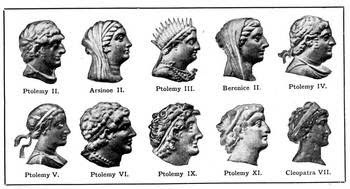
The succession of the Ptolemaic Dynasty, from Ptolemy to Cleopatra.

The Ptolemaic Dynasty of Egypt is a unique reference point in classical history. Most notably, our very notion of classical wisdom itself largely depends on this period, insofar as it played a role in  the documentation, preservation, and accumulation of the wisdom of the Greek world. It was a singular cultural epoch that sprang up into its own golden age, flourishing for a time, followed by rapid decline and acquiescence to Rome. Egypt was ruled for roughly three hundred years under Ptolemies (from 323 BC to 30 BC), ending with the death of Cleopatra.

As a civilization it was a relatively rare example of a largely tranquil symbiosis; where the philosophical ideas of a Greek ruling class took fertile root in an Egyptian culture—a culture already at that time considered impossibly ancient. The particular Ptolemaic world view which rooted and ripened in that immortal Nile valley soil gave classical history three hundred years of highly innovative, self-actuated, archaic-romantic civilization. The Greek rulers were as much influenced and altered by that eldritch land of ancient gods as the land was by them.

Most notably, this vibrant community led to the creation of the most important place of learning and wisdom in the ancient world. Perhaps ever. The much celebrated and lamented Library of Alexandria.

Its history began with the god-like Macedonian conqueror Alexander The Great, who overtook Egypt in 332 BC. He was regarded there as a liberator from the Persian oppression of the Achaemenid Empire (Artaxerxes III). Alexander was afterward crowned Pharaoh. To the Egyptians, pharaohs were the divine link between gods and men, who ascended to godhood in death. The Great Alexander, in turn, secured his own Egyptian godhood by consulting the Oracle of Siwa Oasis, who declared him a son of the god Ammon. From that point on, Alexander considered and referred to himself the son of Zeus-Ammon.

It is reported that Alexander, while dreaming, asked Ammon what he was to do. The god responded to him saying that his destiny in Egypt was to found an illustrious city at the site of the island of Pharos. This the great conqueror set forth to do, and this was henceforth to be named after him: the city of Alexandria.

But Alexander left Egypt before the city was built and never had a chance to return, dying soon after in 323 BC.

After his death, one of Alexander’s somatophylakes, the historian Ptolemy, was appointed satrap of Egypt. Soon after he declared himself pharaoh Ptolemy Soter I (soter meaning saviour). Ptolemy and his descendants adopted Egyptian customs, including religion, and had themselves portrayed sculpturally in Egyptian style. They built magnificent new temples in honor of ancient Egyptian deities and adopted the monarchic system of dynastic pharaohs. This was not unusual, as the Greeks from the onset had revered Egypt and it’s magnificent longevity, and within a hundred years they had developed a new Greco-Egyptian educated middle class.
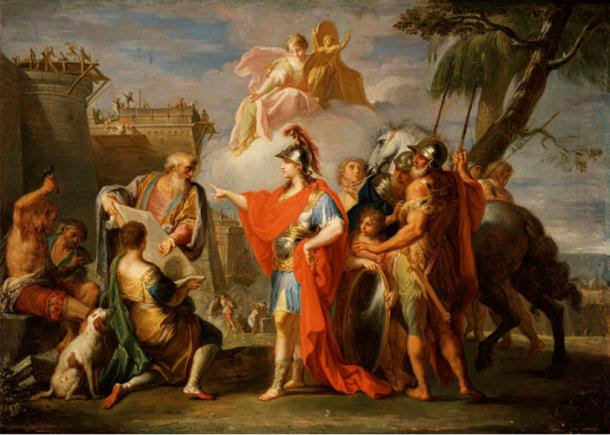
 

Alexander the Great founding Alexandria, Placido Costanzi (Italy, 1702-1759)

Ptolemy I Soter also went so far as to create new gods in order to unite his plural populace. Serapis was one such God, a combination of two Egyptian gods: Apis and Osiris. Additionally, Serapis combined elements of the main Greek gods: Zeus, Hades, Asklepios, Dionysos, and Helios, as well as influence from many other cults. Serapis had powers over fertility, the sun, funerary rites, and medicine, and included the worship of the new Ptolemaic line of pharaohs. To him they built the enormous Serapeum of Alexandria. Ptolemy I also promoted the cult of the deified Alexander, who became the state god of the Ptolemaic kingdom. This was a time when mortal men of sufficient influence really could become gods. Also in homage to the aims of Alexander, Ptolemy soon proclaimed the port city of Alexandria as the new capital of Egypt.
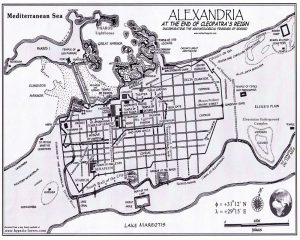
A map of Alexandria at the end of Cleopatra’s reign.

Fortunately, Ptolemy’s desire was to continue the work of his former master, which was to spread Hellenistic culture and Greek wisdom concepts throughout the known world. Where the Greeks had conquered, gymnasiums and libraries were erected. And libraries in particular enhanced a city’s reputation, attracted scholars, and augmented the available intellectual assets of a kingdom.

Any kingdom or nation faces threats to its existence. For Ptolemy the primary hazard came from his former comrades, the somatophylakes of Alexander who themselves had been granted rulers of surrounding satrapies. Each new kingdom which sprung up in the wake of one of the world’s greatest conquerors were thus set in competition against one other.
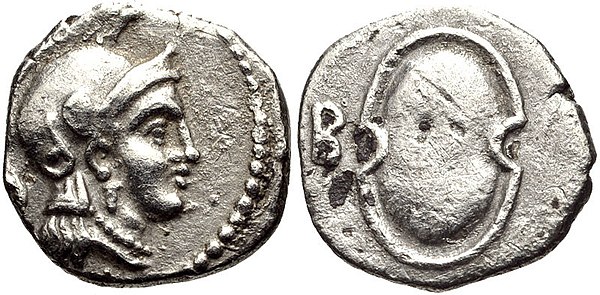
Coin of Balacrus, somatophylakes of Alexander, as Satrap of Cilicia, with letter “B” next to the shield, standing for B[AΛAKPOI],

Luckily for us, this rivalry often manifested itself in competitive feats of wealth and grandeur, of which exhibition of genuine culture was a token of magnificence. A kind of cold-war high-culture-race was underway: to have the largest or most impressive edifice, the most athletic and intellectual populace, to produce the greatest genius, artist, or astronomer, the most ground breaking scientific theory or understanding of archaic mystic philosophy. These were the conditions under which the Greek Pharaoh Ptolemy sought to make Alexandria an unrivaled center of knowledge and learning, and began plans (actual construction was likely begun under Ptolemy II) of the great Library. The construction of which was possibly managed by Demetrius of Phalerum, a student of Aristotle. Ptolemy sought nothing less than a repository of all knowledge, and his library would prove to be unprecedented in scope and scale, one that has gone unrivaled over the ages.
The library was not merely the largest collection of books (scrolls) in antiquity, but was also a kind of think tank, a research institution lavishly funded by the pharaoh. The actual library was housed within a larger building, known as the Mouseion (origin of our word museum), dedicated to the nine Greek goddesses of the arts, the Muses. Written research was officially conducted in both Egyptian and Greek. Scholars from across the Greek world and beyond were sought after and invited to live at the library, to practice their science, to teach, and to learn from each other, without domestic distractions. The first-century BC Greek geographer Strabo wrote that scholars were provided with a large salary, free food, lodging, and exemption from taxes.
It was a state-funded elite study group, only with the added advantage of not being invested in consolidating state power. The Greek scholars made no contribution to the economy. The aim of the library was nothing less than the virtuous pursuit of knowledge for its own sake. A place where scholars could come together and exchange ideas. Isolationist Egyptian temples had historically contained libraries but the books were kept largely secret from the public. Yet the combination of the Greek attitude toward philosophy and the impossibly ancient and staid nature of Egypt, served to abet the pursuit of new knowledge.
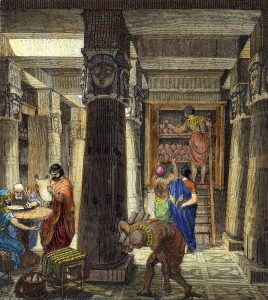
Artistic Rendering of the Library of Alexandria, based on some archaeological evidence.

In characteristically Greek fashion, the collecting of scrolls itself became an idealized vocation, a paramount obsession. Visitors to Alexandria arrived with their versions of famous literary texts, while agents were sent abroad collecting everything they could find. Books became a kind of currency, and in terms of this wealth, the library of Alexandria became the largest collection in antiquity. Some estimates suggest the number was as high as 700,000 scrolls, which were not just stored but used for reference and research by the active scholars. These scholars then spent time copying and spreading this accumulated knowledge further across the Greek world and beyond, and it is to this effect that we can thank our own surviving awareness of Classical wisdom. Because of this, Alexandria became the symbolic brain of a scattered and oppositional ancient world.
The feats of scholarship soon began to gain notoriety and, as visitors increased, so did reputation.  There may have been up to fifty learned men in the community, teaching and interacting at one time. Completely free from daily material burdens to indulge their intellectual pursuits. There were lecture halls, dormitories, and cafeterias, all enmeshed and linked in a manner to encourage the various experts of different disciplines to interact. There was a large communal dining hall, meeting rooms, reading rooms, gardens, lecture halls, and a great hall for the scrolls known as bibliothekai. It is speculated that the Mouseion may have also had a zoo for exotic animals. There was certainly a medical school where animals were used in the research of human anatomy (using human bodies was forbidden in the wider Greek world). Later, the library scholar Herophalus performed medical exams on dead human bodies, elevating the science of anatomy. Herophalus’ sacrilege was tolerated because the Egyptian embalming tradition gradually influenced Ptolemaic Greeks towards a more relaxed view regarding human dissection. Again, we note the creative virility of the symbiotic relationship of two quite different cultures, existing stably, mutually influencing one another.
Of the many poets who resided at the library, there were three of great fame for masters of Hellenistic verse: Callimachus, Apollonius of Rhodes, and Theocritus. Of astronomers there is Hipparchus, who figured out the path of stars, and length of solar years while in Alexandria. Eratosthanes figured out the circumference of the earth while studying there, by examining the length of cast shadows at certain times of day about sun-drenched Alexandria. He calculated this to an accuracy within 200 miles. The astronomer Aristarchus devised the first heliocentric model of the solar system (the known universe). Later, the Mouseion-educated mathematician and astronomer, Claudius Ptolemy (no relation), wrote his three influential treatises on astronomy, geography and astrology. Developing what we famously know today as the Ptolemaic system of astronomy.

An illustration of Ptolemy holding a cross-staff, published in Les vrais portraits et vies des hommes illustres (1584). Image by © Bettmann/CORBIS.

Overall, Alexandrian research was strongly centered towards mathematics. Among mathematicians under Ptolemaic patronage the most famous was the inventor Archimedes (inventor of the Archimedes screw), the polymath Eratosthenes, and the greatest geometer of all time, Euclid. After studying at the library of Alexandria, Euclid published his great text, The Elements, that immediately surpassed all previous geometric literature to that date and remains the foundation of that science today. It was Euclid’s access to the bibliothekai that allowed him to codify the collected results of basic theorems postulated by others through the centuries. Legend has it that when Euclid showed his work to the pharaoh, he was asked if there was any shortcut to understanding his work, to which Euclid replied, “there is no royal road to geometry.”
Along with poetry and mathematics, matters of philosophy and religion were treated with equal reverence, study, and proselytism. Many ancient texts became at this point translated into Greek, including the Septuagint translation of the bible, which made the story accessible to others. This is the primary Greek translation of the Old Testament, also known as the Greek Old Testament. Again, this work was done purely out of intellectual interest…to catalogue, examine, and learn from all available ancient sources.
In this sense the pagan world view had its advantages, in its ability to honestly assess other religions without offending its own dogmas, in a way that monotheism historically has not. These combined efforts to know all things in a spiritual context of understanding, united disciplines such as poetic literature and mathematics in common purpose, which we today might find unusual. They did not seem to share our quandary over the division of physical and metaphysical, or materialistic and spiritual. Astronomy and astrology were equally venerated, even if the latter was more open to interpretation, or understood to be spiritually speculative. Very seldom, if at all, in the ancient world do we see overt supplications to atheism or hard materialism. And that is despite it being a world where the gods changed with the generations, and the good ones became evil, and vice versa, and new kings invented new gods altogether.
All the studied disciplines at Alexandria, from anatomy to Platonism to topography, were interwoven in a tapestry of mutually educative striving, beneath the hierarchy of the Pharaonic society. The monarchic system itself, quite alien to us now, was also woven into this mesh as the unquestionable order, the foundational bedrock supporting the pursuit of high culture. We are reminded of these more esoteric and archaic foundations in the name Alexandria itself. For let us not forget, the city was named after and founded by the great god-king Alexander, and all that followed was based on his vision for it.
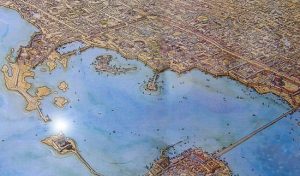
Artist’s Impression of Ancient Alexandria.

Concerning philosophy and mysticism more specifically, Alexandria nourished Neo-Pythagoreanism, Middle Platonism, NeoplatonismTheurgy, and Gnosticism, which all flourished and were studied and transcribed by busy scholars under patronage of the Ptolemies over the centuries. In the name of these mystic and rational philosophies, and to the copying of scribes, and to the boundless ideas therein represented, we may also pay our respects to the memory of this golden classical city.
Abstractly speaking, the library, acting as a storehouse of philosophy, religions, history, and science, secured beyond its finite physical existence its sacred purpose: the dissemination and preservation of knowledge across distance and time. Many manuscripts that were ancient in Ptolemy’s day survive down to us thanks to the care of the various scholars that visited and lived in Alexandria. In this way the historic reverberations of the library issue about recorded history like ripples upon the surface of water—reaching ever outward.
The decline and fall of this institution was synonymous with that of the Ptolemies themselves. The precise cause of destruction is lost to time amid conflicting reports, and is often a controversial subject, beginning with the rise of Rome in that region.
Roman interest in Egypt was typically due to the reliable delivery of grain to the city of Rome. To this end the Roman administration made no essential change to the Ptolemaic system of government, however they were in all but name subjugated before the powerful new empire. The Romans, like the Ptolemies, respected and protected Egyptian religion and customs, although the cult of the Roman state and of the Emperor was gradually introduced. The great library was at least in part burned accidentally by Julius Caesar in 48 BC. But there are accounts of its existence by notable visitors who accessed its resources around 20 BC. However, overall, it dwindled during the roman period, and suffered from a lack of funding after the Ptolemaic dynasty ended with the death of Cleopatra.
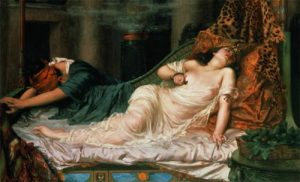
The Death of Cleopatra by Reginald Arthur, 1892. (Public Domain).

Around 270 AD the library may have been destroyed further in a rebellion. By 400 AD paganism was outlawed and the Serapeum was demolished by Christians under orders from pope Theophilus of Alexandria. However, it may not have housed many books at that time, and was primarily a meeting place for Neo-Platonist philosophers following Iamblichus. In 616 AD the Persians conquered, and this was followed in the same century by Arab conquest, and whatever remained then of the library was finally destroyed for good in their sacking of the city by the order of Caliph Omar.
Whatever had remained of the collection at that point was no doubt finally lost. But as all things that exist for a time, there is a portion that belongs to the infinite (at least according to the Neo-Platonists thought).
The life of the mind, that epitome of Plato’s teaching—which the library of Alexandria embodied—was preserved in that eternal city, leaving traces of itself for us to cherish today.
===
The Eternal City was Written by Brendan Heard, Author of the Decline and Fall of Western Art 

The Lady of Magic & the Lord of Ecstasy

Isidora's avatarIsiopolis

Of course the Egyptians made wine!

Dionysos in musical ecstasy

I missed posting the last couple of weeks. Life, the Universe, Everything…and the Fall EQ Festival. This year was dedicated to one of my two Beloved Ones, Dionysos, so I had to be there. It was a very fine Festival and Divine Madness was had by all. Anyway, in His honor, and Hers, I’d like to show you how, in antiquity, these two Divine Ones came together…as They do even today in my heart.

Now, at first glance, the Greek God of Ecstatic Intoxication & Wine doesn’t seem to have much to do with our Egyptian Lady of Magic & Power, Isis. After all, He’s the Sex, Drugs & Rock-n-Roll God and She’s, well, She’s a bit more serious.

Ah, but wait. All is not as it seems. (All is almost never as it seems.) There are, in fact…

View original post 915 more words

Operative Alchemy: Avery Hopkins

An open lecture given on the basics of alchemical philosophy and applications. Details on the 3 principles, 4 elements, there internal and external correspondences, the energetic (chakra) centers of man, and the creation of medicines for the body and the mind using alchemical philosophies and operations.

Website: https://www.kymiaarts.com

Facebook: https://www.facebook.com/kymiaarts/

Instagram: https://www.instagram.com/kymiaarts/

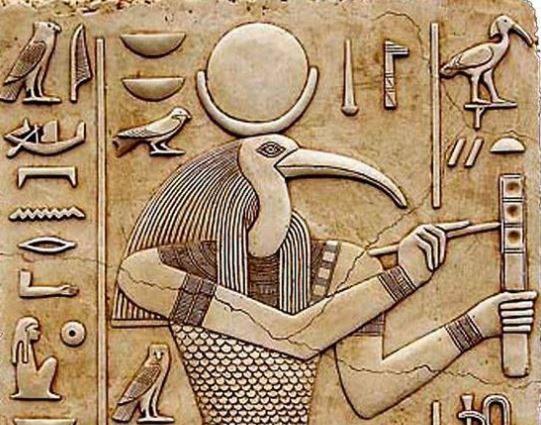
A’an – The Tablets of Thoth (Psychedelic Reading)

The Spiritual, Occult and Historical significance of the “Emerald Tablets” is almost beyond belief of modern man.

Written around 36,000 B.C. by Thoth, an Atlantean priest-king, this manuscript dates far back beyond reach of any Egyptian writings ever found. The author, Thoth, a Master-Teacher of the early Egyptians, put this treatise to writing in his native Atlantean language and Dr. Doreal, was given the directive to retrieve these Tablets and translate them into English for the edification of modern man. The powerful and rhythmic verse of Thoth is wonderfully retained in Doreal’s translation. Contained within the pages of Thoth’s masterpiece of Spiritual and Occult Wisdom is the synthesis of the Ancient Wisdom Teachings, the guideline for initiates of all ages, revealing the Knowledge and Wisdom hitherto held secret, but now in this New Age, revealed to all Seekers on the Path of Light.

It is recommended to study the material presented here as there are many ideas and lessons to be taken from it. Everything can be considered a truth or a lie, so if there is something to be learnt, take the information and put it to good use.

Go forth rejoicing in the power and the peace of the One.  Adonai.

The Tetragrammaton – Masonry Meets Theurgy

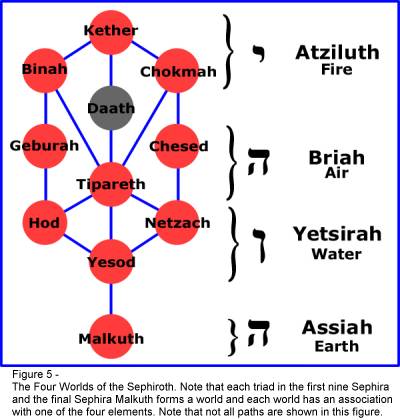
The Tetractys and the Sephiroth represent similar concepts; however the link between these two concepts would not be readily apparent were it not for their common use of the Tetragrammaton. The Tetagrammaton serves as a bridge between these concepts which span time, culture (Greek and Hebrew), and multiple Masonic rites and rituals. This paper discusses the Tetragrammaton, the Tetractys, and the Sephiroth and shows how the three are related.  […]

Source:  http://rosacruzes.blogspot.com/2009/02/tetragrammaton.html

Stationary Powerpoint

Tara Greene www.taratarot.com's avatarTara Greene,Tarot,Astrology,Psychic

Saturn is now Stationary to be exact, September 18- 23rd at 13+ degrees Capricorn. 13+ degrees Capricorn is a potent powerpoint for the next 5 days. Dig into the karmic patterns and release them now. Saturn is death and time. It’s not easy work but turning lead into Gold is awesome.

13+ degrees Capricorn. 13+ degrees Capricorn is a potent powerpoint for the next 5 days. Saturn moves forward to the 14th degree on the New Moon, how synchronous.

This Saturn station is s a very powerful point. Put all your discipline into understanding what you are supposed to learn about in going over these lessons over lifetimes and get it and let it go. 

We are stuck in the rut with the wheels spinning around, we are tired of being stuck and now its time to release what has kept us here. Look at the deep patterns in your…

View original post 612 more words

Venus in Libra brings balance in 2019

Tara Greene www.taratarot.com's avatarTara Greene,Tarot,Astrology,Psychic

VENUS enters her home sign of LIBRA September 14-October 8

Venus 1024px-Birth_of_VenusSandro Botticelli [Public domain] Venus in Cancer water born, Botticelli Sandro Botticelli [Public domain] Which means its time for Women, beauty, love, creativity and justice time as Venus is in her Air and daytime sign September 14-October 8.
VENUS in LIBRA will be bringing sexy back as she is THE LOVE GODDESS HERSELF along with Mercury who is very close by to her right now in Libra.
We are thinking an talking and texting and twittering about all things Venusian and Mercurial during this time.

VENUS in the TAROT is symbolised by Card #3 The EMPRESS

There will be a NEW MOON in LIBRA @ 5+ degrees on September 28 with  Mercury and venus. triple Libra times.
LILITH WILL BE CONJUNCT NEPTUNE EXACTLY DURING THIS NEW MOON

Hopefully, Venus will help to bring some balance to all out of balance situations in the world…

View original post 425 more words

Profile | Who was A.E. Waite?


Arthur Edward Waite (1880)

Arthur Edward Waite was a scholarly American mystic who wrote extensively on occult and esoteric matters, and was the co-creator of the Rider-Waite Tarot deck. He was the first to attempt a systematic study of the history of Western occultism, viewed as a spiritual tradition rather than as aspects of proto-science or as the pathology of religion.  […]

Source:   http://www.witchcraftandwitches.com/witches_waite.html