
Category Archives: Enochian Magic
(1) Solomonic – Secrets of the Magickal Grimoires

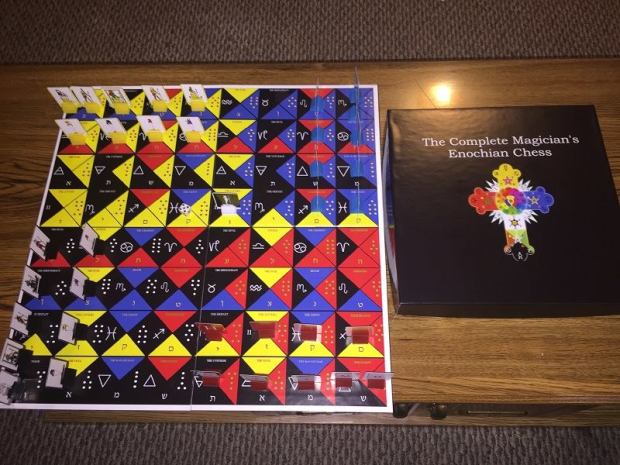
Enochian Chess, Anyone?
For those looking for a set under $50, here it is. – Thanks
*It does take a week or two for delivery. They print them one at a time.
https://www.thegamecrafter.com/games/the-complete-magician-s-enochian-chess
Virtual Enochian
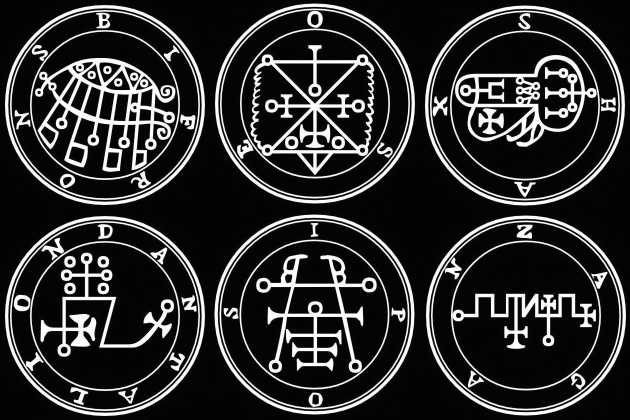
Enochian: The Mysterious Lost Language of Angels | Ancient Origins
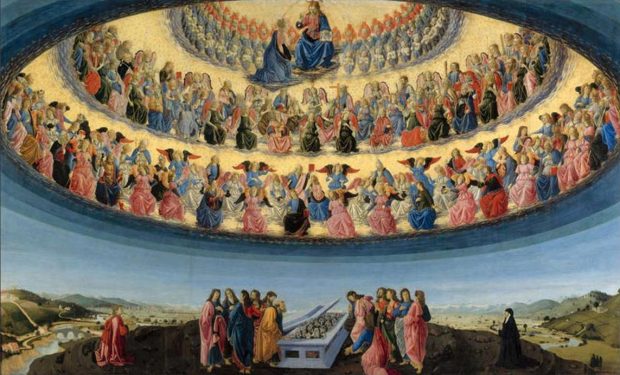
In the year 1581, occultists John Dee and Edward Kelley, claimed to have received communications from angels, who provided them with the foundations of a language with which to communicate with ‘te

Source: Enochian: The Mysterious Lost Language of Angels | Ancient Origins
Famous Personages Practicing Magic?
Which famous people are practicing Magic?
If you’re like me, you probably think that 99% of the imagery around magic is … Silly. Embarrassing. Just downright tacky.
When I first got into magick, this was the first hurdle I encountered. The word “magic” itself is silly. The books are poorly designed, with airbrushed images of crystals and dragons and that kind of thing. Nine times out of ten, people who claim to be into magic dress like they’re at a Renaissance Fair, and behave just as foolishly.
PPFFTTT!!
Well, since the 80s and 90s, magic has become a lot more fashionable. It’s become popular in youth culture to call yourself a witch, talk about energy, etc. But still, in polite company, “magic” isn’t exactly a subject that’s taken seriously.
But it works. It works almost too well. Everybody from heads of state to business leaders to top celebrities are using it—they might call it magick, or they might call it something else. But this stuff is out there. It shows up in the most unexpected places. And all the tacky New Age aesthetics? As far as I’m concerned, that serves as a distraction from the real stuff.
Ask yourself: If magic has helped rocket these people to such prominence, what can it do for you?
For example, take chaos Magic, a postmodern system that emerged during the late 20th century in England. During the late 1970s and early 1980s, occult thinkers Peter J. Carroll and Ray Sherwin were looking to define a system of magic that didn’t accept the dogma of the traditions that came before it, and instead sought results based on performing the magical operations of given system. Chaos magic values an eclectic approach toward belief—and its practitioners will adopt new beliefs and identities as they see fit to match the results they’re looking to get. Influenced by the writings of early-20th century painter and sorcerer Austin Osman Spare, as well as taking inspiration for the ideas of countercultural figures like Robert Anton Wilson and William S. Burroughs, the early chaos magicians suffused a core system based on the individual practitioner’s achievement of gnosis, a state of altered consciousness that exists beyond reason and the senses.
While not exactly attracting such celebrities such as Tom Cruise or John Travolta, chaos magick does have its notable practitioners. Below is a list of seven of them.
1. William S. Burroughs
William S. Burroughs was the author of classic countercultural works like Naked Lunch,The Soft Machine and Nova Express. Burroughs was fascinated by altered states of consciousness, and it shows in his hallucinatory writings—as well as his life-long drug habit. His interest in altered states of consciousness led him to a more schooled interest in magick, with a particular interest in Hassan i-Sabbah, whose dictum “Nothing is True, Everything is Permitted” was of particular influence on the system of chaos magick. Along with Bryon Gysin, Burroughs was one of the originators of the cut-up technique of writing.
Below, Burroughs lectures on the using power of magical states of consciousness to inspire the creative faculty.
2. Robert Anton Wilson
Robert Anton Wilson’s books—like The Illuminatus! Trilogy and Cosmic Trigger—were early influences on the development of chaos magic. You could say that his suffusion of Sufism, Taoism, Zen, General Semantics, Thelema and a host of other philosophical and mystical traditions made him an early adopter of chaos magick.
Below, Wilson talks about his experiences channeling a higher intelligence from the star system Sirius.
3. Genesis Breyer P-Orridge
Genesis Breyer P-Orridge is a highly celebrated artist and founding member of influential musical acts Throbbing Gristle and Psychic TV. With Throbbing Gristle, Genesis was instrumental in the creation of industrial music—and with Psychic TV, helped to spearhead the burgeoning rave scene in the 1980s. In 1981, Genesis founded Thee Temple ov Psychick Youth, an informal international occult order.
4. Grant Morrison
Grant Morrison is the author of the The Invisibles, an epic comic series designed as a hypersigil inspired by a UFO abduction/mystical experience Morrison had in Kathmandu.
Morrison has been very vocal about his practice of chaos magic. Below is the talk that launched a thousand sigils.
Bonus: Morrison, along with Invisibles artist Frank Quitely, designed the sigil-heavy album art for Robbie Williams’ 2005 album Intensive Care. Williams was allegedly heavily influenced by Grant’s version of chaos magick at the time.
5. Alan McGee
Alan McGee is the founder of Creation Records, the label responsible for launching the careers of the Jesus and Mary Chain, Primal Scream, My Bloody Valentine and Oasis. Peter J. Carroll’s Liber Null was of particular interest to McGee, who said in an interview:
“I’m more into… the chaos magicians like Peter J. Carroll, Austin Osman Spare and the films of Kenneth Anger and stuff like that. And Grant Morrison… Liber Null was a massive learning curve for me… It was a life changer for me, that book Liber Null.”
6. Die Antwoord
Ultraculture previously did a deep dive on the occult symbolism in Die Antwoord’s music video for “Pitbull Terrier”—and the South African rap duo, consisting of Ninja and Yolandi, have been revealing more and more of their interest in chaos magic. Their latest record, Donker Mag, features an androgynous, nude Yolandi covered with sigils on the cover. Their latest music video, “Ugly Boy” heavily features imagery associated with chaos magic, such as the eight-pointed chaosphere.
7. Aphex Twin
The enigmatic and reclusive electronic music legend Aphex Twin (real name Richard D. James) recently spoke about the influence of chaos magick on his artistic output. In aGuardian article about his new album Syro, James stated that he “pretty much believes” in magic:
“Even if none of it’s true, it’s just a thousand times better than any science fiction film that’s ever been written,” he said. “You can’t only believe things which can be proven. It’s boring.”
He also opened up about the mysterious origins of his logo:
“You think of something that you want to happen, then you turn it into something that looks like a magic symbol, and then you put it out in the world, and it works,” James said. “It does … But if you tell anyone what the symbol means, then it will stop working. I’ve got a new [sigil] that’s been in development for ages but it’s not looking right yet.”
8. Damon Albarn
While not a chaos magician in a strict sense, Albarn is yet another celebrity who has recently “come clean” about his interest in the occult. A few years ago, Albarn released a concept album and opera about 16th century mystic and alchemist John Dee, entitled, simply, “Dr. Dee.” A 2011 piece in The Guardian reports:
Albarn is particularly fascinated by Dee’s “horrible” final years in ruined exile in Manchester after dabbling with the occult. “Magic and the occult are part of my life. I’ve got to come out of the closet with this,” admits Albarn. As well as spending time in Chetham’s Library, where Dee used to study and, legend has it, once summoned up the devil (there’s a burn mark on a table there supposedly from Satan’s hoof), Albarn reveals that he has actually tried to contact the “old man” spiritually to find out what went wrong. “He hasn’t told me anything,” he adds, dryly.
This is by no means a comprehensive list. Since chaos magic is among the more trickstery traditions of magic, a celebrity chaote just might be hiding in plain sight.
Codex Gigas (the Devil’s Bible) – the largest manuscript in the world | Ancient Origins
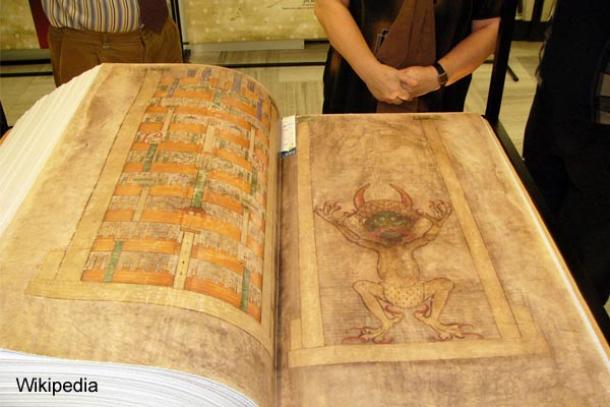 Codex Gigas, otherwise known as ‘the Devil’s Bible’ is the largest and probably one of the strangest manuscripts in the world. It is so large that it is said to have taken more than 160 animal sk
Source: Codex Gigas (the Devil’s Bible) – the largest manuscript in the world | Ancient Origins
Mishkan ha-Echad – Golden Dawn Blog by Frater Yechidah: The Provenance of John Dee’s Obsidian Mirror
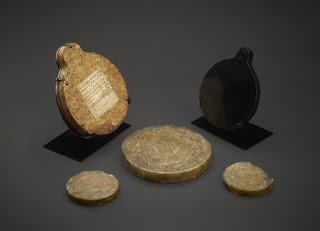
It is widely believed today that the Obsidian Mirror on display in the British Museum was used by Dee and Kelley, a matter that is largely taken for granted, thanks to it being in the same display cabinet as other items linked with Dee, and its attribution to the Elizabethan magician by museum staff.
This Mirror is of Aztec origin, leading some to suggest a possible Aztec link to the Enochian workings. Yet this is all based on the assumption that this device was, in fact, Dee’s, whereas there is no real evidence that this is actually the case.
This assumption is primarily based on a claim by Horace Walpole, who received this item in 1771. The note pasted to the accompanying case, believed to be written in Walpole’s handwriting and initialled by him, reads: “The Black Stone into which Dr Dee used to call his Spirits.” It was not acquired by the British Museum until 1966, where it continues to be labelled as Dee’s “Magical Mirror” or “Magical Speculum,” based solely on Walpole’s unverified claim.
Some even believe this was the object that mysteriously appeared by the window during one of Dee and Kelley’s workings, but this has no basis. The stone that Dee found was described by Kelley as being “as big as an egg: most bright, clear and glorious,” while Dee said it was “roundish, and less than the palm of my hand.”[1] Given that the Mirror in the British Museum has a height of 22cm (including the small handle) and a diameter of 18.4cm, this clearly cannot be the same object that fit in Dee’s hand. Indeed, it is almost as large as the Sigillum Dei Aemeth itself. While Dee later described the stone as being half an inch in thickness, which the Mirror roughly is, the other dimensions simply do not match. I would also argue that Dee’s description of the object he found being “roundish,” and the numerous references to it being a “stone” (and not a “glass”) suggest it was spherical, not to mention Kelley’s description of it being “bright” and “clear”—in other words, a classic crystal ball, not a black mirror.
Of course, Dee had several objects in his possession for skrying, so it could be argued that the Obsidian Mirror was one of these. However, I have yet to find a single reference to this object in any of Dee’s diaries, whereas there are numerous mentions of his various shewstones. One would think that if this Mirror was “used to call his Spirits,” there would be mention of it somewhere, particularly given Dee’s meticulous record-keeping, not to mention its origin in the New World.
The authenticity of this object has also been challenged by several scholars, including Christopher Whitby, who wrote about it at length, stating finally “the evidence connecting the mirror with Dee is very circumstantial.”[2]
Indeed, even the provenance of the crystal ball on display in the British Museum is questionable, and it was not originally associated with Dee by museum staff. It is only one of several devices that have been attributed to Dee over the years.
For example, there is another crystal ball in the Science Museum in South Kensington, which Nicholas Culpeper claimed was given to him by Dee’s son Arthur. Culpeper apparently used this stone, which is of a purplish hue and is contained within a metal frame upon a small chain, until 1651, when he said he encountered within it a lewd and depraved entity. It is difficult to say if this object was genuinely possessed by Dee.
There is also a convex Claude glass in a circular case in the Science Museum that is attributed to Dee and his spirit workings, but this is more likely to be the one that Dee used to display optical illusions to people,[3] including Queen Elizabeth I, if indeed it is Dee’s at all.
We see, therefore, that many people have claimed to have received one of Dee’s magical devices over the years. Indeed, Francis Barrett noted in 1801 that there were as many as seven people purporting to have one of these illustrious heirlooms:
“Although Dee’s manuscripts, and his Magic Chrystal, are to be seen at the Museum, there are six or seven individuals in London who assert they have the stone in their possession; thereby wishing to deceive the credulous, and to tempt them to a purchase at an enormous price.”[4]
Given Dee’s popularity (or notoriety), it is not surprising why people would make such claims, but it does considerably muddy the water in terms of scholarship, not to mention leading to unsupported (though evidently very popular) beliefs like that of Dee’s alleged Obsidian Mirror.
This is important in a practical sense, because there are many people attempting to recreate the process used by Dee and Kelley, employing a similar black mirror instead of the more traditional shewstone. While there is nothing stopping anyone from using any object they desire in their own personal spirit workings, it seems very unlikely that they would actually be emulating Dee in this regard.
Extracted from Enochian Magic in Practice by Frater Yechidah
Footnotes
1 Joseph H. Peterson, ed. John Dee’s Five Books of Mystery, p. 253.
2 Christopher Whitby, John Dee’s Actions With Spirits, p. 141.
3 See Dee’s The Mathematical Preface to Elements of Geometry of Euclid of Megara, where he describes this object.
4 Francis Barrett, The Magus, Book II, p. 196 (footnote).
Source: Mishkan ha-Echad – Golden Dawn Blog by Frater Yechidah: The Provenance of John Dee’s Obsidian Mirror
Rosenroth Project #2 is now available. | Naturae Curantor
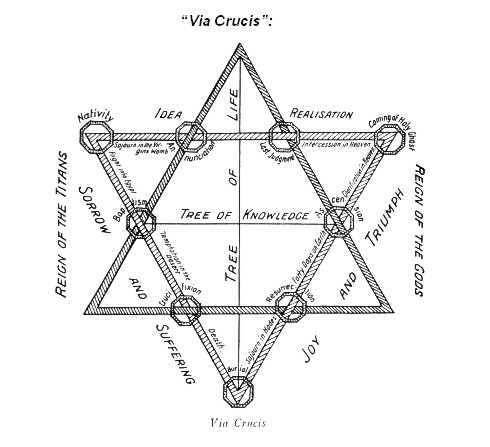
The title is Comparison of Qliphoth Diagrams: The Tree of Perdition & the Qliphotic Colour Scale. It compares the extracts used in the Order of the G.D. and the Rosenroth text and diagrams from which they are derived. But its real reward is the accurate identification of the Colour Scale of the Qliphoth and the related Tree of Perdition. There is some minor duplication with Rosenroth Project #1 as they are companion texts. The diagrams are in colour and thus differ from any other published diagrams as they implement the Qliphotic Colour Scale. Rosenroth Project #2 is now available in 20 copies. There will be more forthcoming (it is not a limited edition) but I’m not really a business and have to do this in manageable lots as time presents itself. A completely different book will be released after I manage the first 20 copies of this text. If I did both at once I would be overwhelmed. Please check availability here first as I will number the available copies in the post as they are sold. The price is $14.99 U.S. plus shipping + $1.00. I will have to send a paypal button via email, but also have to transfer money as the publisher does not actually accept paypal payments, so the $1.00 is to cover the transfer and banking logistics. Please contact the author at perarduaaddeus@gmail.com for further information or to place an order. It may take me 24 hours to respond as growing boys need sleep sometimes.
Source: Rosenroth Project #2 is now available. | Naturae Curantor
Enochian – Wikiwand

God’s angels names,Guide/Guardian Angel name, Find soul mate
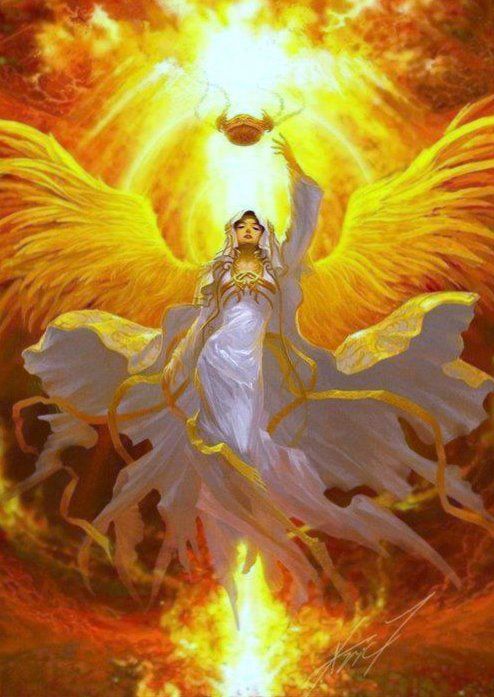
The Archangel Uriel
Angels names,God Angel name,Guide/Guardian Angels can help you find your soul mate love,72 angels names, love match by angelic powers, spiritual teachings
Source: God’s angels names,Guide/Guardian Angel name, Find soul mate
Dr. John Dee, Astrologer to the Queen

Born on July 13, 1527, in London, England, John Dee was an “English alchemist, astrologer, and mathematician who contributed greatly to the revival of interest in mathematics in England.”
– Encyclopaedia Britannica
 “Dee was an exceptional student who entered Cambridge University when he was fifteen…Dee excelled at Cambridge and was named Underreader (junior faculty member) before taking his degree. After graduating he traveled to the Continent to continue his studies, achieving overnight fame in Paris at the age of twenty-three, when he delivered a series of lectures on the recently exhumed works of the Greek mathematician Euclid.”
– Visions and Prophesies
“After lecturing and studying on the European continent between 1547 and 1550, Dee returned to England in 1551 and was granted a pension by the government. Dee became astrologer to the queen, Mary Tudor, and shortly thereafter was imprisoned for being a magician but was released in 1555.”
– Encyclopaedia Britannica
“Dee met the future Queen Elizabeth while she was being held under house arrest by Queen Mary. The two developed a freindship that lasted for the rest of their lives. As queen, Elizabeth gave Dee money…More importantly, she protected him from those who accused him of withcraft.”
– Visions and Prophesies
“Besides practicing astrology and horoscopy in the court of Elizabeth I, whose favour he enjoyed, he also gave instruction and advice to pilots and navigators who were exploring the New World. He was asked to name a propitious day for Elizabeth’s coronation, and he gave her lessons in the mystical interpretation of his writings.”
– Encyclopaedia Britannica
“Dee’s house in Mortlake, near London, was for many years a major center of science in England. Dee salvaged many ancient scientific tomes that had been scattered when Roman Catholic churches and monasteries were ransacked during the Reformation, and his own library of more than 4,000 books may have been the largest of its kind in Europe at the time.”
– Visions and Prophesies
“Before we raise our eyes to heaven, kabbalistically illuminated by the contemplation of these mysteries, we could perceive very exactly the constitution of our Monad as it is shown to us not only in the LIGHT but also in life and nature, for it discloses explicitly, by its inner movement, the most secret mysteries of this physical analysis.”
John Dee, Theorem XVIII
“…In Dee’s most Hermetic work, the Monas Hieroglyphica, (One Hieroglyph), published in Antwerp in 1564, Dee believed he had found a ‘hieroglyph’, a hitherto hidden ‘symbol’ which contained in its form the very unifying principle of reality. It is a kind of micro-chip which contains within it all the most elementary principles of the universe. It is to be contemplated upon and fixed in memory as an archetype applicable to all studies. But what is it? If one can imagine a great ocean of prima materia which we may call in this context ‘spirit’, a pure unformed, undirected, unmoving, unmoved homogenous world, then we see the beginning of the universe. If a hand were to, as it were, drop the Monas Hieroglyphica into that ocean of potentials, the materia prima would immediately start forming itself into the universe we imagine we know.”
– Tobias Churton, The Gnostics
“In 1570 the first English translation of Euclid’s work appeared, and, although it is credited to Sir Henry Billingsley, who became sheriff and later lord mayor of London, Dee probably wrote part or all of it. In addition, he wrote the preface, which encouraged the growing interest in the mathematical arts.”
– Encyclopaedia Britannica
“…Dee stayed in his library, where, bent over his books, he explored the Talmudic mysteries, the Rosicrucian theories, and a host of other obscure and occult subjects.”
– Daniel Cohen, Masters of the Occult
Dee died in 1608 was two years before the first Rosicrucian manifesto, the Fama Fraternitas, began to circulate in 1610.
 Grand Temple of Horus Behdety