
Uncover the sacred role of cats in ancient Egypt. Explore their symbolism, history, and significance. […]

Uncover the sacred role of cats in ancient Egypt. Explore their symbolism, history, and significance. […]

If so, how did that happen? Did you do a specific ritual? Did it slowly gain its living quality over time? Following the inspirations of ancient Egyptian cult, for me, the ones that are alive are s […]


Whether an apprentice or an adept, each practitioner of Mysticism/Magic of any kind should have for themselves some understanding of what we could call, for the moment, the Subtlety of Results. For […]
Relax into the sound. Allow yourself to be lifted up in comfort and love. Breathe in and breathe out as your being returns to its natural state.

Photo by OmarPhotos.com
As Weret Hekau, Great of Magic, Isis’ magical “push” can be powerful indeed. If you are inclined to your own magical pushing every now […]
Source: Fierce Isis

The Gita presents a magnificent portrait of the man of meditation who has all his senses and organs under complete control. Whatever he does, he remains seated like one unaffected and aloof (kutastha). He does not identify with any of the instruments musically necessary for the creative transformation of the cosmic process. The Religion of Responsibility is rooted in Ṛta, sattvic motion in unmanifested Nature, and it makes sattvic consciousness (dharma) accessible to imperfect individuals. A human being who valiantly journeys in consciousness behind and beyond the visible process of Nature — like a ballerina in Stravinsky’s “Rite of Spring” becoming Spring itself while remaining a single character in the concordant ballet — maintains a joyous and silent awareness of the whole process while coolly functioning at various levels with deft dexterity. All human beings, insofar as they can smoothly function at diverse levels of precise control and painless transcendence, can attain to firm fixity of mind and serene steadfastness of spirit — the sacred marks of initiation through sattvic ideation in the secret heart. Sattvic knowledge is the invisible common thread transcending all apparent differences. It gives support to rhythmic activity which is simultaneously precise, liberating and intrinsically self-validating, without the creeping shadow of inconstancy.
The self of the individual who is sattvic is integrated with the Self which surveys the whole world with its congeries of forms and objects, whilst seeing all of these appearances in local time and visible space as evanescent parts of a continuous process of interconnected if conceptually discrete causes and consequences. This is like a mighty river that flows from a hidden stream issuing from a sacred source in the depths of the highest mountain ranges. Dnyaneshvari offers an apt analogy which applies both to anamnesis and to Turiya-Sattva. Just as when a stream becoming a river empties itself into the great ocean, so too will individual consciousness when it withdraws itself from its reflected sense of ‘I-ness’ within the world of insupportable illusions. When the principle of self-consciousness initiates this inner withdrawal, it quietly empties itself into the great ocean of primordial light, Daiviprakriti, universal and self-luminous consciousness. Yet at the same time it remains active within Hiranyagarbha, the pristine golden egg of immortal individuality, cosmic and trans-human.
From the standpoint of the man of meditation, light and darkness are archetypal categories applicable at many levels. Philosophically and mystically, darkness at the level of inversion is chaos, and light as we understand it in nature is associated with the illumination of a field of consciousness. Psychologically, for many sad souls darkness is the deepening shadow of loneliness, and light shines as the resplendent vision of human brotherhood and the spiritual solidarity of all that lives. This can become a glorious vision of enduring hope, invulnerable faith and unwavering affirmation. Rodin’s well-known simile in stone suggests that the pilgrim-soul and weary toiler is plunged in deep thought. All such persons are asking the oldest question — “Who am I?” Significant trends are emerging across the globe, and the crisis is aggravated by the breakdown of alternatives everywhere and especially in the North American continent. Light and darkness refer to every revivified conception of what is real, what is abstract and what concrete in the vast field of unilluminated objects and hazy memories, the negations and affirmations of consciousness resulting from the repeated negation of a false sense of ‘I’ in a fast-changing world.
The Secret Doctrine offers the ancient analogy of the Sun to the individual emerging out of the cave of avidya in search of Universal Good (SAT). Though difficult to exemplify, a talismanic exercise in practical instruction is conveyed. Close your eyes, and from the depths of inmost consciousness travel outward to the extremest limits in every direction. You will find equal lines or rays of perception extending evenly in all directions, so that the utmost effort of ideation will terminate in the vault of a sphere. Think of yourself as within a numinous golden egg, a divine sphere. Close your eyes, draw within, behind and beyond your own shadowy conception of yourself, behind the superficial and self-limiting images of the mind’s surface, cast there by the lunar activity of the world, and eclipse your own restless lunar self.
As you withdraw behind your five senses, focus upon the point between your eyes and see that point as only a representation in the physical face of a field of consciousness where there are innumerable points, each of which is at the centre of a radiant sphere formed by a reflection of the fiery substance of the dark ocean of space.
From the standpoint of your own self-conscious ray of light, try to think outward to the extreme limits of boundless space in every direction. You will find that equal lines or rays of perception will terminate in all directions in the invisible vault of a macrocosmic sphere. The limit of the sphere will be a great circle, and the direct rays of thought in any direction must be right-line radii from a common centre in an immaterial, homogeneous medium. This is the all-embracing human conception of the manifesting aspect of the ever-hidden Ain-Soph, which formulates itself in the geometrical figure of a circle with elements of continuous curvature, circumference and rectilinear radii. This geometrical shape is the first recognizable link between the Ain-Soph and the highest intelligence of man. The rule proclaimed at the portals of the Pythagorean School and the Platonic Academy limited entry to those who had deeply reflected upon divine geometry.
According to Eastern esotericism, this great circle, which reduces to the point within the invisible boundless sphere, is Avalokiteshwara, the Logos. It is the manifested God, the Verbum of the Gospel According to St. John, unknown to man except through its manifested universe and the entirety of mankind. The One is intuitively known by the many, although the One is unthinkable by any mode of mere intellection. Reaching within consciousness means going behind and beyond every possible perception and conception, every possible colour and form. Form corresponds to knowledge on the lower reflected lunar plane; colour corresponds to the knower at the level of the reflected ray. The objects of knowledge are merely modifications of a single substance. These do not yield any simple triadic diagram, but involve a gradual ascent within consciousness, in a tranquil state of contemplation, towards the greatest parametric conception of the One. The Logos sleeps in the bosom of Parabrahm — in the Abstract Absolute — during pralaya or non-manifestation, just as our individual Ego is in latency during deep, dreamless sleep. We cannot cognize Parabrahm except as Mulaprakriti, the mighty expanse of undifferentiated cosmic matter. This is not merely a vesture in cosmic creation through which radiate the energy and wisdom of Parabrahm. It is the Divine Ground.
The Logos in its highest aspect takes no notice of history. The Logos is behind and beyond what appears important to human beings, but the Logos knows itself. That transcendent self-knowledge is the fons et origo of all the myriad rays of self-conscious, luminous intelligence focused at a certain level of complexity in what we call the human being, rays which, at the same time, light up the infinitude of points in space-time. As the Logos is unknown to differentiated species, and as Parabrahm is unknown to Prakriti, Eastern esotericism and the Kabbalah alike have resolved the abstract synthesis in relatively concrete images in order to bring the Logos within the range of human conception. We have images, therefore, such as that of the sun and the light, but there is freedom through concentration, abstraction and expansion, while there is bondage through consolidation, concretization and desecration. The Logos is like the sun through which light and heat radiate, but whose energy and light exist in some unknown condition in space and are diffused throughout space as visible light. If one meditates at noon on the invisible midnight sun, which sages reflect upon in a calm state of ceaseless contemplation, and if one remains still and serene, one could exercise the privilege of using the divine gift of sound. The sun itself is only the agent of the Light in The Voice of the Silence. This is the first triadic hypostasis. The Tetraktys is emanated by concentrating the energizing light shed by the Logos, but it subsists by itself in the Divine Darkness. A tremendous light-energy flows from the deepest thought, wherein one continuously voids every conception of the reflected ray of egoity or the individual self, all objects and universes, everything in what we call space and time. Thus the individuating mind enters subtler dimensions, through which it can approach universal cognition in a resplendent realm of noumenal reality, opening onto a shared field of total awareness in Mahat, wherein the self-consciousness of divine wisdom (Vach) is eternally enacted by self-luminous Mahatmas, the Brotherhood of Light.
Raghavan Iyer
The Gupta Vidya II

Since, then, the soul is immortal and has been born many times, since it has seen all things both in this world and in the other, there is nothing it has not learnt. No wonder, then, that it is able to recall to mind goodness and other things, for it knew them beforehand. For, as all reality is akin and the soul has learnt all things, there is nothing to prevent a man who has recalled — or, as people say, ‘learnt’ — only one thing from discovering all the rest for himself, if he will pursue the search with unwearying resolution. For on this showing all inquiry or learning is nothing but recollection.
Plato
Anamnesis is true soul-memory, intermittent access to the divine wisdom within every human being as an immortal Triad. All self-conscious monads have known over countless lifetimes a vast host of subjects and objects, modes and forms, in an ever-changing universe. Assuming a complex series of roles as an essential part of the endless process of learning, the soul becomes captive recurrently to myriad forms of maya and moha, illusion and delusion. At the same time, the soul has the innate and inward capacity to cognize that it is more than any and all of these masks. As every incarnated being manifests a poor, pale caricature of himself — a small, self-limiting and inverted reflection of one’s inner and divine nature — the ancient doctrine of anamnesis is vital to comprehend human nature and its hidden possibilities. Given the fundamental truth that all human beings have lived many times, initiating diverse actions in intertwined chains of causation, it necessarily follows that everyone has the moral and material environment from birth to death which is needed for self-correction and self-education. But who is it that has this need? Not the shadowy self or false egoity which merely reacts to external stimuli. Rather, there is that eye of wisdom in every person which in deep sleep is fully awake and which has a translucent awareness of self-consciousness as pure primordial light.
We witness intimations of immortality in the pristine light in the innocent eye of every baby, as well as in the wistful eye of every person near the moment of death. It seems that the individual senses that life on earth is largely an empty masquerade, full of sound and fury, signifying nothing. Nevertheless, there is a quiet joy in the recognition that one is fully capable of gaining some apprehension not only of the storied past but also of the shrouded future by a flashing perception of his unmodified, immutable divine essence. If one has earned this through a lifetime of meditation, one may attain at the moment of withdrawal from the body a healing awareness of the reality behind the dense proscenium of the earth’s drama.
Soul-memory is essentially different from what is ordinarily called memory. Most of the time the mind is clouded by a chaotic association of images and ideas that impinge upon it from outside. Very few human beings, however, are in a position to make full use of the capacity for creative thinking. They simply cannot fathom what it is like to be a thinking being, to be able to deliberate calmly and to think intently on their own. Automatic cerebration is often mistaken for primary thinking. To understand this distinction, one must look at the fundamental relation between oneself as a knower and the universe as a field of knowledge. Many souls gain fleeting glimpses of the process of self-enquiry when they are stilled by the panoramic vistas of Nature, silenced by the rhythmic ocean, or alone amidst towering mountains. Through the sudden impact of intense pain and profound suffering they may be thrown back upon themselves and be compelled to ask, “What is the meaning of all of this?” “Who am I?” “Why was I born?” “When will I die?” “Can I do that which will now lend a simple credence to my life, a minimal dignity to my death?”
Pythagoras and Plato taught the Eastern doctrine of the spontaneous unfolding from within of the wisdom of the soul. Soul-wisdom transcends all formal properties and definable qualities, as suggested in the epistemology, ethics and science of action of the Bhagavad Gita. It is difficult for a person readily to generate and release an effortless balancing of the three dynamic qualities of Nature — sattva, rajas and tamas — or to see the entire cosmos as a radiant garment of the divine Self. He needs to ponder calmly upon the subtle properties of the gunas, their permutations and combinations. Sattvic knowledge helps the mind to meditate upon the primordial ocean of pure light, the bountiful sea of milk in the old Hindu myths. The entire universe is immersed in a single sweeping cosmic process. Even though we seem to see a moving panorama of configurations, colours and forms, sequentiality is illusory. Behind all passing forms there are innumerable constellations of minute, invisible and ultimately indivisible particles, whirling and revolving in harmonic modes of eternal circular motion. A person can learn to release anamnesis to make conscious and creative use of modes of motion governing the life-atoms that compose the variegated universe of his immortal and mortal vestures.
The timeless doctrine of spiritual self-knowledge in the fourth chapter of the Bhagavad Gita suggests that human beings are not in the false position of having to choose between perfect omniscience and total nescience. Human beings participate in an immense hinterland of differentiation of the absolute light reflected within modes of motion of matter. To grow up is to grasp that one cannot merely oscillate between extremes. Human thought too often involves the violence of false negation — leaping from one kind of situation to the exact opposite rather than seeing life as a fertile field for indefinite growth. This philosophical perspective requires us to think fundamentally in terms of the necessary relation between the knower and the known. Differences in the modalities of the knowable are no more and no less important than divergences in the perceptions and standpoints of knowers. The universe may be seen for what it is — a constellation of self-conscious beings and also a vast array of elemental centres of energy — devas and devatas all of which participate in a ceaseless cosmic dance that makes possible the sacrificial process of life for each and every single human being. If one learns that there are degrees within degrees of reflected light, then one sees the compelling need to gain the faculty of divine discrimination (viveka). That is the secret heart of the teaching of the Bhagavad Gita.
The Gita is a jewelled essay in Buddhi Yoga. Yoga derives from the root yog, ‘to unite’, and centres upon the conscious union of the individual self and the universal Self. The trinity of Nature is the lock of magic, and the trinity of Man is the sole key, and hence the grace of the Guru. This divine union may be understood at early stages in different ways. It could be approached by a true concern for anasakti, selfless action and joyous service, the precise performance of duties and a sacrificial involvement in the work of the world. It may also be attempted through the highest form of bhakti or devotion, in concentrating and purifying one’s whole being so as to radiate an unconditional, constant and consistent truth, a pure, intense and selfless feeling of love. And it must also summon forth true knowledge through altruistic meditation. Jnana and dhyana do not refer to the feeble reflections of the finite and fickle mind upon the finite and shadowy objects of an ever-evolving world, but rather point to that enigmatic process of inward knowing wherein the knower and the known become one, fused in transcendent moments of compassionate revelation. The pungent but purifying commentary by Dnyaneshvari states in myriad simple metaphors the profoundest teaching of the Gita. In offering numerous examples from daily life, Dnyaneshvari wants to dissolve the idea that anything or any being can be known through a priori categories that cut up the universe into watertight compartments and thereby limit and confine consciousness. The process of true learning merges disparate elements separated only because of the looking-glass view of the inverted self which mediates between the world and ourselves in a muddled manner. The clearest perception of sattva involves pure ideation.
Raghavan Iyer
The Gupta Vidya II
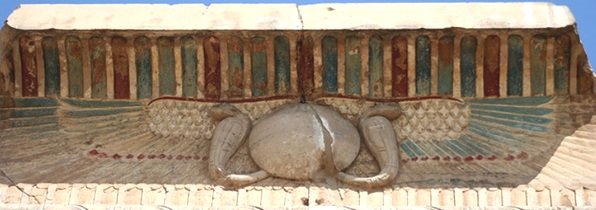
Wherever you see an image of the winged disk you are looking at Horus Behdety, a totally separate entity to the Sun. Horus sky god “He above. […]
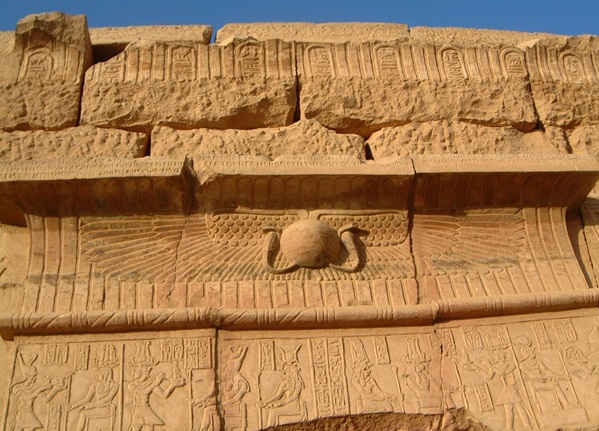
Source: Horus Behdety – The Winged Disk (Horus Gods – Part 3 of 3) – The God King Scenario

Re Horus of the horizons, Re-Horakhty, or even “Horus (who is) Re of the Horizons.” Re-Horakhty was a ‘living image of Re.’ […]
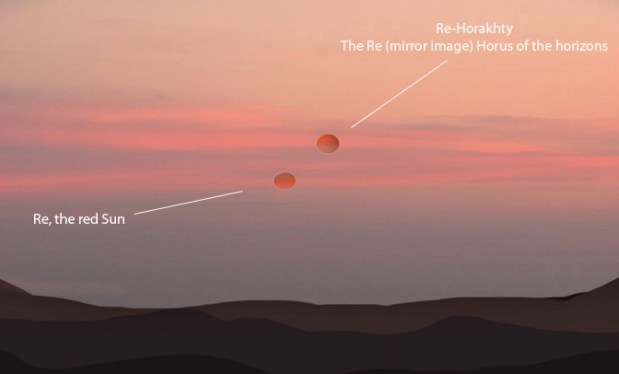
Source: Re-Horakhty (Horus Gods – Part 2 of 3) – The God King Scenario

“These are the names of the seven overseers who sit upon (the) seven thrones: the name of the first is ‘WRPNY’L, and the name of the second is TYGRH, and the name of the third is […]

When the North and South Nodes change signs, it shifts the backdrop both in our world and in our personal lives for 18 months. The North Node is the point based on the moon’s ecliptic that indicate
Source: True Node in Aries
If you have unhealthy sexual appetites that are leading towards degeneration and pain, you need to strengthen your thymus gland, and saturate it with uplifting forces. There is a powerful mantra exactly for this purpose.
We recommend using this mantra daily, especially when you are struggling with your sexual power. This mantra is especially powerful from June 20 to July, during the influence of the sign of Cancer, but can be used anytime of year.
If you have unhealthy sexual appetites that are leading towards degeneration and pain, you need to strengthen your thymus gland, and saturate it with uplifting forces. There is a powerful mantra exactly for this purpose. The mantra Abracadabra is Hebrew אברה קדברה Ebrah K’Dabri, which means “I create what I speak.” Its primary component is the vowel A, which stimulates the thymus gland. When used consciously, the vowel A nourishes the thymus gland, giving us control over our sexual appetite.
This video provides more than one hour of mantra recitation that you can follow. Use it to accompany your meditation practice.
To perform this mantra:
1. Relax. Become perfectly still, like you are going to sleep.
2. Empty your mind.
3. Concentrate inwardly.
4. Consciously concentrate the mantra in your thymus gland.
The purpose of these videos is as an accompaniment as you close your eyes and dive within, leaving the body, the room, and of course the video far behind. If someone is watching the video with their eyes for one full hour, or even focused on listening to it with their ears, they will not learn how to meditate.
“When this gland is active, the organism does not age. The sage-doctors of antiquity said that the vowel “A,” when it is pronounced wisely, has the power to make the thymus gland vibrate. The ancient sages utilize the wise mantra so vulgarized by people today: Abracadabra. This mantra is said to keep the thymus gland active during life. They pronounced this word forty-nine times in the following way:
Abracadabra
Abracadabr
Abracadab
Abracada
Abracad
Abraca
Abrac
Abra
Abr
Ab
A
“The word was pronounced so that the sound of the vowel “A” was prolonged. Even some doctors are beginning to cure by means of musical sound. It is interesting to acknowledge that in the voice of the doctor, in each of his words, there is a source of life or death to his patients.
“The endocrinological science should study the intimate relationships that exist between music and the endocrine glands. It is better to investigate, analyze, and comprehend than to laugh at that which we do not know.”
—Sexology, the Basis of Endocrinology and Criminology, by Samael Aun Weor

Ra was an Egyptian god. His believers considered him to be the god who created everything. He was also known as the sun god and was an incredibly powerful and important central god of the Egyptian pantheon.

Jewish incantations, jewish spells, jewish magic, judaism supernatural, names of God, Judaism theurgy, Jewish mantra, atbash, Rabbi Geoffrey W. Dennis […]
Source: Incantations, Spells and Adjurations | My Jewish Learning
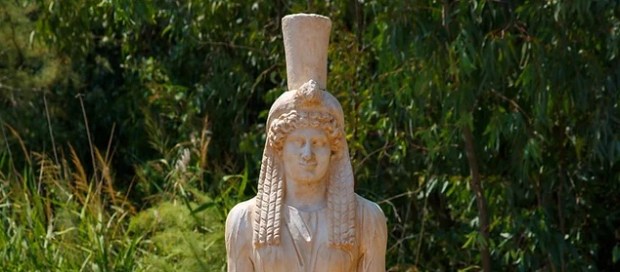
A statue of Isis from a private sanctuary of the Egyptian Gods near Marathon, Greece built by a Roman statesman. How many of us were Egyptophiles from very early on in our lives, even as children? […]
Source: Isis Outside of Egypt

In May 2022, a team of Egyptian archaeologists made an extraordinary discovery during excavations carried out in the ancient necropolis of Saqqara: a papyrus from the Book of the Dead. This collection of sacred texts served the deceased in overcoming the dangers they would encounter on their journey to the afterlife. The papyrus was found […]
Source: The Discovery of 16-meter-long “Book of the Dead” Papyrus
This Audiobook Version is Read by Julian Brown.
Timothy Freke is the author of 35 books, translated into more than 15 languages, including a Sunday Times bestseller and Daily Telegraph ‘Book of the Year’.
He is one of ‘The 100 Most Spiritually Influential Living People’ on the 2021 list in Watkins Magazine (# 57) and the winner of ‘Author of the Year 2020’ in Kindred Spirit magazine. He has been exploring spirituality since a spontaneous awakening aged 12 and leads experiential’ Deep Awakening’ retreats internationally and online. Find out more on his youtube channel or website https://timfreke.com
00:00 Introduction
04:57 The Last Words Of Thrice Great Hermes
05:56 Chapter 1: The Prophecies of Hermes
14:48 Chapter 2: The Initiation of Hermes
23:27 Chapter 3: The Being of Atum
34:10 Chapter 4: Contemplate Creation
42:27 Chapter 5: The Living Cosmos
48:24 Chapter 6: The Circle of Time
52:09 Chapter 7: The Gods
58:23 Chapter 8: The Hierarchy of Creation
1:02:05 Chapter 9: The Creation of Humankind
1:09:44 Chapter 10: The Birth of Human Culture
1:15:11 Chapter 11: Man is Marvel
1:24:11 Chapter 12: The Zodiac and Destiny
1:30:32 Chapter 13: The Universe and the Particular
1:37:13 Chapter 14: Incarnation of the Soul
1:45:18 Chapter 15: Death and Immortality
1:53:45 Chapter 16: Ignorance of the Soul
2:01:11 Chapter 17: Knowledge of Atum
2:09:01 Chapter 18: Rebirth
2:16:04 Chapter 19: Secret Teachings
2:22:19 Chapter 20: In Praise of Atum
2:32:02 Outro with Music
There’s an invisible law active in all things.
It would serve us well to be aware of this law and learn to employ it to our benefit.
An esoteric system is a way of guiding man to a right relationship to himself, others, and the Infinite Universe, of which he is a part. After we’ve accurately located ourselves in the big scheme of things we are ready to move forward to what we came here to do.
You were created to develop beyond what life offers you.
 Grand Temple of Horus Behdety