Azoth, Sive Aureliae Occcultae Philosophorum (c. 1613), by Basil Valentine

Возможно, это изображение текст

Art by Rafał Kowalski, Rebis, 2021 (This image appears originally in the book of Basil Valentine)

“I am the dragon, venomous, present everywhere, and to be obtained at the smallest price. Upon that which rests above me do I rely, and whoever investigates me within myself shall discover the truth. My water and fire destroy, and by compounding them you will extract from my body the green and the red lion. If you do not know me precisely, you will abuse my fire with your five senses.

A scorching venom emerges from my nostrils, which has brought ruin to many. Therefore, carefully separate the coarse from the subtle, and you will rejoice in extreme wealth. I generously bestow upon you the riches of the heavens and the earth, equally for men and women. But the mysteries of my soul must be handled courageously and magnanimously. If you desire to operate in this work, which involves many labors and much wealth, you must subject yourself to the fire of my soul.

I am the egg of nature, known to the wise by the sun alone, who have generated from me the pious and modest microcosm. It is prepared by the divine will of the Supreme God, yet granted to very few, even though many fruitlessly desire it. It has been given that the poor may be enriched by my treasure, but let them not fix their souls on perishable gold. I am called Mercury by the philosophers, my spouse is gold (the Philosophical Stone).

I am the ancient dragon, present everywhere on the earth, father, mother, youth, and elder. I am the strongest and most subtle, visible and invisible, hard and soft, mortal and rejuvenating. I descend to the earth and ascend to the heavens, the highest and the lowest, the heaviest and the lightest. In the natural order, I am often found in color, number, weight, and measure, containing natural light, both obscure and luminous. Emerging from the earth, I am known and am as though nothing at all, and yet I bring forth all colors to shine, and metals are perfected through the rays of the sun: the solar carbuncle, the most noble earthly matter, by which copper, iron, tin, and lead are transmuted into gold.”

SOURCE:  https://www.e-rara.ch/zut/content/zoom/7821372

Kabballah | The Origins of Jachin and Boaz

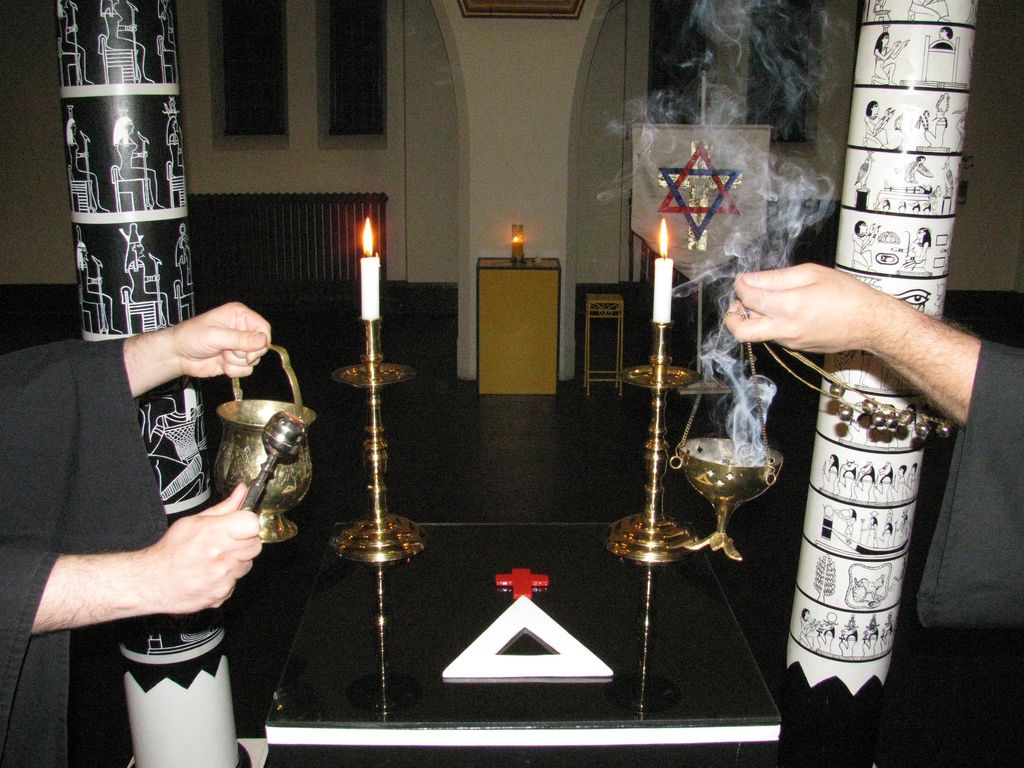
JACHIN AND BOAZ (Heb. יָכִין בֹּעַז), two pillars which were set up in front of the Sanctuary in Solomon’s Temple in Jerusalem (I Kings 7:15–22, 41–42; II Kings 25:13, 17; Jer. 52:17, 20ff.; II Chron. 3:15–17; 4:12–13). The form and nature of these pillars are uncertain, and many proposals have been advanced by scholars.  […]

Source:  Jachin and Boaz

Helen Demetriou | Venus, the Mother of Jerusalem, The Light Bringer

“According to Eusebius, Hadrian built a temple dedicated to the Roman goddess Venus to bury the cave in which Jesus had been buried. The Orthodox Church celebrates the Dedication of the Church of the Holy Sepulchre on September 26 (Gregorian), the same date as the ancient Roman festival of Venus.”
Melchizedek was the king of Shalem also known as Shalim. Shalim is a god in the Canaanite religion pantheon, mentioned in inscriptions found in Ugarit (Ras Shamra) in Syria. William F. Albright identified Shalim as the god of dusk, and Shahar as Goddess and sometimes known as god of the dawn. Shalim is also identified as the deity representing Venus or the “Evening Star”, and Shahar, the “Morning Star”.His name derives from the triconsonantal Semitic root S-L-M. Many scholars believe that the name of Shalim is preserved in the name of the city Jerusalem and both Shalim and Shahar were the patrons of Shalim.
This tells us that Melchizedek was the high priest of the most high God Shalim which is Venus yet when we look further back we see that Shalim and Shahar were indeed deities of Venus because they had been birthed from Venus herself whom we know to be Inanna, Ishtar, Aphrodite, Astarte, Asherah, Mary Magdalene, Mother Mary etc So in truth, Jerusalem is the city of Venus.
We call the planet Venus the morning star when it appears in the east at sunrise, and the evening star when it appears in the west at sunset, although the ancients called it Hesperus in the evening and Phosphorus, or Lucifer, in the morning. Because of the distances of the respective orbits of Venus and the Earth from the Sun, Venus is never visible more than three hours before sunrise nor three hours after sunset, and it may also surprise you that Venus can be seen in broad daylight, provided you know where, and when, to look after reference to an almanac.
-Masonic Library
 .   .   .    .   .
After Jesus was born in Bethlehem in Judea, during the time of King Herod, Magi from the east arrived in Jerusalem, asking, “Where is the One who has been born King of the Jews? We saw His star in the east and have come to worship Him.”
-Matthew 2:2
The study of Phoenician gods revealed three goddesses to be different aspects of the planet Venus. A similar trilogy exists in the Norse pantheon, but with different names. It is believed that the Phoenicians, or Canaanites carried their beliefs with them when working on the Temple for Solomon and may have affected its ultimate design.
It is said that the first known name for the city of Jerusalem was Urushalim, “Uru’ founded by “Shalem”, the name of the Canaanite god of Venus in its evening setting, but Solomon’s Temple was facing in the opposite direction, towards Venus rising in its role as morning star. We can be certain that King Solomon’s Temple was built by Canaanites who were known to worship Venus, also we can understand that Solomon had no tradition of his own to give him the knowledge of how to build a temple that was properly constructed to interface with the heavens. However it is perplexing that these Venus worshipping Phoenicians were allowed to build the house of God.
Biblical scholars have noted from passages such as I Kings 11.5 that Venus was worshipped by Solomon in her special form as the deity of the Phoenicians and he fell out of favour with God. The official worship of Venus as Astarte, the Queen of Heaven continued in the Kingdom of Judah until circa 600 BCE.
Moses created Princes of the Tabernacle and the initiations took place when the Pentagram, or blazing star was to be seen in the east. A blazing star that is referred to as a Pentagram can only be a reference to Venus which had long been associated with the pentagram because of the planet’s apparent movement around the sun when observed from Earth. It is suggested that when the Romans destroyed Jerusalem and the Temple in year 70 of the Christian Era, a number of the Princes of the Tabernacle managed to escape to locations across Europe. It was from these families that the men came, who went on to found the Knights Templar.
-Masonic Library
     
     
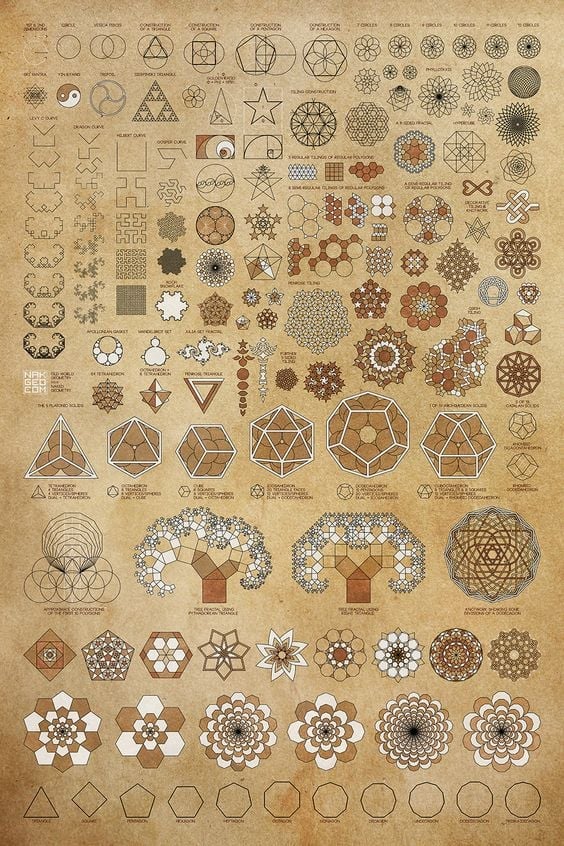
Venus is represented by the pentagram, hexagram, heptagram and octagram. For a time, a pentagram was the official seal of the city of Jerusalem and it was also the symbol of the Pythagoreans.
In later times, it was used by medieval Christians to symbolize the five wounds of Christ, and figured in the heavily symbolic Arthurian romances. In medieval times, the pentagram represented the proportions of the human body.
In alchemical texts, the four elements (in Latin)- flatus, ignus, aqua, terra, superseded by light, or divine energy- illustrated the process of creation, and the biblical motto Fiat Lux, or, “let there be light.” Venus and the pentagram is the symbol of the Light Bringer, the Morning Star who is also known as Lucifer in Latin and Phosphorus in Greek.
This Venus, this Morning Star, is the same star the Jesus called himself and it is through Venus that all of the elements of Jerusalem, David and Melchizedek are connected. The star that rose out of the House of Jacob is both David and Jesus and that star is Venus and that scepter was passed on as the divine seed from the bloodlines of Jacob, through to David, through to Joseph and then to Jesus himself.
In many icons you will see Mother Mary associated with the star which symbolizes Venus. The church fathers were well aware that Mary manifested from her previous known names of Venus which grew out from ancient mesopotamia. Venus has always been the Queen of Heaven, Earth and the underworld and she has always been known as the mother of the sun, who is the dying and resurrected fertility god which is again, another connection with the original name of Bethlehem.
She is Venus herself who produces the messenger of light who comes to Earth to bring the Christ Logos which is the divine Word. As the Mother of the Mysteries, it is through her son that the world becomes enlightened should they choose to follow his Way which leads straight back to her, which is the soul.
By Helen Demetriou, taken from

Rosicrucianism | Microcosm and Macrocosm — Rosicrucian Fundamentals

Возможно, это изображение текст «SUPERIVS ら � Ov © A 7 NOYIW QUOD INFERIVS FIG. 1 MACROPROSOPUS AND MICROPI PROSOPUS THE GREAT SYMBOL OR DOUBLE TRIANGLE OF SOLOMON THE TWO ANCIENTS OF KABBALAH, THE GOD OF AND THE GOD OF REFLECTIONS REFLE MERCY AND ENGE- ANCE. SPIRIT REFLECTED IN MATTER.»
The writings of occultism are replete with references to both of these terms, but many such references seem extremely vague and obscure.
The confusion of the terms “God, Deity, Creator and Absolute” make the definitions given extremely contradictory, as also the indiscriminate use of the terms “Universe, Heaven, World, Cosmos, and Chaos.” That the medieval Kabbalists understood and differentiated them is certain, but the manner in which they have employed them in their writings leaves much to be desired.
The usual expression, “the Microcosm of the Macrocosm” applies equally to the reflection of the Greater in the Lesser in all the kingdoms of Life and Creative Manifestation. The use in which these terms will be employed in the Rosicrucian teachings will be as follows:
MICROCOSM – Man
MACROCOSM – God. (Solar)
MICROPROSOPUS – Supreme Being (Universe)
MACROPROSOPUS – Absolute (Cosmos)
The following are some of the attributes of the differentiations as given in the Kabala and Hermetic Writings:
Microcosm— The Lesser World, or Man
* One of the two Tetragrammaton.
* The Heavenly Man, the Manifested Logos.
* The Triangle in the Square ; the Sevenfold Cube.
* The Male-Female.
* Man, a compound of Intellect and Matter, is the Microcosm of the Macrocosm or Great Universe.
* Medieval Kabbalists, following the Jewish, also called Man the Microcosm.
* Ancient philosophers called Earth the Microcosm of the Macrocosm, and Man the outcome of the two.
* Macrocosm and Microcosm, the Universe and our Globe are the dual characters of the Universal Matrix of Cosmos personified.
* Represented by a Pentagon. Pentagon within a Hexagonal Star, the Macrocosm.
* Triad or Triangle becomes Tetraktys, the sacred Pythagorean Number; the Perfect Square and a six faced Cube on Earth.
Macrocosm— The Greater World or God.
* Absolutely Perfect Square or Tetraktys in a Circle.
* AIN—the Negatively Existent.
* God,—Universe; Solar System.
* Represented by a Hexagon.
MICROPROSOPUS & MACROPROSOPUS
Microprosopus
* Universe; Supreme Being.
* Ateh—”Thou,” Ani—”I” when speaking.
* The Lesser Countenance.
* Supernal Adam.
* Six of the Sephiroth.
* The Crown, Kether.
Macroprosopus
* The Greater Countenance.
* The Vast Countenance.
* The Great Face; in Chaldean a pure abstraction.
* The Word or Logos.
* Cosmos, in form of a Man.
* Adam Kadmon.
* Hua—”He,” the Hidden and Concealed.
* The whole ten Sephiroth represent the Heavenly Man or Primordial Being Adm Oilah. Adam Anilah. Arik Anpin.
* Six and Five, Male and Female, Hexagon and Pentagon.
* Hua, Ateh, and Ani—A—Aleph is the ending of one and the beginning of the other two, the connecting link as it were. It is the symbol of the UNITY, and the unvarying idea of the Divine operating through all these. But behind the Aleph in the name Hua are the letters – and n, the symbols of the numbers six and five.
* Man’s resemblance.—The Microcosm of Man resembles the Macrocosm of the Universe in all its aspects except that of external form.
* Man’s midway position.—Thus Man occupies a unique place in the Arcana of Nature—he stands alone midway as it were between the long ages past when his involutional development began, and the untold ages to come, when his evolutional processes shall be accomplished.
* Man, the key to all worlds.—Rosicrucians therefore regard Man as the embodiment of all conditions objective and subjective, and find in him the key to worlds terrestrial and celestial, material and spiritual, seen and unseen.
Our first contemplation of Man, objectively, reveals three conditions:
1. A visible organism.
2. Evidence of an actuating power or motive force.
3. Evidence of a directing intelligence operating from within.
Body, Life, Mind.—The first of these conditions we commonly describe as the BODY, the second as the LIFE and the third as the MIND. Careful analysis shows the error of these concepts. Spirit—Principle.
Rosicrucians teach that MATTER is the external manifestation of an internal or invisible “PRINCIPLE.”  That “Principle” is SPIRIT.  Everything that exists, visibly or invisibly, objectively or subjectively, MUST HAVE SUBSTANCE.
Force.
—The modus of its operation is FORCE.
—MATTER may be termed the external manifestation of SPIRIT substance, in other words, CRYSTALLIZED SPIRIT.  Matter, crystallized Spirit.
—SPIRIT may be regarded as Matter, so sublimated and etherealized as to be invisible and intangible.  Spirit, sublimate Matter.
—PRIMORDIAL SUBSTANCE.
Grades of Density.—As there are many grades of density in Matter, so there are many grades of density in Spirit.  Life.
—The FORCE by which and through which SPIRIT manifests itself as Matter or through the various so-called phenomena of Nature, is LIFE.  Therefore, LIFE may be termed the visible expression of SPIRIT POWER.
Universal Principle.
—Rosicrucians define it as the UNIVERSAL PRINCIPLE, the activity of UNIVERSAL SPIRIT OR PRIMORDIAL SUBSTANCE.
Note — Life is present everywhere, in a stone or plant as well as in an animal or Man, and there is nothing in Nature which is entirely destitute of Life; because all things are a manifestation of the ONE LIFE or ONE FORCE which fills the Universe. In some bodies the activity of Life is so slow that it may be looked at as dormant or latent, in others it is rapid; but a form which is deserted by the Life Principle ceases to exist as a form.
ATTRACTION, COHESION, GRAVITATION, etc., are all manifestations of Life, while in animals this activity progresses toward a state of self-consciousness which culminates (is perfected) in Man. To suppose that Life is a product of the mechanical or physiological activity of an organism is to mistake effects for causes, and causes for effects.
—Man is an ABSOLUTELY SPIRITUAL BEING, who by the operation of SPIRIT POWER, UNIVERSAL PRINCIPLE OR LIFE ; has, by a specific process, CRYSTALLIZED his external substance into a form of MATTER known as his DENSE or PHYSICAL ENVELOPE or BODY.  Man a Spiritual Being.
—This “specific process” is INVOLUTION.  Involution is defined as the Descent of Spirit into Matter, or the process of crystallization whereby Spirit attains a vehicle for visible manifestation, expression, or contact with other objective conditions.  Involution.
—It has been written that everything that exists, either visibly or invisibly, must have substance. The one reality that can fulfil the requirements of this substance is Spirit. Therefore Spirit is the UNIVERSAL SUBSTANCE. It is the Cosmic Ocean in which all things from Universes and Solar Systems to Man are but its crystallized forms.  Universal Substance.
—As the ABSOLUTE exists, it must be Spirit. We are told by theologians that “God is a Spirit.” The ABSOLUTE and Man, both being spirit, are therefore of the same substance, but vastly differentiated. Man being the Creature, leaves the primacy to the ABSOLUTE or Creator.  Absolute and Man, both Spirit.
What, then, is the differentiation?
—The ABSOLUTE is the essence of all potentialities in the Cosmic Root Substance. Man is the individualized, self-conscious, differentiated Spirit at the other extreme of the long line of Spiritual Hierarchies, Angelic Hosts, Logoi, Gods of Solar Systems, and the Lesser Spiritual Powers which intervene.  Absolute, an Essence.
—Man is thus Divinity incarnated in Humanity.”  Divinity and Humanity.
(c. 1922, by Plummer George Winslow)

Horus Behdety – The Winged Disk (Horus Gods – Part 3 of 3) – The God King Scenario

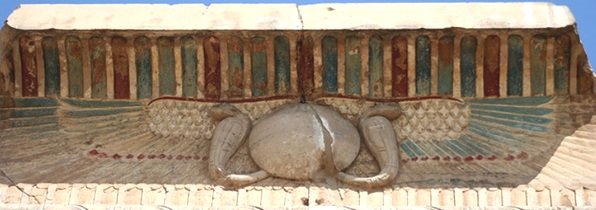
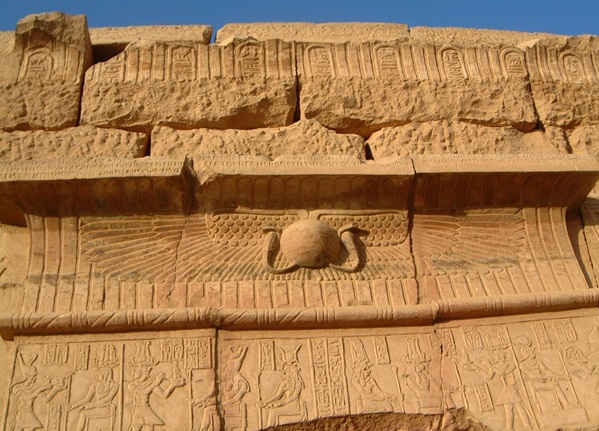
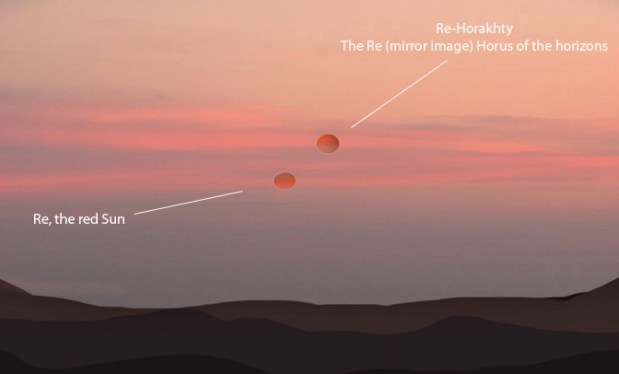
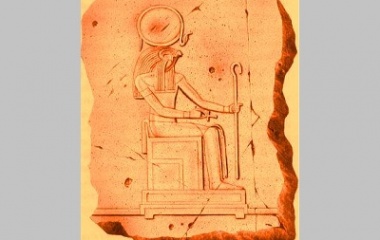
Wherever you see an image of the winged disk you are looking at Horus Behdety, a totally separate entity to the Sun. Horus sky god “He above.  […]

Source: Horus Behdety – The Winged Disk (Horus Gods – Part 3 of 3) – The God King Scenario

Theosophy | REINCARNATION AND SILENCE – II

 Many an unlettered man, in the words of the poet, is a mute, inglorious Milton, unknown, unnoticed by other men, and, like Markham’s man with a hoe, conveys through his eyes the sad awareness that this is an old story that includes all beings and will persist far into the future. For the pseudo-sophisticated intellectual classes to see as much would be extremely difficult. People for whom there is very little else can sustain the awareness of some fundamental truth. To be able to do this self-consciously within a process of growth is extraordinarily elusive for a man burdened with the mental complexities of contemporary civilization, because he cannot ascend to universal brotherhood except very partially, intermittently and, alas, defensively.

 To make reincarnation a vital truth in one’s personal life is to treat each day as an incarnation, to greet every person as an immortal soul, inwardly and in silence, and to empathize with every human failure as a limitation — an effect with causes — comparable to all other limitations. It is the ability to see, even in the longing of the person who is almost totally lost, that spark of the Divine which could eventually be fanned into the flame of the cosmic and compassionate fire of wisdom of the Buddhas and Bodhisattvas. It is an old tradition in the East that those who truly know of the immortality of the soul can only say, “Thus have I heard.”

 Why is there no immortality for what we call the ‘personality,’ the particular mask that we wear, through which we appear to other people to be someone with a name and a form, a recognizable identity? However glorious the aggrandizement of personal selfhood may seem in a Nietzschean sense, it is still something that limits and is limited, and hence must participate in finitude and mortality. To wish immortality for that which is visibly mortal, for a mind which is like a cobweb of confusing conceptions, is at best a compensatory illusion. Ultimately, it is a sign of weakness. But the Great Teachers did not come to tell man what he already knows — that there are limitations. They came to tell him that beyond these limitations he could be free. Buddha declared: “Know ye who suffer, ye suffer from yourselves. None else compels that ye are caught in this Wheel of Life.” When Jesus spoke of the weakness of the flesh, he also intimated that the spirit is free, that it is the source of will, and that when it is truly willing, it is immortally free.

 It is only by reinforcing a weaker side of our own nature that we could project from a limited view of ourselves a confused picture of personal immortality. Despite all the self-advertisements of the age, hardly any man can do full justice to himself. A man who is loudly making the case for himself is all too often belittling himself. Even the finest self-images have some illusion built into them, and to extrapolate them into the future and into the past is to limit oneself unduly. The notion of personal immortality becomes extremely degrading in a universe of law, where everything experienced by consciousness is connected, in the course of time, with everything that follows it. If a person, early or late in life, uses the doctrine of rebirth, or some notion of personal immortality, as a crutch to cling to, physical death may well be succeeded by a dreamy state of illusory happiness after a period of purgatorial separation from all the excrescences of the life just lived. Then he will have to come back, and alas, in so doing, as Plato suggests in the Myth of Er, he may choose the very opposite of what he seeks. A person who mistakes the external tokens of the good, the true and the beautiful for the transcendental Agathon may well find himself drawn, even propelled, into an environment where he is punished by getting what he wants.

 What we need is metanoia, a fundamental breakthrough in consciousness. Otherwise the notion of immortality avails us naught. Many Theosophists of every sort hold to reincarnation as a dogma rather than as a basis for meditation. It cannot help unless a man can really come to see that it is a fact in Nature — a law of life in a universe of cyclic processes — and can live by that law increasingly. He can recognize mistakes, and through repeated self-correction, open new vistas. He may make existential affirmations of perfectibility — which must be on behalf of all if they are to be authentic — and give everyone he meets something of the taste of true optimism in regard to the future. Unless a person can do these things, even if he speaks the language of impersonal immortality, still it would be nothing but a projection of a personal conception of immortality.

 The teaching of the Mahatmas is utterly uncompromising on such matters. For the personal consciousness there can be no immortality, while for the indwelling soul, for the individual ray of the overbrooding Atman, immortality is a fact. For the mediating mind of the middle, immortality has to be won, to be earned, and is neither a gift nor a fact. The mind must progressively detach itself from its external vestures, like a musician who goes beyond worship of his instrument or of his fingers moving on the instrument or of his own self-image, and is merged into something beyond all recorded music, into a reverence for the inaudible music of the spheres. Until a man can do this self-consciously as a soul (and he cannot do it without pain and thoroughness if he is to be honest with himself), immortality for him will be merely a compensatory myth. It will not carry that conviction with which alone he could lighten the loads of others and, through eyes of love, make many lives more meaningful.

Raghavan Iyer
The Gupta Vidya II

Meditation | A Mantra to Control Your Sexual Appetite and Nourish the Thymus Gland

If you have unhealthy sexual appetites that are leading towards degeneration and pain, you need to strengthen your thymus gland, and saturate it with uplifting forces. There is a powerful mantra exactly for this purpose.

We recommend using this mantra daily, especially when you are struggling with your sexual power. This mantra is especially powerful from June 20 to July, during the influence of the sign of Cancer, but can be used anytime of year.

If you have unhealthy sexual appetites that are leading towards degeneration and pain, you need to strengthen your thymus gland, and saturate it with uplifting forces. There is a powerful mantra exactly for this purpose. The mantra Abracadabra is Hebrew אברה קדברה Ebrah K’Dabri, which means “I create what I speak.” Its primary component is the vowel A, which stimulates the thymus gland. When used consciously, the vowel A nourishes the thymus gland, giving us control over our sexual appetite.

This video provides more than one hour of mantra recitation that you can follow. Use it to accompany your meditation practice.

To perform this mantra:

1. Relax. Become perfectly still, like you are going to sleep.
2. Empty your mind.
3. Concentrate inwardly.
4. Consciously concentrate the mantra in your thymus gland.

The purpose of these videos is as an accompaniment as you close your eyes and dive within, leaving the body, the room, and of course the video far behind. If someone is watching the video with their eyes for one full hour, or even focused on listening to it with their ears, they will not learn how to meditate.

“When this gland is active, the organism does not age. The sage-doctors of antiquity said that the vowel “A,” when it is pronounced wisely, has the power to make the thymus gland vibrate. The ancient sages utilize the wise mantra so vulgarized by people today: Abracadabra. This mantra is said to keep the thymus gland active during life. They pronounced this word forty-nine times in the following way:

Abracadabra
Abracadabr
Abracadab
Abracada
Abracad
Abraca
Abrac
Abra
Abr
Ab
A

“The word was pronounced so that the sound of the vowel “A” was prolonged. Even some doctors are beginning to cure by means of musical sound. It is interesting to acknowledge that in the voice of the doctor, in each of his words, there is a source of life or death to his patients.

“The endocrinological science should study the intimate relationships that exist between music and the endocrine glands. It is better to investigate, analyze, and comprehend than to laugh at that which we do not know.”
Sexology, the Basis of Endocrinology and Criminology​, by Samael Aun Weor