
Theosophy | METAPHYSICS AND SELF-STUDY – II

 There is in every single human being the embryo of this ideal man of meditation, and we can at least imagine what it would be like for such a being to be present somewhere in our midst, if not in ourselves. We also can recognize that we have our own share in the desperate demand for psychological survival. In this way we restore an integrity to our own quest and are somewhat deserving of that illumination which will take hold in our consciousness in relation to the great and priceless teaching. We might begin to wonder whether perhaps there is a golden chord that connects the golden sphere of a man of meditation and the complex intermediary realms in which he must, by pain and anguish and awakening, by knitting together minute golden moments rescued from a great deal of froth and self-deception, come to know himself. If there were not a fundamental connection between meditation and self-study, something of the uniquely precious wisdom in this great text would be lost to us. When we begin to realize this in our lives, we come to appreciate that, while we may not be in a position to make judgments about teachers and schools in a vast and largely unrecorded history or in our own time, nonetheless we do know that there is something profoundly important in stressing both meditation and self-study, in bringing the two together. We must reconcile what looked like a pair of opposites and get beyond despair to something else which allows an existential and dynamic balance between meditation and self-study. This is the quality of compassion. It is in the heart of every human being in his response to human pain, and brings him truly into the fellowship of those Beings of Boundless Compassion.

 A man is a Buddha before he seeks to become a Buddha. He is a Buddha potentially. The Buddha at one time must have had a desire to become a Buddha, to understand human pain. The Buddha vow is holy because it is a vow taken on behalf of all. There is in everyone the capacity to want something for the sake of all, and also honestly to want it for oneself. In this there is an authentic mirroring, in every human heart, of the highest, the holiest and the most pregnant of beginnings of the quest. There are many beginnings, many failures, and many seeming endings. The quest itself, since it applies to all beings and not only to any one man, is beginningless and endless. It is universal, since any individual quest in this direction becomes at some point merged into the collective quest. Put in poetical form, or recognized in the simplest feelings, there is something metaphysically important and philosophically fundamental to the connection between meditation or self-transcendence, and the kind of self-study which makes true self-actualization possible. There is a way in which a man can both be out of this world and in this world, can forget himself and yet be more truly himself. These paradoxes of language are difficult to explain at one level and yet we all know them to be the paradoxes of our very lives. In our moments of greatest loneliness we suddenly find a surprising capacity to come closer to beings far removed from us, men of different races and alienated groups in pain. Then we come to feel a brotherhood that is so profound that it could never be secured in any other way. These are part of the everyday experience of mankind.

 Here we touch on a crucial emphasis, maintained sedulously by the Gelukpa tradition of Tibet, which affirms that unless you spend sufficient time in refining, studying and purifying your motive, in using compassion as fuel to generate the energy needed to take off and land, you should not begin to rush into meditation. It is a slow school, but it greets the aspirant in the name of all. It scorns powers and the notion of one man becoming a superman in isolation from the quest of other men. Making no promises or claims, it does not insult our intelligence by promising us something to be attained without effort.

 Are we not old enough in history to be somewhat apprehensive of schools that promise too much and too soon, when we know that this does not work in any sphere of life? Would we go to some local, loud-talking musician who tells us that he could make us as good as Casals in a week? Would we even take him seriously? We might go to him out of fun or sympathy or curiosity. Why in the most sacred of all realms should we be misled? Is it because of our impatience, our feeling of unworthiness, an advance fear of failure? These questions throw us back upon ourselves. In raising them, in probing our own standpoint at the original moment of the beginning of the quest, we make discoveries about ourselves. They are very profound and important, as they may sum up for us a great deal of the past. They would also be crucial in the future where we may come to sense the supreme relevance all along the way, when it is hard and rough, of what Merlin said to Arthur: “Go back to the original moment.” If one could understand the fullness of what is anticipated in that original moment of our quest, one could trace the whole curve of our growth that is likely to emerge, with its ups and downs. Yet it cannot tell all as long as there are unknown depths of potentiality and free will in a human being.

 A statement in The Morning of the Magicians suggests that so long as men want something for nothing, money without work, knowledge without study, power without knowledge, virtue without some form of asceticism, so long will a thousand pseudo-initiatory societies flourish, imitating the truly secret language of the ‘technicians of the sacred.’ There must be some reason why the integrity of the quest requires that no false flattery be made to the weaker side in every man. The Voice of the Silence tells us early on: “Give up thy life, if thou would’st live.” That side of you which is afraid, which wants to be cajoled and flattered and promised, which would like an insurance policy, must go, must die. It is only in that dying that you will discover yourself. We all limit ourselves. We engage in a collective act of daily self-denigration of mankind. We impose, in addition to our tangible problems, imaginary and insurmountable difficulties owing to our dogmatic insistence on the finality of our limitations.

 The Wisdom-Religion is transmitted so as to restore in the human being, and collectively in the world, the reality of the perfectibility of man, the assurance that men are gods, that any man is capable of reaching the apex, and that the difference between a Buddha or a Christ and any one of us is a difference of degree and not of kind. At the same time it shows that the slaying of the dragon, the putting of the demon under the foot, the command of the sovereign will of the Adept, “Get thee behind me, Satan,” are heroic deeds every one of us could accomplish. Potential gods could also become kings. Every man could be a king in his own republic, but he can only become a king and eventually a god if he first experiences the thrill of affirming what it is to be a man — man qua man, one who partakes of the glory, the potentiality, the promise and the excellence of human nature, one who shares points of contact with the mightiest man of meditation. He must understand what the power of his thought can do, and discern a connection between the imagination of children and the disciplined imagination of perfected teachers.

 With this exalted view of the individual embodiment of the collective potentialities of man, a person can say, “I’m proud to be a man and man enough to give myself a minimum of dignity. I’m willing to be tried, to be tough, to go through a discipline. I’m willing to become a disciple, and dissipate that portion of myself which is pretentious, but which is also my problem and my burden — like the donkey the man carries on his back in the Japanese fable — instead of making it an ever-lengthening shadow by walking away from the sun. I can make that shadow shrink by walking towards the sun, the Logos reflected in the great teachers, which is real and in me and every single living being.” This is a great affirmation. To make it is profoundly important. It is to affirm in this day and age that it is meaningful for a man to give up lesser pretensions and engage in what may look like presumption, but is really an assertion in his life that he can appreciate the prerogative of what it is to be a manushya, a man, a self-conscious being. That is a great step on the path of progressive steps in meditation and self-study.

 So far all that has been said is about beginnings, but this really is an arena where the first step seems to be the most difficult. Also, it is a matter of how you define the first step. An analogy may be made here with our experience in the engineering of flying machines. The designs were there; the diagrams were there; the equations were there; the knowledge of what is involved in maintaining a jet engine at high altitudes was there. The tough part was the take-off and landing problem. We now know more widely, in an age when people turn in desperation to a variety of drugs, that it is very difficult to have control over entry into the higher states of consciousness in a manner that will assure a smooth re-entry into ordinary life. It is because of the take-off and landing problem that we need both to be very clear about our beginnings and also to see the whole quest as a re-sharpening of the integrity of the beginning, in relation to meditation and self-study.

 In the Gelukpa schools one would be told to spend a lot of time expanding compassion but also meditating on meditation. What is one going to meditate on? Meditate on meditation itself. Meditate on men of meditation. In other words, the more you try to meditate, the more you realize that meditation is elusive. But this is an insight that protects you from self-deception. Ultimately, the entire universe is an embodiment of collective mind. Meditation in its fullness is that creative power of the Platonic Demiurge, of the Hindu Visvakarman, of the Logos of the Gnostics, which could initiate a whole world. That initiation or inauguration of a world is a representation of the mighty power of meditation. You can become, says The Voice of the Silence, one with the power of All-Thought, but you cannot do so until you have expelled every particular thought from your mind-soul. Here is the philosophical and cosmic basis of meditation in its fullness. All meditations can only be stepping stones towards a larger meditation. What will give us a gauge of the quality, strength and meaningfulness of our power to meditate, and of our particular meditations, is our ability to harvest in the realm of self-knowledge that which can be tested in our knowledge and understanding of all other selves. To put this in another way, if to love one person unconditionally is so difficult for us, how extraordinarily remote from us seems to be the conception of those beings who can unconditionally love all living beings. We cannot do it even with one. Now someone might say, “No, but I can do it with one or a few sufficiently to understand in principle what it would be like to do it for all.” Someone else might say, “Oh, when I look at my life I find that I don’t know what it is fully to love any one, but I do know that somewhere in my loneliness and pain I feel the closeness of anonymous faces, a silent bond of brotherhood between myself and many others.”

 There are different ways by which we could see in ourselves the embryo of that boundless love and compassion which is the fruit of self-knowledge at its height, where a man becomes self-consciously a universal embodiment of the Logos, having no sense of identity except in the very act of mirroring universal light.

 There must be a tremendous integrity to a teaching and discipline which says that every step counts, that every failure can be used, and that the ashes of your failures will be useful in regrafting and rejuvenating what is like a frail tree that has to be replanted again and again. But the tree one is planting is the tree of immortality. One is trying to bring down into the lesser vehicles of the more differentiated planes of matter the glorious vesture of immortality, which showed more clearly when one was a baby, which one saluted in the first cry of birth, and of which one becomes somewhat aware at the moment of death.

 There is a hint at the moments of birth and death, something like an intimation of the hidden glory of man, but during life one is not so awake. This becomes a problem of memory and forgetfulness. The chain of decline is started. It was classically stated in the second chapter of the Gita: “He who attendeth to the inclinations of the senses, in them hath a concern; from this concern is created passion, from passion anger, from anger is produced delusion, from delusion a loss of the memory, from the loss of memory loss of discrimination, and from loss of discrimination loss of all!” Every man is fragmenting himself, spending himself, limiting himself, finitizing himself, localizing himself, to such a degree, with such an intensity and irregularity, and such a frenetic, feverish restlessness, that he is consuming himself. Physiologically, we know that we cannot beat the clocktime processes of the changes in the physical body. Therefore we cannot expect to find the elixir of immortality on the physical plane. But we all know that by attending to the very process of growth and change, and by awareness of what happens to us in sickness, that we do have some control and can make a difference by our very attitude and acceptance of the process. If you are very ill, by worrying about it you are going to make yourself worse, but there are people who are really quite ill, who by acceptance have gained something of the aroma of well-being.

 These are everyday facts having analogues and roots in a causal realm of ideation and creative imagination which gives shape and form to the subtle vehicle, through which a transmission could take place of the immortal, indestructible and inexhaustible light of the Logos which is in every man and came into the world with every child. It is the radiance of Shekinah, the nur of Allah, the light of St. John. It is a light that looks like darkness and is not to be mistaken for those things that have a glamour on the sensory plane. To bring it down or make it transmit through the causal realm and become a living tejas or light-energy issuing forth from the fingers and all the windows and apertures of the human body is, of course, asking for a great deal. But what one is asking is meaningful, and we have got to try to understand.

Raghavan Iyer
The Gupta Vidya II

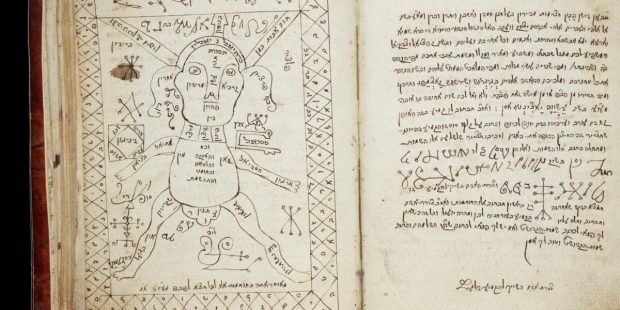
Introducing the Shem HaMephorash Pentagram Technique for Working the 72 Angelic Names – Rosicrucian Tradition Website

The newest method for working with the 72 angelic names of the Shemhamphorash now revealed on Pansophers.com with an invitation to join a working group HERE […]

Source: Introducing the Shem HaMephorash Pentagram Technique for Working the 72 Angelic Names – Rosicrucian Tradition Website

The Enchanting World of Rose Gardens

R𝚘s𝚎 𝚐𝚊𝚛𝚍𝚎ns 𝚑𝚊v𝚎 𝚊n i𝚛𝚛𝚎sisti𝚋l𝚎 𝚊ll𝚞𝚛𝚎 t𝚑𝚊t t𝚛𝚊nsc𝚎n𝚍s tim𝚎 𝚊n𝚍 c𝚞lt𝚞𝚛𝚎. T𝚑𝚎s𝚎 𝚎x𝚚𝚞isit𝚎 l𝚊n𝚍sc𝚊𝚙𝚎s 𝚑𝚊v𝚎 𝚋𝚎𝚎n c𝚑𝚎𝚛is𝚑𝚎𝚍 𝚏𝚘𝚛 c𝚎nt𝚞𝚛i𝚎s, 𝚊n𝚍 t𝚑𝚎i𝚛 𝚎n𝚍𝚞𝚛in𝚐 𝚙𝚘𝚙𝚞l𝚊𝚛it𝚢 is 𝚊 t𝚎st𝚊m𝚎nt t𝚘 t𝚑𝚎 tim𝚎l𝚎ss 𝚋𝚎𝚊𝚞t𝚢 𝚘𝚏 𝚛𝚘s𝚎s. A 𝚛𝚘s𝚎 𝚐𝚊𝚛𝚍𝚎n is n𝚘t j𝚞st 𝚊 c𝚘ll𝚎cti𝚘n 𝚘𝚏 𝚏l𝚘w𝚎𝚛s; it’s 𝚊 s𝚊nct𝚞𝚊𝚛𝚢 𝚘𝚏 c𝚘l𝚘𝚛s, 𝚏𝚛𝚊𝚐𝚛𝚊nc𝚎s, 𝚊n𝚍 𝚎m𝚘ti𝚘ns. In t𝚑is 𝚊𝚛ticl𝚎, w𝚎 […]

Source: The Enchanting World of Rose Gardens

Theosophy |  NOETIC SELF-DETERMINATION – II

   The actual fact of man’s psychic (we say manasic or noeticindividuality is a sufficient warrant against the assumption; for in the case of this conclusion being correct, or being indeed . . . the collective hallucination of the whole mankind throughout the ages, there would be an end also to psychic individuality. Now by ‘psychic’ individuality we mean that self-determining power which enables man to override circumstances.

  H.P. Blavatsky, Psychic and Noetic Action”

  All human beings have some experience not only of a persisting sense of individuality, but also of an ineradicable sense of being able to separate themselves from an observable objective field. They have a deep sense of being able to affect it consciously, and indeed even to control it. To dismiss so vital and universal an experience would be to betray a narrow, pseudo-philosophical prejudice towards mechanistic determinism. Not even all animals have precisely the same stimuli or reactions. Certainly, human beings in very similar environments respond quite differently to external stimuli. One cannot deny, then, that a human being can make a vital difference to his environment through his calm appraisal of it, or even through simply comparing or sharply contrasting it with something else. Either through the fugitive sense of memory or through the fervent thrill of anticipation, based upon a relaxed sense of identity projected into the past and the future, or even through heightened perceptions of the unsuspected relations between one’s own circumstances and those of other beings, individuals make decisive choices among newly discovered alternatives. So long as they can ask probing questions about the degree to which they can possibly alter their mental outlook, they can truly determine for themselves, through these subtle changes of attitudes, their untapped ability to alter these circumstances.

 In general, such attitudes may be rather passive or defiantly resistant to circumstances. But they may also include an intelligent acceptance of circumstances rooted in a capacity for conscious cooperation with necessity. One may completely transform one’s environment through rearranging elements in it, through constructive dialogue with other agents and, above all, through an inner life of daily meditation and effortless self-transcendence. Thus free will can function, and so unfold a unitary consciousness coolly capable of deft self-determination. Having understood all this, the main challenge is to come to a clear comprehension of the self-determining power in man and, more specifically, to understand the delicate operation of the diverse faculties of the mind in the compelling context of universal causality. In this regard, the shrewd argument of George T. Ladd concerning mental faculties is crucial. Having contended that the phenomena of human consciousness must require a subject in the form of a real being, manifested immediately to itself in the phenomena of consciousness, he proceeded to consider how that real being perceives its relationship to the activity of consciousness.

   To it the mental phenomena are to be attributed as showing what it is by what it does. The so-called mental ‘faculties’ are only the modes of the behaviour in consciousness of this real being. We actually find, by the only method available, that this real being called Mind believes in certain perpetually recurring modes: therefore, we attribute to it certain faculties. . . . Mental faculties are not entities that have an existence of themselves. . . . They are the modes of the behaviour in consciousness of the mind.

  Ibid.

In other words, Ladd denied that one can comprehend the real being, or unit consciousness, exclusively through those recurring modes that are associated with certain ‘faculties’. Just as one would find the idea of a unit being, in this metaphysical monadology, incompatible with crude physical behaviourism, it is also incompatible with psycho-physical and psychological behaviourism. Put another way, the inherent power of Manasic ‘I-am-I’ consciousness transcends all patterns such as those which inhere in the volatile skandhas. The human being can consciously transcend all behaviour patterns. He can readily transform anything through tapping his inherent powers of volition and ideation. Ladd then concluded:

   The subject of all the states of consciousness is a real unit-being, called Mind; which is of non-material nature, and acts and develops according to laws of its own, but is specially correlated with certain material molecules and masses forming the substance of the Brain.

  Ibid.

Full understanding of these laws, mastery over action and the capacity to coordinate the mind and brain can come only from a strong intention to attain these ends, together with a purgation of one’s entire field. One cannot work with incompatible mixtures, which are inevitably explosive. One cannot infuse the potency of the noetic mind into the polluted psyche. One must purge and purify the psyche before it can absorb the higher current of transformation which is alchemical and fundamentally noetic.

 The question then becomes how, in practice, one can readily recognize the subtle difference between an illusory sense of freedom and a real and valid sense of self-determination. Insofar as people are misled by everyday language and by fleeting sense-perceptions, and insofar as they have an associationist picture of mixed memories and indelible images, rendering them essentially passive in relation to mental and emotional states, they may totally fail to see that all these familiar states fall under laws of causality. They may also be unable to make significant noetic connections. Based upon luminous perceptions of noetic connections, one must learn to see their causal chains and calmly project possible consequences of persisting patterns tomorrow, next year and in the future. One must then take full responsibility for the future consequences of participation in connected patterns. The moment one recognizes and perceives significant connections, one will see that at different times one could have made a distinct difference by the way in which one reacted, by the degree of sensitivity one showed, and by the degree of self-criticism one applied to these states. The moment a human being begins to ask ‘why’, he demands meaning from experience and rejects uncritical acceptance or mere passivity towards anything in life, including the recognizable sequence in which mental phenomena manifest.

 Through this noetic capacity to question the association and the succession of events, one can decisively alter patterns. One can thus move from an initial level of passivity to a degree of free will whilst, in the act of seeing connections and making correlations, raising questions and altering patterns. Given the Buddhist doctrine of skandhas, or the Hindu doctrine of samskaras, each personality collects, over a lifetime, persisting associated tendencies. These persisting tendencies of thought and character are reinforced by appropriate emotions, desires and habits. Hence, the mere making of sporadic alterations in the inherited pattern of tendencies will be a poor example of free will, since over a longer period of time the pattern itself is conditioned by certain basic assumptions.

 To take a simple example, as long as the will to live is strong and persistent, there is a sense in which free will is illusory. One lacks the fundamental capacity to make significant changes in one’s skandhas or personality. This is an expression of prarabdha karma, the karma with which one has begun life. It is already reflected in one’s particular body, one’s mind, one’s emotions, character and personality — and, indeed, in one’s established relationship to a specific heredity and environment. This is part of the karma one cannot alter easily from within. Though these ideas go far beyond anything that is conceived in ordinary behaviouristic psychology, it is vital that the complex notion of free will be raised to a higher level, making greater demands and requiring more fundamental changes in one’s way of life and outlook. It is precisely at this point that the distinction between psychic and noetic action becomes crucial. One must understand the locus in consciousness of the incipient power of free will, and then distinguish this from the fundamental source of will which lies entirely outside the sphere of the personality and the field of prarabdha karma, skandhas and samskaras. Speaking of Ladd’s conception of mind as the real unit being that is the subject of all states of consciousness, H.P. Blavatsky commented:

   This ‘Mind’ is manas, or rather its lower reflection, which whenever it disconnects itself, for the time being, with kamabecomes the guide of the highest mental faculties, and is the organ of the free will in physical man.

  Ibid.

 Whereas Manas itself is noetic, and signifies what could be called the spiritual individuality, there is also that which may be called the psychic individuality — this same Manas in association with kamaor desire. This projected ray of Manas itself has a capacity, though intermittent, for a kind of free will. Consider a human being who is completely caught up in chaotic desires and who is extremely uncritical in relation to his experiences, his tastes, his likes — in short, to his self-image. Even that kind of person will have moments of disengagement from emotion and a relative freedom from desire. In such moments of limited objectivity the person may see what is otherwise invisible. He may see alternatives, recognize degrees, glimpse similarities and differences from other human beings in similar situations; gradually, he may sense the potential for self-determination. Even lower Manas, when it is disconnected from kamacan exercise free will, giving guidance to the mental faculties that make up the personality. This limited application of free will, however, is obviously quite different from full self-determination. The projected ray of Manas is the basis of the psychic nature and potentially the organ of free will in physical man. Manas itself is the basis of the higher self-conscious will, which has no special organ, but is capable, independent of the brain and personality, of functioning on its own. This noetic individuality is distinct from the projected ray of lower Manas, which is its organ, and distinct too from the physical brain and body, which are the organs of the psychic lower Manas. This source of spiritual will is characterized in the Bhagavad Gita as the kshetrajna, higher Manas, the silent Spectator, which is the voluntary sacrificial victim of all the mistakes and misperceptions of its projected ray.

 The contrast between the silent Spectator and the despotic lower Manas explains the difference between the psychic and the noetic. Wherever there is an assertion of the egotistic will, there is an exaggeration of the astral shadow and an intensification of kama manasWhen the projected ray of Manas becomes hard and cold, it tends to become parasitic upon others, taking without returning, claiming without thanking, continuously scheming without scruples. Ultimately, this not only produces a powerful kamarupa, but also puts one on the path towards becoming an apprentice dugpa or black magician. The dugpa or sorcerer works through coercive imposition of combative will. It accommodates nothing compassionate or sacrificial, no hint or suggestion of the supreme state of calm. This suggests a practical test in one’s self-study. If one is becoming more wilful, one is becoming more and more caught up in lower psychic action. One’s astral body is becoming inflamed, fattened and polluted, and one is losing one’s flickering connection with the divine and silent Spectator. This is a poor way of living and ageing, a pathetic condition. If, on the other hand, one is becoming humbler and more responsive to others, more non-violent, less assertive and more open to entering into the relative reality of other beings, loosening and letting go the sense of separateness, one is becoming a true apprentice upon the path of renunciation, the path of benevolent magic. The altruistic use of noetic wisdom, true theurgy, is the teaching of Gupta Vidya.

Raghavan Iyer
The Gupta Vidya II

Theosophy | NOETIC SELF-DETERMINATION – I

   If the general law of the conservation of energy leads modern science to the conclusion that psychic activity only represents a special form of motion, this same law, guiding the Occultists, leads them also to the same conviction — and to something else besides, which psycho-physiology leaves entirely out of all consideration. If the latter has discovered only in this century that psychic (we say even spiritual) action is subject to the same general and immutable laws of motion as any other phenomenon manifested in the objective realm of Kosmos, and that in both the organic and the inorganic (?) worlds every manifestation, whether conscious or unconscious, represents but the result of a collectivity of causes, then in Occult philosophy this represents merely the ABC of its science. . . .
But Occultism says more than this. While making of motion on the material plane and of the conservation of energy two fundamental laws, or rather two aspects of the same omnipresent law — Swara — it denies point blank that these have anything to do with the free will of man which belongs to quite a different plane.

“Psychic and Noetic Action”, H.P. Blavatsky

   Gupta Vidya, the philosophy of perfectibility, is based upon the divine dialectic, which proceeds through progressive universalization, profound synthesis and playful integration. These primary principles are inseparably rooted in the cosmogonic archetypes and patterns of universal unity and causation. They are in sharp contrast to the expedient and evasive methodology of much contemporary thought which all too often proceeds on the basis of Aristotelian classification, statistical analysis and a sterile suspicion of intuitive insight. Whatever the karmic factors in the ancient feud between these divergent streams of thought, it is poignantly evident that their polar contrast becomes insuperable when it comes to understanding human nature. Gupta Vidya views the human situation in the light of the central conception of an immortal individuality capable of infinite perfectibility in its use of opaque and transitory vestures. The greater the degree of understanding attained of Man and Nature, the greater the effective realization of spiritual freedom and self-mastery. In the methodology of modern thought, the more sharply its conceptions are formulated, the more inexorably it is driven to a harsh dilemma: it must either secure the comprehension of Nature at the cost of a deterministic conception of Man, or it must surrender the notions of order and causality in favour of statistical indeterminacy and randomness in Nature, thereby voiding all human action of meaning. Gupta Vidya not only dispels this dilemma, but it also explains the propensity to fall prey to it, through the arcane conception of two fundamental modes of mental activity. These were set forth by H.P. Blavatsky as “psychic” and “noetic” action. They refer to much more than ‘action’ in any ordinary sense, and really represent two distinct, though related, modes of self-conscious existence. They provide the prism through which the perceptive philosopher can view the complex and enigmatic relationship between human freedom and universal causality. All creative change and all dynamic activity in the universe are understood, in the perennial philosophy of Gupta Vidya, as spontaneous expressions of one abstract, pre-cosmic source symbolized as the Great Breath. In its highest ranges this is Spirit, and beneath that, it encompasses every mode of motion down to and including action on the physical plane.

 Motion as the GREAT BREATH (vide “Secret Doctrine”, vol. i, sub voce) — ergo ‘sound’ at the same time — is the substratum of Kosmic-Motion. It is beginningless and endless, the one eternal life, the basis and genesis of the subjective and the objective universe; for LIFE (or Be-ness) is the fons et origo of existence or being. But molecular motion is the lowest and most material of its finite manifestations.

“Psychic and Noetic Action”, H.P. Blavatsky


   Several important consequences follow from this single origin of both subjective and objective reality. For example, the strict unity and universal causality implied by the conception of absolute abstract Motion entail the basic principle transmitted from ancient knowledge into modern science as the law of the conservation of energy. In a world of finite manifestations, such as that of molecular motion, this law has immense importance. The conception of entropy is an allied principle equally crucial in understanding the particularized motions and relationships between objects having specific kinds of energy in the world as we know it. Yet this does not really reveal much about the deeper sense in which there is collection and concentration of energy, from the highest laya state down through the physical plane of manifestation. There is a sense in which enormous energy is held waiting to be released from higher to lower planes. Potential energy, related to the higher aspects of the ceaseless motion of the One Life, transcends all empirical conceptions based upon observable phenomena. This is crucial when considering the seemingly abrupt transition from medieval to modern thought accompanying the movement away from a vastly inflated, but exceedingly particularized, conception of the subjective realm towards an almost obsessive concern with physical objectivity. As the capricious happenings and hearsay of the ‘age of miracles’ were gradually replaced by a rigid conception of external and mechanical order, it increasingly came to be understood that the inner life of man must also conform to universal laws. In what was a marked advance upon earlier notions of both physics and psychology, there emerged, in the nineteenth century, the explosive recognition that everything in the psychological realm is also subject to causality. This was powerfully put forward as part of a grandiose ethical scheme by George Godwin, the philosophical anarchist. Late in the nineteenth century several social scientists argued that if causality is to be applied to all phenomenal events and processes, it must also apply in some way to the world of what may be called psychic action. It must, in short, be applicable to all the states of mind experienced by human beings in bodies with brains.

Raghavan Iyer
The Gupta Vidya II
Mythos | The Four Horsemen

THE FOUR HORSES

Here is pure mythology, in this case using horses to represent 

aspects of our human condition.

The red horse represents our emotional nature, the black horse 

represents our intellectual nature, the pale horse represents 

our physical nature, and the white horse 

represents our spiritual nature.

This is a real horse race, and it is one that goes on within us every day.

THE RED HORSE is the one that takes peace from the earth.

This horse is responsible for the pride that compels people to go to war 

and do terrible things.

You must put a saddle on the red horse. 

When our emotions get the best of us that really do take peace from the earth. 

Our earth. Our minds.

 Are not all of the wars the results of someone’s emotions run amuck?

So, the red or emotional horse getting in the lead can be difficult as we all know.

THE BLACK HORSE

The scripture says that the rider on the Black Horse held a  pair 

of balances in his hands. The balances are for weighing decisions and 

this is what the intellect or black horse does.

The scripture says to the Black Horse, do not hurt the oil and the wine.

The intellect functions in buying and selling. Making decisions.

Where it says do not hurt the Oil and Wine it is saying do not hurt 

the spirit with intellectualism. 

In the spirit realm you must think with your heart in meditation.  

Not with your head.

 Thus when the black horse gets in front we will find ourselves thinking 

and trying to figure spiritual things out instead of allowing spirit 

to flow within us as it will.


THE PALE HORSE

Revelation 6:7

And I saw a pale horse: and his name that sat on him was death, 

and hell followed with him.

And power was given to them over the fourth part of the earth to kill 

with the sword, with hunger and with fear.


The Pale Horse is the physical nature. 

As we all know death and hell follows the physical.

Notice how it is the physical that hungers and dies and must tangle 

with the beasts of the earth.

The physical has power over the fourth. It controls the four parts of 

our nature, if we allow it.

As the Bible says, the spirit is willing but the flesh is weak.

And what are those four parts

The Physical, Spiritual, Intellectual and Emotional.

It is the physical that must interact with the beasts of the earth which 

are the human carnal minds which work against nature for profit and 

lead charges of war and death against the innocent.


THE FOUR HORSES

THE FOUR PARTS OF THE HUMAN PSYCHE MUST GIVE WAY

TO THE LIGHT OF THE RIGHT SIDE WHEN 

THE SEALS ARE OPENED.


These symbolic horses which represent our human nature must 

be rounded up and controlled by the higher nature within us we call God.


AND NOW WE SEE COMING TO US      

THE WHITE HORSE

The White Horse is our spiritual nature.

It must race to the front and lead us to that inner nature of God. 

The higher power that is within us and within all human beings.

We extend the right hand of love to all.

The White Horse has taken the lead.

The Red Horse of Emotions no longer overwhelms us.

The Black Horse of the Intellect is no longer trying to figure out 

how to beat the other guy. Instead, it is absorbed with learning God’s truth.

The Pale Horse, our physical nature. In spite of the four seals 

being opened, our physical nature still struggles against the reins. 

It is difficult for us to bring it under control.

Meditation is what brings it under control. 

It is brought into the corral and no longer pulls us to the lower life battles.

We must keep the white horse up front. 

It is so important for the white horse to win life’s race.

The four horses of our mind that have been used in battles within us 

will come under the rule of light and carry you to a communion 

with the higher light force.

1.  Revelation 19:11

And I saw heaven opened, and behold a white horse; and he that sat upon him was called Faithful and True, and in righteousness he doth judge and make war.

2.  Revelation 19:14

And the armies which were in heaven followed him upon white horses, 

clothed in fine linen, white and clean.

Sit upon your White Horse and ride to the sky. 

They’re waiting for you.

WHY WAS JESUS BORN IN A MANGER

Because the Sun in its course through the Zodiac

is born between Sagittarius and Capricorn,

between the horse and the goat.

Thus the child is born in a stable or manger.

Helen Demetriou | Venus, the Mother of Jerusalem, The Light Bringer

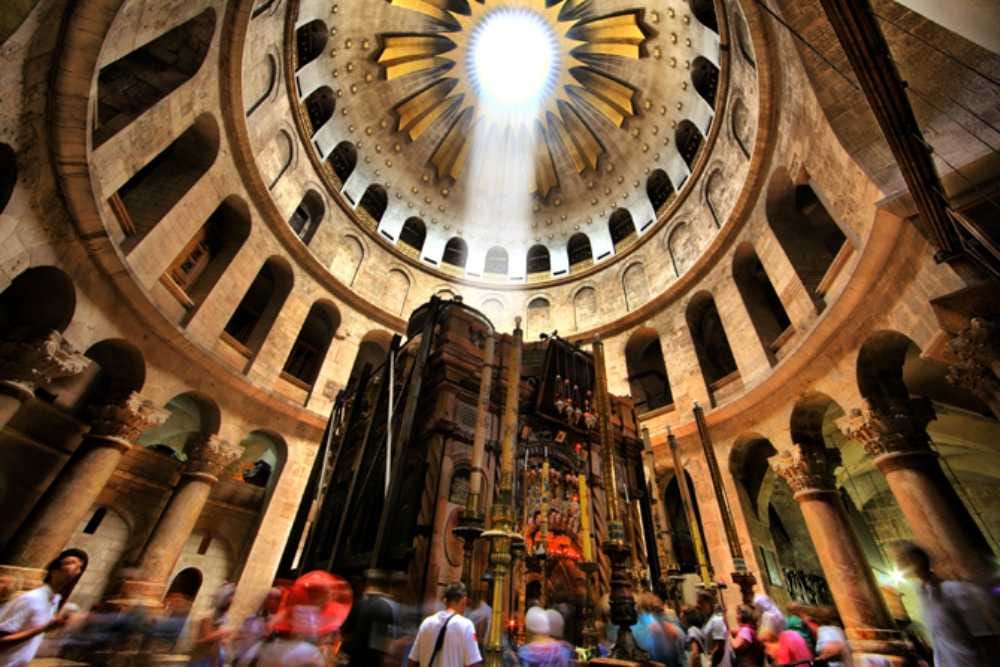
“According to Eusebius, Hadrian built a temple dedicated to the Roman goddess Venus to bury the cave in which Jesus had been buried. The Orthodox Church celebrates the Dedication of the Church of the Holy Sepulchre on September 26 (Gregorian), the same date as the ancient Roman festival of Venus.”
Melchizedek was the king of Shalem also known as Shalim. Shalim is a god in the Canaanite religion pantheon, mentioned in inscriptions found in Ugarit (Ras Shamra) in Syria. William F. Albright identified Shalim as the god of dusk, and Shahar as Goddess and sometimes known as god of the dawn. Shalim is also identified as the deity representing Venus or the “Evening Star”, and Shahar, the “Morning Star”.His name derives from the triconsonantal Semitic root S-L-M. Many scholars believe that the name of Shalim is preserved in the name of the city Jerusalem and both Shalim and Shahar were the patrons of Shalim.
This tells us that Melchizedek was the high priest of the most high God Shalim which is Venus yet when we look further back we see that Shalim and Shahar were indeed deities of Venus because they had been birthed from Venus herself whom we know to be Inanna, Ishtar, Aphrodite, Astarte, Asherah, Mary Magdalene, Mother Mary etc So in truth, Jerusalem is the city of Venus.
We call the planet Venus the morning star when it appears in the east at sunrise, and the evening star when it appears in the west at sunset, although the ancients called it Hesperus in the evening and Phosphorus, or Lucifer, in the morning. Because of the distances of the respective orbits of Venus and the Earth from the Sun, Venus is never visible more than three hours before sunrise nor three hours after sunset, and it may also surprise you that Venus can be seen in broad daylight, provided you know where, and when, to look after reference to an almanac.
-Masonic Library
 .   .   .    .   .
After Jesus was born in Bethlehem in Judea, during the time of King Herod, Magi from the east arrived in Jerusalem, asking, “Where is the One who has been born King of the Jews? We saw His star in the east and have come to worship Him.”
-Matthew 2:2
The study of Phoenician gods revealed three goddesses to be different aspects of the planet Venus. A similar trilogy exists in the Norse pantheon, but with different names. It is believed that the Phoenicians, or Canaanites carried their beliefs with them when working on the Temple for Solomon and may have affected its ultimate design.
It is said that the first known name for the city of Jerusalem was Urushalim, “Uru’ founded by “Shalem”, the name of the Canaanite god of Venus in its evening setting, but Solomon’s Temple was facing in the opposite direction, towards Venus rising in its role as morning star. We can be certain that King Solomon’s Temple was built by Canaanites who were known to worship Venus, also we can understand that Solomon had no tradition of his own to give him the knowledge of how to build a temple that was properly constructed to interface with the heavens. However it is perplexing that these Venus worshipping Phoenicians were allowed to build the house of God.
Biblical scholars have noted from passages such as I Kings 11.5 that Venus was worshipped by Solomon in her special form as the deity of the Phoenicians and he fell out of favour with God. The official worship of Venus as Astarte, the Queen of Heaven continued in the Kingdom of Judah until circa 600 BCE.
Moses created Princes of the Tabernacle and the initiations took place when the Pentagram, or blazing star was to be seen in the east. A blazing star that is referred to as a Pentagram can only be a reference to Venus which had long been associated with the pentagram because of the planet’s apparent movement around the sun when observed from Earth. It is suggested that when the Romans destroyed Jerusalem and the Temple in year 70 of the Christian Era, a number of the Princes of the Tabernacle managed to escape to locations across Europe. It was from these families that the men came, who went on to found the Knights Templar.
-Masonic Library
     
     
Venus is represented by the pentagram, hexagram, heptagram and octagram. For a time, a pentagram was the official seal of the city of Jerusalem and it was also the symbol of the Pythagoreans.
In later times, it was used by medieval Christians to symbolize the five wounds of Christ, and figured in the heavily symbolic Arthurian romances. In medieval times, the pentagram represented the proportions of the human body.
In alchemical texts, the four elements (in Latin)- flatus, ignus, aqua, terra, superseded by light, or divine energy- illustrated the process of creation, and the biblical motto Fiat Lux, or, “let there be light.” Venus and the pentagram is the symbol of the Light Bringer, the Morning Star who is also known as Lucifer in Latin and Phosphorus in Greek.
This Venus, this Morning Star, is the same star the Jesus called himself and it is through Venus that all of the elements of Jerusalem, David and Melchizedek are connected. The star that rose out of the House of Jacob is both David and Jesus and that star is Venus and that scepter was passed on as the divine seed from the bloodlines of Jacob, through to David, through to Joseph and then to Jesus himself.
In many icons you will see Mother Mary associated with the star which symbolizes Venus. The church fathers were well aware that Mary manifested from her previous known names of Venus which grew out from ancient mesopotamia. Venus has always been the Queen of Heaven, Earth and the underworld and she has always been known as the mother of the sun, who is the dying and resurrected fertility god which is again, another connection with the original name of Bethlehem.
She is Venus herself who produces the messenger of light who comes to Earth to bring the Christ Logos which is the divine Word. As the Mother of the Mysteries, it is through her son that the world becomes enlightened should they choose to follow his Way which leads straight back to her, which is the soul.
By Helen Demetriou, taken from

The Pagan Side | THE FIVE FOLD KISS

May be an image of 1 person
The five fold kiss is series of ritual kisses given at initiation, and as a portion of the Great Rite ceremony. The kiss is usually done male to female, or female to male, though this is not always the case. It is only performed within the circle. It is also a ceremony that is sometimes ritually acted out between the High Priestess and Priest to mark the respect shown between the God and Goddess.
*FEMALE
The High Priest kneels before the High Priestess and gives her the Five Fold Kiss; that is, he kisses her on both feet, both knees, womb, both breasts, and the lips, starting with the right of each pair. He says, as he does this:
“Blessed be thy feet, that have brought thee in these way
Blessed be thy knees, that shall kneel at the sacred altar.
Blessed be thy womb, without which we would not be.
Blessed be thy breasts, formed in beauty.
Blessed be thy lips, that shall utter the Sacred Name”
For the kiss on the lips, they embrace, length-to-length, with their feet touching each others. When he reaches the womb, she spreads her arms wide, and the same after the kiss on the lips.
*MALE
The High Priestess kneels before the High Priest and gives him the Five Fold Kiss; that is, she kisses him on both feet, both knees, phallus, both breasts, and the lips, starting with the right of each pair. she says, as she does this:
“Blessed be thy feet, that have brought thee in these ways.
Blessed be thy knees, that shall kneel at the sacred altar.
Blessed be thy phallus, without which we would not be.
Blessed be thy breasts, formed in strength
Blessed be thy lips, that shall utter the Sacred Names.”
For the kiss on the lips, they embrace, length-to-length, with their feet touching each others. When she reaches the phallus, he spreads his arms wide, and the same after the kiss on the lips.
-Farrar, Janet and Stewart; “Eight Sabbats For Witches”; Robert Hale 1983
🌹