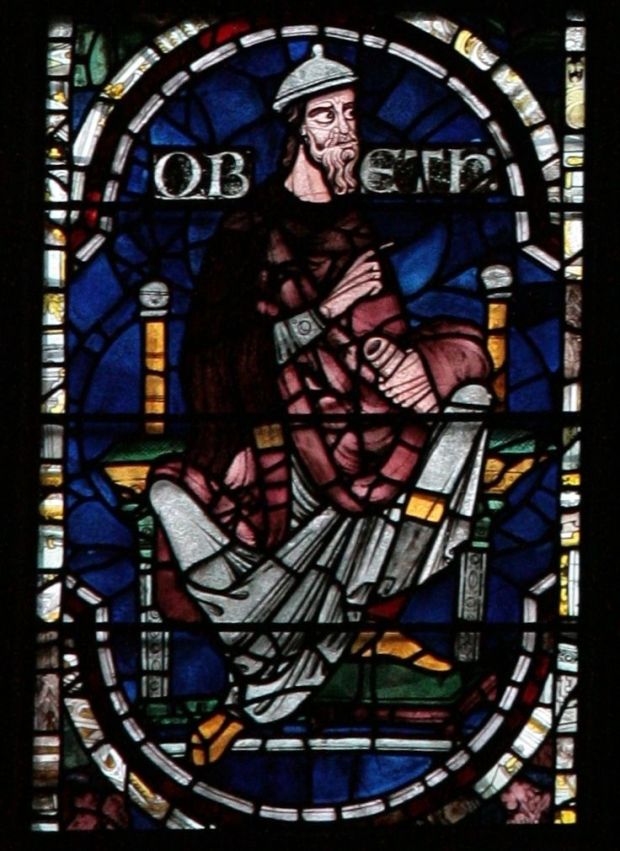
In the Ancient Craft of Masonry, Hiram is called the architect of the Temple and the Widow’s Son from the tribe of Naphtali who was the son of a Tyrian bronze worker, contracted by Solomon to…
Source: The Widow’s Son

In the Ancient Craft of Masonry, Hiram is called the architect of the Temple and the Widow’s Son from the tribe of Naphtali who was the son of a Tyrian bronze worker, contracted by Solomon to…
Source: The Widow’s Son

Tat tvam asi
Despite its contempt for metaphysics and for ontology, materialistic science is honeycombed with metaphysical and contradictory implications, and even its “atoms” are “entified abstractions”. “To make of Science an integral whole necessitates, indeed, the study of spiritual and psychic, as well as physical Nature.” But although real science is inadmissible without metaphysics, and those scientists who trespass on the forbidden grounds of metaphysics, who lift the veil of matter and strain their eyes to see beyond, are “wise in their generation”, H.P. Blavatsky declared towards the end of The Secret Doctrine that the man of exact science must realize that
he has no right to trespass on the grounds of metaphysics and psychology. His duty is to verify and to rectify all the facts that fall under his direct observation; to profit by the experiences and mistakes of the Past in endeavouring to trace the working of a certain concatenation of cause and effects, which, but only by its constant and unvarying repetition, may be called A LAW. . . . Any sideway path from this royal road becomes speculation.
The Secret Doctrine, ii 664
It is a sign of advance that scientists today are less given than their predecessors in the latter half of the nineteenth century to “metaphysical flights of fancy”. Bad metaphysics is clearly worse than none. On the other hand, as modern psychology becomes less materialistic and as race evolution proceeds, a greater appreciation of the higher intuitive and cognitive capacities will emerge and may enable the most intuitive scientists to venture more effectively into metaphysics.
It is, therefore, necessary for students of Theosophy to see the fundamental difference between what goes by the name of metaphysics and has rightly become suspect today, and the “metaphysics, pure and simple”, with which The Secret Doctrine is concerned. We cannot, however, grasp the metaphysics given in Theosophical teachings unless we perceive its close and inseparable connection with Theosophical ethics. We are told in The Secret Doctrine that the “highly philosophical and metaphysical Aryans” were the authors of “the most perfect philosophical systems of transcendental psychology” and of “a moral code (Buddhism), proclaimed by Max Müller the most perfect on earth”. Without a proper understanding of Theosophical psychology and the teachings regarding the nature and constitution of man and the working of karmic law, we cannot appreciate the metaphysical basis of Theosophical ethics or the ethical significance of Theosophical metaphysics. Hence the importance of a careful study and application, from the first, of the Ten Items from Isis Unveiled or the Propositions of Oriental Psychology, and of the Aphorisms on Karma by W.Q. Judge. Until this is done, we cannot begin to see the ethical import of the statements in The Secret Doctrine or the metaphysical basis of the statements in The Voice of the Silence and Light on the Path.
We are told explicitly in The Secret Doctrine that “to make the workings of Karma, in the periodical renovations of the Universe, more evident and intelligible to the student when he arrives at the origin and evolution of man, he has now to examine with us the esoteric bearing of the Karmic Cycles upon Universal Ethics”. Our ethical progress depends on an increasing awareness of the “cycles of matter” and the “cycles of spiritual evolution”, and of racial, national and individual cycles. The kernel of Theosophical ethics is contained in the statement that “there are external and internal conditions which affect the determination of our will upon our actions, and it is in our power to follow either of the two”. This contains a great metaphysical and psychological truth, which is illuminated by the seminal article on “Psychic and Noetic Action”, written, late in life, by H.P. Blavatsky, the Magus-Teacher of the 1875 cycle.
Theosophical ethics is in the end no easier to understand properly than Theosophical metaphysics. It can no more be grasped by the mentally lazy than Theosophical metaphysics can be comprehended by the morally obtuse. There is nothing namby-pamby about Theosophical ethics and it is as fundamentally different from conventional ethics as Theosophical metaphysics is from conventional metaphysics. Just as modern metaphysics is a shadowy distortion of archaic metaphysics, modern ethics is a sad vulgarization of the archaic ethics taught by the early religious Teachers of humanity. It is to be welcomed that more and more questioning people today are less and less prepared to accept blindly conventional ethical codes merely because they are traced back to so-called scriptural revelations, just as they have little use for the metaphysical speculations of even the formidable minds of the past. If the ethical nihilism of today is even more repugnant to the Theosophist than sterile positivism, he would do well to regard both as the karmic price we have to pay for the moral and metaphysical dogmatism of the past.
Although we may talk of Theosophical metaphysics and Theosophical ethics, and classify texts broadly under these heads, we must get beyond the conventional distinction between metaphysical and ethical statements and grasp central concepts, such as Dharma and Karma, which are protean in scope and profound in content, and incapable of being regarded as purely metaphysical or exclusively ethical. It is significant that the supposedly anti-metaphysical and superbly moral teaching of the Buddha was centred in the complex concept of Dharma rather than in Brahman or moksha, in the stern law of moral compensation and universal causality, rather than in a conception of infinite Deity constructed by the finite mind of man or in any notion of salvation or redemption which caters to the spiritual selfishness of the individual.
In the European tradition, a natural reaction to theocentric systems of thought was the Cartesian affirmation of the autonomy of the individual in relation to knowledge and the later Kantian proclamation of the autonomy of the individual in relation to morality. The Theosophist, however, holds to the Pythagorean and ancient Eastern maxim that man is the mirror and microcosm of the macrocosm. It is in this context that he must evolve from egoism to egoity, from personal self-love to individual self-consciousness, which is impossible without a heart-understanding of the Law of Universal Unity and Moral Retribution. The close connection between metaphysics and ethics in Theosophy is ultimately based on the workings of Universal Law, which affects the exact and occult correspondences between the constituents of man and of the cosmos. This ancient doctrine of correspondences has been ignored by modern metaphysicians and moralists, but it was known to modern mystics and poets from Boehme to Swedenborg, Blake to Baudelaire.
Hermes, May 1975
Raghavan Iyer

The Mayan civilization is one of the most mysterious and fascinating in history. There is much we still don’t know, but they are much-admired for their fully developed writing system
Source: El Mirador, ‘The Look Out’ Of Guatemala Boasts Probably the Largest

Tat tvam asi
It is natural for us to make a firm distinction between our study and our application of Theosophy, between theory and practice. As a result, we contrast the capacities of the head and the heart, and assume that we seek and secure different kinds of nourishment from The Secret Doctrine and The Voice of the Silence. At the same time, we also know that Theosophy is essentially the Heart Doctrine, distinct from the head-learning with which our world abounds. What is more, the whole purpose of Theosophical discipline is to blend the head and the heart, to broaden our mental sympathies and to awaken and direct the intelligence of the heart. Does this simply mean that we need for conceptual clarity the dualistic view of the spiritual life as long as we remain as inwardly divided as we are, and that this dichotomy is made only so that it may be destroyed as we become rooted in the holiness that reflects an inner wholeness? It is certainly convenient to regard all conceptual distinctions and classifications as mere scaffoldings and to choose the best available at any particular stage of our growth. But in order to appreciate the distinctive significance of Theosophical classifications, we cannot merely regard them like the maps of early mariners, whose explorations needed as well as corrected their initial cartographical knowledge. We need, in fact, to acquire an entirely new and original view of the relation between true metaphysics and enduring ethics and to appreciate the profound epistemological nature and the peculiar therapeutic value of Theosophical statements as indicated in the First Item of The Secret Doctrine.
Metaphysics, as normally understood, is speculative rather than gnostic and is often the product of the propensity to subsume existing knowledge under a complete system, an imposing pattern that is then ascribed to reality with a dogmatism that pretends to a certainty that it cannot possibly possess. It is in accord with cyclic law that this kind of metaphysical system- building is suspect today and has even led to an extremist and naively positivistic reaction among die-hard empiricists. Similarly, ethics, in the everyday sense, consists of injunctions and imperatives that are rarely susceptible of rational enquiry and are either endowed with spurious absoluteness or are regarded as relativist and subjectivist preferences, from which we choose as from a menu. Given the pretentious nature of ordinary metaphysics and conventional ethics, we can understand the insistence of Hume, the sceptical Scot of the eighteenth century, that metaphysical statements are a priori assertions that are incapable of verification, that we cannot logically derive any ethical imperatives either from them or from statements of fact, and that our ethical preferences cannot possess certainty or universality or freedom from arbitrariness. The metaphysical assertion that “X is true or must be true” cannot help us to answer the question “Why ought I to do Y?” It is indeed not surprising that the speculations of most metaphysicians do not give us a basis for moral conduct and moral growth, and that the injunctions of many conventional ethical codes do not have their basis in the moral and spiritual order of our law-governed cosmos.
In Theosophical literature, however, every metaphysical statement has an ethical corollary and connotation, and every ethical injunction has a distinct metaphysical basis. It is impossible to grasp the force of any of the seven paramitas of The Voice of the Silence without a comprehension of the Three Fundamental Propositions regarding God, Nature and Man that underlie the order of reality intimated by the Stanzas of the Book of Dzyan, on which The Secret Doctrine is closely based. Theosophical literature assumes, as shown especially by Light on the Path, the truth and validity of the Socratic axiom “Knowledge is virtue.” For example, to know, with the heart as well as the head, and to be fully aware that the sin and the shame of the world are verily our own must totally transform our actions as well as our attitudes in relation to all our fellow men and also to our own sins and lower self. We cannot rely on that which is not real, in an ultimate and philosophical sense. Theosophical ethics teaches the only possible reliance — on the Divine Ground of all Being and beyond — that is available to those who become aware of the degrees of reality in an ever-evolving universe that is itself only a relatively real emanation from the Eternal Reality. Our conduct consists of emanations that cannot but harm us and others if they are not emanated in the creative and impersonal manner and with the conscious control that marks the ceaseless process of cosmic emanations from a single source — Life of our life, Force of our force. Until we are free from the dire heresy of separateness (attavada), we cannot claim to have grasped the doctrine of samvriti or of the nidanas that teaches us about the origins of delusions and chains of causation. To know is to become, and to become is truly to know.
In an illuminating passage in The Secret Doctrine on the Causes of Existence” and on the Buddhist concept of nidana and the Hindu concept of maya, H.P. Blavatsky said that …
science and religion, in trying to trace back the chain of causes and effects, jump to a condition of mental blankness much more quickly than is necessary, for they ignore the metaphysical abstractions which are the only conceivable cause of physical concretions. These abstractions become more and more concrete as they approach our plane of existence, until finally they phenomenalise in the form of the material Universe, by a process of conversion of metaphysics into physics.
The Secret Doctrine, i 45
If we consider this even as a logical possibility, then clearly the knowledge of these metaphysical abstractions gained and given by trained Initiates is epistemologically prior to the external order of reality in the material universe. Such metaphysics, the product of intuitive apprehension and capable of patient verification by the extrasensory experiences of independently acting individuals, is different in kind from the speculative metaphysics of the ordinary variety and is more analogous to the methods of investigation of the greatest natural scientists. This is why we are told that it is difficult to find a single speculation in Western metaphysics which has not been anticipated by Archaic Eastern philosophy. From Kant to Herbert Spencer, it is all a more or less distorted echo of the Dwaita, Adwaita, and Vedantic doctrines generally.
The Secret Doctrine, i 79
The very nature of Theosophical metaphysics is such that we cannot approach it merely with the head, independently of the heart. The purely ratiocinative and intellectualist approach to ordinary metaphysics is itself the result of “the inadequate distinctions made by the Jews, and now by our Western metaphysicians”, so that “the philosophy of psychic, spiritual, and mental relations with man’s physical functions is in almost. inextricable confusion”. Our metaphysical conceptions are clearly conditioned by our own mental development and cannot have the absolute validity that we claim for them. This is especially true of the evolution of the GOD-IDEA. Hence, says Theosophy, for every thinker there will be a “Thus far shalt thou go and no farther”, mapped out by his intellectual capacity. Outside of initiation, the ideals of contemporary religious thought must always have their wings clipped and remain unable to soar higher; for idealistic as well as realistic thinkers, and even free-thinkers, are but the outcome and the natural product of their respective environments and periods.
The Secret Doctrine, i 326
Not merely does modern metaphysics fall far short of the truth, but even its basic concepts and usages of terms like “Absolute”, “Nature” and “matter” are shallower and cruder than their corresponding concepts propounded by the Theosophical Adepts. Initiation into Theosophical metaphysics is more than an intellectual or moral enterprise; it is a continuous spiritual exercise in the development of intuitive and cognitive capacities that are the highest available to men, a process that includes from the first a blending of the head and the heart through the interaction of viveka and vairagya, discrimination and detachment. Even our initial apprehension of a statement of Theosophical metaphysics involves an ethical as well as mental effort, just as even the smallest application of a Theosophical injunction to our moral life requires some degree of mental control and the deeper awareness, universal and impersonal in nature, that comes from our higher cognitive capacities. Moral growth, for a Theosophist, presupposes the silent worship of abstract or noumenal Nature, the only divine manifestation”, that is “the one ennobling religion of Humanity.”
Hermes, May 1975
Raghavan Iyer
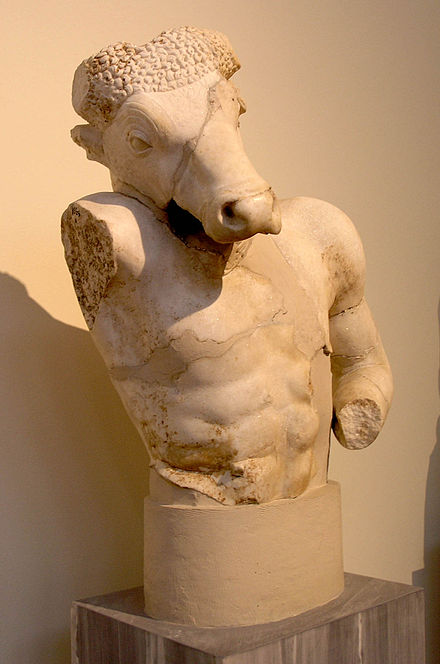
Down, down below the imperial Palace of Knossos, the capital of Crete and home to King Minos, legend has it that there lurks a mythical beast. A beast so terrible, so ferocious, that it could not be allowed to see the light of day. Contained within a maze, and fed by sacrificial rites, it is doomed to a storybook ending. […]
Source: https://classicalwisdom.com/mythology/monsters/minotaur-a-beastie-of-epic-proportions/
The land of Lemuria is right here on Earth and I have felt it’s vibrations and that of its High Priests and Priestesses for a very long time if not all of my life. There are many humans throughout history who have been drawn to the enigma of this ancient place and people and who have tried and succeeded in connecting with the frequencies of Mu. I am also one of those people yet what I have learned during my meetings with the Lemurians does not come from any book or what someone has told be but what they have taught me themselves.
View original post 2,801 more words
From the distance, as if through a tunnel, I began to hear a chanting. Slowly, it became louder so that I could understand what was being said.
View original post 1,760 more words
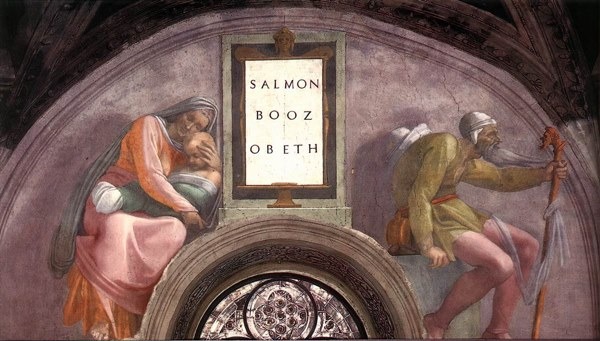 “When Abibalus was dead, his son Hiram received the kingdom.” – Josephus The ancient historian and priest of Byblos, Sanchuniathon or Sanchoniatho (Phoenician: 𐤎𐤊𐤍𐤉𐤕𐤍) had dedicat […]
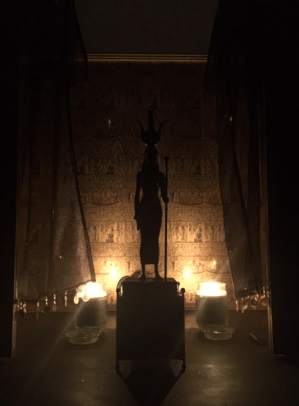
I got up at four this morning to go to the high place where I watch Her star in its heliacal rising. Alas, Portland did its mostly cloudy thing and all I could see was an occasional glimpse of the moon and one of the stars in Orion’s belt. So I came home, went to Her temple, opened the doors and illuminated Her lamps. She shines diamond bright, even when I cannot see Her.
I know this because I have experienced it many times. Perhaps I can’t sense Her in my life at a particular moment, yet I know She is there. Just because there are obscuring clouds in my world, doesn’t mean She doesn’t shine. And this just may be a drop of wisdom, born of both knowledge and experience.
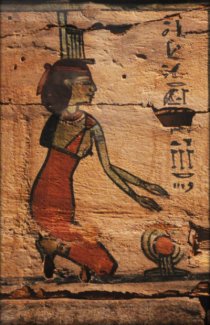
View original post 317 more words
In my own work with Isis over the years, I have come to settle on four qualities that seem to me to capture much of Her “flavor” for me. They are power, wisdom, love, and magic.

When we first come to Isis, we often immediately perceive Her love, flowing out to us, enfolding us in Her sheltering wings. We are warmed in Her love. We rest in Her wings.
Her power reveals itself later.
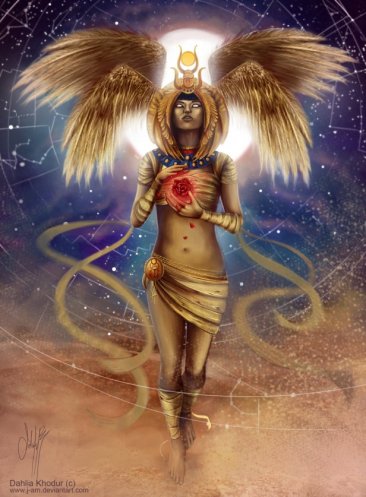
First, there is Her metaphysical power. This is the power that blows my hair back, makes we want to “kiss the ground before Your beautiful face,” as the ancient texts put it. This power makes me gasp, thrills my body and makes me shiver. Before this power, I can say only, “yes, Goddess.” And rejoice. Sometimes there’s a…
View original post 264 more words
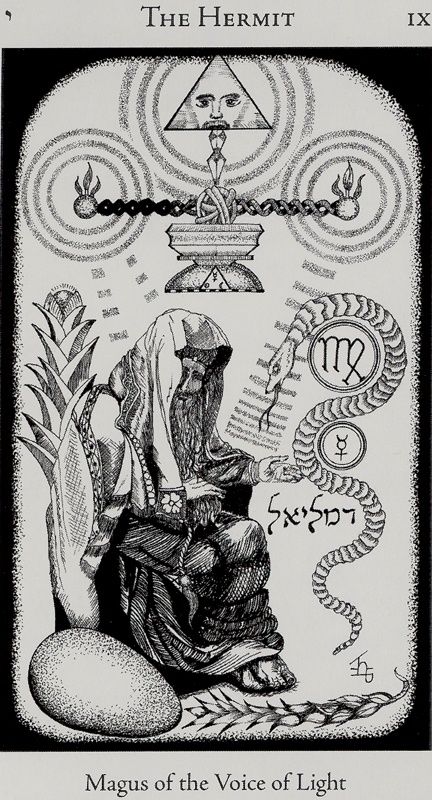
In Pilgrimage one onely thing I found
Of worth in Lemnes nere to Vulcan’s shopp,
A Christall founteine runnig under ground,
Between a Vally and a Mounteins topp.
Pleas’d with this sight, I bid a Hermite tell
The story of the place, who there did dwell.Within this Vale a hallowe dusky Cave
There is (quoth he) of greate Antiquity,
Where plumes of Mars blew greene and red you have:
Torne from his crest for his Iniquity.
The Troope of Smiths, as he for Venus lay,
Supris’d and tooke him, yett he gett away.For as the Cyclops him in tryumph brought,
To halting Vulcan to receive his doome,
They lifted up his beaver, and found nought
But vacant place and Armour in the roome.
Of th’armour then they thought they had good prize,
But working it they found itt scyndarize.The Smiths amaz’d finding themselves deluded,
Satt all in Counsaile in their Masters Denne,
Deliberating well, at length concluded,
There is no equall War twixt Godds and men,
Lett’s finde the Angry God and pardon crave,
Lett’s give him Venus our poore selves to save.They sought in Heaven Mars knew his fact so bad,
He came out there, then one began to tell,
Saturne turn’d from his Throne, a Place had
Not far from thence, hard by this Christall Well.
Thither they wen, and found two Gods alone,
Sitting within a darke, but glittering throne.Down fell old Vulcan on his crooked knee,
And said forgive, O mighty God of Warr,
My servants and my selfe (once God as yee)
Then use thy will with Venus my faire starr.
Saturne (quoth Mars) and I must not yet part,
Though shee for whom th’art pard’ned hath my heart.With this the Cuckold with his sweaty Troope
Went to Forge and seem’d to make a legg,
Att every steppe, where halting made him stoope,
In thankes to Mars, granting what he did begg;
In whose remembrance you shall ever have
Syndars, and fetters in that hollow Cave.But lett me tell you all that then befell,
Iove seeing this, meaning the Smith to right,
Sent downe a winged God, he trusted well,
Disguis’d in habitt of a shineing light,
Which to the Vally from the Hill’s high topp,
Affrighted all the Smiths in Vulcans shopp.A voyce was heard from Ioves Embassadour,
To summon Mars t’appeare before the Gods:
With Saturne forth came Venus Paramour:
Thinkeing with might to gett of right the odds:
Downward came he 9 myles, they upward fower,
All mett in mist, he fledd, they nere went lower.Vulcan came hobling up to se what’s done,
He findes nor light, nor Gods, but other shape;
To witnesse of this fact he calles the Sonne,
Who streght cryes Murther, and made hast to scape:
Sme dyeing Soule groan’d forth, Apollo stay,
Helpe wise Apollo ere thou goest away.With this Apollo lookeing round about,
Espies this fountaine knowes the voice was here,
And boweing downe to finde the party out,
Himselfe unto himselfe doth streyght appeare.
There gaz’d he till a sturdy showre of rayne
Tooke wise Apollo from himselfe againe.Farewell Apollo then Apollo sayd,
To morrow when this storme is fully past,
Ile turne and bring some comfortable ayd,
By which Ile free thee ere the latter cast.
Then did itt cry as if the voice were spent,
Come sweete Apollo, soe itt downwards went.Vulcan went to his Forge, the Sonne to bed,
But both were up betimes to meete againe;
Next morne after the storme a pale foule dead
Was found att bottome of this faire Fountaine.
Smith (said Apollo) helpe to lade this spring,
That I may raise to life yonder dead thing.Then Vulcan held Apollo by the heele,
While he lades out the Waters of the Well;
Boweing and straining made Apollo feele
Blood from his nose, that in the fountaine fell.
Vulcan (quoth he) this Accident of blood
Is that or nought must does this Creature good.He spake the word, and Vulcan sawe itt done,
Looke Sol (said he) I see itt changeth hue,
Fewe Gods have vertue like to thee o Sonne,
From pale itt is become a ruddy blue;
Vulcan (quoth Phoebus) take itt to thy forge,
Warme it, rubb it, lett itt caste the Gorge.Thus Vulcan did, itt spued the Waters out,
And then itt spake and cry’de itt was a cold;
Then Vulcan stuft and cloath’d it round about,
And made the Stone as hott as ere itt would.
Thus fourteene dayes itt sickly did indure,
The Sonne came every day to se the cure.As itt grewe well the Colours went and came,
Blew, Blacke, White, Redd, as by the warmth & heate,
The humours moved were within the same,
Then Phoebus bid him put it in a sweate;
Which Vulcan plyed soe well, it grue all Red,
Then was itt found, and cald for drinke and bread.Stay (quoth Apollo) though itt call for meate,
Digestion yett is weake, 奏will breede relapse,
By surfett, therefore eye you lett itt eate,
Some little exercise were good perhapps,
Yett had itt broath alowde the strength to keep,
But when 奏was on his leggs it would scarce creepe.Sol sawe some reliques left of th’ould disease,
A solutine (quoth he) were good to clense,
With which the sickness he did so appease,
Health made the Patyent seeke to make amense;
Who went away three weekes, then brought a Stone,
That in projection yeelded ten for one.This did he lay down att Apollo’s feete,
And said by cureing one th’hast saved three:
Which three in this one present joyntly meete,
Offring themselves which are thine owne to thee.
Be our Physitian, and as we growe old,
Wee’le bring enough to make new worlds of Gold.With that this Hermite tooke me by the hand
And ledd me to his Cell; Loe here (quoth he)
Could’st thou but stay, and truly understand
What thou now seest, thou knowst this Mystery.
I stayd, I saw, I tryd, and understood,
A Heav’n on Earth, and everlasting good.

Yes, yes, yes. It is getting to be that time. That time when She rises early, early in the dawning light. It’s the best thing that happens in August as far as I’m concerned. While everything else starts to crisp in the late summer heat, I am refreshed in Her rising power.
Here in Portland, Oregon in 2019, Sirius rises at 4:31 in the morning of August 23rd. Further south, She rises earlier. It all depends on your latitude. You can calculate Her rising in your area here with this online calculator. If you’d like to celebrate Isis’ birthday, then it would be two days before the rising of Sirius, in this case, August 21. So Isis is a Leo (at least at this latitude.) And well, She is Isis-Sakhmet, after…
View original post 934 more words
Complete Explanation of the Universal Table, sourced from the new OMS Publication of “10 Lessons to Men of Desire: Louis Claude de Saint-Martin’s Instructions for the Temples of the Élus Coëns, Elevated to the Greatest Glory of the Eternal”, part of the OMS Élus Coëns Source Series available to initiated OMS members.
This diagram is as important to Élus Coëns & Martinist cosmology as the Tree of Life is to Lurianic Kabbalah.
In this video, we explore in-depth the cosmology of Pasqually’s Élus Coëns and the Martinist Tradition. Many errors exist in the usual versions of this diagram – we have rectified these errors by referencing original manuscripts of Willermoz, St. Martin, Prunelle de Lière and other Coëns, and have expanded the diagram with additional layers and labels to match the writings of our Past Masters.
Public Documents & Information about the Ordre Martinistes Souverains is available here: https://mega.nz/#F!3WB2RQxb!gIuRbABeq…
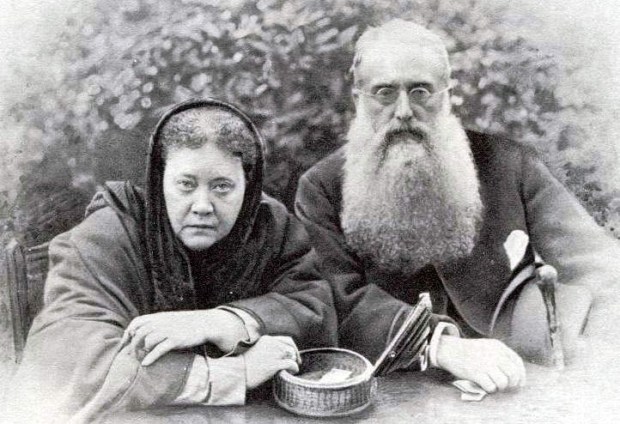
What were the historical origins of Helena Blavatsky’s Theosophical ‘Secret Masters’? In the following paper we discuss how it may well have been the long-established heritage of high-grade continental masonry that gave birth to the particular spiritual and historical context in which the Theosophical movement was able to promote its ideas of ‘Secret Masters’ – ideas which ultimately tied in with fantastical beliefs surrounding a secret occult hierarchy supervising spiritual evolution on Earth, known as the ‘Great White Brotherhood’. Blavatsky portrayed these ‘Masters’ of the Great White Brotherhood or ‘Mahatmas’, as living in the remote mountains of the Himalayas, often materializing to the Theosophers in person, or communicating with them by ‘letters transmitted by occult means’… but were their origins actually much closer to home? […]
Source: http://pansophers.com/secret-masters-theosophy-masons/
Text available here: http://web.mnstate.edu/gracyk/courses/web%20publishing/pico_oration.htm

In this essay, I will discuss the qabalah of the number 777 from two different approaches. The classical derivation of 777 is to sum the paths that the Lightning Flash of Creation travels along or, in the case of Gimel, crosses on its journey from Kether to Malkuth on the Tree of Life. Another way to derive 777 is to add 359 to 418, as suggested by Aleister Crowley’s comment on chapter 3, verse 74, of the Book of the Law. Both approaches discover an archetype of spirit incarnated in human form. […]
Read article here: http://www.aiwass.com/777.html


 Grand Temple of Horus Behdety