
A very rare Super Blue Moon at 7+ degrees Pisces for so many reasons, occurs at 6:36 pm PDT/ 9:36 pm EDT/1:36 GMT energy with 7 Retrograde plamets including Chiro and with Jupiter stationing to tur […]

A very rare Super Blue Moon at 7+ degrees Pisces for so many reasons, occurs at 6:36 pm PDT/ 9:36 pm EDT/1:36 GMT energy with 7 Retrograde plamets including Chiro and with Jupiter stationing to tur […]

For me, there are two things that make August wonderful, here in Portland, Oregon. One of them is all the produce that I can go pick on Sauvie’s Island, fresh from the farmers’ fields. […]
Source: She is Rising 2023
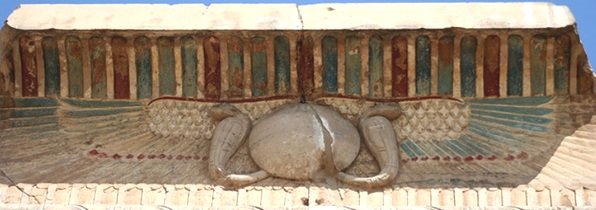
Wherever you see an image of the winged disk you are looking at Horus Behdety, a totally separate entity to the Sun. Horus sky god “He above. […]
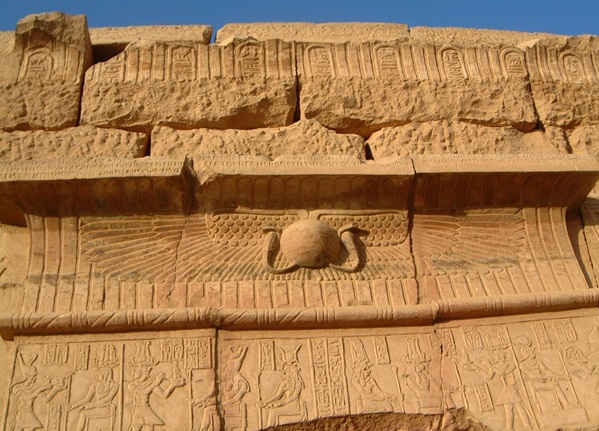
Source: Horus Behdety – The Winged Disk (Horus Gods – Part 3 of 3) – The God King Scenario

Re Horus of the horizons, Re-Horakhty, or even “Horus (who is) Re of the Horizons.” Re-Horakhty was a ‘living image of Re.’ […]
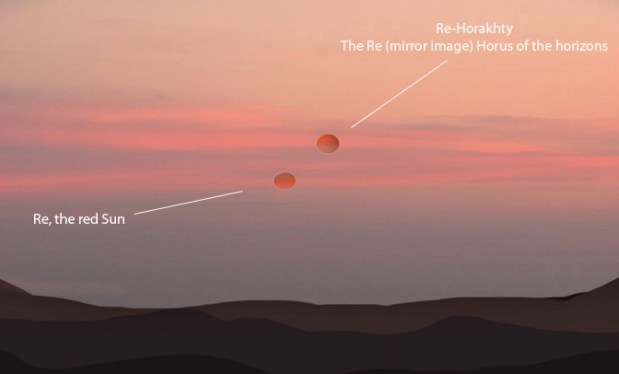
Source: Re-Horakhty (Horus Gods – Part 2 of 3) – The God King Scenario

It will be shown how Horus was essentially an omnipresent sky deity whose physical form was above all manifest in the god king planets. […]
Source: The Egyptian Sky God Horus. Part 1 of 3. – The God King Scenario

In 1150, a pair of green-skinned children are said to have shown up in an English village, and the strange tale continues to baffle historians to this day. […]
Source: The Head-Scratching Mystery Behind The Green Children Of Woolpit

Every man’s soul has by the law of his birth been a spectator of eternal truth, or it would never have passed into this our mortal frame, yet still it is no easy matter for all to be reminded of their past by their present existence.
PLATO
While we may know about the long and complex history of the doctrine of reincarnation, the crisis of our time is such that the response of thinking men and women is and should be, “How does it help me? What difference could it make to my life?” In the Bhagavad Gita Lord Krishna, speaking as the Logos in the cosmos, but also as the hidden god in every man, makes a supreme, unqualified affirmation. Like similar utterances in the great scriptures of the world, the words of Krishna have a ring of self-certification. He simply affirms for all men that there is an inexhaustible, inconsumable, incorruptible, indestructible, beginningless and endless spirit that is the sovereign ruler within the temple of the human body. Yet the same Krishna, having made this affirmation, ends his speech by asking Arjuna to recognize the honest position of the finite mind of the ordinary man by saying, “The antenatal state of beings is unknown; the middle state is evident; and their state after death is not to be discovered.”
Any human being must recognize that, in so far as his mind is a bundle of borrowed conceptions — because he has grown up conditioned and circumscribed by the limiting factors of heredity, family, education and the social environment — he cannot do any more at first than come with pain to the point of declaring with profound honesty, “I really do not know. I do not know about evil. I have no idea of many things that happened to me earlier in this life. I have no idea of what will happen to me tomorrow, next year, let alone after the moment of death.” This could give integrity to the quest. At the same time, when a human being begins at the level of categories and concepts, he also knows that there is something unspoken about his particular life — his tears, his thoughts, his deepest feelings, his loves and longings, his failures and frustrations, his invisible, hidden determination to hold fast in times of trial, to triumph over obstacles that seem forbidding. Beyond all of these there is that secret of his own soul which he cannot share with anyone else or even bring to the level of human speech. He knows that there is a depth and dimension to his own experience as a conscious sentient being which can participate in the transcendental wonder of the world, which can be aroused to depths and to heights and to a tremendous breadth of cosmic vision when looking at awesome vistas in nature or when surveying the great epochs of human history. But at the same time this secret cannot be conveyed. It cannot be demonstrated or fitted into the workaday categories and concepts needed to survive in a world of psychological limitation and scarcity.
The problem is one of translation. Seen philosophically, if we assume that there is something prior to be translated into something else that is shareable, it is a problem of self-discovery. It involves integrating the potential, intermittently intimated in our consciousness, with the actual which is a story that could be streamlined and which any Hollywood scriptwriter could convert into a celluloid version, a banal sequence of scenes. There must be something between our inchoate intuition of the inexhaustible and our painful recognition of the factuality of the temporally finite sequence that seems to string these events together. Memories clutter the mind. We look back with regrets or look forward with hopes, with longings that may be vain and ineffectual or may be impossible to share with anyone else.
What is self-validating for a Krishna or for the immortal spirit of man can only become a supreme and total fact for a human being when he has begun to strip away the layers and vestures of consciousness through which he is bound. In a Wordsworthian sense, every child is crowned by the aura of the divine, and has in his eyes some recognition of having lived before, some glint of an ancient wisdom distilled into the very essence of his response to the furniture of the world. Yet every human being, growing out of the child-state, loses those intimations. How are we to recover them compatibly with the integrity and self-consciousness that we must bring to every level and aspect of our human experience? This necessitates further work upon the whole of one’s nature. Where we do not know, we may discard the dogmas that claim to know. There are those which insist that man is merely a fortuitous concurrence of atoms — in the name of a science which would be disowned by the greatest, most agnostic and creative scientific thinkers. There is the dogma derived from religion that man is a soul created by an anthropomorphic being at a certain point of time and consigned to eternal hell or heaven, and there are other corruptions of thought such as transmigration into animal form.
When a person discards dogmas and starts with the standpoint of genuine unknowingness, combined with a willingness to learn, he has taken a stand that is truly individual, yet within the context of all mankind. Then, as he works upon himself, he must find out what is unique and gives continuity to himself. At the same time, further growth in this quest will only be possible when he can truly dissolve the sense of separateness between himself and other beings. When the barriers fall away, his love can become almost limitless in scope. He can feel the pain in every human heart and enjoy the world through the eyes of every human being. Clearly, this cannot be done by a person except at some specific level and cannot be done totally within any short-term curve of growth. We would need a number of births to attain that degree of universalization wherein we could merge the universal and the individual and also maintain stasis throughout the different levels on which we have to communicate with widening or narrowing circles of human beings. In that sense, what is self-validating at one level could only become wholly valid and be a fully embodied truth when one’s whole life revolves around it.
Raghavan Iyer
The Gupta Vidya II

We’re not quite there yet, but I thought you might like to have this small rite early in case you’d like to find a special outdoor place to celebrate the coming solstice. In Egypt, abou[…]
Source: A Summer Solstice Isis Rite

What if massive ocean worlds – ‘Hycean’ planets – are a better bet in the search for life than terrestrial exoplanets? […]

Many souls all over the globe were deeply moved by the tragic happenings in Tibet which led to the dramatic escape and exile of the fourteenth Dalai Lama. Here was a harmless, happy people, with a distinctive culture and traditional society totally different from that existing anywhere else in the world. To some this society seemed to be an archaic survival, an anachronism in the modern age, a ‘theocratic’ system which Europe had rejected long before the Enlightenment and the French Revolution. And yet, in spite of all facile attempts to label Tibet, many had a feeling of deference towards a religious culture they could not claim to understand. Despite all the travellers’ tales, the several volumes written by scholars and by others fascinated by Tibet, one still felt that the essential truth had not been told, that perhaps it could never be told by anybody inside that remote and close-knit community to anyone outside it. A few went so far as to follow Burke’s maxim: “We must venerate where we cannot understand.” But even the most insensitive of persons, willing to write off Tibet and dismiss its tradition, had somewhere deep down a sense of not knowing what one was talking about.
Most observers, ranging from the troubled sceptic to the ardent admirer and even to the true believer — most felt that there had taken place a sudden confrontation, unprecedented in history, between a way of life centered on spiritual concerns — which could be criticized in terms of modern criteria but nonetheless had a radiant integrity of its own — and the crude forces of aggression and the destructive passions of politics which are all too familiar in the outside world. It seemed as though Tibet was a test case: can a spiritual tradition survive if it does not arm itself against aggressors who are ruthless, who care nothing for the tradition they are prepared to tear apart or for the culture they are willing to destroy in the name of modernization? This is a question which still troubles many people.
The Dalai Lama is fortified by his faith that in the end Tibetan tradition, embodied in the way of life of which he is the custodian and the conscience will survive, will even eventually triumph. He is also convinced that, as time goes on, more and more people will come to see that Tibet has a profound political and spiritual significance for all humanity. Elementary human rights have been flagrantly violated by aggressors among a people who were not linked with any foreign power, who were not involved in any sense in the Cold War or giving cause for offence to any neighbouring nation.
Here, then, is a test case of the vindication of basic human rights, and the Dalai Lama pins his hopes on people everywhere who think about this, who read the reports of the International Commission of Jurists, who seriously try to get some idea of the implications, for a people such as the Tibetans, of the desecration of their monasteries and shrines, and of a stable religious and social order in need of internal reform. His Holiness feels that if men and women continue to be silent about Tibet they will be betraying their very humanity.
We find that on the political plane the issue has been so sharply and squarely stated that it ultimately touches upon those fundamental decencies which make life meaningful. But, also, the Dalai Lama is convinced that the tragedy of Tibet has a spiritual significance and a meaning even for those who are not primarily interested in the Buddhist tradition. Even for them it must appear tragic that there should have been this brutal interference with the benefits of a gentle and tolerant people. Do the virtues of tolerance and civility for which Europe fought so hard — and which were finally enshrined in the seventeenth century — do these virtues mean nothing to people who may not necessarily share in the beliefs of the Tibetans?
The Dalai Lama speaks with a faith and confidence akin to that of the Encyclopaedists, the great humanists and the religious prophets, and it would be wonderful for any of us to get something of this faith. How this could be translated into immediate political action is a question which is not a matter for casual discussion. Although nowhere more than in England was there an immediate response in the way of sympathy and material support for the Tibetans in their plight, yet already, in a short time, many people even there have begun to take the subjugation of Tibet for granted, and sometimes to talk as though the Tibetan cause were wholly lost. The Dalai Lama has spoken very warmly about England as the leading spiritual and cultural centre of the whole of Europe. He thought that the British Government, more than any other Government in the West, was aware of the historical background of Tibet and the implications of all that had happened. He also felt that the admirable work of the Tibet Society in England was a pointer to the kind of sympathy and support which could be fruitful.
It is indeed distressing that we should come across the feeling that Tibet is a lost cause, an irretrievable tragedy, and that perhaps the time has come to write Tibet’s epitaph. Some of us are keen to do what we can for the refugees and to assist the Dalai Lama, while still regarding the cause of Tibet, at least in a political sense, as hopeless. This feeling of hopelessness is unwarranted but perfectly understandable in our time. Whatever we may feel about the legitimacy of the survival of the Tibetan way of life, we are all affected by the tremendous increase in historicism, determinism and fatalism in the modern world, and especially in our own century, even though we instinctively condemn these attitudes when they are couched in their crudest Marxist form. Many of us think that there is something irreversible about the process of modernization, something titanic and totally irresistible about the Industrial Revolution, the march of science and technology. We consequently feel that when any country, but especially a country with an archaic society and a simple economy, with a monastic culture and old-fashioned ideas of government, comes up against a modern aggressor, be he communist or anyone else, the traditional system must necessarily give way to the forces of modernization.
When the British entered Tibet at the time of the famous Younghusband Expedition, and even earlier — going back to the emissary sent out in the eighteenth century — there was a willing recognition that Tibet was no worse for being different. It is Britain, more than any other power that has moved out into far places, which has preserved that due respect for differing cultures and traditions which comes naturally to a people steeped in a traditional culture that has set a high value upon tolerance and the acceptance of diversity. The British failed in the assimilation of people who were racially and culturally different, but they were able to play a protective role in many areas of the world where they were in power. Even in countries where they unwittingly launched the process of modernization they had doubts and reservations; they were never too certain that this was the universal panacea.
But when a country such as Tibet comes into violent contact with fanatical believers in the gospel of material progress and ruthless modernization, can it survive? If we are convinced it cannot, then we can do no more than merely deplore the actual methods used by the Chinese, which indeed are ghastly. And here we have the cruel paradox of modernization introduced by methods which take us right back to the Middle Ages, methods which beggar description. Sickening details of the heinous things that are being done in Tibet in the name of modernization are to be found in the objective reports prepared by the International Commission of Jurists.
Are we going to be content with deploring the pace, the cost, the pains and the ruthlessness of this compulsory modernization? Has not the time come for us to reassess our high valuation of the very process of modernization? If we do this, we shall become less inclined to accept without question the notion that it is inevitable and unavoidable in every part of the world. We may even come to distrust the dogmatism or fatalism with which people declare Tibet to be a lost cause.
If we wish to appreciate the significance of Tibet, we must not merely have second thoughts about the blessings and inevitability of modernization but also discard at least one version still in vogue of the doctrine of Progress. No doubt the idea of progress is an ancient one, derived from several sources of the Western tradition, different from the cyclical views of history of the East, but it assumed a wholly new form in the last sixty years. All the early apostles of progress — Herder, Kant, Condorcet, Renouvier — regarded it mainly as a moral concept, an ethical ideal towards which modern man was moving. Renouvier clearly condemned the deterministic notion of progress. There is, after all, no religious warrant for the belief that the Kingdom of God will inevitably appear on earth in the foreseeable future. There is no scientific proof for the belief that technological and scientific developments will necessarily ensure better social relations, happier and more harmonious human relationships. There is no economic basis, either, for the belief in indefinite and automatic expansion.
But none of these doubts entered sixty years ago into the minds of those who took the permanency of their political universe for granted. Then, for the first time, as a result of the Darwinian theory of evolution, a new and specious form of the doctrine of progress came into being: the idea of inevitable, automatic, cumulative and irreversible progress achieved purely through technological inventions, economic betterment and the raising of living standards. This idea, although it was powerfully attacked and rejected by several leading thinkers and writers in Europe, still lingers on in people’s minds even if they disavow it. This lingering latter-day notion of progress is a serious obstacle to our appreciation of the significance of Tibet.
If we look at Tibet with this idea in our minds, there is no chance of our really understanding it. Tibetans have lived in a land rich in mineral resources but refused to develop them because they believed that this would be an unnecessary and undesirable interference with the soil. These are people willing to spend a significant proportion of their meagre earnings upon the maintenance of a vast number of monasteries; a people completely happy to accept that the only education available to them (and it was generally available in Tibet) was an essentially religious education. It is true that those who did not wish to become monks went to these ancient monastic universities and got some kind of secular learning, but not what we would today call secular learning. They might acquire a little knowledge of elementary mathematics, indigenous medicine, traditional arts and crafts and practical skills. But how could such people be fitted into any scale of values we might have?
It is not going to be easy for ‘progressive’ people to seize on the true significance of Tibet, and to realize that they are confronted not just by helpless exiles pleading for sympathy but by a moral challenge to many assumptions they normally would not question. As the Dalai Lama has said in his book My Land and My People, one cannot understand Tibet if one has no feeling for religion.
What is religion to the Dalai Lama, to Tibetans? Religion, he says in his book, has got everything to do with the mental discipline, the peace of mind, the calm and poise, the inner equanimity achieved by any human being, which is bound to show in his daily life. The Dalai Lama says explicitly that religion is not a matter of merely going into retreats and monasteries. No doubt when this is done it has its value, but religion is not a matter of outward profession or formal observance. His Holiness does not even use the word ‘Buddhism’ with anything like a sectarian sound. He is simply not interested in making claims of any sort. Religion means for him something quite different from what it means to almost all of us in the modern world. For him, and for the Tibetans, religion means what it meant in Carlyle’s definition: the beliefs by which a man really lives from day to day, not the beliefs to which he merely gives verbal or even mental assent.
Raghavan Iyer
The Royal Society, London June 13, 1962
Max HEINDEL (1865 – 1919)
A primer for those interested in the basic philosophy, beliefs & secrets of the Rosicrucians. (Summary by Kirk Ziegler.)
There’s an invisible law active in all things.
It would serve us well to be aware of this law and learn to employ it to our benefit.
An esoteric system is a way of guiding man to a right relationship to himself, others, and the Infinite Universe, of which he is a part. After we’ve accurately located ourselves in the big scheme of things we are ready to move forward to what we came here to do.
You were created to develop beyond what life offers you.
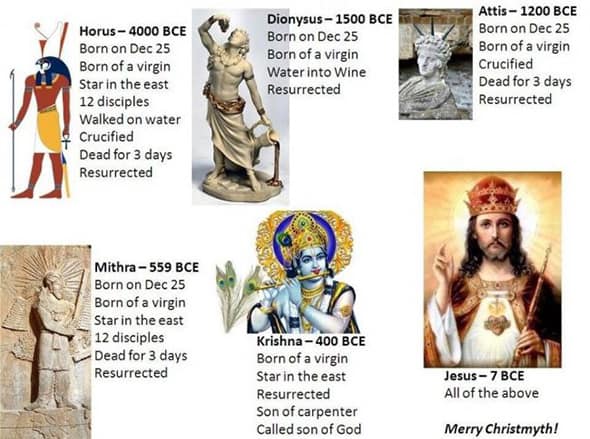
In exploring the deeper meanings of this, we all go through mini deaths (changes) after which we are reborn, in our lives. We can choose to suffer the material losses that inevitably come from such processes, or we can keep focused on the Divine, higher aspect of ourselves, or that which we call God, and maintain our inner peace, despite the challenges from the material world around us. In the end it is up to each of us to choose our state of mind in any given situation, and learn to be less reactive to the external.
Have a great weekend everyone! 


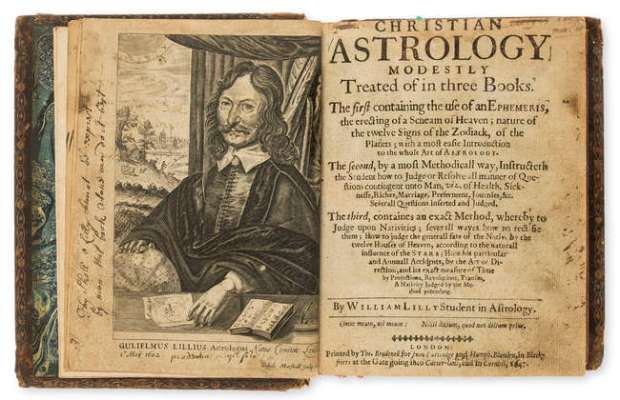
William Lilly’s portrait, now housed in the Ashmolean Museum, shows him standing by a window, holding pen and paper. The sheet of paper has the words Etatis 45 written on it, indicat […]
Source: “They do not compel” William Lilly, Astral Determinism and Free Will

The famous Trundholm Sun Chariot is a bronze and gold artifact pulled out of a bog in Denmark in 1902. Said to belong to the Nordic Bronze Age (c. 1700 to 500 BC), the so-called chariot consists of a bronze horse, a bronze disc with a thin sheet of gold pressed into one side, and six four-spoke wheels made also of bronze. […]
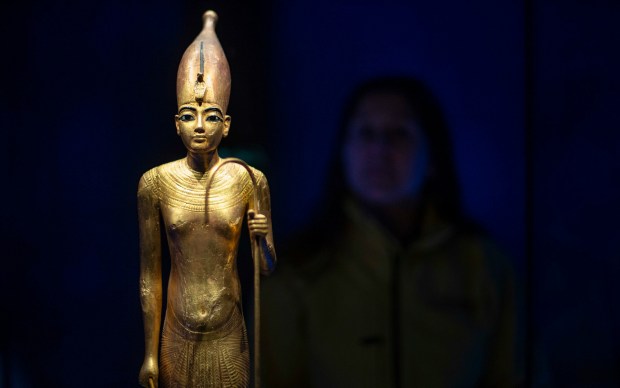
The truly wondrous treasures of Tutankhamun’s tomb are not made of gold. They are the mundane things of everyday life […]
Source: What King Tut’s treasures reveal about daily life in ancient Egypt | Aeon Essays

These pyramids, recently found in Russia’s Kola Peninsula, may be evidence that a new ancient civilization existed there. This civilization seems to be much older than that of Egypt, according to the antiquity and appearance of the pyramids. Even though the mystery of who constructed these architectural wonders has yet to be solved, historians as well as archaeologists have determined that the pyramids are at the least twice as old as the ones discovered in Egypt. It is also suggested that the Kola Peninsula was the home of the oldest civilization in the World, as it is based on the […]
Source: Strange Pyramids Twice As Old As The Egyptian Ones Found In Russia
 Grand Temple of Horus Behdety