Theosophy | Metaphysics & Ethics – 1, by Raghavan Iyer

Tat tvam asi

It is natural for us to make a firm distinction between our study and our application of Theosophy, between theory and practice. As a result, we contrast the capacities of the head and the heart, and assume that we seek and secure different kinds of nourishment from The Secret Doctrine and The Voice of the Silence. At the same time, we also know that Theosophy is essentially the Heart Doctrine, distinct from the head-learning with which our world abounds. What is more, the whole purpose of Theosophical discipline is to blend the head and the heart, to broaden our mental sympathies and to awaken and direct the intelligence of the heart. Does this simply mean that we need for conceptual clarity the dualistic view of the spiritual life as long as we remain as inwardly divided as we are, and that this dichotomy is made only so that it may be destroyed as we become rooted in the holiness that reflects an inner wholeness? It is certainly convenient to regard all conceptual distinctions and classifications as mere scaffoldings and to choose the best available at any particular stage of our growth. But in order to appreciate the distinctive significance of Theosophical classifications, we cannot merely regard them like the maps of early mariners, whose explorations needed as well as corrected their initial cartographical knowledge. We need, in fact, to acquire an entirely new and original view of the relation between true metaphysics and enduring ethics and to appreciate the profound epistemological nature and the peculiar therapeutic value of Theosophical statements as indicated in the First Item of The Secret Doctrine.

Metaphysics, as normally understood, is speculative rather than gnostic and is often the product of the propensity to subsume existing knowledge under a complete system, an imposing pattern that is then ascribed to reality with a dogmatism that pretends to a certainty that it cannot possibly possess. It is in accord with cyclic law that this kind of metaphysical system- building is suspect today and has even led to an extremist and naively positivistic reaction among die-hard empiricists. Similarly, ethics, in the everyday sense, consists of injunctions and imperatives that are rarely susceptible of rational enquiry and are either endowed with spurious absoluteness or are regarded as relativist and subjectivist preferences, from which we choose as from a menu. Given the pretentious nature of ordinary metaphysics and conventional ethics, we can understand the insistence of Hume, the sceptical Scot of the eighteenth century, that metaphysical statements are a priori assertions that are incapable of verification, that we cannot logically derive any ethical imperatives either from them or from statements of fact, and that our ethical preferences cannot possess certainty or universality or freedom from arbitrariness. The metaphysical assertion that “X is true or must be true” cannot help us to answer the question “Why ought I to do Y?” It is indeed not surprising that the speculations of most metaphysicians do not give us a basis for moral conduct and moral growth, and that the injunctions of many conventional ethical codes do not have their basis in the moral and spiritual order of our law-governed cosmos.

In Theosophical literature, however, every metaphysical statement has an ethical corollary and connotation, and every ethical injunction has a distinct metaphysical basis. It is impossible to grasp the force of any of the seven paramitas of The Voice of the Silence without a comprehension of the Three Fundamental Propositions regarding God, Nature and Man that underlie the order of reality intimated by the Stanzas of the Book of Dzyan, on which The Secret Doctrine is closely based. Theosophical literature assumes, as shown especially by Light on the Path, the truth and validity of the Socratic axiom “Knowledge is virtue.” For example, to know, with the heart as well as the head, and to be fully aware that the sin and the shame of the world are verily our own must totally transform our actions as well as our attitudes in relation to all our fellow men and also to our own sins and lower self. We cannot rely on that which is not real, in an ultimate and philosophical sense. Theosophical ethics teaches the only possible reliance — on the Divine Ground of all Being and beyond — that is available to those who become aware of the degrees of reality in an ever-evolving universe that is itself only a relatively real emanation from the Eternal Reality. Our conduct consists of emanations that cannot but harm us and others if they are not emanated in the creative and impersonal manner and with the conscious control that marks the ceaseless process of cosmic emanations from a single source — Life of our life, Force of our force. Until we are free from the dire heresy of separateness (attavada), we cannot claim to have grasped the doctrine of samvriti or of the nidanas that teaches us about the origins of delusions and chains of causation. To know is to become, and to become is truly to know.

In an illuminating passage in The Secret Doctrine on the Causes of Existence” and on the Buddhist concept of nidana and the Hindu concept of maya, H.P. Blavatsky said that …

   science and religion, in trying to trace back the chain of causes and effects, jump to a condition of mental blankness much more quickly than is necessary, for they ignore the metaphysical abstractions which are the only conceivable cause of physical concretions. These abstractions become more and more concrete as they approach our plane of existence, until finally they phenomenalise in the form of the material Universe, by a process of conversion of metaphysics into physics.

The Secret Doctrine, i 45

If we consider this even as a logical possibility, then clearly the knowledge of these metaphysical abstractions gained and given by trained Initiates is epistemologically prior to the external order of reality in the material universe. Such metaphysics, the product of intuitive apprehension and capable of patient verification by the extrasensory experiences of independently acting individuals, is different in kind from the speculative metaphysics of the ordinary variety and is more analogous to the methods of investigation of the greatest natural scientists. This is why we are told that   it is difficult to find a single speculation in Western metaphysics which has not been anticipated by Archaic Eastern philosophy. From Kant to Herbert Spencer, it is all a more or less distorted echo of the Dwaita, Adwaita, and Vedantic doctrines generally.

The Secret Doctrine, i 79

The very nature of Theosophical metaphysics is such that we cannot approach it merely with the head, independently of the heart. The purely ratiocinative and intellectualist approach to ordinary metaphysics is itself the result of “the inadequate distinctions made by the Jews, and now by our Western metaphysicians”, so that “the philosophy of psychic, spiritual, and mental relations with man’s physical functions is in almost. inextricable confusion”. Our metaphysical conceptions are clearly conditioned by our own mental development and cannot have the absolute validity that we claim for them. This is especially true of the evolution of the GOD-IDEA. Hence, says Theosophy, for every thinker there will be a “Thus far shalt thou go and no farther”, mapped out by his intellectual capacity.   Outside of initiation, the ideals of contemporary religious thought must always have their wings clipped and remain unable to soar higher; for idealistic as well as realistic thinkers, and even free-thinkers, are but the outcome and the natural product of their respective environments and periods.

The Secret Doctrine, i 326

Not merely does modern metaphysics fall far short of the truth, but even its basic concepts and usages of terms like “Absolute”, “Nature” and “matter” are shallower and cruder than their corresponding concepts propounded by the Theosophical Adepts. Initiation into Theosophical metaphysics is more than an intellectual or moral enterprise; it is a continuous spiritual exercise in the development of intuitive and cognitive capacities that are the highest available to men, a process that includes from the first a blending of the head and the heart through the interaction of viveka and vairagya, discrimination and detachment. Even our initial apprehension of a statement of Theosophical metaphysics involves an ethical as well as mental effort, just as even the smallest application of a Theosophical injunction to our moral life requires some degree of mental control and the deeper awareness, universal and impersonal in nature, that comes from our higher cognitive capacities. Moral growth, for a Theosophist, presupposes the silent worship of abstract or noumenal Nature, the only divine manifestation”, that is “the one ennobling religion of Humanity.”

Hermes, May 1975
Raghavan Iyer

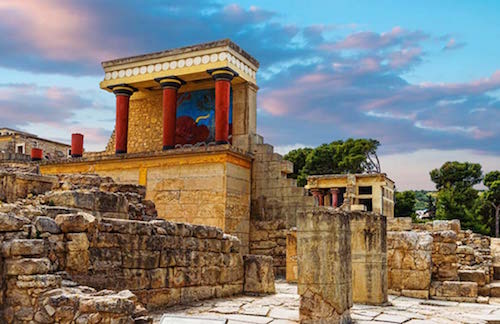
Greek Pantheon | The Palace of Knossos

When we think about the birth of western civilization, we recall Knossos and its stunning palace. Crete is called the cradle of Europe, after all, and Knossos, the largest Bronze Age archaeological site on Crete, is reputed to be Europe’s oldest city!  […]

Source:  https://classicalwisdom.com/science/architecture/the-palace-of-knossos/


THE GOSPEL ACCORDING TO ST. JOHN

   Let us beware of creating a darkness at noonday for ourselves by gazing, so to say, direct at the sun . . . , as though we could hope to attain adequate vision and perception of Wisdom with mortal eyes. It will be the safer course to turn our gaze on an image of the object of our quest.

The Athenian Stranger
Plato

Every year more than three hundred and fifty Catholic and Protestant sects observe Easter Sunday, celebrating the Resurrection of Jesus, the Son of God who called himself the Son of Man. So too do the Russian and Greek Orthodox churches, but on a separate calendar. Such is the schism between East and West within Christendom regarding this day, which always falls on the ancient Sabbath, once consecrated to the Invisible Sun, the sole source of all life, light and energy. If we wish to understand the permanent possibility of spiritual resurrection taught by the Man of Sorrows, we must come to see both the man and his teaching from the pristine perspective of Brahma Vach, the timeless oral utterance behind and beyond all religions, philosophies and sciences throughout the long history of mankind.

The Gospel According to St. John is the only canonical gospel with a metaphysical instead of an historical preamble. We are referred to that which was in the beginning. In the New English Bible, the recent revision of the authorized version produced for the court of King James, we are told: Before all things were made was the Word. In the immemorial, majestic and poetic English of the King James version, In the beginning was the Word and the Word was with God, and the Word was God. This is a bija sutra, a seminal maxim, marking the inception of the first of twenty-one chapters of the gospel, and conveying the sum and substance of the message of Jesus. John, according to Josephus, was at one time an Essene and his account accords closely with the Qumran Manual of Discipline. The gospel attributed to John derives from the same oral tradition as the Synoptics, but it shows strong connections with the Pauline epistles as well as with the Jewish apocalyptic tradition. It is much more a mystical treatise than a biographical narrative.

Theosophically, there is no point or possibility for any man to anthropomorphize the Godhead, even though this may be very touching in terms of filial devotion to one’s own physical father. The Godhead is unthinkable and unspeakable, extending boundlessly beyond the range and reach of thought. There is no supreme father figure in the universe. In the beginning was the Word, the Verbum, the Shabdabrahman, the eternal radiance that is like a veil upon the attributeless Absolute. If all things derive, as St. John explains, from that One Source, then all beings and all the sons of men are forever included. Metaphysically, every human being has more than one father, but on the physical plane each has only one. Over a thousand years or thirty generations, everyone has more ancestors than there are souls presently incarnated on earth. Each one participates in the ancestry of all mankind. While always true, this is more evident in a nation with mixed ancestries. Therefore it is appropriate here that we think of him who preached before Jesus, the Buddha, who taught that we ask not of a man’s descent but of his conduct. By their fruits they shall he known,say the gospels.

There is another meaning of the ‘Father’ which is relevant to the opportunity open to every human being to take a decision to devote his or her entire life to the service of the entire human family. The ancient Jews held that from the illimitable Ain-Soph there came a reflection, which could never be more than a partial participation in that illimitable light which transcends manifestation. This reflection exists in the world as archetypal humanity – Adam Kadmon. Every human being belongs to one single humanity, and that collectivity stands in relation to the Ain-Soph as any one human being to his or her own father. It is no wonder that Pythagoras – Pitar Guru, ‘father and teacher,’ as he was known among the ancient Hindus – came to Krotona to sound the keynote of a long cycle now being reaffirmed for an equally long period in the future. He taught his disciples to honour their father and their mother, and to take a sacred oath to the Holy Fathers of the human race, the ‘Ancestors of the Arhats.’

We are told in the fourth Stanza of Dzyan that the Fathers are the Sons of Fire, descended from a primordial host of Logoi. They are self-existing rays streaming forth from a single, central, universal Mahatic fire which is within the cosmic egg, just as differentiated matter is outside and around it. There are seven sub-divisions within Mahat – the cosmic mind, as it was called by the Greeks – as well as seven dimensions of matter outside the egg, giving a total of fourteen planes, fourteen worlds. Where we are told by John that Jesus said, In my Father’s house are many mansions, H.P. Blavatsky states that this refers to the seven mansions of the central Logos, supremely revered in all religions as the Solar Creative Fire. Any human being who has a true wakefulness and thereby a sincere spirit of obeisance to the divine demiurgic intelligence in the universe, of which he is a trustee even while encased within the lethargic carcass of matter, can show that he is a man to the extent to which he exhibits divine manliness through profound gratitude, a constant recognition and continual awareness of the One Source. All the great Teachers of humanity point to a single source beyond themselves. Many are called but few are chosen by self-election. Spiritual Teachers always point upwards for each and every man and woman alive, not for just a few. They work not only in the visible realm for those immediately before them, but, as John reminds us, they come from above and work for all. They continually think of and love every being that lives and breathes, mirroring “the One that breathes breathless” in ceaseless contemplation, overbrooding the Golden Egg of the universe, the Hiranyagarbha.

Such beautiful ideas enshrined in magnificent myths are provocative to the ratiocinative mind and suggestive to the latent divine discernment of Buddhic intuition. The only way anyone can come closer to the Father in Heaven – let alone come closer to Him on earth Who is as He is in Heaven – is by that light to which John refers in the first chapter of the Gospel. It is the light that lighteth every man who cometh into the world, which the darkness comprehendeth not. Human beings are involved in the darkness of illusion, of self-forgetfulness, and forgetfulness of their divine ancestry. The whole of humanity may be regarded as a garden of gods but all men and women are fallen angels or gods tarnished by forgetfulness of their true eternal and universal mission. Every man or woman is born for a purpose. Every person has a divine destiny. Every individual has a unique contribution to make, to enrich the lives of others, but no one can say what this is for anyone else. Each one has to find it, first by arousing and kindling and then by sustaining and nourishing the little lamp within the heart. There alone may be lit the true Akashic fire upon the altar in the hidden temple of the God which lives and breathes within. This is the sacred fire of true awareness which enables a man to come closer to the one universal divine consciousness which, in its very brooding upon manifestation, is the father-spirit. In the realm of matter it may be compared to the wind that bloweth where it listeth. Any human being could become a self-conscious and living instrument of that universal divine consciousness of which he, as much as every other man or woman, is an effulgent ray.

This view of man is totally different from that which has, alas, been preached in the name of Jesus. Origen spoke of the constant crucifixion of Jesus, declaring that there is not a day on earth when he is not reviled. But equally there is not a time when others do not speak of him with awe. He came with a divine protection provided by a secret bond which he never revealed except by indirect intonation. Whenever the Logos becomes flesh, there is sacred testimony to the Great Sacrifice and the Great Renunciation – of all Avatars, all Divine Incarnations. This Brotherhood of Blessed Teachers is ever behind every attempt to enlighten human minds, to summon the latent love in human hearts for all humanity, to fan the sparks of true compassion in human beings into the fires of Initiation. The mark of the Avatar is that in him the Paraclete, the Spirit of Eternal Truth, manifests so that even the blind may see, the deaf may hear, the lame may walk, the unregenerate may gain confidence in the possibility and the promise of Self-redemption.

In one of the most beautiful passages penned on this subject, the profound essay entitled “The Roots of Ritualism in Church and Masonry,” published in 1889, H.P. Blavatsky declared:

   Most of us believe in the survival of the Spiritual Ego, in Planetary Spirits and Nirmanakayas, those great Adepts of the past ages, who, renouncing their right to Nirvana, remain in our spheres of being, not as ‘spirits’ but as complete spiritual human Beings. Save their corporeal, visible envelope, which they leave behind, they remain as they were, in order to help poor humanity, as far as can he done without sinning against Karmic Law. This is the ‘Great Renunciation,’ indeed; an incessant, conscious self-sacrifice throughout aeons and ages till that day when the eyes of blind mankind will open and, instead of the few, all will see the universal truth. These Beings may well be regarded as God and Gods – if they would but allow the fire in our hearts, at the thought of that purest of all sacrifices, to be fanned into the flame of adoration, or the smallest altar in their honour. But they will not. Verily, ‘the secret heart is fair Devotion’s (only) temple,’ and any other, in this case, would be no better than profane ostentation.

Let a man be without external show such as the Pharisees favoured, without inscriptions such as the Scribes specialized in, and without arrogant and ignorant self-destructive denial such as that of the Sadducees. Such a man, whether he be of any religion or none, of whatever race or nation or creed, once he recognizes the existence of a Fraternity of Divine Beings, a Brotherhood of BuddhasBodhisattvas and Christs, an Invisible Church (in St. Augustine’s phrase) of living human beings ever ready to help any honest and sincere seeker, he will thereafter cherish the discovery within himself. He will guard it with great reticence and grateful reverence, scarcely speaking of his feeling to strangers or even to friends. When he can do this and maintain it, and above all, as John says in the Gospel, be true to it and live by it, then he may make it for himself, as Jesus taught, the way, the truth and the light. While he may not be self-manifested as the Logos came to be through Jesus – the Son of God become the Son of Man – he could still sustain and protect himself in times of trial. No man dare ask for more. No man could do with less.

Jesus knew that his own time of trial had come – the time for the consummation of his vision – on the Day of Passover. Philo Judaeus, who was an Aquarian in the Age of Pisces, gave an intellectual interpretation to what other men saw literally, pointing out that the spiritual passover had to do with passing over earthly passions. Jesus, when he knew the hour had come for the completion of his work and the glorification of his father to whom he ever clung, withdrew with the few into the Garden of Gethsemane. He did not choose them, he said. They chose him. He withdrew with them and there they all used the time for true prayer to the God within. Jesus had taught, Go into thy closet and pray to thy father who is in secret, and that, The Kingdom of God is within you. This was the mode of prayer which he revealed and exemplified to those who were ready for initiation into the Mysteries. Many tried but only few stayed with it. Even among those few there was a Peter, who would thrice deny Jesus. There was the traitor, Judas, who had already left the last supper that evening, having been told, That thou doest, do quickly. Some among the faithful spent their time in purification. Were they, at that point, engaged in self-purification for their own benefit? What had Jesus taught them? Could one man separate himself from any other? He had told those who wanted to stone the adulteress,Let him who is without sin cast the first stone. He had told them not to judge anyone else, but to wait for true judgment. Because they had received a sublime privilege, about which other men subsequently argued for centuries and produced myriad heresies and sects, in their case the judgment involved their compassionate concern to do the sacred Work of the Father for the sake of all. The Garden of Gethsemane is always here. It is a place very different from the Wailing Wall where people gnash their teeth and weep for themselves or their tribal ancestors. The Garden of Gethsemane is wherever on earth men and women want to cleanse themselves for the sake of being more humane in their relations with others.

Nor was the crucifixion only true of Jesus and those two thieves, one of whom wanted to have a miracle on his behalf while the other accepted the justice of the law of the day, receiving punishment for offences that he acknowledged openly. Every man participates in that crucifixion. This much may be learnt from the great mystics and inspired poets across two thousand years. Christos is being daily, hourly, every moment crucified within the cross of every human being. There are too few on earth who are living up to the highest possibility of human god-like wisdom, love and compassion, let alone who can say that in them the spirit of Truth, the Paraclete, manifests. Who has the courage to chase the money-changers of petty thoughts and paltry desires from the Temple of the universal Spirit, not through hatred of the money-changers, but through a love in his heart for the Restoration of the Temple? Who has the courage to say openly what all men recognize inwardly when convenient, or when drunk, or when among friends whom they think they trust? Who is truly a man? How many men are there heroically suffering? Not only do we know that God is not mocked and that as we sow, so shall we reap, but we also realize that the Garden of Gethsemane is difficult to reach. Nonetheless, it may be sought by any and every person who wants to avoid the dire tragedy of self-annihilation. Indeed, there are many such people all around who barely survive from day to day because of their own self-hatred, self-contempt and despair, and who tremble on the brink of moral death. We live in terribly tragic times, and therefore there is no one who cannot afford to take a little pause for the sake of making the burden of one’s presence easier for one’s wife or husband, for one’s children, or for one’s neighbours. Each needs a time of re-examination, a time for true repentance, a time for Christ-like resolve. The Garden of Gethsemane is present wherever there is genuineness, determination and honesty. Above all, it is where there is the joyous recognition that, quite apart from yesterday and tomorrow, right now a person can create so strong a current of thought that it radically affects the future. He could begin now, and acquire in time a self-sustaining momentum. But this cannot be done without overcoming the karmic gravity of all the self-destructive murders of human beings that he has participated in on the plane of thought, on the plane of feeling, especially on the plane of words, and also, indirectly, on the plane of outward action.

If the Garden of Gethsemane did not exist, no persecuting Saul could ever become a Paul. Such is the great hope and the glad tiding. As Origen said, Saul had to be killed before Paul could be born. The Francis who was a simple crusader had to die before the Saint of Assisi could be born. Because all men have free will, no man can transform himself without honest and sincere effort. Hence, after setting out the nature of the Gods, the Fathers of the human race, H.P. Blavatsky, in the same article quoted, spoke of the conditions of probation of incarnated souls seeking resurrection:

   . . . every true Theosophist holds that the divine HIGHER SELF of every mortal man is of the same essence as the essence of these Gods. Being, moreover, endowed with free-will, hence having, more than they, responsibility, we regard the incarnated EGO as far superior to, if not more divine than, any spiritual INTELLIGENCE still awaiting incarnation. Philosophically, the reason for this is obvious, and every metaphysician of the Eastern school will understand it. The incarnated EGO has odds against it which do not exist in the case of a pure divine Essence unconnected with matter; the latter has no personal merit, whereas the former is on his way to final perfection through the trials of existence, of pain and suffering.

It is up to each one to decide whether to make this suffering constructive, these trials meaningful, these tribulations a golden opportunity for self-transformation and spiritual resurrection.

If this decision is not made voluntarily during life, it is thrust upon each ego at death. Every human being has to pass at the moment of death, according to the wisdom of the ancients, to a purgatorial condition in which there is a separation of the immortal individuality. It is like a light which is imprisoned during waking life, a life which is a form of sleep within the serpent coils of matter. This god within is clouded over by the fog of fear, superstition and confusion, and all but the pure in heart obscure the inner light by their demonic deceits and their ignorant denial of the true heart. Every human being needs to cast out this shadow, just as he would throw away an old garment, says Krishna, or just as he would dump into a junkyard an utterly unredeemable vehicle. Any and every human being has to do the same on the psychological plane. Each is in the same position. He has to discard the remnants, but the period for this varies according to each person. This involves what is called ‘the mathematics of the soul.’ Figures are given to those with ears to hear, and there is a great deal of detailed application to be made.

Was Jesus exempt from this? He wanted no exception. He had taken the cross. He had become one with other men, constantly taking on their limitations, exchanging his finer life-atoms for their gross life-atoms – the concealed thoughts, the unconscious hostilities, the chaotic feelings, the ambivalences, the ambiguities, the limitations of all. He once said, My virtue has gone out of me,when the hem of his garment was touched by a woman seeking help, but does this mean that he was exposed only when he physically encountered other human beings? The Gospel according to John makes it crisply clear, since it is the most mystical and today the most meaningful of the four gospels, that this was taking place all the time. It not only applies to Jesus. It takes place all the time for every person, often unknown to oneself. But when it is fully self-conscious, the pain is greater, such as when a magnanimous Adept makes a direct descent from his true divine estate, leaving behind his finest elements, like Surya the sun in the myth who cuts off his lustre for the sake of entering into a marriage with Sanjna, coming into the world, and taking on the limitations of all. The Initiator needs the three days in the tomb, but these three days are metaphorical. They refer to what is known in the East as a necessary gestation state when the transformation could be made more smoothly from the discarded vehicle which had been crucified.

People tend to fasten upon the wounds and the blood, even though, as Titian’s painting portrays clearly, the tragedy of Jesus was not in the bleeding wounds but in the ignorance and self-limitation of the disciples. He had promised redemption to anyone and everyone who was true to him, which meant, he said, to love each other. He had washed the feet of the disciples, drawn them together, given them every opportunity so that they would do the same for each other. He told them that they need only follow this one commandment. We know how difficult it is for most people today to love one another, to work together, to pull together, to cooperate and not compete, to add and not subtract, to multiply and serve, not divide and rule. This seems very difficult especially in a hypocritical society filled with deceit and lies. What are children to say when their parents ask them to tell the truth and they find themselves surrounded by so many lies? In the current cycle the challenge is most pointed and poignant. More honesty is needed, more courage, more toughness – this time for the sake of all mankind. One cannot leave it to a future moment for some pundits in theological apologetics and theosophical hermeneutics to say this cycle was only for some chosen people. Every single part of the world has to be included and involved.

The teaching of Jesus was a hallowed communication of insights, a series of sacred glimpses, rather than a codification of doctrine. He presented not asumma theologica or ethica, but the seminal basis from which an endless series of summae could be conceived. He initiated a spiritual current of sacred dialogue, individual exploration and communal experiment in the quest for divine wisdom. He taught the beauty of acquiescence and the dignity of acceptance of suffering – a mode appropriate to the Piscean Age. He showed salvation – through love, sacrifice and faith – of the regenerated psyche that cleaves to the light of no us. He excelled in being all things to all men while remaining utterly true to himself and to his ‘Father in Heaven.’ He showed a higher respect for the Temple than its own custodians. At the same time he came to found a new kind of kingdom and to bring a message of joy and hope. He came to bear witness to the Kingdom of Heaven during life’s probationary ordeal on earth. He vivified by his own luminous sacrifice the universal human possibility of divine self-consecration, the beauty of beatific devotion to the Transcendental Source of Divine Wisdom – the Word Made Flesh celebrating the Verbum In the Beginning.

Above all, there was the central paradox that his mission had to be vindicated by its failure, causing bewilderment among many of his disciples, while intuitively understood only by the very few who were pure in heart and strong in devotion, blessed by the vision of the Ascension. After three days in the tomb, Jesus, in the guise of a gardener, said to a poor, disconsolate Mary Magdalene,Mary! At once she looked back because she recognized the voice, and she said,Rabboni – “My Master” – and fell at his feet. Then he said, Touch me not. Here is a clue to his three days in the tomb. The work of permanent transmutation of life-atoms, of transfiguration of vehicles, was virtually complete. He then said,Go to my brethren, and say unto them, I ascend unto my Father and your Father; and to my God and your God. Subsequently he appeared three times to his disciples.

Jesus gave the greatest possible confidence to all his disciples by ever paying them the most sacred compliment, telling them that they were children of God. But, still, if a person thinks that he is nothing, or thinks that he is the greatest sinner on earth, how can the compassion and praise of Jesus have meaning for him? Each person has to begin to see himself undramatically as one of many sinners and say, “My sins are no different from those of anyone else.” The flesh is weak but pneuma, the spirit, is willing. And pneuma has to do with breath. The whole of the Gospel according to John is saturated with the elixir of the breathing-in and breathing-out by Jesus of the life-infusing current that gives every man a credible faith in his promise and possibility, and, above all, a living awareness of his immortality, which he can self-consciously realize when freed from mis-identification with his mortal frame.

The possibility of resurrection has to do with identification and mis-identification. This is the issue not for just a few but for all human beings who, in forgetfulness, tend to think that they are what their enemies think, or that they are what their friends want them to be. At one time men talked of the imago Christi. We now live in a society that constantly deals in diabolical images and the cynical corruption of image-making, a nefarious practice unfamiliar in simpler societies which still enjoy innocent psychic health. Even more, people now engage in image-crippling – the most heinous of crimes. At one time men did it openly, with misguided courage. They pulled down statues and defaced idols. They paid for it and are still paying. Perhaps those people were reborn in this society. That is sad because they are condemning themselves to something worse than hell – not only the hell of loneliness and despair – but much worse. The light is going out for many a human being. The Mahatmas have always been with us. They have always abundantly sent forth benedictory vibrations. They are here on earth where they have always had their asylums and their ashrams. Under cyclic law they are able to use precisely prepared forums and opportunities to re-erect or resurrect the mystery temples of the future. Thus, at this time, everybody is stirred up by the crucial issue of identity – which involves the choice between the living and the dead, between entelechy and self-destruction.

The central problem in the Gospel according to John, which Paul had to confront in giving his sermon on the resurrection, has to do with life and with death. What is life for one man is not life to another. Every man or woman today has to raise the question, “What does it mean for me to be alive, to breathe, to live for the sake of others, to live within the law which protects all but no one in particular?” Whoever truly identifies with the limitless and unconditional love of Jesus and with the secret work of Jesus which he veiled in wordless silence, is lit up. Being lit up, one is able to see the divine Buddha-nature, the light vesture of the Buddha. The disciples in the days of the Buddha, and so again in the days of Jesus, were able to see the divine raiment made of the most homogeneous pure essence of universal Buddhi. Immaculately conceived and unbegotten, it isdaiviprakriti, the light of the Logos. Every man at all times has such a garment, but it is covered over. Therefore, each must sift and select the gold from the dross. The more a person does this truly and honestly, the more the events of what we call life can add up before the moment of death. They can have a beneficent impact upon the mood and the state of mind in which one departs. A person who is wise in this generation will so prepare his meditation that at the moment of death he may read or have read out those passages in the Bhagavad Gita, The Voice of the Silence, or The Gospel According to St. John, that are exactly relevant to what is needed. Then he will be able to intone the Word, which involves the whole of one’s being and breathing, at the moment when he may joyously discard his mortal garment. It has been done, and it is being done. It can be done, and it will be done. Anyone can do it, but in these matters there is no room for chance or deception, for we live in a universe of law. Religion can be supported now by science, and to bring the two together in the psychology of self-transformation one needs true philosophy, the unconditional love of wisdom.

The crucifixion of Jesus and his subsequent resurrection had little reference to himself, any more than any breath he took during his life. Thus, in the Gospel, we read that Jesus promises that when he will be gone from the world, he will send the Paraclete. This archaic concept has exercised the pens of many scholars. What is the Paraclete? What does it mean? ‘Comforter’? ‘The Spirit of Truth’? Scholars still do not claim to know. The progress made in this century is in the honest recognition that they do not know, whereas in the nineteenth century they quarrelled, hurled epithets at each other out of arrogance, with a false confidence that did not impress anyone for long. The times have changed, and this is no moment for going back to the pseudo-complacency of scholasticism, because today it would be false, though at one time it might have had some understandable basis. Once it might have seemed a sign of health and could have been a pardonable and protective illusion. Today it would be a sign of sickness because it would involve insulting the intelligence of many young people, men and women, Christian, Jewish, Protestant, Catholic, but also Buddhist, Hindu, Moslem, Sikh, and every other kind of denomination. No one wants to settle for the absurdities of the past, but all nonetheless want a hope by which they may live and inherit the future, not only for themselves or their descendants, but for all living beings.

This, then, is a moment when people must ask what would comfort the whole of mankind. What did Jesus think would be a way of comforting all? Archetypally, the Gospel according to John is speaking in this connection of the mystery temple, where later all the sad failures of Christianity took place. This is the light and the fire that must be kept alive for the sake of all. Who, we may ask, will joyously and silently maintain it intact? Who will be able to say, as the dying Latimer said in Oxford in 1555“We shall this day light such a candle . . . as I trust shall never be put out.” Jesus was confident that among his disciples there were those who had been set afire by the flames that streamed through him. He was the Hotri, ‘the indispensable agent’ for the universal alkahest, the elixir of life and immortality. He was the fig tree that would bear fruit, but he predicted that there would be fig trees that would bear no fruit. He was referring to the churches that have nothing to say, nothing real to offer, and above all, do not care that much for the lost Word or the world’s proletariat, or the predicament and destiny of the majority of mankind.

His confidence was that which came to him, like everything in his life, from the Father, the Paraguru, the Lord of Libations, who, with boundless love for all, sustains in secret the eternal contemplation, together with the twoBodhisattvas – one whose eye sweeps over slumbering earth, and the other whose hand is extended in protecting love over the heads of his ascetics. Jesus spoke in the name of the Great Sacrifice. He spoke of the joy in the knowledge that there were a few who had become potentially like the leaven that could lift the whole lump, who had become true Guardians of the Eternal Fires. These are the vestal fires of the mystery temple which had disappeared in Egypt, from which the exodus took place. They had disappeared from Greece, though periodically there were attempts to revive them, such as those by Pythagoras at Delphi. They were then being poured into a new city called Jerusalem. In a sense, the new Comforter was the New Jerusalem, but it was not just a single city nor was it merely for people of one tribe or race.

Exoterically, the temple of Jerusalem was destroyed in 63 B.C. by Pompey and was rebuilt. Later it was razed to the ground again in 70 A.D. Since the thirteenth century no temple has been in existence there at all because that city has been for these past seven hundred years entirely in the hands of those who razed the old buildings and erected minarets and mosques. Now, people wonder if there really ever was a true Jerusalem, for everywhere is found the Babylon of confusion. Today it is not Origen who speaks to us, but Celsus, on behalf of all Epicureans. Everyone is tempted, like Lot’s wife, to be turned into salt by fixing their attention upon the relics and memories of the past long after they have vanished into the limbo of dissolution and decay.

Anyone, however, who has an authentic soul-vision is El Mirador. Jesus knew that the vision, entrusted to the safekeeping of a few, would inspire them to lay the basis of what would continue, because of what they did, despite all the corruption and the ceaseless crucifixion. Even today, two thousand years later, when we hear of the miracle of the limitless love of Jesus, when we hear the words he spoke, when we read about and find comfort in what he did, we are deeply stirred. We are abundantly grateful because in us is lit the chela-light of true reverential devotion to the Christos within. This helps us to see all the Christs of history, unknown as well as renowned, as embodiments of the One and Only – the One without a Second, in the cryptic language of the Upanishads. When this revelation takes place and is enjoyed inwardly, there are glad tidings, because it is on the invisible plane that the real work is done. Most people are fixated on the visible and want to wait for fruits from trees planted by other men. There are a few, however, who have realized the comfort to be derived in the true fellowship of those who seek the kingdom of God within themselves, who wish to become the better able to help and teach others, and who will be true in their faith from now until the twenty-first century. Some already have been using a forty-year calendar.

There have been such persons before us. Pythagoras called them Heroes. The Buddha called them Shravakas, true listeners, and Shramanas, true learners. Then there were some who became Srotapattis, ‘those who enter the stream,’ and among them were a few Anagamin, ‘those who need never return on earth again involuntarily.’ There were also those who were Arhans of boundless vision, Perfected Men, Bodhisattvas, endlessly willing to re-enter the cave, having taken the pledge of Kwan-Yin to redeem every human being and all sentient life.    Nothing less than such a vow can resurrect the world today. These times are very different from the world at the time of John because in this age outward forms are going to give no clues in relation to the work of the formless. Mankind has to grow up. We find Origen saying this in the early part of the third century and Philo saying the same even in the first century. Philo, who was a Jewish scholar and a student of Plato, was an intuitive intellectual, while Origen, who had studied the Gnostics and considered various philosophical standpoints, was perhaps more of a mystic or even an ecstatic. Both knew that the Christoscould only be seen by the eye of the mind. If therefore thine eye be single, Jesus said, thy whole body shall be full of Light. Those responding with the eyes of the body could never believe anything because, as Heraclitus said, “Eyes are bad witnesses to the soul.” The eyes of the body must be tutored by the eye of the mind. Gupta Vidya also speaks of the eye of the heart and the eye in the forehead – the eye of Wisdom-Compassion. Through it, by one’s own love, one will know the greater love. By one’s own compassion one will know the greater compassion. By one’s own ignorance one will recognize the ignorance around and seek the privilege of recognition of the Paraclete. Then, when the eye becomes single in its concentration upon the welfare of all, the body will become full of the light of the Christos. Once unveiled at the fundamental level of causality, it makes a man or woman an eternal witness to the true resurrection of the Son of Man into the highest mansions of the Father.

Hermes, April 1977
Raghavan Iyer
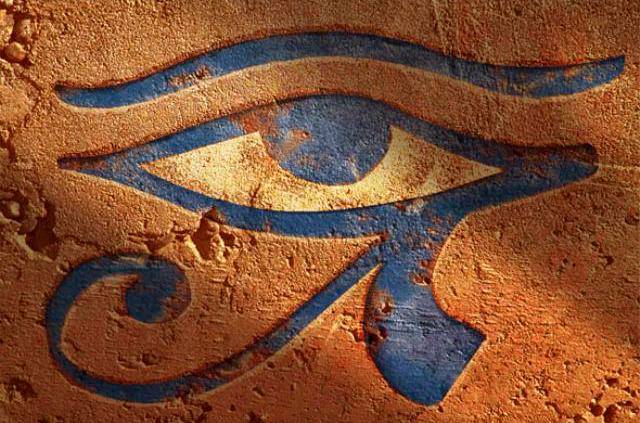
From the Temple at Dandara …

(This attempts to explain the famous view of the ancient Egyptian Iligan at Dendera Temple).

This Inscription is located at the Temple of Dendera, located about 2,5 kilometers southeast of the village of Dendera, west of Qena, and about 55 kilometers north of Luxor, on the west shore of the Nile.

This temple was built to worship Hathor, the Goddess of love, music and beauty worshipped by the ancient Egyptians.

As for the names of the Royal Crowns, depicted here according to the inscription carved at the Temple of Dendera, each of the names could be interpreted, as follows:

(1) Crown their
(2) Crown of the covenant (linked to the idol God)
(3) the crown of fear (linked to the idol of fear.. Lord of the moon at the ancient Egyptians and the son of idol amun ra)
(4) the crown of their their ornamented with Cobra (their their or rouse)
(5) Red Crown ornamented with Cobra (dsẖrt or rouse)
(6) Crown of the four feathers
(7) Crown of the maat (affectionate-about)
(8) the crown of Amun (the) and is called saraswati swty
(9) Marchesa (a mixture of blue naj and maat)
(10) Crown of n (Crown of the eagle)
(11) their their armando
(12) they are committed to suicide (insisted)
(13) Crown of the agreement with Cobra (archived)
(14) Crown of wreath.. Da (scarf)
(15) Crown of burch = Blue Crown
(16) Head Cover.. Mongoose
(17) Crown Cap
(18) another cap crown
(19) Head Cover.. Ring’s ring
(20) another head cover.. another ring (Avneet)
(21) Red Crown (Dsẖrt)
(22) White Crown (argument)
(23) Double Crown (my sarcasm) = strong

— Scientific Research Department at Karnak

Food for Thought …

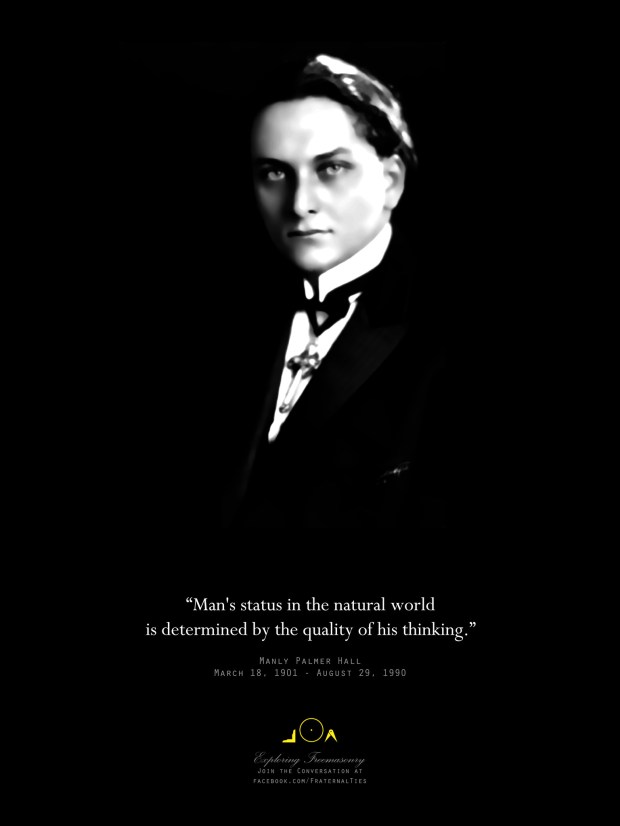
“Those who represent an ideal beyond the comprehension of the masses must face the persecution of the unthinking multitude who are without that divine idealism which inspires progress and those rational faculties which unerringly sift truth from falsehood. The lot of the Initiate-Teacher is therefore almost invariably an unhappy one.

Pythagoras, crucified and his university burned; Hypatia, torn from her chariot and rended limb from limb; Jacques de Molay, whose memory survives the consuming flame; Savonarola, burned in the square of Florence; Galileo, forced to recant upon bended knee; Giordano Bruno, burned by the Inquisition; Roger Bacon, compelled to carry on his experiments in the secrecy of his cell and leave his knowledge hidden under cipher; Dante Alighieri, dying in exile from his beloved city; Francis Bacon, patient. under the burden of persecution; Cagliostro, the most vilified man of modern times–all this illustrious line bear unending witness of man’s inhumanity to man. The world has ever been prone to heap plaudits upon its fools and calumny upon its thinkers.

As is so often the case with genius, Pythagoras by his outspokenness incurred both political and personal enmity. Among those who came for initiation was one who, because Pythagoras refused to admit him, determined to destroy both the man and his philosophy. By means of false propaganda, this disgruntled one turned the minds of the common people against the philosopher. Without warning, a band of murderers descended upon the little group of buildings where the great teacher and his disciples dwelt, burned the structures and killed Pythagoras.”

– Manly P. Hall, The Secret Teachings of all Ages

RITUAL MAGIC | A Simple and Yet Powerful Archangel Invocation

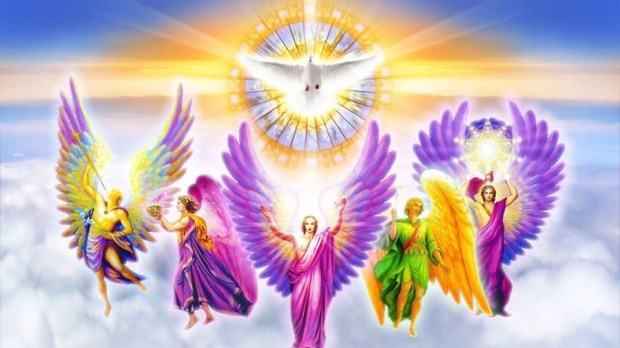
There are many ways to invoke and call forth the presence of the Archangels… One of the most powerful is invoking the Archangels in every direction.

This Archangel Invocation puts you right at the center of a powerful Archangelic energy. You can use this for protection, to raise your vibration… Anchor light where you are… Connect with your highest Divine Self or to simpy tune into the love, support, guidance and incredible angelic energy of the Archangels.

Here’s exactly how to do this.

Archangel Invocation

To begin, focus your awareness within, breathe, relax and begin to visualize golden and white light all around as you now ask to be surrounded with Divine Light love, and with the Archangels in every direction.

Then think clearly and powerfully, or say aloud:

Recite aloud:

Calling in the Archangels from every direction. East, South, West, North,

Above, Below… Within…

“I now call upon Archangel Raphael in the East.”

Raphael is the Archangel of Air, and as you call him forth, feel or see the Emerald Green light and healing presence as Archangel Raphael steps forward.

“I call upon Archangel Michael in the South”

Archangel Michael is the Archangel of Fire. Tune into the electric blue fire and protective energy of Archangel Michael.

“I call upon Archangel Gabriel in the West”

Archangel Gabriel is the Archangel of Water. Tune into the sky-blue diamond light of Gabriel as she steps forward.

“I now call upon Archangel Auriel in the North”

Archangel Auriel is the Archangel of the Earth. Tune into the golden fiery light as Uriel steps forward.

“I now call in Archangel Sandalphon below me…”

Bringing up the crystalline grid and Sophia– Christ Light into your heart center

“I now call upon Archangel Metatron above…”

Lowering down the Solar- Christ Consciousness grid into your heart center.

Now tune into this sacred geometric shape around you…

The pillars of Archangelic energy creaing an octahedron around you.

“Inside this sacred geometric space, I now ask that the vibration be lifted, and filled with the love and light of Divine Presence. And now at the center, through my open heart, I call in and forth the full presence of my highest Divine Self.”

Allow your energy lift, expand, and through your open heart, feel the presence of the Archangels above, below and all around …

And within you, feel the presence of your highest Divine Self. Feel and experience your highest divine light.

From here, allow yourself to simply be present and to bask in the loving, blissful energy. You can ask for specific guidance or healing or you can simply anchor Divine Love, light and presence where you are, through your open heart, into the present moment…

Anchoring Divine Love into the earth and rippling out far beyond you.

And so it is.

===

Give this a try and just feel, see, experience and know the presence of the archangelic energy when you connect, invoke and invite it in.

I hope that this is helpful for you.

The Hermetic Philosophy

No photo description available.


“The lips of wisdom are closed, except to the ears of Understanding”–The Kybalion.

From old Egypt have come the fundamental esoteric and occult teachings which have so strongly influenced the philosophies of all races, nations and peoples, for several thousand years. Egypt, the home of the Pyramids and the Sphinx, was the birthplace of the Hidden Wisdom and Mystic Teachings. From her Secret Doctrine all nations have borrowed. India, Persia, Chaldea, Medea, China, Japan, Assyria, ancient Greece and Rome, and other ancient countries partook liberally at the feast of knowledge which the Hierophants and Masters of the Land of Isis so freely provided for those who came prepared to partake of the great store of Mystic and Occult Lore which the masterminds of that ancient land had gathered together.

In ancient Egypt dwelt the great Adepts and Masters who have never been surpassed, and who seldom have been equaled, during the centuries that have taken their processional flight since the days of the Great Hermes. In Egypt was located the Great Lodge of Lodges of the Mystics. At the doors of her Temples entered the Neophytes who afterward, as Hierophants, Adepts, and Masters, traveled to the four corners of the earth, carrying with them the precious knowledge which they were ready, anxious, and willing to pass on to those who were ready to receive the same. All students of the Occult recognize the debt that they owe to these venerable Masters of that ancient land.

But among these great Masters of Ancient Egypt there once dwelt one of whom Masters hailed as “The Master of Masters.” This man, if “man” indeed he was, dwelt in Egypt in the earliest days. He was known as Hermes Trismegistus. He was the father of the Occult Wisdom; the founder of Astrology; the discoverer of Alchemy. The details of his life story are lost to history, owing to the lapse of the years, though several of the ancient countries disputed with each other in their claims to the honor of having furnished his birthplace–and this thousands of years ago. The date of his sojourn in Egypt, in that his last incarnation on this planet, is not now known, but it has been fixed at the early days of the oldest dynasties of Egypt–long before the days of Moses. The best authorities regard him as a contemporary of Abraham, and some of the Jewish traditions go so far as to claim that Abraham acquired a portion of his mystic knowledge from Hermes himself.

As the years rolled by after his passing from this plane of life (tradition recording that he lived three hundred years in the flesh), the Egyptians deified Hermes, and made him one of their gods, under the name of Thoth. Years after, the people of Ancient Greece also made him one of their many gods–calling him “Hermes, the god of Wisdom.” The Egyptians revered his memory for many centuries-yes, tens of centuries– calling him “the Scribe of the Gods,” and bestowing upon him, distinctively, his ancient title, “Trismegistus,” which means “the thrice-great”; “the great-great”; “the greatest-great”; etc. In all the ancient lands, the name of Hermes Trismegistus was revered, the name being synonymous with the “Fount of Wisdom.”

Even to this day, we use the term “hermetic” in the sense of “secret”; “sealed so that nothing can escape”; etc., and this by reason of the fact that the followers of Hermes always observed the principle of secrecy in their teachings. They did not believe in “casting pearls before swine,” but rather held to the teaching “milk for babes”; “meat for strong men,” both of which maxims are familiar to readers of the Christian scriptures, but both of which had been used by the Egyptians for centuries before the Christian era.

And this policy of careful dissemination of the truth has always characterized the Hermetics, even unto the present day. The Hermetic Teachings are to be found in all lands, among all religions, but never identified with any particular country, nor with any particular religious sect. This because of the warning of the ancient teachers against allowing the Secret Doctrine to become crystallized into a creed. The wisdom of this caution is apparent to all students of history. The ancient occultism of India and Persia degenerated, and was largely lost, owing to the fact that the teachers became priests, and so mixed theology with the philosophy, the result being that the occultism of India and Persia has been gradually lost amidst the mass of religious superstition, cults, creeds and “gods.” So it was with Ancient Greece and Rome. So it was with the Hermetic Teachings of the Gnostics and Early Christians, which were lost at the time of Constantine, whose iron hand smothered philosophy with the blanket of theology, losing to the Christian Church that which was its very essence and spirit, and causing it to grope throughout several centuries before it found the way back to its ancient faith, the indications apparent to all careful observers in this Twentieth Century being that the Church is now struggling to get back to its ancient mystic teachings.

But there were always a few faithful souls who kept alive the Flame, tending it carefully, and not allowing its light to become extinguished. And thanks to these staunch hearts, and fearless minds, we have the truth still with us. But it is not found in books, to any great extent. It has been passed along from Master to Student; from Initiate to Hierophant; from lip to ear. When it was written down at all, its meaning was veiled in terms of alchemy and astrology so that only those possessing the key could read it aright. This was made necessary in order to avoid the persecutions of the theologians of the Middle Ages, who fought the Secret Doctrine with fire and sword; stake, gibbet and cross. Even to this day there will be found but few reliable books on the Hermetic Philosophy, although there are countless references to it in many books written on various phases of Occultism. And yet, the Hermetic Philosophy is the only Master Key which will open all the doors of the Occult Teachings!

In the early days, there was a compilation of certain Basic Hermetic Doctrines, passed on from teacher to student, which was known as “THE KYBALION,” the exact significance and meaning of the term having been lost for several centuries. This teaching, however, is known to many to whom it has descended, from mouth to ear, on and on throughout the centuries. Its precepts have never been written down, or printed, so far as we know. It was merely a collection of maxims, axioms, and precepts, which were non-understandable to outsiders, but which were readily understood by students, after the axioms, maxims, and precepts had been explained and exemplified by the Hermetic Initiates to their Neophytes. These teachings really constituted the basic principles of “The Art of Hermetic Alchemy,” which, contrary to the general belief, dealt in the mastery of Mental Forces, rather than Material Elements-the Transmutation of one kind of Mental Vibrations into others, instead of the changing of one kind of metal into another. The legends of the “Philosopher’s Stone” which would turn base metal into Gold, was an allegory relating to Hermetic Philosophy, readily understood by all students of true Hermeticism.

In this little book, of which this is the First Lesson, we invite our students to examine into the Hermetic Teachings, as set forth in THE KYBALION, and as explained by ourselves, humble students of the Teachings, who, while bearing the title of Initiates, are still students at the feet of HERMES, the Master. We herein give you many of the maxims, axioms and precepts of THE KYBALION, accompanied by explanations and illustrations which we deem likely to render the teachings more easily comprehended by the modern student, particularly as the original text is purposely veiled in obscure terms.

The original maxims, axioms, and precepts of THE KYBALION are printed herein, in italics, the proper credit being given. Our own work is printed in the regular way, in the body of the work. We trust that the many students to whom we now offer this little work will derive as much benefit from the study of its pages as have the many who have gone on before, treading the same Path to Mastery throughout the centuries that have passed since the times of HERMES TRISMEGISTUS–the Master of Masters–the Great-Great. In the words of “THE KYBALION”:

“Where fall the footsteps of the Master, the ears of those
ready for his Teaching open wide.”–The Kybalion.

“When the ears of the student are ready to hear, then cometh
the lips to fill them with Wisdom.”–The Kybalion.

So that according to the Teachings, the passage of this book to those ready for the instruction will attract the attention of such as are prepared to receive the Teaching. And, likewise, when the pupil is ready to receive the truth, then will this little book come to him, or her. Such is The Law. The Hermetic Principle of Cause and Effect, in its aspect of The Law of Attraction, will bring lips and ear together–pupil and book in company. So mote it be!

Artwork by Miles Toland.


“As above, so below, as within, so without, as the universe, so the soul.”

AS ABOVE SO BELOW = 936 = LET THERE BE LIGHT = DAATH INVOCATION

The great Second Hermetic Principle embodies the truth that there is a harmony, agreement, and correspondence between the several planes of Manifestation, Life and Being. This truth is a truth because all that is included in the Universe emanates from the same source, and the same laws, principles, and characteristics apply to each unit, or combination of units, of activity, as each manifests its own phenomena upon its own plane.

For the purpose of convenience of thought and study, the Hermetic Philosophy considers that the Universe may be divided into three great classes of phenomena, known as the Three Great Planes, namely:

1. The Great Physical Plane.
2. The Great Mental Plane.
3. The Great Spiritual Plane.

These divisions are more or less artificial and arbitrary, for the truth is that all of the three divisions are but ascending degrees of the great scale of Life, the lowest point of which is undifferentiated Matter, and the highest point that of Spirit. And, moreover, the different Planes shade into each other, so that no hard and fast division may be made between the higher phenomena of the Physical and the lower of the Mental; or between the higher of the Mental and the lower of the Physical.

In short, the Three Great Planes may be regarded as three great groups of degrees of Life Manifestation. While the purposes of this little book do not allow us to enter into an extended discussion of, or explanation of, the subject of these different planes, still we think it well to give a general description of the same at this point.

At the beginning we may as well consider the question so often asked by the neophyte, who desires to be informed regarding the meaning of the word “Plane”, which term has been very freely used, and very poorly explained, in many recent works upon the subject of occultism. The question is generally about as follows: “Is a Plane a place having dimensions, or is it merely a condition or state?” We answer: “No, not a place, nor ordinary dimension of space; and yet more than a state or condition. It may be considered as a state or condition, and yet the state or condition is a degree of dimension, in a scale subject to measurement.” Somewhat paradoxical, is it not? But let us examine the matter. A “dimension,” you know, is “a measure in a straight line, relating to measure,” etc. The ordinary dimensions of space are length, breadth, and height, or perhaps length, breadth, height, thickness or circumference. But there is another dimension of “created things” or “measure in a straight line,” known to occultists, and to scientists as well, although the latter have not as yet applied the term “dimension” to it–and this new dimension, which, by the way, is the much speculated -about “Fourth Dimension,” is the standard used in determining the degrees or “planes.”

This Fourth Dimension may be called “The Dimension of Vibration” It is a fact well known to modern science, as well as to the Hermetists who have embodied the truth in their “Third Hermetic Principle,” that “everything is in motion; everything vibrates; nothing is at rest.” From the highest manifestation, to the lowest, everything and all things Vibrate. Not only do they vibrate at different rates of motion, but as in different directions and in a different manner. The degrees of the rate of vibrations constitute the degrees of measurement on the Scale of Vibrations–in other words the degrees of the Fourth Dimension. And these degrees form what occultists call “Planes” The higher the degree of rate of vibration, the higher the plane, and the higher the manifestation of Life occupying that plane. So that while a plane is not “a place,” nor yet “a state or condition,” yet it possesses qualities common to both. We shall have more to say regarding the subject of the scale of Vibrations in our next lessons, in which we shall consider the Hermetic Principle of Vibration.

You will kindly remember, however, that the Three Great Planes are not actual divisions of the phenomena of the Universe, but merely arbitrary terms used by the Hermetists in order to aid in the thought and study of the various degrees and Forms of universal activity and life. The atom of matter, the unit of force, the mind of man, and the being of the arch -angel are all but degrees in one scale, and all fundamentally the same, the difference between solely a matter of degree, and rate of vibration–all are creations of THE ALL, and have their existence solely within the Infinite Mind of THE ALL.

The Hermetists sub-divide each of the Three Great Planes into Seven Minor Planes, and each of these latter are also sub-divided into seven sub-planes, all divisions being more or less arbitrary, shading into each other, and adopted merely for convenience of scientific study and thought.

The Great Physical Plane, and its Seven Minor Planes, is that division of the phenomena of the Universe which includes all that relates to physics, or material things, forces, and manifestations. It includes all forms of that which we call Matter, and all forms of that which we call Energy or Force. But you must remember that the Hermetic Philosophy does not recognize Matter as a thing in itself, or as having a separate existence even in the Mind of THE ALL. The Teachings are that Matter is but a form of Energy–.that is, Energy at a low rate of vibrations of a certain kind. And accordingly the Hermetists classify Matter under the head of Energy, and give to it three of the Seven Minor Planes of the Great Physical Plane.

These Seven Minor Physical Planes are as follows:

1. The Plane of Matter (A)
2. The Plane of Matter (B)
3. The Plane of Matter (C)
4. The Plane of Ethereal Substance
5. The Plane of Energy (A)
6. The Plane of Energy (B)
7. The Plane of Energy (C)

The Plane of Matter (A) comprises the forms of Matter in its form of solids, liquids, and gases, as generally recognized by the text-books on physics. The Plane of Matter (B) comprises certain higher and more subtle forms of Matter of the existence of which modern science is but now recognizing, the phenomena of Radiant Matter, in its phases of radium, etc., belonging to the lower sub-division of this Minor Plane. The Plane of Matter (C) comprises forms of the most subtle and tenuous Matter, the existence of which is not suspected by ordinary scientists. The Plane of Ethereal Substance comprises that which science speaks of as “The Ether”, a substance of extreme tenuity and elasticity, pervading all Universal Space, and acting as a medium for the transmission of waves of energy, such as light, heat, electricity, etc. This Ethereal Substance forms a connecting link between Matter (so-called) and Energy, and partakes of the nature of each. The Hermetic Teachings, however, instruct that this plane has seven sub-divisions (as have all of the Minor Planes), and that in fact there are seven ethers, instead of but one.

Next above the Plane of Ethereal Substance comes the Plane of Energy (A), which comprises the ordinary forms of Energy known to science, its seven sub-planes being, respectively, Heat; Light; Magnetism; Electricity, and Attraction (including Gravitation, Cohesion, Chemical Affinity, etc.) and several other forms of energy indicated by scientific experiments but not as yet named or classified. The Plane of Energy (B) comprises seven subplanes of higher forms of energy not as yet discovered by science, but which have been called “Nature’s Finer Forces” and which are called into operation in manifestations of certain forms of mental phenomena, and by which such phenomena becomes possible. The Plane of Energy (C) comprises seven sub-planes of energy so highly organized that it bears many of the characteristics of “life,” but which is not recognized by the minds of men on the ordinary plane of development, being available for the use on beings of the Spiritual Plane alone–such energy is unthinkable to ordinary man, and may be considered almost as “the divine power.” The beings employing the same are as “gods” compared even to the highest human types known to us.

The Great Mental Plane comprises those forms of “living things” known to us in ordinary life, as well as certain other forms not so well known except to the occultist. The classification of the Seven Minor Mental Planes is more or less satisfactory and arbitrary (unless accompanied by elaborate explanations which are foreign to the purpose of this particular work), but we may as well mention them. They are as follows:

1. The Plane of Mineral Mind
2. The Plane of Elemental Mind (A)
3. The Plane of Plant Mind
4. The Plane of Elemental Mind (B)
5. The Plane of Animal Mind
6. The Plane of Elemental Mind (C)
7. The Plane of Human Mind

The Plane of Mineral Mind comprises the “states or conditions” of the units or entities, or groups and combinations of the same, which animate the forms known to us as “minerals, chemicals, etc.” These entities must not be confounded with the molecules, atoms and corpuscles themselves, the latter being merely the material bodies or forms of these entities, just as a man’s body is but his material form and not “himself.” These entities may be called “souls” in one sense, and are living beings of a low degree of development, life, and mind–just a little more than the units of “living energy” which comprise the higher sub-divisions of the highest Physical Plane. The average mind does not generally attribute the possession of mind, soul, or life, to the mineral kingdom, but all occultists recognize the existence of the same, and modern science is rapidly moving forward to the point-of-view of the Hermetic, in this respect. The molecules, atoms and corpuscles have their “loves and hates”; “likes and dislikes”; “attractions and repulsions”. “affinities and non-affinities,” etc., and some of the more daring of modern scientific minds have expressed the opinion that the desire and will, emotions and feelings, of the atoms differ only in degree from those of men. We have no time or space to argue this matter here. All occultists know it to be a fact, and others are referred to some of the more recent scientific works for outside corroboration. There are the usual seven sub-divisions to this plane.

The Plane of Elemental Mind (A) comprises the state or condition, and degree of mental and vital development of a class of entities unknown to the average man, but recognized to occultists. They are invisible to the ordinary senses of man, but, nevertheless, exist and play their part of the Drama of the Universe. Their degree of intelligence is between that of the mineral and chemical entities on the one hand, and of the entities of the plant kingdom on the other. There are seven subdivisions to this plane, also.

The Plane of Plant Mind, in its seven sub-divisions, comprises the states or conditions of the entities comprising the kingdoms of the Plant World, the vital and mental phenomena of which is fairly well understood by the average intelligent person, many new and interesting scientific works regarding “Mind and Life in Plants” having been published during the last decade. Plants have life, mind and “souls,” as well as have the animals, man, and super-man.

The Plane of Elemental Mind (B), in its seven sub-divisions, comprises the states and conditions of a higher form of “elemental” or unseen entities, playing their part in the general work of the Universe, the mind and life of which form a part of the scale between the Plane of Plant Mind and the Plane of Animal Mind, the entities partaking of the nature of both.

The Plane of Animal Mind, in its seven sub-divisions, comprises the states and conditions of the entities, beings, or souls, animating the animal forms of life, familiar to us all. It is not necessary to go into details regarding this kingdom or plane of life, for the animal world is as familiar to us as is our own.

The Plane of Elemental Mind (C), in its seven sub-divisions, comprises those entities or beings, invisible as are all such elemental forms, which partake of the nature of both animal and human life in a degree and in certain combinations. The highest forms are semi-human in intelligence.

The Plane of Human Mind, in its seven sub-divisions, comprises those manifestations of life and mentality which are common to Man, in his various grades, degrees, and divisions. In this connection, we wish to point out the fact that the average man of today occupies but the fourth sub-division of the Plane of Human Mind, and only the most intelligent have crossed the borders of the Fifth Sub-Division. It has taken the race millions of years to reach this stage, and it will take many more years for the race to move on to the sixth and seventh sub-divisions, and beyond. But, remember, that there have been races before us which have passed through these degrees, and then on to higher planes. Our own race is the fifth (with stragglers from the fourth) which has set foot upon The Path. And, then there are a few advanced souls of our own race who have outstripped the masses, and who have passed on to the sixth and seventh sub-division, and some few being still further on. The man of the Sixth Sub-Division will be “The Super-Man”; he of the Seventh will be “The Over-Man.”

In our consideration of the Seven Minor Mental Planes, we have merely referred to the Three Elementary Planes in a general way. We do not wish to go into this subject in detail in this work, for it does not belong to this part of the general philosophy and teachings. But we may say this much, in order to give you a little clearer idea, of the relations of these planes to the more familiar ones–the Elementary Planes bear the same relation to the Planes of Mineral, Plant, Animal and Human Mentality and Life, that the black keys on the piano do to the white keys. The white keys are sufficient to produce music, but there are certain scales, melodies, and harmonies, in which the black keys play their part, and in which their presence is necessary. They are also necessary as “connecting links” of soul-condition; entity states, etc., between the several other planes, certain forms of development being attained therein–this last fact giving to the reader who can “read between the lines” a new light upon the processes of Evolution, and a new key to the secret door of the “leaps of life” between kingdom and kingdom. The great kingdoms of Elementals are fully recognized by all occultists, and the esoteric writings are full of mention of them. The readers of Bulwer’s “Sanoni” and similar tales will recognize the entities inhabiting these planes of life.

Passing on from the Great Mental Plane to the Great Spiritual Plane, what shall we say? How can we explain these higher states of Being, Life and Mind, to minds as yet unable to grasp and understand the higher subdivisions of the Plane of Human Mind? The task is impossible. We can speak only in the most general terms. How may Light be described to a man born blind–how sugar, to a man who has never tasted anything sweet–how harmony, to one born deaf?

All that we can say is that the Seven Minor Planes of the Great Spiritual Plane (each Minor Plane having its seven sub-divisions) comprise Beings possessing Life, Mind and Form as far above that of Man of to-day as the latter is above the earth-worm, mineral or even certain forms of Energy or Matter. The Life of these Beings so far transcends ours, that we cannot even think of the details of the same; their minds so far transcend ours, that to them we scarcely seem to “think,” and our mental processes seem almost akin to material processes; the Matter of which their forms are composed is of the highest Planes of Matter, nay, some are even said to be “clothed in Pure Energy.” What may be said of such Beings?

On the Seven Minor Planes of the Great Spiritual Plane exist Beings of whom we may speak as Angels; Archangels; Demi-Gods. On the lower Minor Planes dwell those great souls whom we call Masters and Adepts. Above them come the Great Hierarchies of the Angelic Hosts, unthinkable to man; and above those come those who may without irreverence be called “The Gods,” so high in the scale of Being are they, their being, intelligence and power being akin to those attributed by the races of men to their conceptions of Deity. These Beings are beyond even the highest flights of the human imagination, the word “Divine” being the only one applicable to them. Many of these Beings, as well as the Angelic Host, take the greatest interest in the affairs of the Universe and play an important part in its affairs. These Unseen Divinities and Angelic Helpers extend their influence freely and powerfully, in the process of Evolution, and Cosmic Progress. Their occasional intervention and assistance in human affairs have led to the many legends, beliefs, religions and traditions of the race, past and present. They have superimposed their knowledge and power upon the world, again and again, all under the Law of THE ALL, of course.

But, yet, even the highest of these advanced Beings exist merely as creations of, and in, the Mind of THE ALL, and are subject to the Cosmic Processes and Universal Laws. They are still Mortal. We may call them “gods” if we like, but still they are but the Elder Brethren of the Race,–the advanced souls who have outstripped their brethren, and who have foregone the ecstasy of Absorption by THE ALL, in order to help the race on its upward journey along The Path. But, they belong to the Universe, and are subject to its conditions–they are mortal–and their plane is below that of Absolute Spirit.

Only the most advanced Hermetists are able to grasp the Inner Teachings regarding the state of existence, and the powers manifested on the Spiritual Planes. The phenomena is so much higher than that of the Mental Planes that a confusion of ideas would surely result from an attempt to describe the same. Only those whose minds have been carefully trained along the lines of the Hermetic Philosophy for years–yes, those who have brought with them from other incarnations the knowledge acquired previously–can comprehend just what is meant by the Teaching regarding these Spiritual Planes. And much of these Inner Teachings is held by the Hermetists as being too sacred, important and even dangerous for general public dissemination. The intelligent student may recognize what we mean by this when we state that the meaning of “Spirit” as used by the Hermetists is akin to “Living Power”; “Animated Force;” “Inner Essence;” “Essence of Life,” etc., which meaning must not be confounded with that usually and commonly employed in connection with the term, i.e., “religious; ecclesiastical; spiritual; ethereal; holy,” etc., etc. To occultists the word “Spirit” is used in the sense of “The Animating Principle,” carrying with it the idea of Power, Living Energy, Mystic Force, etc. And occultists know that that which is known to them as “Spiritual Power” may be employed for evil as well as good ends (in accordance with the Principle of Polarity), a fact which has been recognized by the majority of religions in their conceptions of Satan, Beelzebub, the Devil, Lucifer, Fallen Angels, etc. And so the knowledge regarding these Planes has been kept in the Holy of Holies in all Esoteric Fraternities and Occult Orders,–in the Secret Chamber of the Temple. But this may be said here, that those who have attained high spiritual powers and have misused them, have a terrible fate in store for them, and the swing of the pendulum of Rhythm will inevitably swing them back to the furthest extreme of Material existence, from which point they must retrace their steps Spiritward, along the weary rounds of The Path, but always with the added torture of having always with them a lingering memory of the heights from which they fell owing to their evil actions. The legends of the Fallen Angels have a basis in actual facts, as all advanced occultists know. The striving for selfish power on the Spiritual Planes inevitably results in the selfish soul losing its spiritual balance and falling back as far as it had previously risen. But to even such a soul, the opportunity of a return is given–and such souls make the return journey, paying the terrible penalty according to the invariable Law.

In conclusion we would again remind you that according to the Principle of Correspondence, which embodies the truth: “As Above so Below; as Below, so Above,” all of the Seven Hermetic Principles are in full operation on all of the many planes, Physical Mental and Spiritual. The Principle of Mental Substance of course applies to all the planes, for all are held in the Mind of THE ALL. The Principle of Correspondence manifests in all, for there is a correspondence, harmony and agreement between the several planes. The Principle of Vibration manifests on all planes, in fact the very differences that go to make the “planes” arise from Vibration, as we have explained. The Principle of Polarity manifests on each plane, the extremes of the Poles being apparently opposite and contradictory. The Principle of Rhythm manifests on each Plane, the movement of the phenomena having its ebb and flow, rise and flow, incoming and outgoing. The Principle of Cause and Effect manifests on each Plane, every Effect having its Cause and every Cause having its effect. The Principle of Gender manifests on each Plane, the Creative Energy being always manifest, and operating along the lines of its Masculine and Feminine Aspects.

-The Kybalion

Esoteric Leanings … with Eliphas Levi

Plato really says otherwise that …”the root-matter of this great knowledge really is not to be found in books ; we must seek in ourselves by kind of means of deep meditation, discovering the sacred fire in its proper source in a major way, which mostly is fairly significant. in a subtle way.”

-Eliphas Levi: The History Of Magic