The Fractal Nature of Astrology with the Venus Star

As seekers of astrological wisdom we are often confronted by the bigger questions of why does astrology work. We know it works, we see it working in our lives and in our clients lives, in the world around us and in so many varied and profoundly interesting ways, yet it is hard to define exactly how or why it works, as not one single explanation will ever suffice. Something that has helped enlighten my journey of astrological understanding, of why the patterns and cycles of the planets continue to coincide with our lives, is the understanding of astrology as a dynamic fractal like system, set off at birth with its own unique formula and conditions, that then continues to unfurl and unfold as a never ending fractal like pattern of growth.

Source: The Fractal Nature of Astrology with the Venus Star

Mantra | Kodoish, Kodoish, Kodoish, Adonai Tsebayoth

This is the Sacred Salutation, the Qedushsha, which is used by all the Hierarchy and the Sons and Daughters of Light to greet “The Father” before His Throne. It is also used for the theophany of the Hierarchy, as well as to discern angelic orders through its use as a Salutation, determining those who serve the Eternal Father and those who are His true Messengers. The expression as a three-fold formula sets in motion a trinitized seal and is the highest expression of teamwork in the heavens and upon the earth. It is employed by the Elohim through the Kadumah Kadmon to connect with other sounds for the Divination of new worlds, whereby,

“Each utterance of the Sacred Expression leads to the seed form which represents the complex nature of the basic energies of the Life forces.”  — Keys of Enoch Key 305.

An Alchemical Mass

An Alchemical Mass

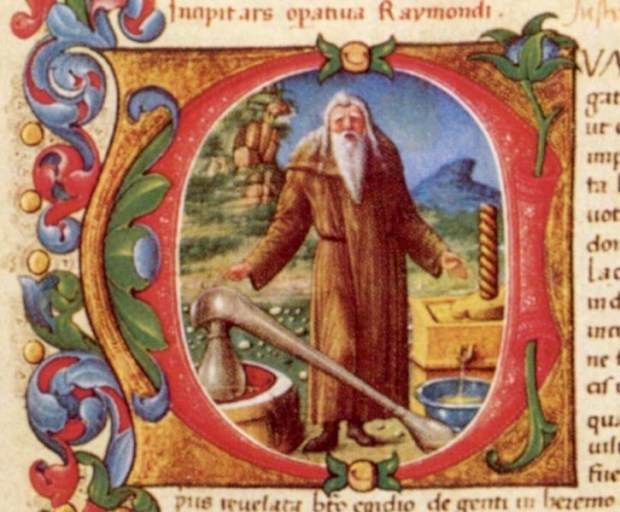
This is an interesting alchemical text, by Melchior Cibinensis, in which an alchemical process is pictured in the form of the Mass. From Theatrum Chemicum Vol III. 1602.

Introitus. Our Lord, fount of goodness, inspirer of the sacred art, from whom all good things come to your faithful, have mercy.

Christe. Christ, Holy one, blessed stone of the art of the science who for the salvation of the world hast inspired the light of the science, for the extirpation of the unbelievers, have mercy.

Kyrie. Our Lord, divine fire, help our hearts, that we may be able, to your praise, to expand the sacraments of the art, have mercy.

Graduale. He descends like rain upon the fleece, and as showers falling gently upon the earth. Allelujah. O blessed creator of the earth, whiter than snow, sweeter than sweetness, fragrant at the bottom of the vessel like balsam. O salutary medicine for men, that cureth every weakness of the body: O sublime fount whence gushes forth truly the true water of life into the garden of thy faithful.

Ave Maria. Hail beautiful lamp of heaven, shining light of the world! Here art thou united with the moon, here is made the band of Mars and the conjunction of Mercury. From these three is born through through the magistery of the art, in the river bed, the strong giant whom a thousand times a thousand seek, when these three shall have dissolved, not into rain water… but into mercurial water, into this our blessed gum which dissolves of itself and is named the Sperm of the Philosophers.

Now he makes haste to bind and betroth himself to the virgin bride, and to get her with child in the bath over a moderate fire. But the Virgin will not become pregnant at once unless she be kissed in repeated embraces. Then she conceives in her body, and thus is begotten the child of good omen, in accordance with the order of nature.

Then will appear in the bottom of the vessel the mighty Ethiopian, burned, calcined, discoloured, altogether dead and lifeless. He asks to be buried, to be sprinkled with his own moisture and slowly calcined till he shall arise in glowing form from the fierce fire …. Behold a wondrous restoration and renewal of the Ethiopian!

Because of the bath of rebirth he takes a new name, which the philosophers call the natural sulphur and their son, this being the stone of the philosophers.

And behold it is one thing, one root, one essence with nothing extraneous added and from which much that was superfluous is taken away by the magistery of the art …. It is the treasure of treasures, the supreme philosophical potion, the divine secret of the ancients.

Blessed is he that finds such thing.

One that has seen this thing writes and speaks openly, and I know that his testimony is true.

Praise be to God for evermore.

What Aloe Vera Does In Your Body: Why Egyptians Called It The Plant Of Immortality

Known to the Egyptians as the plant of immortality and to Native Americans as the wand of heaven, aloe vera comes with a wide array of amazing healing properties — some of which you may already know about. You might even have your own aloe vera plant in your home for those small emergencies like scrapes, cuts, and burns, […]

Source: What Aloe Vera Does In Your Body: Why Egyptians Called It The Plant Of Immortality

Rare Saturn sextile Neptune and objective reality

Tara Greene www.taratarot.com's avatarTara Greene,Tarot,Astrology,Psychic

Saturn is the ruler of reality. Neptune is the ruler of unreality, the multi-dimensional world.  Saturn is in Capricorn in its ruling sign, where it expressed its cold restricting, conservative historical nature the strongest. Saturn is the planet of reality and karma. Saturn rules seniors, times, limitations, senators, history, the architect, structure, tradition, in modern times fathers and the Patriarchy. 

Neptune is also in its modern ruling sign of Pisces where it is also freest to express the intrinsic nature of Pisces, the ephemeral, spiritual, dreamy, creative, chameleon-like, unbounded, imaginative, emotional spiritual and psychically Unified energy. Pisces is the sign of endings, addictions, illusions and projection.

Saturn in Capricorn is sextile to Neptune in Pisces for the last if 3 rare sextiles in 2019. These planets are both in their own home signs and are in expressing their natures to the fullest. This rare aspect is in effect now until…

View original post 606 more words

Chaos inspires the Dancing Star : Full Moon 20°Aries 13th October @21:07UT

Over this rather stimulating Full Aries Moon that mission is multi-layered, multi-dimensional and multi-stranded, with a Grand Cross and Grand Trine in the horoscope. Throughout the three-day Full Moon period (12-13-14th Oct) we would do well to guard against negative emotions such as envy, anger or spite, especially if or when standing up for self and/or others, at the same time providing copious amounts of strength and care, warmth and inspiration – particularly when birthing interstellar moonwalkers.

Source: Chaos inspires the Dancing Star : Full Moon 20°Aries 13th October @21:07UT

THOTH’s PROPHECY read from the Hermetic Texts by Graham Hancock

Graham Hancock is a British author who specializes in theories involving ancient civilizations, Earth changes, stone monuments or megaliths, altered states of consciousness, ancient myths, and astronomical or astrological data from the past. He has become recognized as an unconventional thinker who raises controversial questions about humanity’s past.

Learn more at https://grahamhancock.com/

Cracking Ancient Codes:  Cuneiform Writing – with Irving Finkel

Writing is generally agreed to be among the greatest inventions in human history, perhaps the greatest invention, since it made history possible.

You can read more about Irving’s quest to explore the Noah’s Ark myth in “The Ark Before Noah: Decoding the Story of the Flood”: https://geni.us/zU95bVO or learn more about cuneiform writing in “Cuneiform”: https://geni.us/eMPb

Writing seems to have been invented in the late fourth millennium BC in Mesopotamia in the form of wedge-shaped marks pressed into soft clay with a reed stylus: the script known as cuneiform. Through his work on this ancient language, Irving Finkel, has uncovered amazing secrets from over five thousand years ago, including the story behind Noah’s ark.

Irving Finkel is the curator in charge of cuneiform inscriptions on tablets of clay from ancient Mesopotamia at the British Museum, of which the Middle East Department has the largest collection of any modern museum. This work involves reading and translating all sorts of inscriptions, sometimes working on ancient archives to identify manuscripts that belong together, or even join to one another. He is the author of The Ark Before Noah: Decoding the Story of the Flood.

This talk was filmed in The Royal Institution on 18 January 2019.

The Knot Magic of Isis

Isidora's avatarIsiopolis

Note the knots in the straps of the Goddess' garment as well as the little loop between Her breasts. Note the knots in the straps of the Goddess’ garment as well as the little loop between Her breasts.

Feeling the need for some personal protection these days? I know I am. So this post offers a protection rite from Isis Magic that uses magical knots. The ritual can be used for any protective purpose.

But before we get to the ritual, let’s talk a bit more about Egyptian knot magic in general.

In ancient Egypt, magical knots were used to bind and release, join opposites, and— since a knot secures things—protect.

Knot magic was well known in Egypt from an early period; an inscription in one of the pyramids states that Isis and Nephthys work magic on Osiris “with knotted cords.”

The Book of Coming Forth by Day also gives several examples of the magical power of the knot. In one, knots are tied around the deceased to help her…

View original post 1,137 more words

The origins of the Tarot.

Tara Greene www.taratarot.com's avatarTara Greene,Tarot,Astrology,Psychic

The great Swiss psychologist Carl Jung coined the term synchronicity and he used the Tarot in his psychological research. He also used Astrology and the I Ching as part of his defining what Archetypes and the Collective Unconscious are

Jung said in a short piece reveal the depth of insights that the tarot can bring. I first started reading about Jung in my first-year university way back in the ’70s/ Man and His Symbols. 

This article may not be factually correct though. Tarot cards were first designed as playing cards as a parlour game for the wealthy Italian families in the Renaissance.

It was only much later that Tarot cards became entwined with divination because of one man, Court de Gebelin in a vast treatise he channelled is the best way I can describe it.

“De Gébelin wrote an essay included in his Le Monde primitif, analysé et comparé avec…

View original post 105 more words

Michaelmas 2019: Consecrations of the Lion Skin Belt, Triangle of Art, and Sword

Frater S.C.F.V's avatarLight in Extension: A Magical Journal

By Frater S.C.F.V.

Date: Sunday, September 29, 2019
Sun Phase: Mid-day
Moon Phase: Waxing post New Moon
Mansion of the Moon: Zubana.
Planetary Day: Day of the Sun.
Planetary Hour: Hour of the Sun.
Activities: Solomonic bathing; opening by Bell of Art; greeting spirits of the Four Directions and Heptameron for Sunday; exorcisms of candles, incense, and tools; offerings to the spirits of my spiritual court; Conjuration of Michael; Calling upon all spirits whose names are inscribed on the belt for aid in its empowerment; Consecrations of Belt, Triangle, and Sword; Conversation with Michael; License to Depart; greetings to Quarters; Temple closing.

After a Solomonic bath, I put on my Robe, Rosary, and Bracelet of St. Cyprian and entered the Temple. I did preliminary prayers and exorcised the fire, incense, bread, and water. I then performed offerings of water, bread, incense, and candlefire to God in…

View original post 3,992 more words

Theosophy | Drawing The Larger Circle – 1, by Raghavan Iyer

The 1975 cycle will continue to precipitate momentous choices for individuals and societies. What are the vital elements in this decisive choosing, and what will be the chief consequences? There is in the life of every human being a series of minor choices which add up to a crucial choice, but often it is made with incomplete knowledge of its critical nature. To grow and to age is to recognize with increasing clarity that all events in the past have had their irreversible consequences. Therefore, within any shallow philosophy centered essentially on the physical body and premised upon a single incarnation, a personal sense of futility and fatalism looms large as one comes closer to the moment of death. As with individuals, so with civilizations. Civilizations are apt to conduct the deepest reflection upon their storied past in times of depression, either out of self-indulgent nostalgia or sheer bewilderment at their bygone glory. This has shadowed every great civilization in its hour of decline, and today we are witnessing this in Western Europe and in the nostalgic mood which is intermittent in the United States. Civilizations seek to cling to something of the past, and perceptive chroniclers like Toynbee in England or Jaspers in Switzerland sense that something went wrong as early as before 1914, that the seeds of today’s malaise lay far back in the past. When we look back to that past we surmise that a lot could have been avoided, that there were viable alternatives and missed opportunities. This is the sad state of societies as well as individuals who, because of narrowness of perspective and myopia in relation to the future, impose upon their lives a delusive dependence upon their own edited versions of a truncated past. But whenever human beings are willing to rethink their basic assumptions about themselves, about their shrouded past and about their cloudy future, then they do not need to edit. They do not have to limit unduly the horizon of their gaze.

This is difficult to understand initially. One might think in terms of the extreme example of a person with Promethean foresight who can discern in the cycles of this century long-term factors that go back a thousand years into the past and will go forward a thousand years into the future. In the Victorian Age, T.H. Huxley observed that in the myriad worlds around us there is no reason why there cannot be beings with an intelligence as far beyond our present level as ours is beyond that of the black beetle, and with a control over nature as far beyond our own as ours is beyond that of the snail. He also suggested that even ordinary human beings can look back and forward over a millennium and make broad projections. It is, in principle, possible for there to be beings in the universe who can see all pasts and all futures. The power of choice is partly a function of the scope of perspective. With wider perspectives our choices become more intelligent, but as they become more informed, we readily recognize that there are many factors that are constant. One cannot wish away causes generated over a long cycle. The more clearly a person sees what he cannot alter right now in this incarnation, the more effectively he can use his energies to alter what he can. All this requires a measure of balance, but most human beings are unable to choose wisely by clearly facing the alternatives before them. All too often they vainly hope that by proceeding in one direction, everything else will automatically come to them. Energy cannot move in all directions at once, and though there are many planes of matter, it is always the case that everything adds up in a mathematical universe. One’s capacity to choose is a function of one’s knowledge, not merely of particular causal chains but also of what is at the very core of the phenomenal process of becoming: breathing in and breathing out. Ideally, if one could comprehend the meaning of a single day, one would by analogy be able to understand what is enacted over a lifetime.

It has been taught that for the truly wise, each day is like a new incarnation. In small space they see the subtle motions of unbounded space. In a single moment they can grasp quintessentially the infinite possibilities that are spread out in eternal duration. They can retain in consciousness the freedom that belongs to those who are not rushing to manifest, while displaying a shrewd awareness of what it is possible to manifest with a due respect for the feelings of others, for collective strengths and weaknesses, for the limits and possibilities of the current cycle. Theosophical teaching offers the vast perspective of eighteen million years of human history and also of the sixth sub-race which will emerge far in the future but which must clearly have some relationship to the fifth sub-race – now visibly on the decline – that flowered forth in Europe and partly in America. At this point of time there is, by analogy and correspondence, a critical moment of choice bearing upon the alternatives that confront our intelligence. The ratiocinative mind has become adept, because of modern upbringing and so-called education, because of so much dichotomous thinking since Aristotle, at rationalizing its wants, desires and limitations. Now we find at a global level the logical limit of this rationalizing mind, which insists there is not enough room or food on earth for all human beings on our globe. This no-exit barrier in thinking arises because of assumptions that were too limited from the start. It hinges upon a view of the universe which is incompatible with the vast resources of the creative imagination, with the inventiveness displayed in the last three centuries in building up the structures of applied science and sophisticated civilization. Even this is merely a recent example of the immense resourcefulness of the human race over many millennia. The type of thinking which is inductive, inferential and dichotomous, functioning within the perspective of a closed universe or of a one-life system, has become sterile and has no real answers to the awesome problems of our time.

Hermes, August 1978
Raghavan Iyer

Theosophy | The Crest Jewel – 2, by Raghavan Iyer

   Against this, however, we have the tremendous affirmation through the supreme negation of Sri Shankaracharya.

The individual who knows that at the root is the persisting illusion of separateness, is vaster than the universe, and can dissolve it instantly by breaking down at will the baseless, insubstantial fabric of his imagination. Anyone who can do that has begun to wake up. There are people who will not wake up voluntarily because they repeatedly fell asleep during eighteen million years and are now frightened to settle accounts. They are themselves negated by suffering which comes as healing compassion, and are negated by others in the course of intolerable inhuman encounter. Self-negation is shown by the timeless religion of responsibility and the hidden science of divine wisdom. The invisible sun in every man as the Atman, the spectator, ever radiates endless energy for the sake of all. According to this teaching, darkness is prior to what we call light; glamour or unwisdom is beginningless. It is what the ancients called ChaosGaia, or Mahamaya. There is a chaos prior to any cosmos. There are many myriads of systems, galaxies and galactic clusters in the vast spaces of the heavens, but if there were no primordial chaos one would be forever trapped within the same universe. Before Adam was Chaos, the primordial matter, in which is hidden the light that is the soundless sound. In the beginning was the Word. Primordial chaos is necessary for the universe, but whether we think it necessary or not, we have no choice. We are caught. We can get out, because we have in us the light that was hidden in the darkness, which lighteth up every man who comes into the world.

The Crest Jewel of Wisdom speaks only to those who are prepared to negate the world of appearances:

   Gaining at length human life, hard to win, and manhood, and an understanding of the revealed teachings, he who strives not for liberation in the Divine Self, deluded in heart, self-destroying, slays himself through grasping at the unreal. who, then, is the very self of folly but he who, deluded, follows selfish purposes, after he had gained a human body and manhood hard to win? Even though they recite the scriptures, and sacrifice to the gods, and fulfill all works, and worship the divinities – without awakening to the unity of the Divine Self, liberation is not attained even in a hundred aeons.

   From the standpoint of the sage, the innumerable ways in which human beings are enmeshed in the Mahamaya are not very interesting. The sage can recognize anyone who is fully awake behind a semi-sleepy projection. Those who really want to emerge from behind the false personal mask will receive what they deserve in mathematically exact proportion. This is a truth about consciousness on all planes. One must deserve to go beyond all the external forms and modes and, through the eternal soul-memory now awakened of the soundless sound behind the great vibrations of the universe, to light up in the lower mind a self-conscious reflection of the invisible sun that overbroods the egg.

Albert Einstein said there are no hitching posts in the universe. There are no boundaries except arbitrary and conventional ones assigned by human beings who happen to think that they occupy a fixed point of space and time, when in fact space is curved and time is relative. They do not understand the inner meaning of spatial coordinates and of clocktime. Although there are no hitching posts, there are innumerable hooking points. When people really begin to enjoy the thought that at any point of space-time they could break out of the boundedness of the universe, they can experience through self-knowledge what they have forgotten. The ancients taught that God is a circle with its centre everywhere and circumference nowhere. Human beings can find in the inmost depths of abstract meditation an active centre of intense, motionless, joyous consciousness. Abiding in universal welfare and doing nothing, as beings of light they enjoy pure unmoving spiritual will in, through and independently of, all material vestures. Even if we somewhat understand all of this, it is still very difficult to light the lamp of discernment. The moment we think, “Let me do this,” “May I be that,” we only create karma and imprison ourselves. But the moment we say, “Let me begin,” and also recognize that there is a chaos we cannot explain and that there are no hitching posts, then we begin like true pilgrims to walk along the Path. It leads to invisible summits lost in glorious Nirvanic light which may be glimpsed from foothills and mountains arduously climbed in cheerful enjoyment, although one is aware of the many pitfalls on the way. The only hooking points are found within. They form the seven-knotted bamboo staff of the ascetic. If you were a montagnard you would cherish the serene strength of the individual and know what the communards forget, that communities are doomed to fail from the start when men are afraid to be alone. At the same time, if a human being in distress came for help, the montagnard will take care of him and then return to solitude.

The soul is ensnared through the power of misidentification in the chaos of primordial matter. If we enjoy narcissistically the illusions of the ever-changing reflective soul, then we forget the light of divine discernment, the Sleeping Beauty in the castle. She can only be awakened by Prince Charming, the androgynous manas, the power of noetic thought, ideation and imagination. Real thinking has a self-sustaining quality determined by the grasp, the vision, the scope and the strength of the universal ideas that provide mental nourishment. When one truly begins to walk the inner Path, one does not need any reference point in external space and time, and can see the moment of birth as if it were this morning’s dawn and can see the moment of death as if it were this evening’s twilight. Thousands of previous lives seem like twinkling stars in the sky.

The real Gurus who truly know teach just by being themselves. They are self-existing, self-manifesting embodiments of the wisdom of compassion, crowned with the Crest Jewel of pure insight. Their very existence is testimony. Shankara spoke to disciples who were already free from the delusion of the personal “I” but who were stuck in the illusion of the individual “I.” His teaching is not about the hereafter, not about the now and then, not about the always and everywhere, but about That. The supreme affirmation is TAT TVAM ASI – That Thou Art. That is the oldest teaching which Shankara explained by reference to reason, to experience, to states of consciousness, to vestures of matter in the five-fold classification, and also by references to madmen, yogis and free men. Universal self-awareness is the potential privilege and birthright of every human being, but no one can attain to it except by fulfilling the qualifications, embodying the conditions that approximate the posture and the position of a true learner.

The Crest Jewel could be in your hands. Use it, Shankara says, because by use you make it sufficiently your own to recognize that the greatest lies are “I” and “thou.” All amounts to an “it” and “it” equals That. That equals zero. Your sphere becomes luminous when you wholly adopt the standpoint of the Logos in the cosmos, the God in man, and then enjoy the universe through every pair of eyes. Heal yourself, and others through yourself, by luminous thoughts and adamantine compassion.

Hermes, August 1977
Raghavan Iyer

Theosophy | The Crest Jewel – 1, by Raghavan Iyer

To affirm is to deny. It is obvious that we do this always, but we periodically forget because of narrowing our focus to what we affirm in the language of perceived objects and in terms of the illusive independent existence of a particular set of subjects who see those objects. We fashion a pseudo-system. The universe is boundless, birthless and partless. Both within and beyond visible space and in eternal motion within endless duration, going through apparent vicissitudes like the waxing and waning of the moon or the rise and fall of the tides, through cyclical and cosmically precise changes, human beings have the privilege of exercising the deific power of creative imagination. At the highest level conceivable to a finite mind caught up within the prison of the personality, imagination is ceaselessly enjoying the universe, for example, the play of light and shade upon the green leaves of summer. If we say that there is also continuous negation, we are correct because chlorophyll is gradually negated, and thereby the leaves turn yellow. Thus we know that spring and summer must be followed by autumn. Human beings, however, sometimes forsake these primal facts because they prefer convenient fictions which involve false affirmations.

There is the false affirmation that a whole lot of bodies are in existence today. Do the bodies say so, and if so, how do they know? Apparently they are supposed to have minds, but what is a mind and what is the evidence that bodies have minds? We entertain opinions about these matters, but are opinions the same as ideas and are ideas the efflux of fluctuating moods? Is that the same as thinking, the activity of a Thoreau in the woods and an Emerson in his study? Questions of this kind are deeply troublesome and difficult. Therefore, Sri Shankaracharya states that before you can begin to deserve the Crest Jewel, which is in the crest above the forehead of the human body, the regal gem of pure discernment and spiritual wakefulness, and before you can benefit by it in the three states of consciousness – waking, dreaming and dreamlessness – you must recognize that at the root you have made a false identification. Without knowing it, you have engaged in falsehoods to which you were invulnerable before you learned to walk, before you learned to identify with the body that stumbles and before you learned to talk, to repeat sounds associated by other people with sense-objects. You started to slip into a stupor, and began to live an increasingly unreal existence, mostly reinforcing your sense of unreality but insisting it was the only reality – thereby showing that it was not real to you – against other people’s conceptions of reality. Therefore, that compassionate teacher Sri Shankaracharya states that we must get to the root and core of illusion.

What is the root? We are told that the Crest Jewel is that which causes all our problems but which also is their cure. The Crest Jewel represents the fundamental affirmation that two habitual negatives make a higher-order affirmation. On the one hand, there is a false negation in the notion of reality attached to the apparent freedom of all seemingly separate subjects, and the resulting glamour of the false shadow-play created by supposedly separate selves. On the other hand, there is also the notion of a plurality of separate objects, constituting a false negation of the one homogeneous substance or root-matter which is of the quality of pure primordial light and remains undivided and untransformed. All the various collocations of atoms, in seemingly fortuitous movement, whirl and revolve around invisible centres which are seemingly separate points in one homogeneous universal region, giving rise to the falsehood that there are separate objects. These two false negations have been marked out in the great teaching of the Guru.

Sri Shankara begins the text by saying there are three things extremely difficult to have. One is manhood. The second is the longing for liberation. The third is access to Masters. Without the second the third is impossible and the first is useless. If one wants access to Masters, one has to long sufficiently for liberation. One has to want sufficiently, with the whole of one’s being, to become free from the massive burden of inane repetitions that we call life and the impossibility of making it meaningful with the help of borrowed, lifeless and bloodless categories that wear masks and don caps and engage in a perpetual pantomime play called living. Shankara says that there is nothing new under the sun, that it is all the same old story. One might say it began with thinking man, but it really began when man stopped thinking. As a result, a huge rigamarole emerged which men then packaged and called recorded history.

History represents in recent centuries a harsh but also a necessary negation of the absurdities, errors and illusions of the past. When that happens with so many minds, when so many wills are blunted, hearts hurt and human beings lamed and crippled, suddenly we know that springtime is near. The Golden Age is next door. Suddenly we realize what we always might have known – that there are children in this world, that other people exist, that while ten men are gloomy there are another hundred who are happy. Those who are engrossed in being happy do not go around certifying their happiness to the gloomy. The gloomy want certainty, but there is no certitude to be attained anywhere in the realm of differentiation. This is a philosophical truth which everyone knew as a little child. The intuitive negation of childhood, a beautiful sharing with no “mine” and “thine,” was followed by cruel adolescent affirmations which are intensely ugly especially to others and sometimes to oneself. Then came the prolonged adolescence of those who are petrified that they might actually have to assume minimal responsibilities. But when men will not negate, Nature negates. Nature’s power of negation is vaster than the collective power of negation of history, and both seem more awesome and decisive than the capacity of an individual to negate.

Hermes, August 1977
Raghavan Iyer