The partially restored Temple of Hathor on neo-Philae (Agilkia) island
On the island of Philae, east of the Temple of Isis, stands a smaller temple to Hathor. The Hathor temple was restored, at least in part, in 2012 and reopened to the public.(Both the Isis and Hathor temples, as well as the other temples of ancient Philae are now on theEgyptian island of Agilkia, aka Agilika, where they were moved prior to the building of the Aswan Dam, which created Lake Nasser and flooded Philae.)
A lovely Hathor head, from a processional boat, now in the British Museum
Compared to the Temple of Isis on Agilkia, the Temple of Hathor is quite small. Reciprocally and interestingly, at Denderah, Hathor’s great Ptolemaic temple complex, there is a similar small Temple of Isis.Clearly, there is a relationship between these two Great Goddesses; so much so that it was required that each Goddess…
It would serve us well to be aware of this law and learn to employ it to our benefit.
An esoteric system is a way of guiding man to a right relationship to himself, others, and the Infinite Universe, of which he is a part. After we’ve accurately located ourselves in the big scheme of things we are ready to move forward to what we came here to do.
You were created to develop beyond what life offers you.
Authorized by the Philosophical Research Society, this video book was produced under license for distribution. Financial proceeds from this video are shared directly with PRS to support their work dedicated to the truth seekers of all time. For more info: http://www.prs.org
Book Introduction:
The Initiates of the Flame is a little essay on the mystery of fire. To all ancient peoples fire was a symbol of the divine One dwelling in the innermost parts of all things. Robert Fludd, a Rosicrucian mystic, writing in the seventeenth century, declared that the fire of the philosophers was divided into three parts: first, a visible fire which is the source of physical light and heat; second, an invisible, or astral fire, which enlightens and warms the soul; third, a spiritual, or divine fire which in the universe is known as God and in man as spirit.
The Initiates who took their oaths in the presence of the Flame renounced the lesser concerns of ordinary life and, freed from the attachments of this material sphere, these purified souls became custodians of that symbolic Flame of wisdom which is the true Light of the world. This Light is a manifestation of the one Universal Life, that active agent whose impulses are the cause of all sidereal phenomena. Where in antiquity this flame of light, this spirit-fire, was the object of a universal adoration and was worshipped as the very presence of God Himself, it now lies buried beneath the ruins of man’s fallen temple. Obscured by the paramount interests of the flesh, it emits but the faintest gleam in this non-philosophic age.
– Bookcase 00:43
– Preface 03:23
– Introduction 13:01
– Foreward 14:20
– The Fire Upon the Altar 25:49
– The Sacred City of Shamballa 37:56
– The Mystery of the Alchemist 48:49
– The Egyptian Initiate 58:50
– The Ark of the Covenant 01:08:30
– Knights of the Holy Grail 01:19:38
– The Mystery of the Pyramid
Credits: Text – Manly P. Hall
Audio Narration – Adam Hanin
Visual Photography and Editing – Brian Dehler
Produced by Cine-O-Matic, Inc. dba Master Key Society on location in Minneapolis, Minnesota.
Isis, Mistress of Wind Deep breath. In and out. I don’t know about where you are, but here in the Pacific Northwest, it is…just…beginning to feel like spring. Finally, finally. So […]
In exploring the deeper meanings of this, we all go through mini deaths (changes) after which we are reborn, in our lives. We can choose to suffer the material losses that inevitably come from such processes, or we can keep focused on the Divine, higher aspect of ourselves, or that which we call God, and maintain our inner peace, despite the challenges from the material world around us. In the end it is up to each of us to choose our state of mind in any given situation, and learn to be less reactive to the external.
Have a great weekend everyone!
The Hermetic Tarot by Godfrey Dowson was one of my earliest deck reviews on this blog, back in 2013. And it wasn’t even really a deck review. I don’t know what that was other than a lit […]
But how do we know that Isis is? How do we know that She’s “real”? Must we simply have faith? Do we just choose to “believe in” Her? Can we prove Her is-ness?
The term ‘devotion’ remains one of the more beautiful words in the English language, its suggestive and sacred etymology harking back to the taking of a vow. At the popular level this may be seen in frenzied devotion to a secular cause such as that of a political party. There can be total commitment without any streak of scepticism. There is neither wavering nor weakening of such commitment, but it is focussed upon an abstract idea attached to some tangible form. Few human beings, however, can contain the vast energy of unconditional commitment within the vessel of any external organization. Attempts to do so in messianic politics merely re-enact what happened in earlier history in relation to dogmatic religion. Owing to the limitations of sectarian ideologies and organizational structures, and especially due to the difficulty of distinguishing between the impersonal immortal individuality and the changing personal mask, ardent votaries fall prey to self-righteousness, an outburst of exaggerated emotion mistaken for deep feeling. No wonder Socrates challenged Euthyphro’s claims to knowledge of piety and holiness – the relation between gods and humans – the most exalted, elusive and mysterious of subjects, wherein one’s credential is the uncommon recognition that one does not really know. What was true in his day is even more evident in our own time. Many people are running away from past symbols of piety, from various forms of totalism and tokenism in churches, and from every kind of trivialized, degraded and vulgarized ritual and sacrament. But in rushing to the opposite extreme, pretending to be nihilists, they are often trapped in the tragic predicament of having no faith in themselves, not even enough to carry on from day to day. Muddled thinking and negative emotions reinforce each other, corrupting the psyche.
Devotion is much more than wanting to be devoted. It is far more than having a euphoric feeling, however holy this may seem at the time. Bhakti is a different order of consciousness from that involved in the expenditure of emotion. Its sovereign power can only flow freely from the ātman, the perpetual motion of transcendental light that shines upon every human soul. It is invoked through an inward prostration of the mind within the sanctuary of the heart towards the Light of the Logos. To ask how one can prostrate before that which one does not comprehend is to ask how to be humble before the great mystery of Nature, the vastitude of life or the saga of humanity. To be humble in this sense is not merely to say to oneself that one does not know, but also means that one can thrill with the thought of the mysterium tremendum. Even though one does not know its destiny or destination, one may feel reverence for the whole of humanity; though one cannot fathom the breadth or depth of Nature, one rejoices in one’s kinship with Nature; though one has no final answer to the basic questions of life, one remains open towards the life process. Such simple devotion generates the proper mental posture, which Krishna depicts in the Bhagavad Gītā. It is neither too high nor too low, neither so abject that one cannot generate any enthusiasm nor so lofty that one is isolated within an ivory tower of self-delusion.
True bhakti comes to birth through the firm recognition of the unity of all life and the universality of the highest ideals and ideas conceived, transcending the human capacity to formulate and transmit them. When devotion continues undiminished through the trials that it necessarily brings, just as light increases the shadow – it renews itself. It must be put to the test, and it surely will be. One has to encounter the abyss; one has to be tried and tempted. Jesus had three great temptations, of which a remarkably perceptive account is given by Dostoievsky in the story of the Grand Inquisitor. All Initiates go through trials, and they do this deliberately because, although those who are perfected before birth really need no tests, they compassionately re-enact the archetypal story for the sake of the human race. Any person can, from small beginnings, tap the immense potential power in a vow to give birth to lasting devotion. This cannot be done even with an authentic start and a self-sustaining rhythm unless it is fortified by the fearlessness and courage that are rooted in the invulnerable truth of one’s devotion.
Devotion is rather like the harnessing of electrical energy. In order to be properly channelled to some end, the resistance or responsiveness of the conductor is crucial. Just as a river cannot rise above its source, the power of devotion is as great as the heights upon which it is focussed. Devotion is also affected by the clarity of the mental picture of the ideal, even though that evolving picture may fall short of the ideal, which, when fully realized, becomes so all-encompassing that it is beyond the possibility of formulation in words or any expression in particular modes. As Shelley knew,
Rome’s azure sky,
Flowers, ruins, statues, music, words, are weak
The glory they transfuse with fitting truth to speak.
Devotion fundamentally alters the relation and ratio between the unmanifest and the manifest: what is not said is more important than what is said; what is not shown or seen is more suggestive than what is shown and seen. Francis Thompson exclaimed:
O world invisible, we view thee,
O world intangible, we touch thee,
O world unknowable, we know thee,
Inapprehensible, we clutch thee!
This celebrates the passage from the region of māyā to the realm of sat. One of the oldest invocations in the Upanishads is:
Lead me from the unreal to the real!
Lead me from darkness to light!
Lead me from death to immortality!
Lord Krishna came at a time when he knew that humanity could not go back and restore the child-state of antiquity. He also knew that human beings in kali yuga were going to be enormously vulnerable to self-righteous merchants of the moral language who narrow and limit conceptions of duty and morality by institutionalizing them, thereby binding human beings through fear to mere externalities of conduct. Therefore an alternative had to be shown. Being magnificently generous, Krishna speaks at the widest cosmic level of how the Logos functions out of only a small portion of itself and yet remains totally uninvolved. It is like the boundless ocean on the surface of which there are many ships, and in which there are many aquatic creatures, though the depths of that boundless ocean remain still. The whole world may be seen from the standpoint of the Logos, which is essentially incapable of incarnating and manifesting within the limitations of differentiated matter. The Logos can only overbrood. This overbrooding is joyous, producing myriad kaleidoscopic reflections within which various creatures get engaged, act and become caught.
For the sake of all beings enmeshed in this māyā, Krishna incarnates the immortal standpoint and sovereign perspective of divine activity, which is all sacrifice. That is the critical relationship between the unmanifest and the manifest, for if the unmanifest can never be fully manifested, how can the manifest ever be linked to the unmanifest? There is always in everything that is manifest, behind the form, behind the façade, a deathless core of the very same nature and essence as that which is unmanifest. Where a human being can, by the power of thought, bring this to the centre of individual consciousness, it is possible to consecrate. It is possible to act as if each day corresponds to the Day of an entire universe, or to a lifetime. It is possible to act in each relationship as if it were a supreme expression of the very highest sacrificial relationships between teacher and pupil or mother and child. It is possible to act in a small space as if there were the possibility of an architecture and a rearrangement with analogues to the grand arrangements of solar systems and galaxies.
This is the great gift of creative, constructive imagination without illusion. What makes it Wisdom-Sacrifice is that one trains personal consciousness – the chattering mind, the divided and wandering heart, the restless hands. One centres all of these energies around a single pivotal ideal, having no expectations. An ordinary human being with no expectations whatsoever would simply die, because, typically, a person lives on the basis of some confused and vague expectations in regard to tomorrow, next year and the future. Deny a human being all expectations, all claims, and personal consciousness usually will collapse. Of course this must not be done from the outside. The shock would be too great. But human beings can administer the medicine to themselves progressively and gradually. Merely look at the years already lived and see how many expectations have been built up. Either you dare not look back at them and how they were falsified – which means there is a cowardliness, a lie in your very soul – or you have replaced them so fast by other expectations that you are caught in a web of externalizing expectations. To initiate a breakthrough you can earnestly think, “Supposing I have only one day more to live; supposing everything that I have is taken away from me; supposing I can rely on nothing and expect nothing. What would be the meaning of joy, the dignity of grief?”
At that point, if a person thinks of Lord Krishna, of the unthanked mahātmas and adepts, and thinks of them not as distant from the human scene but as the ever-present causal force behind the shadow-play of history, then he finds an incredible strength in that thought, a strength in consciousness, but without a solidification of the object of consciousness. One can act with a freedom that is ultimately rooted in total actionlessness, like the supreme light of the ātman which is in eternal motion but which is not involved in what we call motion, refracted by differentiated matter. At the same time, one can live as if each act is supremely important, sublimely sacred. The person who really thinks this out trains himself in this mode of thinking, feeling, breathing, acting and living, and can in time gain a new lightness and economy, a fresh conception of real necessity, but above all a fundamental conception of identity merely as one of manifold unseen and unknown sacrificial instruments of the one Logos.
Robert Fludd (1574-1637) was a English philosopher, theologian, and physician who is best known for his contributions to the field of Hermeticism, a spiritual and philosophical tradition.
Fludd’s philosophy was deeply influenced by the idea of the universe as a unified whole, with all things interconnected and interdependent. He believed that the universe was created by God and that it reflected the divine order and harmony that existed in the mind of God.
Fludd also believed in the importance of correspondences, which are connections between different aspects of the universe that reflect the underlying unity of all things. He saw these correspondences as a key to understanding the mysteries of the universe and unlocking the secrets of nature.
In addition to his interest in Hermeticism, Fludd was also interested in the study of alchemy and the occult. He believed that these disciplines offered a way of understanding the hidden dimensions of reality and accessing the divine knowledge that was concealed within them.
Fludd’s philosophy had a significant impact on the development of Renaissance thought, particularly in the areas of alchemy, mysticism, and the occult. His ideas about the unity of the universe and the importance of correspondences would go on to influence many other philosophers and thinkers in the centuries that followed.
Overall, Fludd’s philosophy emphasized the interconnectedness of all things and the importance of understanding the hidden dimensions of reality. His ideas about the unity of the universe and the divine order that underlies it continue to inspire and challenge thinkers to this day.
“For in the world is nothing great, but Man; in man is nothing great, but Mind.”
“The whole world is a living mirror of the Divine unity and is full of divine correspondences.”
“The wise man will seek within himself for the mysterious cause of things, and will not rest content with superficial explanations.”
“Nature is the living garment of God.”
“The universe is one vast living organism, animated by the divine breath and permeated by the divine light.”
These quotes illustrate some of the key themes in Fludd’s philosophy, including his emphasis on the interconnectedness of all things, the importance of seeking knowledge from within oneself, and his belief in the divine nature of the universe.
You would be amazed how often I am asked this question. Which technique is the most powerful? Which angel is more powerful? Can we create Talismans more powerful than those in the Key of Solomon? Which material for talismans is the most powerful? Even, which Psalm is the most powerful? And, every single time, my answer begins with the same words:
It’s not about “power.”
Now, to be clear, I’m not suggesting the concept of power has no relevance in magick! Or, to be honest, I think a better word would be “effectiveness” instead of “power.” For example, one can create perfectly workable talismans by observing only the Planetary day and hour. But a more effective technique is to observe a full astrological election. The latter could be called “more powerful”.
Another example might be the Angelical (often mis-termed “Enochian”) language, which I have found exceedingly effective in my angelic…
Remove and clear all negativity in and around you! Release blockages, dissolve and cleanse toxins and infections and let pure and positive energy flow into your whole being. This music for meditation and/or sleep in the healing Solfeggio frequency of 741Hz is here for you, to lovingly support you in your spiritual and emotional detox and to help you live a conscious, healthy and fulfilling lifestyle.
Solfeggio frequencies form part of an ancient scale that was rediscovered in the early 70’s. They are a tone sequence of special tonal frequencies. Originally used in Gregorian chants for centuries, they recently were brought to everybody’s attention for their healing powers. The music in this video was composed in the seventh tone of the modern Solfeggio frequency scale: The tone “Sol” at 741Hz.
This tone is known to resonate particularly well with the cells and organs of our body and help remove toxins and infections. It promotes a healthier and more stable life. Spiritually, emotionally and physically. The frequency of 741 Hz also helps us to liberate ourselves from negative energy, as well as from all emotional restrictions, negative influence and blockages that are associated with. It assists in problem solving, especially problems relating to our ability to express ourselves freely and openly.
For twenty years, photographer Shannon Taggart has been taking pictures of the world’s largest Spiritualist community in Lily Dale, New York – and other smaller communities around the world.
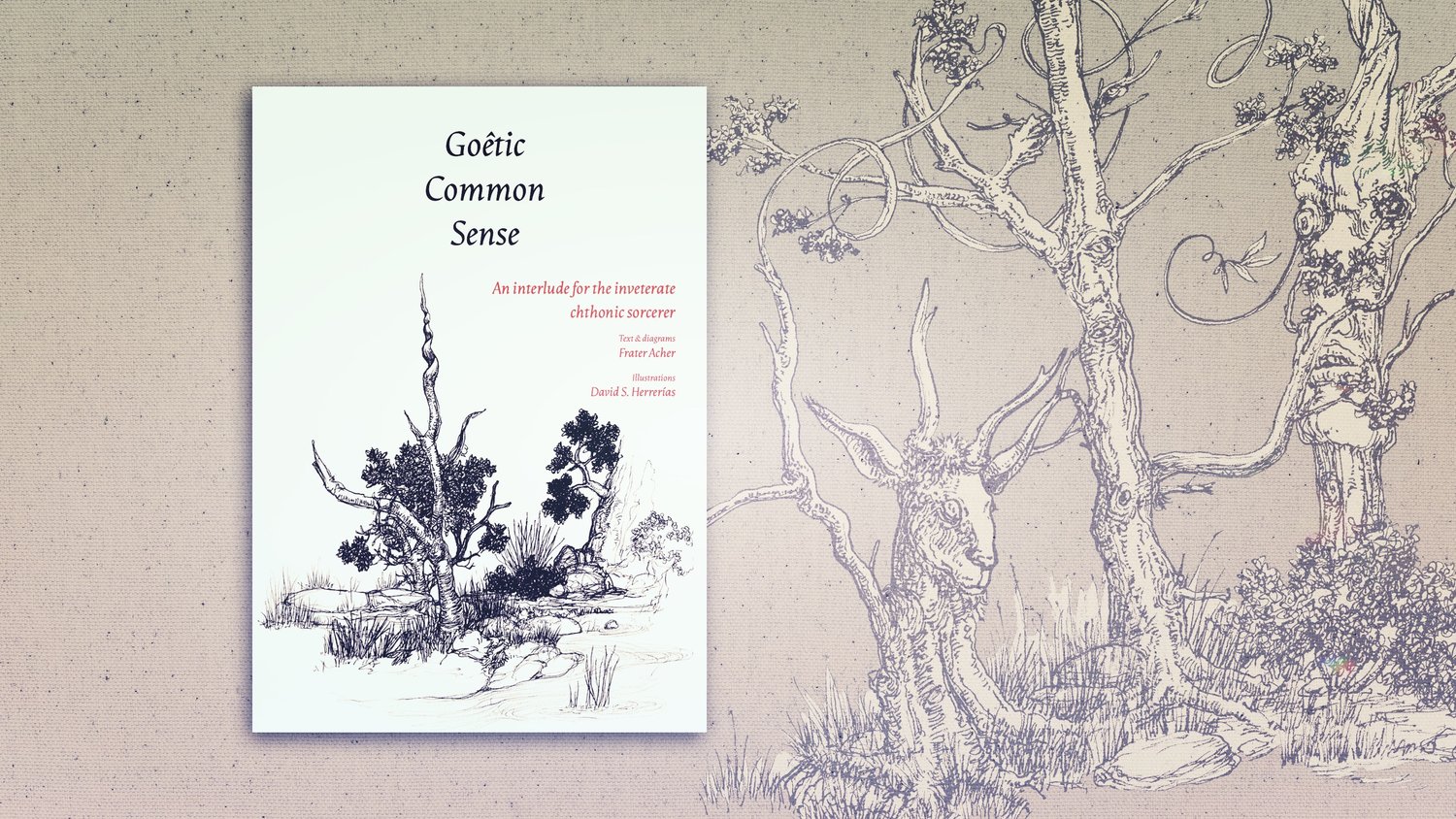
In this comprehensive essay I am exploring an inside view into the ancient figure of the goês: What does it mean to do spirit-work according to genuine goêteia? Which patterns of practice as well as social positioning do we observe from the time of the Ancient Greek to modern practitioners of this p[…]




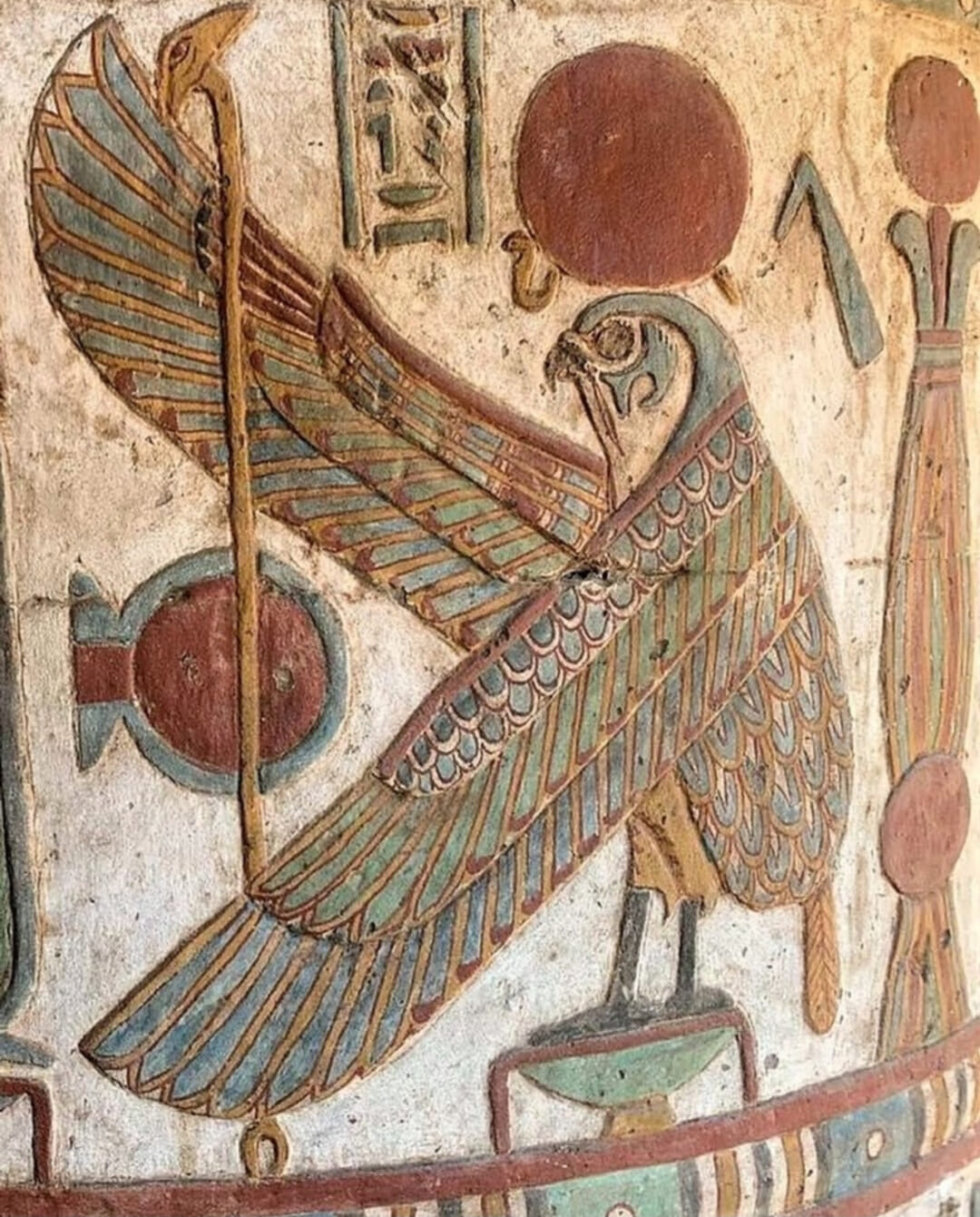




 Grand Temple of Horus Behdety