A traditional Temple Blend incense is not a single historical formula, but rather a class of resin-based incenses intended to evoke the atmosphere of sacred temples, churches, and mystery schools. Across the Western Mystery Tradition—including Rosicrucian, Hermetic, Golden Dawn, and ceremonial magical practice—the most common foundation consists of frankincense, myrrh, and benzoin, with additional resins added to deepen, brighten, or sweeten the fragrance.
A Classic Temple Blend
This recipe burns well on charcoal and produces a rich, lingering aroma.
Ingredients (by weight)
4 parts Frankincense (Olibanum)
2 parts Myrrh
2 parts Benzoin (Siam or Sumatra)
1 part Copal (gold or white)
½ part Dragon’s Blood
¼ part Mastic (optional, for brightness)
Optional additions
A few dried rose petals (Rosicrucian symbolism)
A pinch of powdered sandalwood
Small amount of powdered cedar
One or two crushed cloves (very sparingly)
Tiny amount of cinnamon chips
Avoid adding too many herbs. Temple incense is traditionally resin-dominant.
Equipment
Mortar and pestle
Small glass bowl
Kitchen scale (preferred)
Fine mesh sieve (optional)
Airtight glass jar
Charcoal tablets and censer for burning
Step 1 – Freeze the Resins
Place the resins in the freezer for 30–60 minutes.
Cold resin shatters instead of becoming gummy, making it much easier to grind.
Step 2 – Grind Separately
Each resin has a different hardness.
Grind:
Frankincense first
Myrrh second
Benzoin separately
Copal separately
Dragon’s Blood last
Do not worry if some pieces remain coarse.
Step 3 – Blend
Combine all powders in a glass bowl.
Mix thoroughly with a wooden spoon or gloved hands.
If using powdered sandalwood or cedar, add them now.
Step 4 – Cure
Seal in a glass jar.
Allow the incense to rest:
minimum: 2 weeks
ideal: 1 month
exceptional: 3 months
As with wine, the fragrance becomes smoother as the volatile oils mingle.
Step 5 – Burn
Light a charcoal tablet until fully ignited.
Wait until it develops a gray ash coating.
Place only a pinch of incense on the charcoal.
Too much resin at once will melt and produce excessive smoke.
A Rosicrucian Temple Blend
For meditation in a Rosicrucian setting:
5 parts Frankincense
2 parts Benzoin
2 parts Myrrh
1 part Mastic
½ part Rose petals
¼ part Orris Root
This blend is bright, uplifting, and well suited for contemplative work centered on the symbolism of the Rose Cross.
A Golden Dawn Blend
Designed for ceremonial operations.
4 parts Frankincense
2 parts Myrrh
2 parts Benzoin
1 part Dragon’s Blood
1 part Copal
Pinch of Storax
This produces a heavier, more dramatic fragrance appropriate for ritual work.
Planetary Temple Blend
Excellent for general planetary invocations.
Frankincense — Solar
Myrrh — Lunar
Benzoin — Mercury
Copal — Jupiter
Dragon’s Blood — Mars
Mastic — Air and purification
The resulting aroma is balanced without strongly emphasizing one planetary current.
Consecrating the Blend
Many ceremonial traditions prepare incense with mindful intention rather than as an ordinary craft project.
A simple approach is to:
Work in a clean, quiet space.
Grind each resin with deliberate attention.
As each ingredient is added, reflect on its symbolic qualities—for example, frankincense for aspiration, myrrh for sacrifice and transformation, benzoin for harmony, copal for purification, and dragon’s blood for vitality and protection.
Once blended, allow the incense to mature undisturbed before its first ceremonial use.
Some practitioners reserve a dedicated jar for temple incense and prepare fresh batches seasonally or before major observances.
Storage
Keep resin incense:
in amber glass jars
away from sunlight
cool and dry
tightly sealed
Properly stored, resin incense can retain its fragrance for many years, and many practitioners find that a well-aged blend develops a smoother, more integrated aroma over time.
For a Rosicrucian Temple working, this classic formula is an excellent starting point:
5 parts Frankincense
2 parts Benzoin
2 parts Myrrh
1 part Mastic
½ part Copal
½ part dried red rose petals
¼ part Orris root powder
The result is bright enough for meditation, warm enough for ritual, and sufficiently balanced for regular temple use throughout the liturgical year.
Officers, initiates, companions, and honored guests:
Tonight we turn our attention toward Lammas, the festival of the First Harvest.
In the agricultural calendar, Lammas marks the season in which the first grain is gathered and the first bread of the new harvest is prepared. Within modern Pagan observance, it stands at the beginning of the harvest cycle and is commonly celebrated around the first day of August.
For the esoteric student, however, Lammas is more than a seasonal festival.
It is a natural revelation of the Hermetic process.
It illustrates the descent of spiritual force into matter, the maturation of potential through elemental operation, the necessity of sacrifice, and the transmutation of individual attainment into service.
Lammas may therefore be studied as a seasonal emblem of the Great Work.
I. The Seasonal Threshold
Lammas occurs after the summer solstice.
At the solstice, the solar power has reached its greatest visible extension. The days are longest, vegetation flourishes, and the outward current of life appears triumphant.
Yet the solstice also marks the beginning of the Sun’s decline.
After the longest day, the hours of light gradually diminish.
By Lammas, the solar force is still strong, but its direction has changed. The power that once drove expansion is now becoming concentrated within the harvest.
The light that filled the sky has entered the grain.
This is the first key to understanding Lammas esoterically:
Energy that has completed its outward expansion begins to consolidate into form.
The spiritual life follows a similar rhythm.
There are seasons of aspiration, study, invocation, growth, and expansion. There must also be seasons of consolidation, embodiment, evaluation, and harvest.
Without consolidation, inspiration remains diffuse.
Without embodiment, knowledge remains theoretical.
Without harvest, growth never becomes nourishment.
Lammas therefore announces a turning from expansion toward integration.
II. The Grain as an Initiatory Symbol
Consider the life of the grain.
The seed begins as a compact vessel containing hidden potential.
Nothing in its outward appearance reveals the full pattern that it carries. Yet within it exists the power to become root, stalk, leaf, and ripened grain.
The seed enters the Earth.
There, in darkness, it breaks open.
Its original form is destroyed, but its essential life is liberated.
The root descends while the shoot rises.
The seed therefore moves in two directions simultaneously: downward into matter and upward toward light.
This is a fitting image of initiation.
The aspirant cannot ascend authentically without also descending into the unexamined depths of the personality.
One must confront the concealed roots of desire, fear, memory, and conditioning while also reaching toward the higher consciousness.
The spiritual path is not a flight upward alone.
It is the establishment of a living axis between the heights and the depths.
The grain expresses this axis perfectly.
Its roots enter the darkness of Malkuth.
Its stalk rises toward the Sun.
Its golden crown receives and concentrates the solar fire.
III. The Elemental Operation
The life of the grain also reveals the cooperation of the four classical Elements.
Earth provides the field, the mineral substance, the body, and the conditions of stability.
Water awakens the seed, dissolves its rigidity, and carries nourishment through the plant.
Air enables respiration, movement, exchange, and growth.
Fire, present through the Sun, provides warmth, vitality, maturation, and ripening.
Yet the four Elements do not operate as a random collection of forces.
They are coordinated by a fifth principle.
This principle may be called Spirit, Quintessence, the hidden life, or the directing intelligence within nature.
In Golden Dawn symbolism, Spirit equilibrates and governs the Elements.
Without balance, Fire would consume.
Water would dissolve.
Air would disperse.
Earth would become inert.
Through the operation of Spirit, the Elements become a temple rather than a conflict.
The grain is therefore a living pentagram.
The loaf of Lammas makes this symbolism even more explicit.
Flour represents Earth.
Water binds the flour into one body.
Air enters the dough and raises it.
Fire fixes and transforms the mixture.
Spirit is the unseen principle that gives meaning to the entire operation.
Bread becomes the Pentagram made visible in substance.
IV. Solve et Coagula
The alchemical formula most clearly revealed through Lammas is Solve et Coagula: dissolve and coagulate.
The seed must dissolve its former condition before the plant can emerge.
The grain must be separated from the stalk.
The husk must be broken.
The grain must be ground into flour.
Its fixed structure must be reduced.
Yet dissolution is not the final purpose.
The flour is joined with water.
Air is introduced.
The mixture is kneaded into a new body.
Fire fixes the new form.
The result is bread.
The work therefore proceeds through a cycle:
The old form is dissolved.
The hidden essence is released.
The components are purified and joined.
A new form is established.
This is the formula of psychological and spiritual transformation.
The unrefined personality cannot simply be decorated with spiritual symbols.
Its patterns must be examined and, where necessary, dissolved.
Unconscious motives must be revealed.
Contradictions must be separated.
The faculties must be purified and reordered.
Only then can a more integrated spiritual identity be established.
The grain does not become bread by remaining grain.
The aspirant does not become an initiate by clinging unchanged to every habit of the former life.
V. The Alchemical Stages of the Harvest
The cycle of grain may also be contemplated through the major stages of alchemical transformation.
The seed enters the dark soil. This corresponds symbolically to Nigredo, the black stage of dissolution, obscurity, and putrefaction.
The seed’s former structure breaks down.
The aspirant experiences a similar darkness whenever old assumptions, identities, or certainties begin to fail.
From this darkness, the shoot emerges.
The washing rains and the first green growth may be associated with purification, renewal, and the gradual emergence of clarity.
The plant rises into the sunlight.
Its structure becomes ordered.
Its life is directed toward a definite purpose.
At harvest, the grain becomes golden.
This golden state evokes the solar completion of the Work.
Yet the lesson of Lammas is that even gold must become useful.
The ripened grain cannot remain forever in the field.
Attainment must pass into service.
Illumination must become embodiment.
The spiritual gold must tincture the world.
VI. Tiphareth and the Solar Grain
Within the Qabalistic Tree of Life, Lammas resonates strongly with Tiphareth.
Tiphareth is the sphere of Beauty, harmony, balance, sacrifice, healing, and solar consciousness.
It stands at the center of the Tree and mediates between the higher and lower worlds.
The Sun is its principal planetary correspondence.
The grain is solar because it has received the Sun’s power and fixed it within matter.
Wheat may therefore be contemplated as condensed sunlight.
Bread is solar vitality made receivable through the body.
This relationship suggests a movement from Tiphareth to Malkuth.
The force of the solar center descends into the Kingdom.
Spirit enters matter.
Light enters the field.
The field produces grain.
The grain becomes bread.
The bread strengthens embodied life.
This descent is not a degradation of spirit.
It is the fulfillment of spirit.
The purpose of the higher is not merely to remain above.
Its light seeks expression below.
The purpose of mystical realization is not escape from the world, but the illumination of the world.
Lammas teaches the sanctity of descent.
VII. The Sacrificed Solar Principle
Lammas also contains the mystery of the sacrificed solar power.
In many agricultural mythologies, the spirit of the grain is symbolically cut down at harvest. Modern Pagan traditions may represent this through the Grain God or Corn King.
From an esoteric perspective, this image corresponds to the solar principle that gives itself so that life may continue.
The grain reaches perfection by becoming capable of offering itself.
Its cutting is not a failure.
It is the consequence of fulfillment.
This distinction is important.
Sacrifice in the higher sense is not meaningless destruction.
It is the surrender of a completed form so that a greater purpose may be served.
The grain gives its body as bread.
The initiate gives knowledge as guidance.
The healer gives training as service.
The teacher gives understanding as instruction.
The adept gives presence, stability, and illumination to the world.
The true solar consciousness does not hoard its radiance.
Like the Sun, it gives.
VIII. The Rose and the Cross
The Rosicrucian formula of the Rose and Cross offers another interpretation of the harvest.
The Cross represents incarnation, limitation, the four Elements, labor, and the conditions of manifestation.
The Rose represents awakened consciousness, beauty, harmony, hidden wisdom, and spiritual unfolding.
At Lammas, the field is the Cross.
It is the place of work, time, weather, limitation, and effort.
The golden grain is the Rose.
It is the flowering result of spirit operating through material conditions.
The Rosicrucian does not reject the Cross in order to discover the Rose.
The Rose blooms upon the Cross.
Matter is not the enemy of spirit.
Matter is the field in which spiritual meaning becomes visible.
Therefore the Rosicrucian approach to Lammas is not world-denying.
It affirms that ordinary actions may become sacramental when performed with awareness.
Labor may become ritual.
Craftsmanship may become devotion.
A meal may become communion.
A household may become a temple.
The body may become an instrument of the Light.
IX. The Sickle and the Sword
The sickle is one of the principal symbols of the harvest.
Its function is separation.
It cuts the grain from the field.
It ends one phase of growth and begins the process of transformation.
In ceremonial symbolism, the sword performs a related function.
The sword represents reason, discrimination, division, clarity, and authority.
The Lammas sickle may therefore be interpreted as the Sword of Discernment applied to the field of life.
The practitioner must ask:
What has genuinely ripened?
What only appears impressive?
What bears grain?
What is empty husk?
What should be preserved as seed?
What should be transformed into nourishment?
What should be returned to the Earth?
The harvest is a judgment, but not necessarily a punishment.
It is a revelation.
The field reveals the consequences of previous conditions and actions.
For the magician, this is essential.
The magical record must distinguish between intention and result.
Emotional excitement is not attainment.
Complexity is not depth.
A dramatic vision is not always wisdom.
A title is not transformation.
A ritual is judged by its fruit.
Has the work produced balance?
Has it produced courage?
Has it produced self-knowledge?
Has it produced ethical discipline?
Has it increased the capacity to serve?
These are the questions of the harvest.
X. Lammas and the Test of Adeptship
The beginner naturally gathers knowledge.
The student collects symbols, correspondences, rituals, names, teachings, and techniques.
This stage is necessary.
Yet the test of adeptship is not accumulation.
It is integration.
The true adept becomes fruitful.
Knowledge becomes wisdom.
Wisdom becomes balance.
Balance becomes healing influence.
Understanding becomes guidance.
Power becomes responsibility.
Lammas therefore provides an important standard for esoteric attainment.
The robes, grades, implements, signs, and passwords of initiation are not the harvest.
They are instruments of cultivation.
The harvest is the transformation of the human being.
The initiate must ask:
Am I more truthful than I was?
Am I more disciplined?
Am I less ruled by impulse?
Am I more compassionate without becoming weak?
Am I more discerning without becoming cruel?
Am I able to carry responsibility without seeking domination?
Am I able to receive correction?
Am I becoming a stable presence within the lives of others?
The adept must become bread.
XI. Lugh and the Integration of Skill
Lammas is frequently celebrated alongside Lughnasadh, the Gaelic festival associated with Lugh.
Lugh is remembered as a master of many arts.
Esoterically, he represents the integration of faculties.
The magician likewise must coordinate multiple powers.
Intellect must not war against intuition.
Will must not overwhelm compassion.
Devotion must not reject discrimination.
Imagination must not abandon reason.
Power must not escape ethics.
The wand, cup, sword, and pentacle must be balanced around the center.
Lugh’s mastery is therefore not mere talent.
It is disciplined integration.
The festival of Lammas may be used to honor the development of skill, craft, artistry, scholarship, and practical excellence.
The esoteric path is not opposed to competence.
To perform a task well is to bring order into matter.
To refine a craft is to cooperate with the formative intelligence of the Logos.
To create something useful, beautiful, and true is a form of magical work.
XII. The Law of Exchange
Every harvest is made possible by expenditure.
The soil gives nutrients.
The clouds give rain.
The Sun gives light.
The seed gives its original form.
The laborer gives time and strength.
Transformation requires exchange.
The spiritual life is governed by the same law.
One does not attain discipline without surrendering certain comforts.
One does not attain wisdom without surrendering certain illusions.
One does not attain mastery without surrendering distraction.
One does not attain service without surrendering some degree of self-importance.
The question of sacrifice must therefore be understood carefully.
Sacrifice is not suffering pursued for its own sake.
It is the conscious consecration of energy, time, habit, or identity to a purpose of greater value.
At Lammas, the practitioner may ask:
What has the Work required from me?
What have I resisted giving?
What am I now prepared to offer?
XIII. The Spiritual Inventory
Lammas is an appropriate time for a formal spiritual inventory.
The initiate may review the cycle of the year.
At the winter solstice, the Light was born in darkness.
At Imbolc, the hidden life began to stir.
At the spring equinox, balance enabled growth.
At Beltane, vitality and desire entered union.
At the summer solstice, solar power reached its greatest extension.
At Lammas, the first results become visible.
The practitioner should examine these results without either vanity or self-condemnation.
The alchemist does not curse the vessel when an experiment fails.
The conditions are studied.
Was the heat sufficient?
Was the matter properly prepared?
Was the operation interrupted?
Was the vessel impure?
Was the timing wrong?
Was patience lacking?
This analytical spirit should be applied inwardly.
What practice produced genuine transformation?
What effort was inconsistent?
What intention was unrealistic?
What obstacle was ignored?
What unexpected blessing appeared?
What should be continued?
What should be revised?
What should be abandoned?
The harvest is information.
XIV. The Final Formula
The deepest teaching of Lammas may be summarized in a single movement:
The Light descends into matter so that matter may become a vehicle of Light.
The Sun enters the grain.
The grain enters the bread.
The bread enters the body.
The body becomes the instrument of action.
Action becomes service.
Service returns the Light to the world.
Therefore the First Harvest is not only the gathering of personal achievement.
It is the beginning of distribution.
What has been gained must now be shared.
What has been understood must now be embodied.
What has been received must now become useful.
The true harvest of the Rosicrucian path is not hidden knowledge.
It is the flowering of the inner Rose within the conditions of ordinary life.
The true harvest of the alchemical path is not private gold.
It is the tincture that transforms what it touches.
The true harvest of the ceremonial path is not power over invisible forces.
It is the ordered, ethical, and illuminated human being.
At Lammas, let us gather the grain.
Let us preserve the seed.
Let us separate substance from husk.
Let us submit what is unrefined to the millstone of discipline.
Let us join the Elements in right proportion.
Let us pass through the fire of transformation.
And let the bread of our labor become nourishment for the world.
Litha is one of the most widely celebrated festivals in modern Pagan traditions, marking the Summer Solstice—the longest day and shortest night of the year. While ancient cultures observed the solstice in diverse ways, contemporary Paganism honors Litha as a sacred celebration of the Sun at the height of its power, abundance in the natural world, and the fullness of life before the gradual return of darkness.
Every year, as the Sun reaches its highest point in the sky, something extraordinary happens.
For one glorious day, daylight lingers longer than at any other time of the year. The Earth seems alive with warmth, flowers bloom in vibrant colors, gardens overflow with life, and the natural world stands in its fullest expression.
This is Litha, the Summer Solstice—a sacred celebration of light, vitality, abundance, and the ever-turning Wheel of the Year.
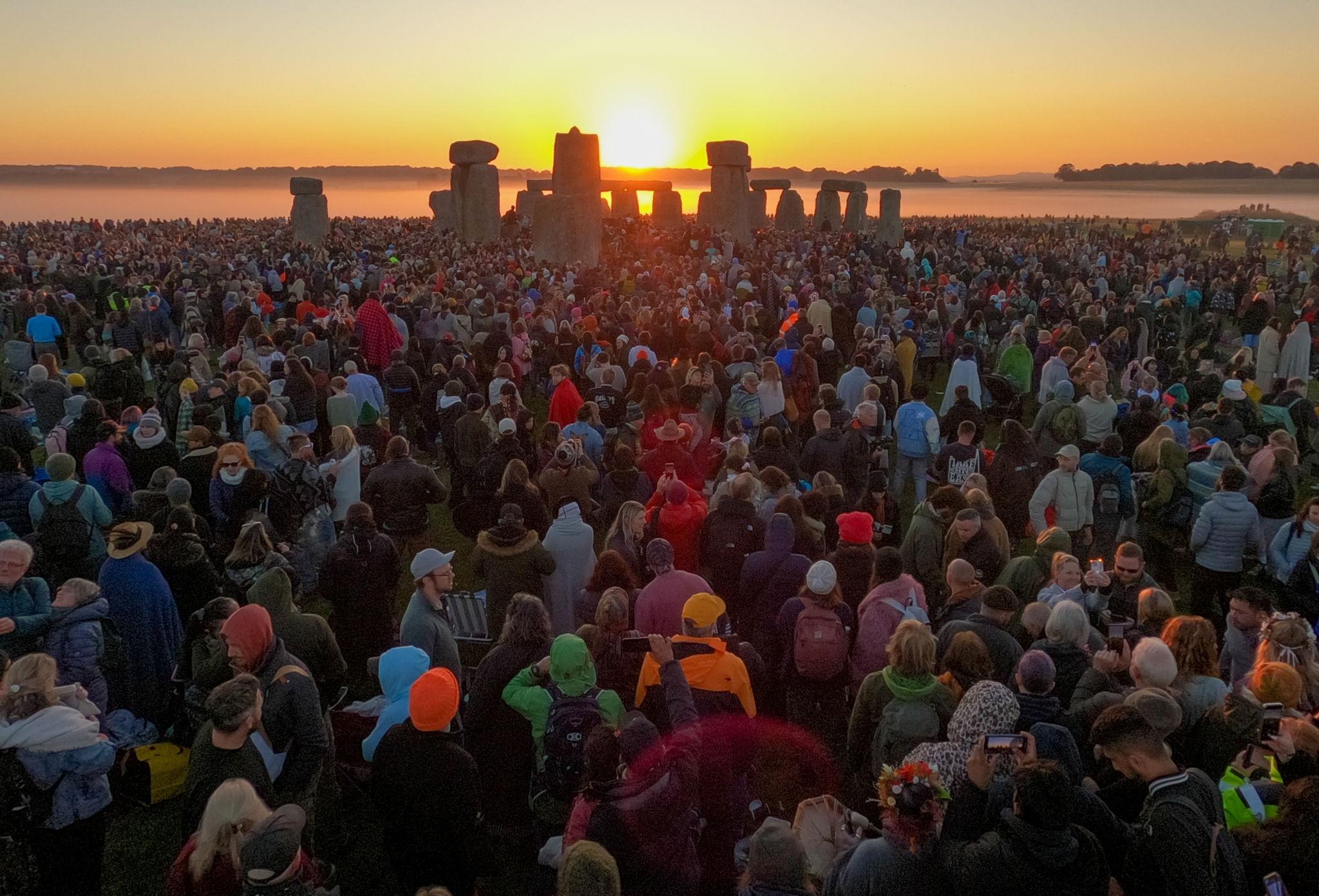
Although often associated with modern Paganism and Wicca, the Summer Solstice has been honored by cultures across the world for thousands of years. Whether through bonfires, dances, feasts, or watching the sunrise over ancient stone circles, humanity has long recognized this day as one of profound spiritual significance.
What Is Litha?
Litha is one of the eight seasonal festivals known as the Wheel of the Year. It falls on or around June 20–22 in the Northern Hemisphere (and around December 20–22 in the Southern Hemisphere).
It marks the moment when the Sun reaches its greatest strength.
Yet hidden within this triumph of light is an important reminder.
From this day forward, the daylight slowly begins to diminish.
Litha therefore teaches a profound spiritual lesson:
Everything that rises must eventually descend.
Every season contains the seed of the next.
Life exists not in permanence, but in sacred cycles.
The Power of the Sun
Across many Pagan traditions, the Sun represents far more than a celestial body.
It symbolizes:
Life
Wisdom
Consciousness
Courage
Creativity
Divine illumination
Spiritual awakening
At Litha, the Sun is honored not simply because it shines, but because it makes all earthly life possible.
Its warmth ripens crops.
Its light nourishes forests.
Its energy sustains every living thing.
For many practitioners, spending time beneath the Sun during Litha becomes an act of gratitude—a reminder of humanity’s intimate relationship with the natural world.
Ancient Roots
Long before the word “Litha” entered modern Pagan vocabulary, civilizations celebrated the Summer Solstice.
Ancient peoples aligned monuments with the rising Sun.
Farmers prayed for healthy harvests.
Communities gathered around enormous bonfires.
Kings demonstrated their power.
Priests welcomed the season of abundance.
Even today, thousands gather each year at ancient monuments such as:
Stonehenge
Newgrange
Chichén Itzá
These sacred places remind us that humanity has always looked toward the heavens to understand our place within the cosmos.
The Oak King and the Holly King
Many modern Pagan traditions tell a symbolic story of two archetypal rulers:
The Oak King, who governs the waxing light from Yule to Litha.
The Holly King, who rules the waning light from Litha until Yule.
At the Summer Solstice, the Oak King reaches the height of his reign before yielding to the Holly King.
This is not a story of defeat.
Rather, it illustrates one of nature’s deepest truths:
Growth and decline are partners, not enemies.
Without rest there can be no renewal.
Without winter there can be no spring.
Without endings there can be no beginnings.
Symbols of Litha
Many symbols associated with Litha reflect the season’s abundance.
Among them are:
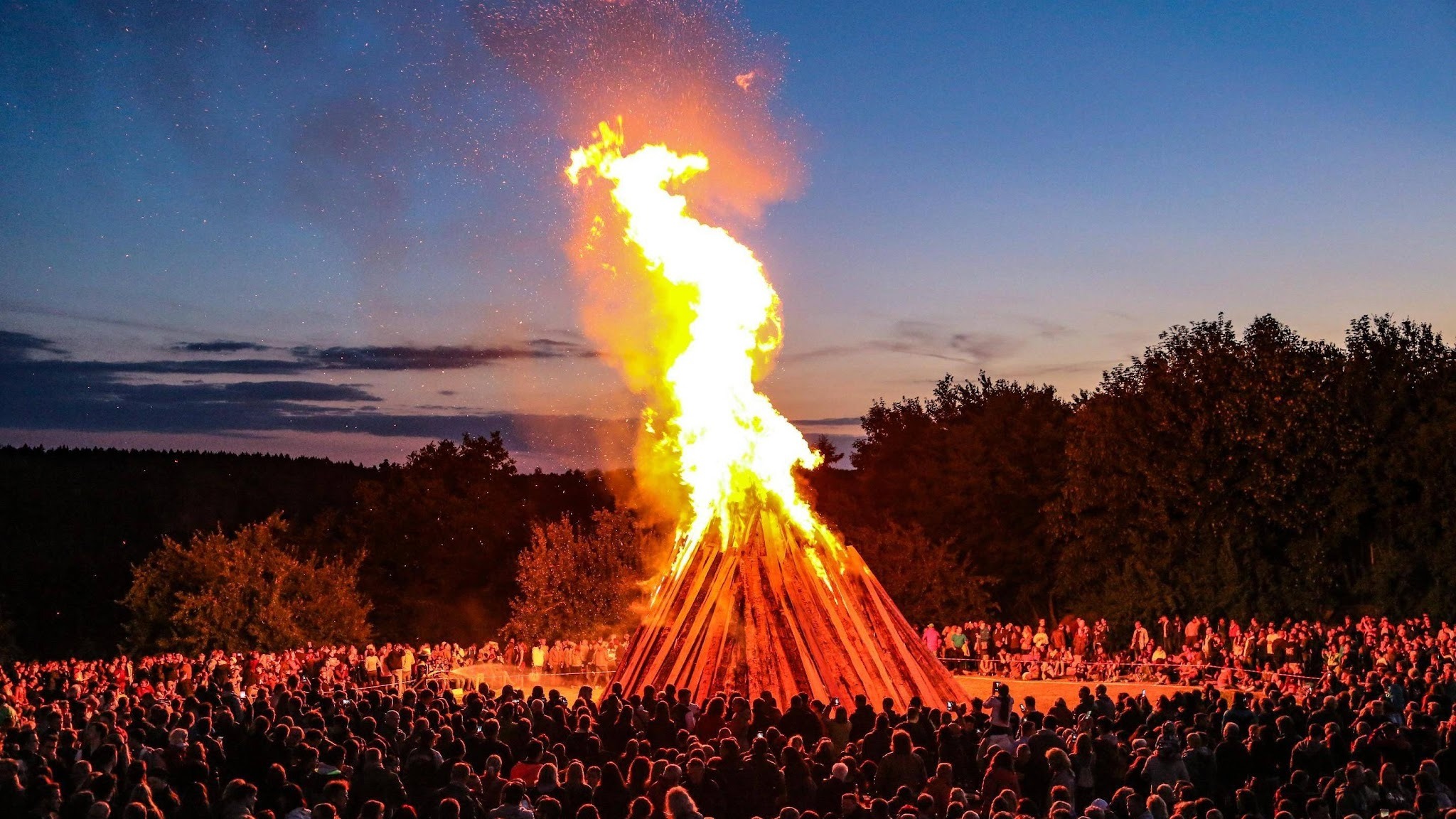
Bonfires
The Sun
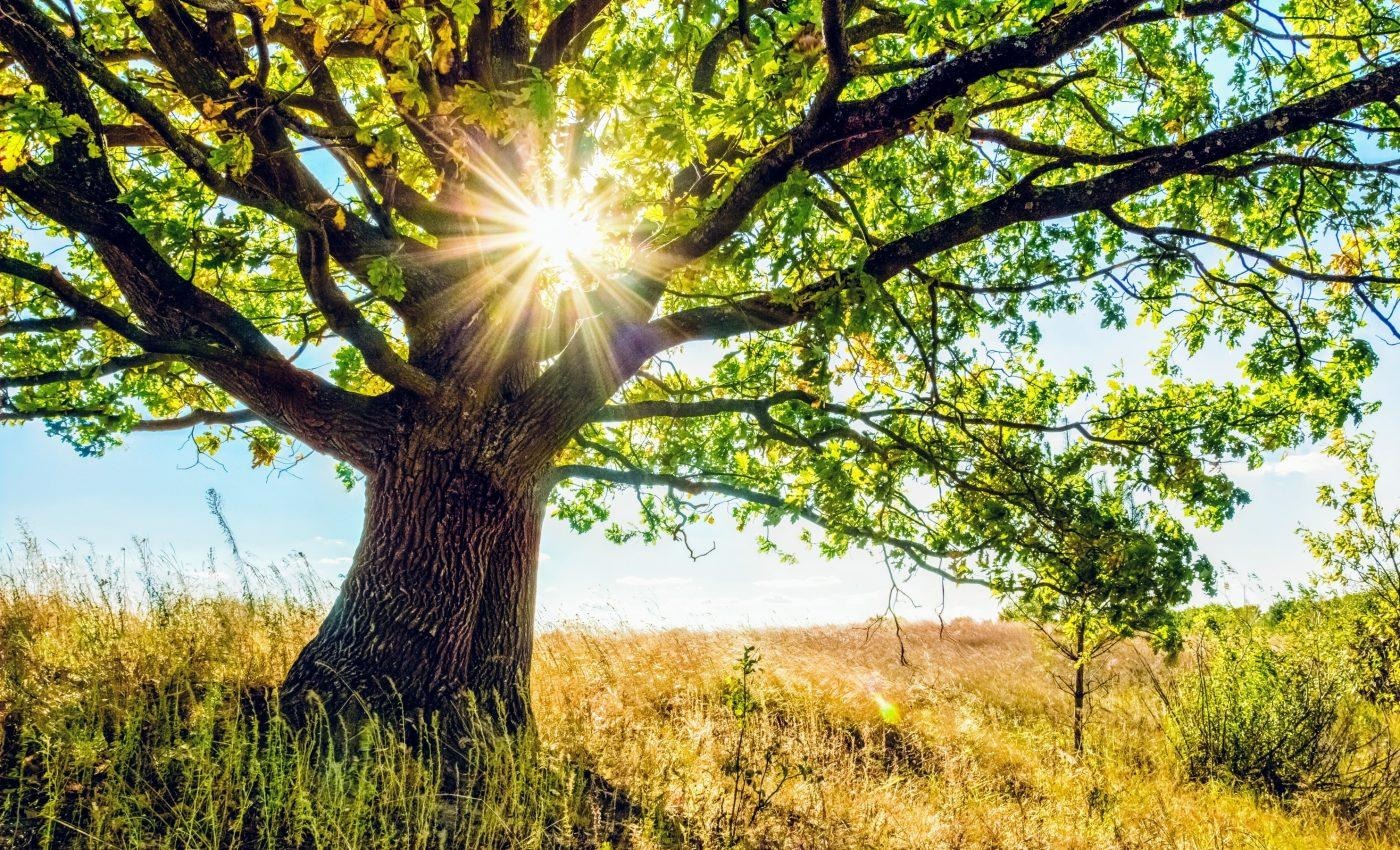
Oaks
Wildflowers
Honey
Herbs
Bees
Butterflies
Wheels
Solar wheels
Fresh fruits
Wheat
St. John’s Wort
Mugwort
Lavender
Sunflowers
Fire plays an especially important role.
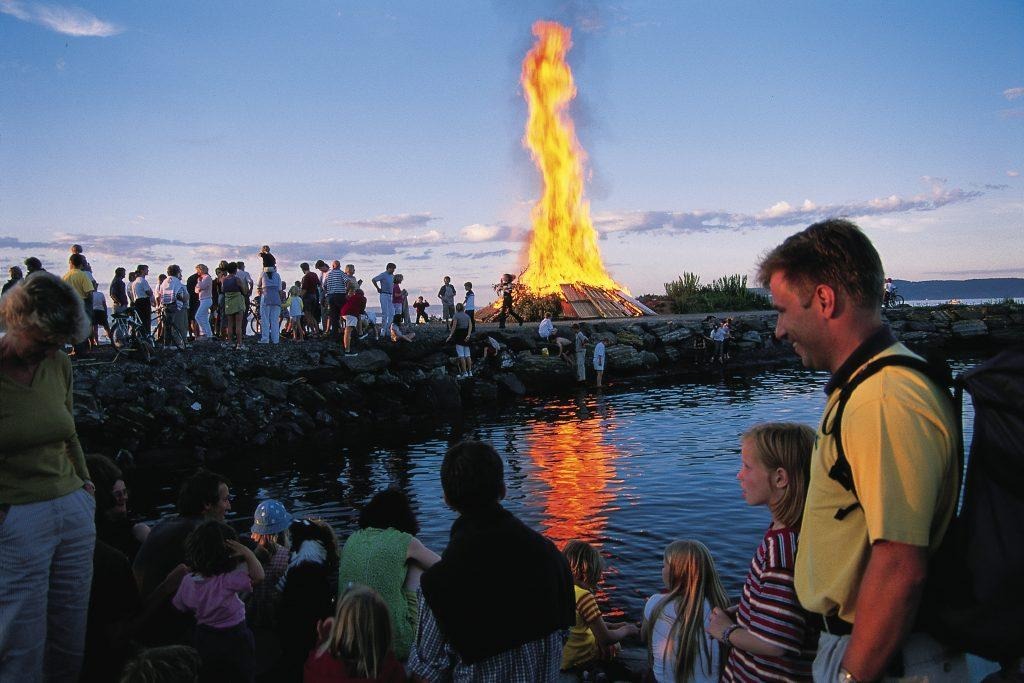
Across Europe, enormous hilltop fires once blazed through the night, symbolizing the strength of the Sun and offering blessings for protection, fertility, and prosperity.
Spiritual Themes
Litha invites reflection on questions such as:
Where has my life reached its fullest expression?
What seeds have now borne fruit?
What blessings have I overlooked?
What must I preserve before the seasons begin to change?
How can I use my gifts to bring light into the lives of others?
Rather than focusing on what is lacking, Litha encourages appreciation for what is already flourishing.
Gratitude itself becomes a spiritual practice.
Simple Ways to Celebrate
You do not need an elaborate ritual to honor Litha.
Many meaningful observances are beautifully simple.
You might:
Rise early to watch the sunrise.
Spend time hiking through forests or meadows.
Gather flowers for your home altar.
Prepare a meal using seasonal fruits and vegetables.
Light a candle in gratitude for the Sun.
Journal about the blessings that have come into your life.
Meditate outdoors beneath a tree.
Host a gathering with family or friends.
Offer thanks for the abundance of the Earth.
Above all, Litha is a celebration of presence.
It asks us to notice beauty while it is here.
A Festival of Gratitude
Perhaps the greatest lesson of Litha is this:
Light is most precious because it does not last forever.
The Summer Solstice reminds us to celebrate while the flowers bloom, to laugh while the days are warm, and to cherish the people who walk beside us.
Nature teaches that nothing remains fixed
The Wheel continues to turn.
Yet each return of Litha offers another opportunity to stand beneath the radiant Sun, breathe deeply, and remember that we, too, are part of this living rhythm.
As the ancient cycle continues, may the light that shines above also awaken the light within.
There is a quiet tragedy in modern adulthood: we are trained to be efficient, optimized, scheduled… but rarely enchanted.
And yet, beneath the spreadsheets and status updates, something ancient hums.
Let’s call it what it is.
Magic.
Not rabbits in hats. Not superstition. Not fantasy.
Magic as the art and science of manifesting one’s will into reality.
That definition alone feels like striking flint against stone. Sparks fly. 🔥
Because suddenly, magic is not escapism. It is agency.
Magic Is Intent Made Tangible
At its core, magic is deliberate creation.
You choose a direction. You focus attention. You align thought, emotion, and action. Reality bends.
Every entrepreneur who builds a company, every artist who shapes an idea into form, every parent who shapes a human soul is practicing magic in its most grounded sense.
When you decide:
“I will build this.” “I will heal this.” “I will become this.”
You are declaring will. And when that will is paired with disciplined action, reflection, and refinement, it becomes science as well as art.
Magic is not wishful thinking. It is structured intention.
The Psychological Power of a Magical Framework
To live magically is to live consciously.
When you frame your life as an act of willful creation, several things happen:
1. You Reclaim Responsibility
Circumstances matter. But so does interpretation. So does response. Magic shifts you from passive recipient to active participant.
You stop asking, “Why is this happening to me?” You begin asking, “What am I building here?”
That subtle pivot changes everything.
2. You Train Attention
Attention is the currency of reality.
What you consistently notice grows in your experience. Gratitude multiplies. Fear multiplies. Opportunity multiplies.
Magic, properly understood, is applied attention. It is choosing where your mental spotlight shines. 🎯
3. You Activate Symbolic Thinking
Humans are meaning-making creatures. Ritual, symbolism, journaling, intentional habits, and reflective practices encode intention deeper into the psyche.
Light a candle before working. Write your goals in ink, not in fleeting thought. Speak your commitments aloud.
These are not theatrics. They are neurological anchors.
The brain loves ritual. It interprets repetition as importance.
Magic becomes behavioral neuroscience in ceremonial clothing.
The Creative Edge of Living Magically
People who consciously practice “manifesting will into reality” often display a few shared traits:
Clarity of vision
Emotional resilience
Comfort with delayed gratification
Creative adaptability
Why?
Because magic demands alignment.
You cannot manifest chaos with disciplined will. You cannot build long-term reality from short-term impulse.
Magic is the long game.
It is strategic imagination paired with consistent action.
It asks: What future are you rehearsing daily?
Ritual as Architecture
Daily ritual does something extraordinary: it builds invisible architecture.
Morning journaling. Evening reflection. A walk taken with a specific intention. A gratitude practice before sleep.
These small acts create internal order.
And internal order produces external coherence.
In this way, magic becomes habit design with poetry.
You are not just living. You are sculpting.
The Spiritual Dimension
Even for the secular mind, there is something profound in this framework.
To view yourself as a being capable of directing will into form is to affirm dignity.
It restores mystery without abandoning reason. It allows reverence without requiring dogma.
You become both architect and apprentice.
Both sculptor and stone.
There is humility in that. There is power in that.
✨
The Real Benefit: Integration
The greatest benefit of incorporating magic into your life is integration.
Mind and action align. Emotion and intention align. Dream and discipline align.
You stop fragmenting yourself.
You begin living as a coherent force.
And coherence is magnetic.
A Simple Practice to Begin
If magic is the art and science of manifesting one’s will into reality, then begin small.
Tonight, write one clear intention for tomorrow.
Not vague. Not aspirational. Concrete.
“I will complete the proposal draft.” “I will speak calmly in the meeting.” “I will train for 30 minutes.”
Then act.
Observe.
Refine.
That is magic in motion.
No smoke. No mirrors. Just will, attention, and embodied action.
In a world that often feels random and overwhelming, incorporating magic into your life is not about escaping reality.
It is about participating in it deliberately.
It is about remembering that you are not merely drifting through circumstances.
You are shaping them.
And when you live that way, life ceases to feel accidental.
A ritual is a container for meaning. Not just something you do, but something you enter.
It is behavior lifted slightly above the ordinary and polished until it reflects something larger than the moment. If daily actions are loose pages, ritual is a book bound in intention. 📖
At its core, a ritual has three ingredients:
Intention – Why you are doing it.
Structure – Repeated gestures, words, symbols, or timing.
Meaning – A story or worldview that gives the action weight.
Without intention, it’s a habit. Without structure, it’s a feeling. Without meaning, it’s choreography.
Everyday Rituals (Yes, You Already Have Them)
Brushing your teeth is a routine. Lighting a candle before journaling becomes a ritual.
The difference is not complexity. It is consciousness.
You might notice ritual in:
Saying grace before a meal
Toasting at a wedding
Standing during a national anthem
Morning coffee made the same way every day ☕
These actions create psychological thresholds. They whisper to the nervous system: “Now we are entering something.”
Ritual in Religion & Culture
Christianity
The Eucharist, baptism, feast days. Ritual makes theology tangible. Bread becomes memory. Water becomes initiation.
Hinduism
Offerings, lamps, mantra recitation. The cosmos is invited into the room through rhythm and flame.
Judaism
Sabbath candles, Passover meals, blessings over wine. Time itself becomes sacred architecture.
Across cultures, ritual does three quiet things:
Marks transitions
Reinforces identity
Synchronizes communities
Psychological View
From a psychological perspective, ritual:
Reduces anxiety
Strengthens focus
Creates a sense of control
Deepens memory encoding
Athletes have pre-game rituals. Writers have desk rituals. Even children invent bedtime rituals. The mind loves patterned gateways.
Esoteric or Magical Definition
In ceremonial traditions, ritual is sometimes defined as:
“The art and science of manifesting will through symbolic action.”
Here, ritual becomes a laboratory of consciousness. Symbols are tools. Gesture is language. Space becomes a stage for the invisible.
But the principle is the same as lighting a birthday candle and making a wish. 🎂
A Compact Definition
A ritual is structured, intentional action that transforms ordinary time into meaningful time.
It is how humans tell reality: “This moment matters.”
Ritual is one of the oldest and most universal technologies of human consciousness. Every culture, religion, mystery school, and spiritual tradition has developed ritual because it addresses something fundamental in human beings: our need to create meaning, navigate change, and connect with realities larger than ourselves.
Let’s examine ritual from four complementary perspectives.
The Psychological Lens
Psychologically, ritual functions as a mechanism for organizing consciousness.
The psychologist Carl Jung observed that human beings naturally think in symbols. The unconscious mind does not communicate primarily through logic but through images, myths, archetypes, and symbolic actions. Ritual speaks this language.
When a person performs a ritual:
Attention is focused.
Ordinary distractions are reduced.
Emotions are given symbolic expression.
The unconscious is engaged through image and gesture.
A wedding ceremony does not merely announce a marriage. It psychologically transforms two individuals into a new identity: husband and wife.
A funeral does not merely dispose of a body. It assists the psyche in processing grief and accepting transition.
From a psychological perspective, ritual creates what Jung might call a bridge between conscious and unconscious realms.
Ritual also produces what psychologists call “state change.”
Consider the sequence:
Preparation
Entry
Symbolic action
Culmination
Return
This mirrors the structure of many altered states of consciousness. Even secular rituals—graduations, military ceremonies, court proceedings—create measurable shifts in identity and perception.
Thus psychologically, ritual is a tool for:
Identity formation
Emotional integration
Anxiety reduction
Meaning-making
Transformation of consciousness
The Anthropological Lens
Anthropologists often regard ritual as one of the defining characteristics of human culture.
The anthropologist Arnold van Gennep proposed that many rituals follow a pattern called the “Rite of Passage.”
He identified three stages:
Separation
The individual leaves their previous state.
Examples:
Leaving home for initiation
Entering a temple
Donning ritual vestments
Liminality
The individual exists “between worlds.”
This concept was expanded by Victor Turner.
The liminal state is neither the old identity nor the new identity.
Examples:
The initiate before initiation
The bride before marriage
The candidate before ordination
Liminality is sacred because transformation occurs there.
Incorporation
The individual returns with a new status.
Examples:
Initiate
Priest
Adept
Married person
Elder
Anthropologically, ritual serves several functions:
Preserves social order
Transmits cultural values
Establishes communal identity
Creates solidarity
Connects present generations with ancestral traditions
Turner further described the experience of communitas, a temporary state of unity experienced during ritual where normal social distinctions dissolve and participants feel profoundly connected.
Many initiates describe this feeling after powerful ceremonies.
The Liturgical-Theological Lens
In liturgical theology, ritual is not merely symbolic.
It is sacramental.
A sacrament is an outward sign that conveys inward grace.
In traditional Christian theology, ritual does not simply represent divine realities—it participates in them.
For example, within many branches of Christianity:
Baptism is not merely a symbol of rebirth.
Eucharist is not merely a memorial meal.
Ordination is not merely recognition of office.
The ritual itself mediates divine action.
Liturgical theology understands ritual as:
Anamnesis
Sacred remembrance.
Not merely remembering the past, but making it present.
Participation
The congregation participates in heavenly realities.
Many liturgies describe worship as joining the worship of angels and saints.
Sanctification of Time
The liturgical year transforms ordinary time into sacred time.
Examples include:
Advent
Christmas
Lent
Easter
Pentecost
Sanctification of Space
An altar is not merely furniture.
It becomes a symbolic meeting point between heaven and earth.
In this perspective, ritual is a vehicle through which divine grace enters human experience.
The Ceremonial Magical Lens
This is where ritual reaches perhaps its most elaborate symbolic development.
In ceremonial magic, ritual is often understood as a method of intentionally altering consciousness and aligning the microcosm (the human being) with the macrocosm (the universe).
A foundational Hermetic principle states:
“As above, so below.”
The magician does not merely perform symbolic acts.
The magician seeks to participate consciously in cosmic processes.
Why Ceremonial Magic Uses Ritual
Ceremonial magic assumes that:
Consciousness can be transformed.
Symbols possess power because they engage deep structures of psyche and spirit.
The universe is ordered according to intelligible principles.
Human beings can harmonize themselves with those principles.
Thus ritual becomes a technology of alignment.
The Magical Temple
In traditions such as the Order of the Golden Dawn, the temple represents the universe in miniature.
Every object has symbolic meaning:
East = Light and Spirit
West = Completion and Descent
South = Fire and Force
North = Earth and Stability
The temple becomes a living diagram of the cosmos.
The initiate stands at its center as the meeting point of all forces.
Ritual as Drama of the Soul
Initiatory rituals are rarely instructional lectures.
They are enacted myths.
The candidate experiences:
Darkness
Seeking
Testing
Revelation
Rebirth
This follows the universal hero pattern identified by Joseph Campbell.
The initiate does not merely learn a teaching.
The initiate undergoes it.
Ritual and the Subtle Body
Many ceremonial traditions teach that ritual affects subtle levels of consciousness.
Examples include:
Visualization
Vibratory formulas
Sacred names
Symbolic gestures
Invocation
Meditation
Whether interpreted psychologically, spiritually, or metaphysically, these practices alter awareness and produce profound experiences of transformation.
The Golden Dawn View
Within the Golden Dawn system, ritual has several purposes:
Purification
Consecration
Initiation
Invocation
Equilibration
Spiritual realization
The Lesser Ritual of the Pentagram, for example, is not simply a protective exercise.
It trains:
Imagination
Attention
Symbolic thinking
Sacred orientation
Awareness of elemental balance
Over time, ritual becomes less about “doing a ceremony” and more about transforming the practitioner into a living temple.
The Deeper Mystery
Across psychology, anthropology, theology, and ceremonial magic, a common theme emerges.
Ritual creates a bridge.
Between conscious and unconscious.
Between individual and community.
Between ordinary time and sacred time.
Between the human and the divine.
Between who we are and who we are becoming.
For the ceremonial magician and Rosicrucian initiate, the highest purpose of ritual is not the manipulation of external forces. It is the gradual awakening of the soul to its own divine nature.
At its deepest level, ritual is the deliberate creation of a sacred encounter—an encounter through which transformation becomes possible. The outer ceremony is the visible form; the real ritual occurs within consciousness itself.
A Golden Dawn Reflection for the Thoughtful Reader
By Victoria Generao, PhD
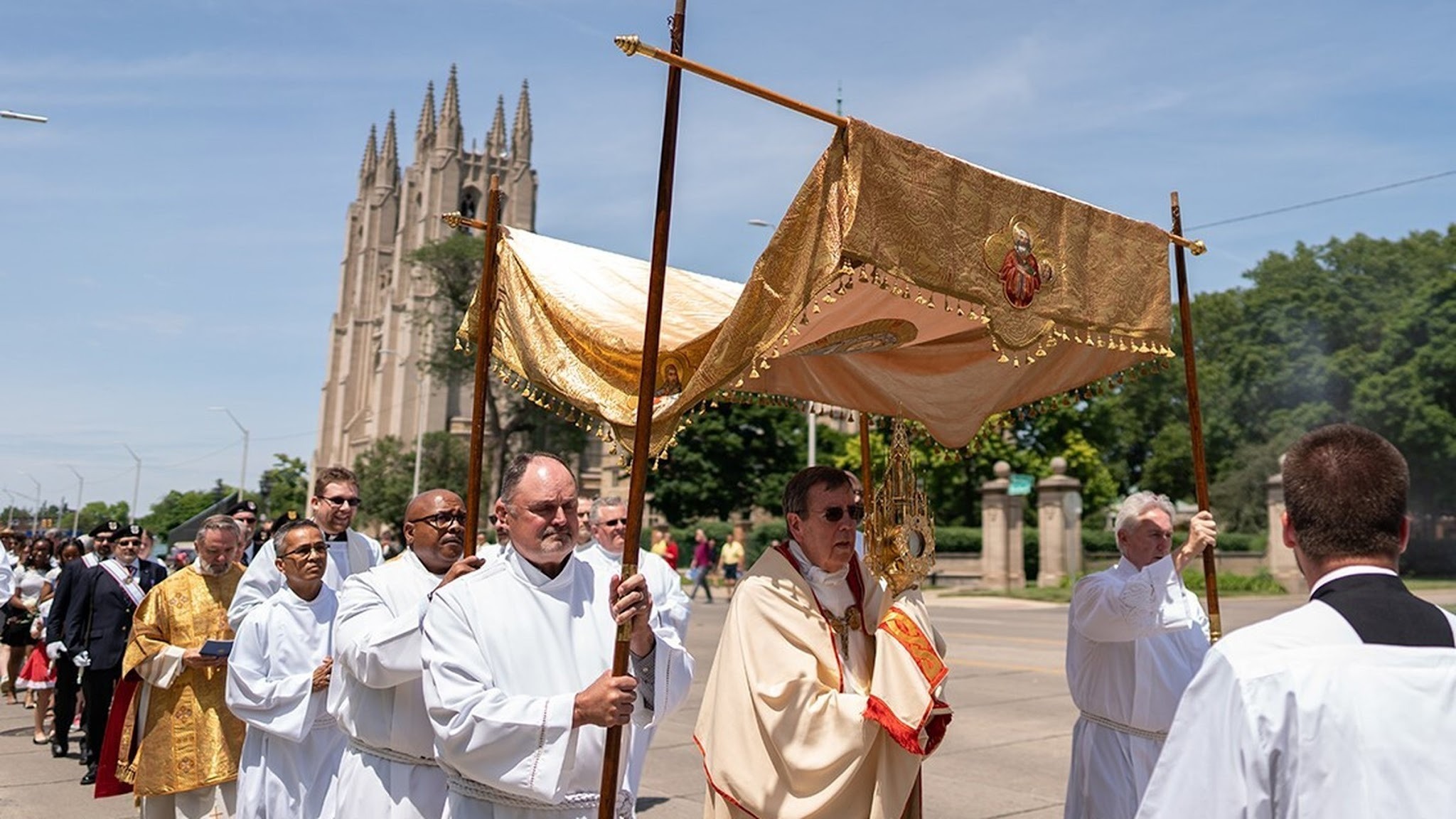
Each year, on the feast of Corpus Christi, streets in many parts of the world are briefly transformed. Flowers are scattered. Bells are rung. A radiant sun of gold is lifted above the heads of the faithful.
To some, this is devotional pageantry. To others, theological affirmation.
To the student of Western esotericism, it is something more subtle: a public enactment of a solar mystery.
The Sun at the Heart
In the symbolic language of the Hermetic Order of the Golden Dawn, the Sun occupies a central and mediating role. It stands between the heights and the depths, between abstraction and embodiment. It is the harmonizing center.
Corpus Christi celebrates the presence of the Divine within consecrated matter. Esoterically considered, this is the same principle: light entering substance without destroying it.
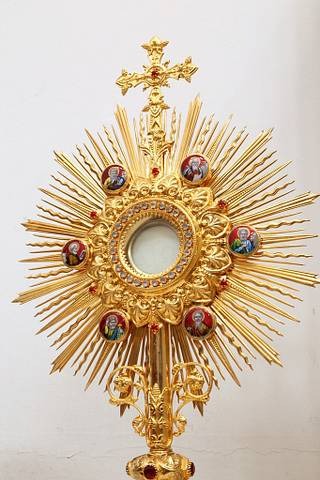
The image of the host placed within a radiant sunburst monstrance is not accidental ornament. It is a visual formula:
Center: luminous presence
Circle: perfected vessel
Rays: life extending outward
The symbolism speaks quietly of something universal. Spirit is not opposed to matter. It seeks expression through it.
The Mystery of Transformation
The theological language of the feast describes transformation at the level of essence. What appears unchanged outwardly is inwardly transfigured.
Western esoteric tradition recognizes this as a key principle of spiritual development. Transformation does not always announce itself with spectacle. The outer life may remain recognizable, yet the interior orientation is altered.
The bread of daily existence becomes transparent to meaning. The ordinary reveals its hidden architecture.
Corpus Christi, viewed symbolically, affirms that matter can become a bearer of light. The human being, too, may undergo such refinement.
The Solar Pattern in the Individual
Many spiritual systems describe an inner center, a point of balance or illumination. In Golden Dawn symbolism, this is often associated with the solar sphere on the Tree of Life, the harmonizing heart of the structure.
The annual celebration of Corpus Christi can be understood as a reminder of this center. The Divine Presence is not merely distant or transcendent. It may be encountered in lived reality, in embodied life.
The ritual procession through streets and neighborhoods subtly mirrors a deeper procession: light carried into the visible world.
The question posed is simple yet searching:
Can illumination walk within the structures of daily life?
The Mystical Body and Invisible Continuity
Corpus Christi also celebrates communion, not only with the Divine but with one another. It speaks of a living body composed of many members.
Esoteric tradition similarly speaks of a chain of transmission, a fellowship of those who have sought to refine perception and character across generations. Whether described as a mystical body or an initiatory lineage, the idea is the same: awakening is not solitary.
The feast becomes, in this light, an affirmation of belonging to a living stream of light-bearing consciousness.
Why It Endures
In a world inclined toward abstraction or fragmentation, Corpus Christi offers a different message. It insists that the sacred is not merely conceptual. It can be touched, tasted, embodied.
For the esoteric student, the significance is quiet but profound. The celebration is not only about veneration. It is about realization.
Each year, the solar emblem is lifted. Each year, light is proclaimed within form.
The inner work asks:
Has that light found expression in thought, word, and deed? Has the center held? Has the ordinary become radiant?
Corpus Christi, read symbolically, is less a memory of an event and more an invitation. It suggests that illumination is not meant to remain in heaven, nor in theory, nor in private meditation alone.
It is meant to take flesh in the world.
And that work, like the rising of the Sun, is renewed each year. ☉🌹
The 7 stages of spiritual alchemy are Calcination, Dissolution, Separation, Conjunction, Fermentation, Distillation, and Coagulation. Each stage transforms a part of you, from the false self all the way to the whole self.
Most people think alchemy is about turning lead into gold. That’s only half the story. The real goal was always inner transformation. The gold was a metaphor. The lab was a symbol. The actual work happened inside the person doing it.
Spiritual alchemy uses the seven stages of physical chemistry as a map. It’s a step-by-step process for breaking down the ego and rebuilding something real. This system runs through Hermetic philosophy, Kabbalistic thought, and the Western esoteric tradition. It’s ancient. It’s precise. And it still works. Let’s walk through each stage, one by one.
The 7 Stages At A Glance
Stage
Element
Color
What It Does
1. Calcination
Fire
Black
Burns the ego and false self
2. Dissolution
Water
Black
Releases buried emotions
3. Separation
Air
Black
Sorts what’s real from what isn’t
4. Conjunction
Earth
White
Rebuilds the authentic self
5. Fermentation
Spirit
Yellow
Breaks down the old, brings in the new
6. Distillation
Spirit
White
Refines what remains
7. Coagulation
Spirit
Red
Makes the transformation permanent
Stage 1: Calcination – What Burns Must Go
What it is: Calcination is the first stage. It burns the false self down to ash.
In physical alchemy, you heat a substance until it breaks apart. Spiritually, that substance is your ego. Your need for status. Your attachment to how others see you. Your rigid beliefs. All of it goes into the fire.
This stage is also called the nigredo, the black stage. Everything goes dark first. Old frameworks crack. The identity you’ve built starts to fall away. That’s not failure. That’s the process working exactly as it should.
Mystics have compared this to the Dark Night of the Soul. It’s uncomfortable. But ash is not the end. It clears the ground for what comes next.
Stage 2: Dissolution – Let It Come Up
What it is: Dissolution takes the ash from stage one and soaks it in water.
Water symbolizes the unconscious. It holds what we’ve buried: grief, shame, old wounds, emotions we pushed down and never processed. In this stage, all of that rises to the surface.
Many people hit this stage and think they’re going backward. They’re not. They’re going deeper. The emotions coming up aren’t new problems. They’re old ones, finally getting their exit.
Think of it like draining a swamp. It’s messy while it’s happening. But once it drains, the ground is clear.
Stage 3: Separation- Sort The Real From The Noise
What it is: Separation uses the element of air. It brings clarity after the fire and water.
Here, you start pulling things apart. The authentic from the inauthentic. The real self from the conditioned one. The genuine feeling from the automatic reaction.
Picture panning for gold in a river. You shake everything around. The heavy truth settles at the bottom. The rest washes away. What stays is yours. What drifts off was never you.
This stage brings real relief. After calcination and dissolution, separation feels like stepping out of a storm. You stop being dragged around by your own thoughts. Instead, you start watching them.
Stage 4: Conjunction – Putting The Pieces Back Together
What it is: A conjunction is the stage of synthesis. The earth element. Embodiment.
After three stages of breaking things down, this is where you start building back up. You take what survived — the real values, the honest impulses, the genuine self, and weave them together.
Polarities stop fighting here. Logic and intuition. Body and soul. Masculine and feminine. They start working together instead of pulling against each other. This feels like a milestone. And it is. But it’s not the finish line. Think of a conjunction as the midpoint of the journey, not the end.
Stage 5: Fermentation – Death, Then Light
What it is: Fermentation is the most dramatic stage. It has two parts: putrefaction and spiritualization.
First comes the rot. The old self, even the version that made it through conjunction, begins to decay. This is intentional. What’s dying is the last grip of the false persona. It can feel like depression. Like meaninglessness. Like everything you built has come undone.
Then comes the light. As the old falls away, something new breaks through. Mystics across traditions have called this illumination, rebirth, or first contact with the higher self. The Sufi poets called it fana, annihilation of the ego, followed by baqa, subsistence in something greater.
This stage connects directly to ceremonial magical practice. In the Western esoteric tradition, this is the point where a practitioner stops working with spiritual forces and starts embodying them.
Stage 6: Distillation – Refine What’s Left
What it is: Distillation removes the last impurities. Only the essence remains.
In chemistry, you boil a liquid until it evaporates. The steam condenses elsewhere, leaving the impurities behind. The same thing happens here, but internally. Everything false has already been cleared by the previous stages. Distillation takes care of what’s left.
The ego stops running the show at this stage. For many people, this is the first time they actually hear their soul’s voice clearly. Not as an occasional whisper. As a steady signal.
Carl Jung studied alchemical symbolism deeply. He described this stage as the integration of the shadow, the hidden parts of the psyche that were rejected or denied. By distillation, those parts have been absorbed. They no longer pull you off course.
In the Golden Dawn tradition, this is when a practitioner begins to operate from the Higher Genius, the part of the self in genuine contact with the divine.
Stage 7: Coagulation – The Work Solidifies
What it is: Coagulation is the final stage. It’s where everything becomes permanent.
In physical alchemy, coagulation is when gold cools and hardens. Spiritually, it’s when the higher self becomes stable. Not a peak experience that fades after a good meditation. A durable, settled state of being.
This is the rubedo, the red stage. Red stands for the fully manifested spirit, embodied in matter. The Philosopher’s Stone isn’t a literal object. It’s this: a person who has genuinely completed the transmutation.
Coagulation isn’t the end of the journey, either. It’s the beginning of a new kind of work — one done from wholeness rather than fragmentation.
The Four Alchemical Colors
The tradition uses four colors to track the overall arc of transformation.
Nigredo (Black) covers stages one to three. This is the breakdown phase. Dark, intense, and necessary.
Albedo (White) arrives around stages four and six. This is purification. The real self starts to become visible.
Citrinitas (Yellow) belongs to stage five: fermentation. It’s the solar illumination that breaks through after the dark.
Rubedo (Red) is coagulation. Full embodiment. Gold is fully realized.
FAQ
Q. What are the 7 stages of spiritual alchemy in order?
The seven stages are Calcination, Dissolution, Separation, Conjunction, Fermentation, Distillation, and Coagulation. They move from breaking down the false self in stage one to becoming a fully integrated, whole person in stage seven.
Q. What is the difference between physical and spiritual alchemy?
Physical alchemy tried to turn base metals into gold. Spiritual alchemy uses those same processes as a map for inner change. The real goal was always the transformation of the person, not the metal.
Q. What does nigredo mean in alchemy?
Nigredo means the black stage. It covers the first three stages: Calcination, Dissolution, and Separation. This is the darkest part of the journey, where the ego breaks down and buried emotions come up. It’s uncomfortable, but it has to happen first.
Q. How does alchemy connect to Kabbalah and ceremonial magic?
The Golden Dawn fused alchemy with the Kabbalistic Tree of Life and Hermetic philosophy. Each stage corresponds to a movement through the Sephiroth. The whole system reflects the Hermetic law: as above, so below.
Q. How long does spiritual alchemy take?
There’s no fixed timeline. Most practitioners cycle through the stages many times over a lifetime, each time going deeper. It’s not a one-and-done process. It’s a practice.
Take The Next Step In The Living Tradition
Reading about these stages is a solid start. But there’s a real difference between knowing the map and walking the path.
At the Grand Temple of Horus Behdety, we work within the Golden Dawn lineage, the same tradition that formalized the alchemical, Kabbalistic, and Hermetic frameworks in this guide. We don’t just explain these stages. We work through them together, in a real initiatory context.
If something in this guide felt familiar, if you sense you’ve already been living some of these stages without knowing the name for them — we’d love to connect. Visit our site, explore our resources, and check our upcoming events. The work is real. The tradition is living. And the door is open.
Most people look at the Minor Arcana and think they’ve got the gist of it. Suits, numbers, a few symbols. Easy enough, right? Well, not quite. Beneath the surface of every single numbered card sits a hidden layer that most readers never dig into. It’s called the tarot card decansystem. And honestly, once you see it, you can’t unsee it.
So, What Even Is A Decan?
Let’s start from the top. Every zodiac sign covers exactly 30 degrees of the sky. Split that into three equal parts, and you’ve got three decans of 10 degrees each. Do that across all twelve signs, and you end up with 36 decans total.
Now, here’s where it gets interesting. Each decan has its own planetary ruler. Not just the sign’s main ruler, a second, more specific one. Think of the zodiac sign as the neighborhood. The decan is the block you’re actually standing on. And every block has its own vibe.
Those 36 decans map directly onto the numbered Minor Arcana cards. We’re talking Twos through Tens, across all four suits. Each card is one decan. It’s not a loose metaphor, either. It’s a precise, one-to-one correspondence built into the tarot’s bones.
Where Did This System Actually Come From?
This is where the history gets really good. The decan system goes way back. Ancient Egyptian priests used decans to track time by observing specific star groups rise before dawn. So right off the bat, we’re dealing with knowledge that’s thousands of years old.
Fast forward to late nineteenth-century London. The Hermetic Order of the Golden Dawn gets hold of this system. These weren’t casual hobbyists, by the way. They were serious initiates who practiced ceremonial magic rituals that pulled together astrology, Hermeticism, and Kabbalah into one unified framework. For them, tarot was never a party trick. It was an initiatory instrument.
The Golden Dawn matched each numbered Minor Arcana card to a specific zodiacal decan and planetary ruler. That system is stuck. It’s still the backbone of serious esoteric tarot work to this day.
What Does The Planetary Ruler Actually Do To A Card?
This is the part that really changes how you read. The planetary ruler of a decan doesn’t just add a little flavor to a card. It shapes the whole energetic quality of it.
Take the Five of Wands as an example. It falls in the first decan of Leo, ruled by Saturn. Now, Leo is fiery, bold, and full of will. But Saturn? Saturn pushes back. Saturn tests. So what you get is two strong forces clashing head-on. That’s the card. It’s not random imagery. It’s cosmological logic playing out in picture form.
Moreover, this explains something that trips up many readers. Why don’t the cards in a suit always feel like smooth, logical steps from one to the next? Sometimes a shift between cards feels like a jolt. Well, that’s because the planetary ruler changed between decans. The frequency shifted. The cards are just reflecting that.
How Does This Actually Help In A Relationship Reading?
Great question. In a tarot card relationship reading, decans give you something that basic card meanings simply can’t. They show you the underlying energetic current running between two people or two situations.
For instance, when two cards in a spread share the same decan ruler, their energies are in sync. They’re speaking the same language, so to speak. But when two cards from conflicting planetary decans show up together, that spread is flagging something. Friction. Dynamic tension. The need to consciously bridge two very different forces.
Beyond that, each decan also corresponds to a specific stretch of the solar year. So the cards carry timing signatures on top of tonal ones. That’s a much richer read than surface symbolism alone.
Where Does Kabbalah Fit Into All Of This?
Here’s where it all comes full circle. The Golden Dawn didn’t build their system on astrology alone. Not even close. Kabbalah was right at the center of everything they did. The Tree of Life, the Sephiroth, the Hebrew letters, all of it wove together with the decan system into one integrated initiatory structure.
That’s why Golem: Jewish magical and mystical traditions matter here. The Golem legend is one of Kabbalah’s most powerful expressions. The core idea is this: sacred language, precise arrangement, and focused intention can literally animate form. Letters carry power. The right sequence brings something into being.
The decan system works on the same philosophical foundation. Assigning specific planetary forces to specific cosmic positions is not decoration. It’s a grammar of creation. When a Golden Dawn initiate worked with a decan-attributed tarot card in a ritual context, they were activating a precise node in a vast symbolic architecture. That same architecture connects astrology, Kabbalah, and the ancient traditions that gave rise to the Golem.
Why Does Any Of This Matter For Daily Practice?
Simply put, this is not just book knowledge. It’s a working framework. When you know which planetary energies are active in a card, you’re doing exactly what the Western magical tradition has always taught: aligning your will with what’s actually moving through a moment.
That’s structured intention in action. That’s magic practiced with real rigor, not smoke and mirrors, but disciplined attention aimed at genuine understanding.
FAQs
Q. What is a tarot card decan, in plain terms?
A tarot card decan is the specific astrological segment linked to each numbered Minor Arcana card. It assigns that card a zodiac sign and a planetary ruler, giving it a deeper cosmic meaning beyond what the surface imagery alone can tell you.
Q. How many decans are there in the tarot system?
There are 36 decans in the zodiac, each covering 10 degrees of a sign. Each one maps onto a numbered Minor Arcana card, from the Twos through the Tens, across all four suits.
Q. How did ceremonial magic traditions shape the tarot’s decan system?
The Golden Dawn formalized it through their ceremonial magic rituals. They precisely matched each numbered card to a specific astrological decan, building a structured system that serious esoteric practitioners still use today.
Q. Can knowing decans actually improve a relationship tarot reading?
Absolutely. In a tarot card relationship reading, decans reveal timing, planetary compatibility, and the energetic texture of how two forces are interacting. It gives you a far more precise read than card symbolism alone.
Q. Is the decan system connected to Kabbalistic thought?
Directly. The Golden Dawn wove Golem: Jewish magical and mystical traditions and Kabbalistic frameworks together with astrology and Hermeticism. That unified system is exactly what gives the decan attributions their initiatory depth and their staying power.
The Spring Equinox Is Here, And So Is Your Next Step
The wheel has turned. We are right at the edge of the Spring Equinox, and for those of us who take this tradition seriously, that is no small thing. This is the moment when light and dark balance out completely. It’s a point of real magical potential, the kind where aligned will and disciplined action carry extraordinary force.
At the Grand Temple of Horus Behdety, we are gathering to mark this threshold with ritual, teaching, and initiatory work rooted in the very same Golden Dawn lineage that gave us the decan system. If this piece has lit something up in you, if you’re ready to stop reading about this tradition and start living it, then we’d love to have you with us.
This isn’t a lecture. It’s a doorway. Head over to our site, check the temple calendar, and take the step that’s been calling you. The equinox doesn’t wait. Neither does the work.
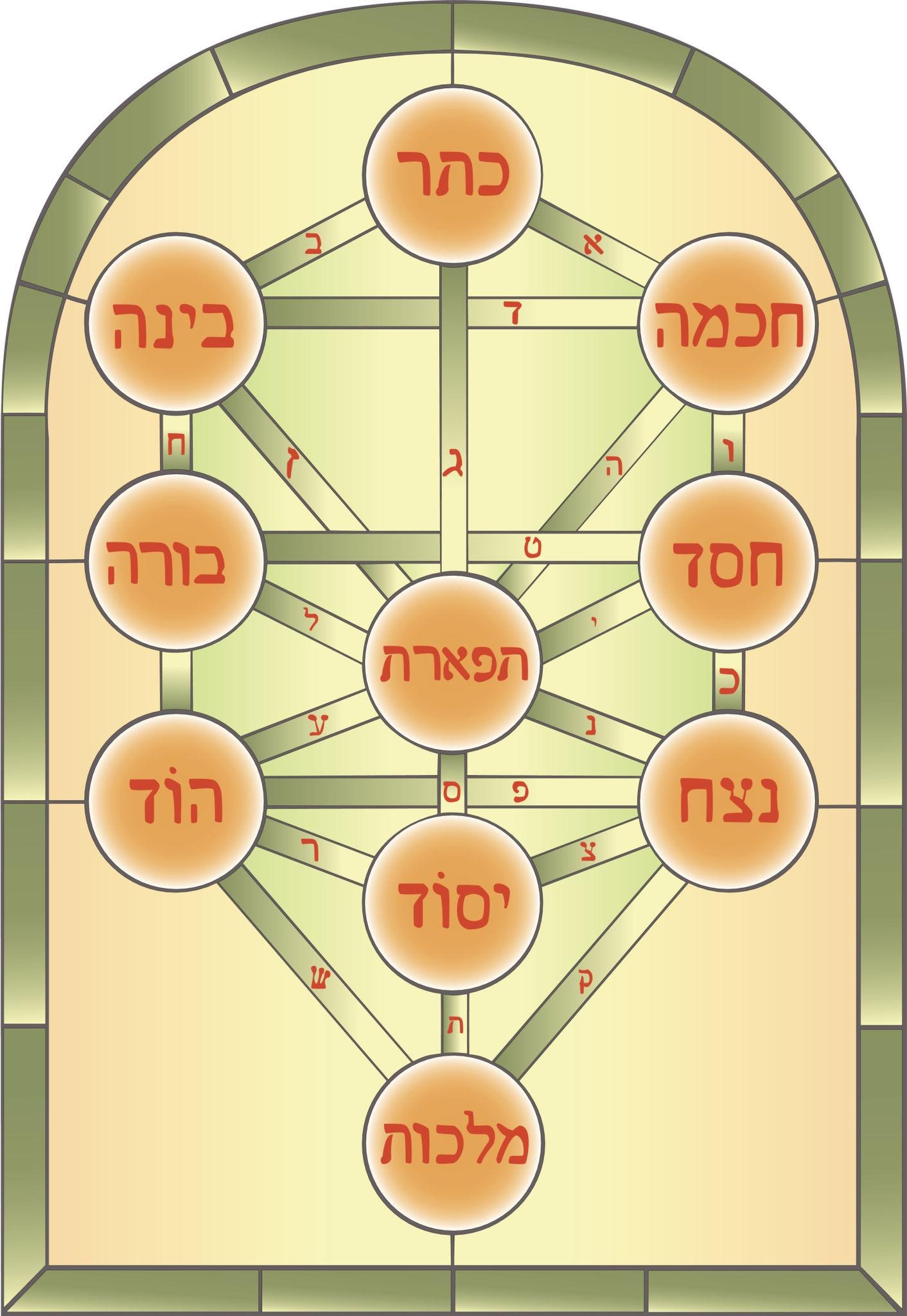
Kabbalah is an ancient Jewish tradition that teaches how energy from God flows through 10 special centers called the Sefirot. These are mapped out on a diagram called the Tree of Life. It also uses the 22 Hebrew letters as building blocks of everything that exists. Think of it like a secret code for understanding the universe, yourself, and how to live in balance.
Quick Overview:
What Kabbalah is and where it comes from
The Tree of Life, what it looks like, and what it means
The 10 Sefirot and what each one stands for
The 22 Hebrew letters and their hidden meanings
How Kabbalistic ideas connect to feeling good inside and out
Answers to the most common beginner questions
What Is Kabbalah?
The word “Kabbalah” comes from Hebrew. It means “to receive.” The idea is that this wisdom was passed down from teacher to student for thousands of years, like a secret handed from one generation to the next.
Kabbalah comes from two key books. The first is called the Sefer Yetzirah (which means “Book of Formation”). The second is the Zohar (which means “Book of Radiance”). The Zohar is like the main textbook of Kabbalah, and it was written down in Spain around 800 years ago.
What Is The Tree Of Life In Kabbalah?
The Tree of Life (called Etz Chaim in Hebrew) is the big diagram at the heart of Kabbalah. It shows 10 energy centers, the Sefirot, connected by 22 paths. Each path matches up with one Hebrew letter.
Kabbalists believe this Tree is the blueprint for everything, the universe, your body, and the way they’re connected. Every Sefirah (that’s the singular of Sefirot) is a different type of energy. The top of the Tree is pure light and spirit. The bottom is the physical world, things you can touch and feel.
The Three Pillars of the Tree of Life
The Tree has three columns, kind of like three lanes on a road. Each one stands for a different way energy works:
Pillar
Side
What It’s About
Qualities
Pillar of Mercy
Right
Expanding, giving
Love, kindness, creativity
Pillar of Severity
Left
Pulling back, limiting
Discipline, strength, judgment
Pillar of Balance
Center
Finding the middle ground
Compassion, truth, wholeness
What Are The 10 Sefirot?
The 10 Sefirot are like 10 different flavors of God’s energy as it moves from pure spirit down into the physical world. They’re not 10 different gods; think of them more like 10 colors that all come from the same white light.
Here’s a quick breakdown of all 10:
Sefirah
Translation
What It Means
Where It Lives in the Body
Keter
Crown
Pure divine will, the spark of life
Top of the head
Chokhmah
Wisdom
The first flash of a great idea
Right side of the brain
Binah
Understanding
Deep thinking, making sense of things
Left side of the brain
Chesed
Kindness
Unconditional love and generosity
Right arm
Gevurah
Strength
Healthy boundaries and discipline
Left arm
Tiferet
Beauty
The heart, where everything balances
Chest/heart
Netzach
Victory
Feelings, passion, creative energy
Right hip and leg
Hod
Splendor
Logic, communication, and staying humble
Left hip and leg
Yesod
Foundation
Connection, the bridge between worlds
Lower abdomen
Malkuth
Kingdom
The physical world, your body, the earth
Feet
Tiferet is the most important one for beginners. It sits right in the middle of the Tree, the heart center. It balances Chesed (kindness) on one side and Gevurah (strength) on the other.
What Do The 22 Hebrew Letters Mean?
In Kabbalah, the 22 Hebrew letters are not just an alphabet. Each one is a living force, a kind of spiritual building block that God used to create the universe. Wild, right?
The ancient book Sefer Yetzirah splits them into three groups:
The 3 Mother Letters, Aleph (א), Mem (מ), Shin (ש)
These three are the big ones. They stand for the three elements that make up everything: air, water, and fire.
The 7 Double Letters, Bet, Gimel, Dalet, Kaf, Peh, Resh, Tav
Each of these letters has two sounds. They connect to the 7 days of the week and the7 classical planets. They govern the push-and-pull forces in life, like health vs. illness, or wisdom vs. foolishness.
The 12 Simple Letters
These connect to the 12 months of the year and 12 things the human body and mind do,like seeing, hearing, laughing, thinking, and sleeping.
A Closer Look at Key Hebrew Letters
Letter
Name
Basic Meaning
Spiritual Quality
א
Aleph
Ox/breath
The silence before anything exists
ב
Bet
House
The container, the first letter of the Bible
מ
Mem
Water
Flow, the subconscious, hidden potential
ש
Shin
Tooth/fire
Transformation and purifying energy
י
Yod
Hand
The smallest letter; the divine spark in all things
ה
Heh
Window
Breath, revelation, divine femininity
ו
Vav
Hook/nail
The connector between heaven and earth
Here’s something cool: the Hebrew word for health is bri’ut (בריאות). It shares its root with the word for creation (bri’ah). In Kabbalah, being truly healthy means being in line with your purpose. It’s not just “not being sick.” It’s being fully alive.
How Does Kabbalah Connect To Feeling Good?
Kabbalah maps the Sefirot directly onto the human body, Keter at the crown of your head, Malkuth at your feet. The idea is simple: when energy flows freely through the Tree, you feel whole. When it gets blocked or thrown off, things start to fall apart.
There’s a Kabbalistic concept called shefa, divine flow. When shefa moves freely through all 10 Sefirot, it’s like your whole system is humming along in harmony. When one Sefirah is overloaded or shut down, that balance breaks.
FAQs
Q: Do I need to be Jewish to study Kabbalah?
Kabbalah comes from Jewish tradition, and its deepest study happens within Judaism. However, people from many backgrounds explore its symbols for personal growth. If you study it, approach it with respect and understand its cultural and religious roots.
Q: What is the difference between the Tree of Life and the Sefirot?
The Tree of Life is like a diagram or map. The Sefirot are the ten spiritual qualities shown on that map. The Tree gives structure, and the Sefirot explain how divine energy flows and expresses itself.
Q: What is gematria, and how does it work?
Gematria is a system where each Hebrew letter has a numerical value. By adding the numbers in a word, you find its total value. Words with the same number are believed to share a spiritual connection.
Q: What does Ein Sof mean?
Ein Sof means “without end” or “infinite.” It refers to the unlimited nature of God before creation. The Sefirot are ways that this infinite source becomes known and understood in the world.
Q: Is the Kabbalah Tree of Life the same as the one in Genesis?
They share a name but are not the same. The Tree in Genesis is part of the Garden of Eden story. The Kabbalistic Tree of Life is a symbolic diagram developed later in Jewish mystical thought.
Q: How do the 22 Hebrew letters connect to the Tree of Life?
The Tree of Life has 22 connecting paths between the Sefirot. Each path matches one Hebrew letter. The letter helps explain the type of spiritual energy flowing along that path.
Start Your Journey To Whole-Body Balance
Kabbalah for beginners is about more than ancient ideas; it’s a living map for anyone who wants to understand the connection between body, mind, and spirit. The Tree of Life shows us that balance isn’t a finish line. It’s a constant flow between opposites, like breathing in and breathing out.
The Hebrew letters remind us that every part of us, even the parts we can’t see, matters. And the Sefirot tell us that true wholeness means all of our parts working together, not just one or two.
Have you ever felt like something inside you is waking up? Many people feel this way at some point. That feeling might be the beginning of a spiritual journey, one that ancient traditions call spiritual initiation.
Using guided meditation for spiritual guidance, sacred texts, and timeless wisdom, people across cultures have walked this path for thousands of years. In this guide, we break down exactly what spiritual initiation means, why it matters, and how its five key stages unfold in real life.
What Is Spiritual Initiation?
Spiritual initiation is a process of inner transformation. Think of it as leveling up in a video game, except the game is your own consciousness and awareness. At its core, initiation means crossing a threshold. You move from one level of understanding to a deeper, more expanded one. Each stage builds on the last. You shed old habits, fears, and attachments as you grow closer to your higher self and, ultimately, to the divine.
Across spiritual traditions, from Kabbalah to Egyptian mysticism, initiation has always been seen as a sacred journey. It is not a single event. It is a lifelong unfolding.
Why Does Spiritual Initiation Matter?
Most of us go through life on autopilot. We react instead of respond. We follow old patterns without questioning them. Spiritual initiation breaks that cycle.
It invites you to look inward, ask bigger questions, and align your life with a deeper purpose. Through practices like guided meditation for spiritual growth, prayer, and study, you begin to see yourself clearly, maybe for the first time.
Initiation also connects you to something larger. Whether you call it the divine, the universe, or the Source, initiation is the process of drawing closer to it, step by step.
What Are the 5 Stages of Spiritual Initiation?
Ancient esoteric teachings, including those connected to the 72 angels of the Shem Hamephorash and the wisdom of the 72 angels of the Kabbalah, describe a clear path of inner growth. Here are the five major stages:
Stage 1: What Happens at the First Initiation?
The First Initiation is about mastering your physical life.
This stage is the starting point. You begin to take control of your physical body, your habits, and your daily choices. You stop letting impulses run the show.
Think of someone who decides to stop overeating, quit a harmful habit, or commit to a daily meditation practice. That discipline is a form of first-stage initiation. You are proving, first to yourself, that you can lead your own life with intention.
This stage is also called the “birth” of the spiritual self. Something wakes up inside you, and you can never fully go back to sleep.
Stage 2: What Changes During the Second Initiation?
The Second Initiation focuses on mastering your emotions and desires.
Our emotions are powerful. They can lift us up or pull us under. In this stage, the initiate works to purify their emotional world. They stop chasing things just because they feel good in the moment.
Imagine a person who used to react in anger every time things did not go their way. Through inner work, they learn to pause, breathe, and respond with calm. That shift is second-stage work.
Guided meditation for spiritual growth plays a big role here. Sitting in stillness helps you observe your emotions without being controlled by them. You become the watcher, not the reactor.
Stage 3: What Is the Third Initiation (Transfiguration)?
The Third Initiation is called Transfiguration. It is a major turning point.
Here, the physical, emotional, and mental parts of your being begin to align. You are no longer three separate things pulling in different directions. You become integrated, whole.
This is the stage where you consciously connect with your higher self. Ancient traditions describe this as a moment of inner light, where your true nature becomes visible to you.
Many seekers describe third-stage experiences as moments of profound clarity. Everything makes sense. You feel at peace, grounded, and deeply aware of your purpose.
Stage 4: What Is the Great Renunciation?
The Fourth Initiation is called the Great Renunciation. It is the hardest stage.
Here, you release attachment to everything, including spiritual rewards, recognition, and even the idea of personal progress. You surrender fully to divine will.
This might sound extreme. But think of it like this: imagine clinging to a raft while swimming toward the shore. At some point, you have to let go of the raft to reach land. The raft kept you safe, but holding on too long keeps you from your destination.
In this stage, the ego’s last defenses fall away. What remains is pure compassion and wisdom.
Stage 5: What Is the Fifth Initiation (Resurrection)?
The Fifth Initiation is called Resurrection. It marks full spiritual mastery.
At this stage, the initiate transcends human limitations. They become what ancient teachings call an Adept or a Master. They no longer act from personal desire but from pure alignment with universal truth and divine purpose.
The wisdom of the 72 angels of the Kabbalah and the 72 angels of the Shem Hamephorash speaks to this level of awakening. These sacred forces represent aspects of divine light that assist those on the path of initiation. At the fifth stage, the initiate works consciously with these energies, serving as a channel of healing and wisdom for others.
FAQs
Q: What triggers a spiritual initiation?
A spiritual initiation is often triggered by a major life change, a crisis, or a deep inner longing for meaning. It can also be sparked by a spiritual practice like meditation or prayer.
Q: Can spiritual initiation happen more than once?
Yes. Initiation is an ongoing process. Each stage brings new challenges and deeper awareness. Most traditions describe multiple initiations throughout a seeker’s lifetime.
Q: Is spiritual initiation the same across all religions?
The names and rituals differ, but the core idea is similar. Whether in Kabbalah, Egyptian mysticism, or Eastern traditions, initiation means moving from a lower state of awareness to a higher one.
Q: Do you need a teacher or guide for spiritual initiation?
A teacher or spiritual guide can be very helpful, especially in the early stages. They can offer support, answer questions, and help you navigate challenges. However, many people also progress through inner work and self-study.
Q: How long does spiritual initiation take?
There is no set timeline. Some stages take years. Others unfold quickly. What matters is your commitment to the process, not the speed of it.
Ready to Go Deeper on Your Spiritual Path?
At the Grand Temple of Horus Behdety, we offer sacred teachings and tools to support every stage of your spiritual journey. Whether you are just beginning to explore guided meditation for spiritual guidance or you are deepening your understanding of the 72 angels of the Shem Hamephorash, we are here to walk with you.
Visit us athorusbehdet.com and explore how the Grand Temple of Horus Behdety can support your next stage of spiritual growth. Your initiation has already begun. We are honored to be part of your journey.